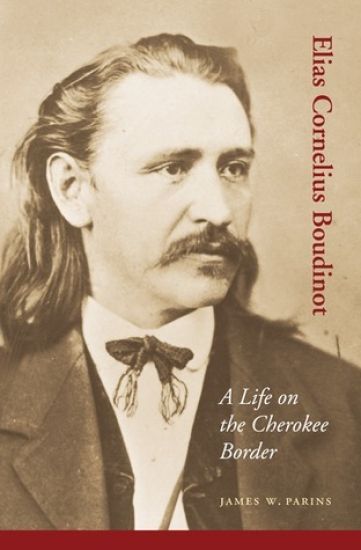
Elias Cornelius Boudinot provides the first full account of a man who was intimately and prominently involved in the life of the Cherokee Nation in the second half of the nineteenth century and was highly influential in the opening of the former Indian Territory to white settlement and the eventual formation of the state of Oklahoma. Involved in nearly every aspect of social, economic, and political life in Indian Territory, he was ostracized by many Cherokees, some of whom also threatened his life. Born into the influential Ridge-Boudinot-Watie family, Boudinot was raised in the East after the assassination of his father, who helped found the first newspaper published by an Indian nation. He returned to the Cherokee Nation, affiliating with his uncle Stand Watie and serving in the Confederate Army and as a representative of the Cherokees in the Confederate Congress. He was involved with treaty negotiations after the war, helped open the railroads into the Indian Territory, and founded the city of Vinita in Oklahoma. He also became a political figure in Washington, DC, a newspaper editor and publisher, and a prominent orator.
"Elias Cornelius Boudinot" provides the first full account of a man who was intimately and prominently involved in the life of the Cherokee Nation in the second half of the nineteenth century and was highly influential in the opening of the former Indian Territory to white settlement and the eventual formation of the state of Oklahoma. Involved in nearly every aspect of social, economic, and political life in Indian Territory, he was ostracized by many Cherokees, some of whom also threatened his life. Born into the influential Ridge-Boudinot-Watie family, Boudinot was raised in the East after the assassination of his father, who helped found the first newspaper published by an Indian nation. He returned to the Cherokee Nation, affiliating with his uncle Stand Watie and serving in the Confederate Army and as a representative of the Cherokees in the Confederate Congress. He was involved with treaty negotiations after the war, helped open the railroads into the Indian Territory, and founded the city of Vinita in Oklahoma. He also became a political figure in Washington, DC, a newspaper editor and publisher, and a prominent orator. James W. Parins is a professor of English and the associate director of the Sequoyah Research Center at the University of Arkansas at Little Rock. He is the author of "John Rollin Ridge: His Life and Works" (available in a Bison Books edition), co-author of bibliographies of Indian writers and guides to Native publications, and editor of works by Indian writers, including "Ke-ma-ha: The Omaha Stories of Francis La Flesche", also available in a Bison Books edition.
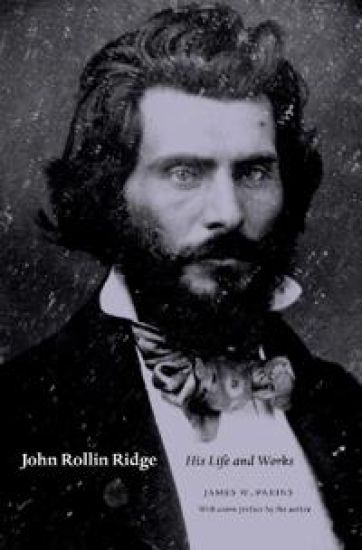
John Rollin Ridge is the first full-length biography of a Cherokee whose best revenge was in writing well. A cross between Lord Byron, the romantic poet who made things happen, and Joaquin Murieta, the legendary bandit he would immortalize, John Rollin Ridge was a controversial, celebrated, and self-cast exile. Ridge was born to a prominent Cherokee Indian family in 1827, a tumultuous and violent time when the state of Georgia was trying to impose its sovereignty on the Cherokee Nation and whites were pressing against its borders. James W. Parins places Ridge in the circle of his family and recreates the circumstances surrounding the assassination of his father (before his eyes) and his grandfather and uncle by rival Cherokees, led by John Ross. Eventful chapters portray the boy's flight with his mother and her family to Arkansas, his classical education there, his killing of a Ross loyalist and subsequent exile in California during the gold rush, his talent as a romantic poet and author, and his career as a journalist. To the end of his life, Ridge advocated the Cherokees' assimilation into white society.
Many Anglo-Americans in the nineteenth century regarded Indian tribes as little more than illiterate bands of savages in need of ""civilizing."" Few were willing to recognize that one of the major Southeastern tribes targeted for removal west of the Mississippi already had an advanced civilization with its own system of writing and rich literary tradition. In Literacy and Intellectual Life in the Cherokee Nation, 1820-1906, James W. Parins traces the rise of bilingual literacy and intellectual life in the Cherokee Nation during the nineteenth century - a time of intense social and political turmoil for the tribe. By the 1820s, Cherokees had perfected a system for writing their language - the syllabary created by Sequoyah - and in a short time taught it to virtually all their citizens. Recognizing the need to master the language of the dominant society, the Cherokee Nation also developed a superior public school system that taught students in English. The result was a literate population, most of whom could read the Cherokee Phoenix, the tribal newspaper founded in 1828 and published in both Cherokee and English. English literacy allowed Cherokee leaders to deal with the white power structure on their own terms: Cherokees wrote legal briefs, challenged members of Congress and the executive branch, and bargained for their tribe as white interests sought to take their land and end their autonomy. In addition, many Cherokee poets, fiction writers, essayists, and journalists published extensively after 1850, paving the way for the rich literary tradition that the nation preserves and fosters today. Literary and Intellectual Life in the Cherokee Nation, 1820-1906 takes a fascinating look at how literacy served to unite Cherokees during a critical moment in their national history, and advances our understanding of how literacy has functioned as a tool of sovereignty among Native peoples, both historically and today.
Many Anglo-Americans in the nineteenth century regarded Indian tribes as little more than illiterate bands of savages in need of "civilizing." Few were willing to recognize that one of the major Southeastern tribes targeted for removal west of the Mississippi already had an advanced civilization with its own system of writing and rich literary tradition. In Literacy and Intellectual Life in the Cherokee Nation, 1820–1906, James W. Parins traces the rise of bilingual literacy and intellectual life in the Cherokee Nation during the nineteenth century—a time of intense social and political turmoil for the tribe. By the 1820s, Cherokees had perfected a system for writing their language—the syllabary created by Sequoyah—and in a short time taught it to virtually all their citizens. Recognizing the need to master the language of the dominant society, the Cherokee Nation also developed a superior public school system that taught students in English. The result was a literate population, most of whom could read the Cherokee Phoenix, the tribal newspaper founded in 1828 and published in both Cherokee and English. English literacy allowed Cherokee leaders to deal with the white power structure on their own terms: Cherokees wrote legal briefs, challenged members of Congress and the executive branch, and bargained for their tribe as white interests sought to take their land and end their autonomy. In addition, many Cherokee poets, fiction writers, essayists, and journalists published extensively after 1850, paving the way for the rich literary tradition that the nation preserves and fosters today. Literary and Intellectual Life in the Cherokee Nation, 1820–1906 takes a fascinating look at how literacy served to unite Cherokees during a critical moment in their national history, and advances our understanding of how literacy has functioned as a tool of sovereignty among Native peoples, both historically and today.
Originally published in 1976, this publication falls into three parts: The Verbal Index, The Word Frequency Table, and The Field of Reference. A scholar interested in the full range of connotation for the word heart in Conrad would look first to the word frequency table to see how often the word in question occurs in Lord Jim. If the word is indeed part of the vocabulary of the novel, he then would turn to its alphabetical listing in the verbal index and the line numbers in which it appears. Then turning to the field of reference, he could locate the lines cited and look at each occurrence of the word in context.The authors feel that the data provided by these tables is of basic importance to both the editor and the literary critic.
Originally published in 1976, this publication falls into three parts: The Verbal Index, The Word Frequency Table, and The Field of Reference. A scholar interested in the full range of connotation for the word heart in Conrad would look first to the word frequency table to see how often the word in question occurs in Lord Jim. If the word is indeed part of the vocabulary of the novel, he then would turn to its alphabetical listing in the verbal index and the line numbers in which it appears. Then turning to the field of reference, he could locate the lines cited and look at each occurrence of the word in context.The authors feel that the data provided by these tables is of basic importance to both the editor and the literary critic.
Originally published in 1979, The Concordance to Conrad’s Victory is intended to provide access to certain information on the text of the novel in a manner convenient to Conrad scholars. To this end the authors have included an alphabetical list of word frequencies and a type/token ratio table as well as a list of word frequencies in rank order. In the concordance itself, each specific word in the text is listed in alphabetical order along with an identifier number and a context for the word. This volume is part of a series which produced verbal indexes, concordances, and related data for all of Conrad’s works.
Originally published in 1979, The Concordance to Conrad’s Victory is intended to provide access to certain information on the text of the novel in a manner convenient to Conrad scholars. To this end the authors have included an alphabetical list of word frequencies and a type/token ratio table as well as a list of word frequencies in rank order. In the concordance itself, each specific word in the text is listed in alphabetical order along with an identifier number and a context for the word. This volume is part of a series which produced verbal indexes, concordances, and related data for all of Conrad’s works.
Originally published in 1981, this volume tabulates the vocabulary of one of Conrad’s most interesting works. This volume contains a complete verbal index to the text, a table of word frequencies, and a field of reference allowing the user to locate the context of each word cited. This volume is part of a series which produced verbal indexes, concordances, and related data for all of Conrad’s works.This book is a re-issue pertaining to a title originally published in 1897. The language used is a reflection of its era and no offence is meant by the Publishers to any reader by this re-publication.
Originally published in 1981, this volume tabulates the vocabulary of one of Conrad’s most interesting works. This volume contains a complete verbal index to the text, a table of word frequencies, and a field of reference allowing the user to locate the context of each word cited. This volume is part of a series which produced verbal indexes, concordances, and related data for all of Conrad’s works.This book is a re-issue pertaining to a title originally published in 1897. The language used is a reflection of its era and no offence is meant by the Publishers to any reader by this re-publication.
Originally published in 1984, this volume follows others in the series. By looking up a word in the word frequency table, the user can find how often it occurs in the text. The verbal index indicates at what page and line the word occurs so that the user can turn to the field of reference to see the word in each of its contexts. This volume is part of a series which produced verbal indexes, concordances, and related data for all of Conrad’s works.
Originally published in 1984, this volume follows others in the series. By looking up a word in the word frequency table, the user can find how often it occurs in the text. The verbal index indicates at what page and line the word occurs so that the user can turn to the field of reference to see the word in each of its contexts. This volume is part of a series which produced verbal indexes, concordances, and related data for all of Conrad’s works.
Originally published in 1985, this volume follows others in the series. An alphabetical frequency table lists all the words indexed with the frequency of their appearance in the field of reference. There is also a table arranged by descending frequency. The verbal index lists the location of the context of each word in the field of reference. This volume is part of a series which produced verbal indexes, concordances, and related data for all of Conrad’s works.
Originally published in 1985, this volume follows others in the series. An alphabetical frequency table lists all the words indexed with the frequency of their appearance in the field of reference. There is also a table arranged by descending frequency. The verbal index lists the location of the context of each word in the field of reference. This volume is part of a series which produced verbal indexes, concordances, and related data for all of Conrad’s works.
The two hundred letters which from the colorful mosaic of this story of the Cherokee tell for the first time, in the Indian's own words, of more than forty years in the history of the old Cherokee Nation. These letters, found in three great trunks in Oklahoma by Edward Everett Dale, and here brought together, in collaboration with Gaston Litton, in sequence and with the necessary annotation to make a connected story, are the correspondence of the Ridge-Watie-Boudinot family, the minority leaders in the Nation.The Cherokees, by the first decade of the nineteenth century, had made great progress in civilization. They had a constitutional form of government under which they were to live for three-quarters of a century in a tiny independent republic within the confines of the United States. Not a few were well educated. They had their own written language as evolved by Sequoyah and many had large plantations, cultivated by numerous slaves, and lived in beautiful homes as Southern planters, in the full tradition of the Southern cavalier.From the time of President Jefferson, however, they had been under urgent pressure to leave their traditional homes in the deep south and seek new ones in the great unoccupied lands of the Louisiana Purchase. In 1835 the minority group, headed by the Ridge-Watie-Boudinot family, signed at New Echota, Georgia, a treaty which provided that the entire tribe should remove to lands in Indian Territory already occupied by the Cherokees West. This group was henceforth known as the ""Treaty Party.""The treaty and the enforced removal three years later divided the Cherokee into two hostile factions and paved the way for thirty years of political turmoil and bloody strife within the Nation. In these letters, which center around the figure of the last Confederate General to surrender his sword - brigadier General Stand Watie - is told the story of the removal, the establishment of a new nation in the West, the divided loyalties of the tribe during the Civil War, and the tragic difficulties of the reconstruction. The picture is not alone that of life within the Nation. E. C. Boudinot, the Cherokee delegate to the Confederate congress, writes of war-torn Richmond during the Civil War. John Rollin Ridge, the poet and journalist, and several others who followed the Gold Rush to California tell of the mining camps during the days of forty-nine. General Albert Pike's official correspondence with General Watie is revealed.As only personal letters can reveal, here in intimacy are the lives and thoughts, the loves and hates, the philosophies and ambitions of these proud cavaliers of Cherokee blood. This book will be a revelation to those who have thought of this branch of Indian race as barbarous or semi-civilized.