Kirjojen hintavertailu. Mukana 12 096 186 kirjaa ja 12 kauppaa.

Kirjahaku

Etsi kirjoja tekijän nimen, kirjan nimen tai ISBN:n perusteella.

123 kirjaa tekijältä James White

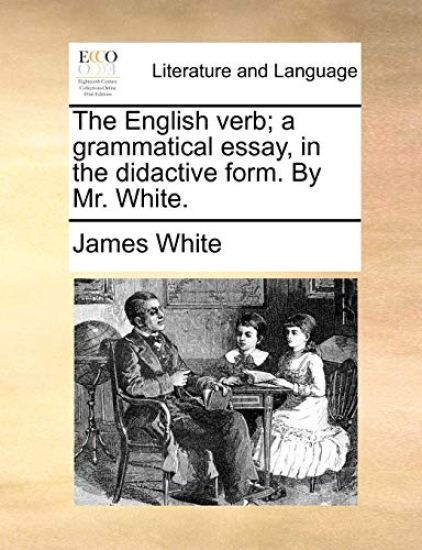
The English Verb; a Grammatical Essay, in the Didactive Form. By Mr. White
The 18th century was a wealth of knowledge, exploration and rapidly growing technology and expanding record-keeping made possible by advances in the printing press. In its determination to preserve the century of revolution, Gale initiated a revolution of its own: digitization of epic proportions to preserve these invaluable works in the largest archive of its kind. Now for the first time these high-quality digital copies of original 18th century manuscripts are available in print, making them highly accessible to libraries, undergraduate students, and independent scholars.Western literary study flows out of eighteenth-century works by Alexander Pope, Daniel Defoe, Henry Fielding, Frances Burney, Denis Diderot, Johann Gottfried Herder, Johann Wolfgang von Goethe, and others. Experience the birth of the modern novel, or compare the development of language using dictionaries and grammar discourses. ++++The below data was compiled from various identification fields in the bibliographic record of this title. This data is provided as an additional tool in helping to insure edition identification: ++++British LibraryT114704London: printed for A. Millar, 1761. xiii, 1],303, 1]p.; 8
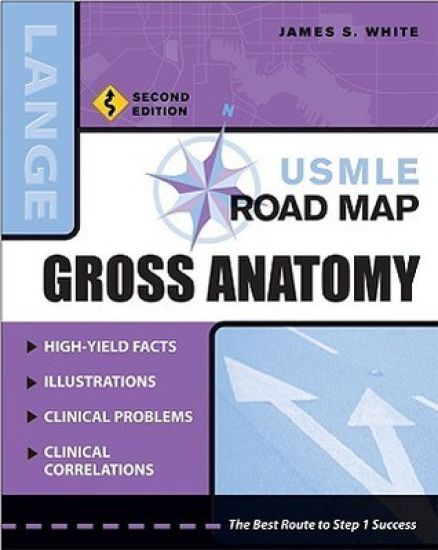
USMLE Road Map Gross Anatomy, Second Edition

USMLE Road Map Gross Anatomy, Second Edition

James White

McGraw-Hill Medical
2006
nidottu
Publisher's Note: Products purchased from Third Party sellers are not guaranteed by the publisher for quality, authenticity, or access to any online entitlements included with the product.USMLE Road Map: Gross Anatomy presents a concise and focused examination of the essential concepts in anatomy. Through a streamlined and easy-to-follow hierarchical outline format, it guides students through the basic anatomical structures (bones, muscles, and nerves) and reviews the major anatomical regions of the body. The outline is enhanced with an extensive and original illustration program that visually conveys the essential information and promotes retention of the material. Features such as clinical correlations and clinical problems are also included. New to this Edition All chapters thoroughly updated and revisedInclusion of 5-10 cross sectional CT images of the thorax and abdomen Refinement of selected Clinical Correlations Update selected clinical vignettes to reflect new types of questions on the Step 1
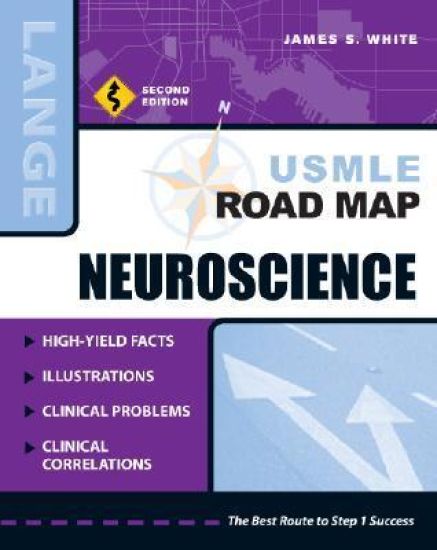
USMLE Road Map Neuroscience, Second Edition

USMLE Road Map Neuroscience, Second Edition

James White

McGraw-Hill Medical
2008
nidottu
Publisher's Note: Products purchased from Third Party sellers are not guaranteed by the publisher for quality, authenticity, or access to any online entitlements included with the product.The Express Route to USMLE Excellence in Neuroscience You'll never find an easier, more efficient, and more focused way to ace neuroscience and neuroscience-related questions on the USMLE and course examinations than the USMLE Road Map. Designed to provide maximum learning in minimum time, this completely up-to-date USMLE Road Map offers a concise, creative, and well-illustrated approach to mastering neuroscience.The right way - the right questions for the right resultsUSMLE SHORTCUTS for effective USMLE preparationOUTLINE FORMAT guides you through the most important areas in neuroscienceHIGH-YIELD FACTS promote comprehension and recallTWO-COLOR FORMAT AND ILLUSTRATIONS make essential concepts easy to understand and rememberLEARNING TIPS AND TRICKS garnered from years of interaction with students just like youCLEAR EXPLANATIONS from instructors with the experience to know the questions you would ask
Unity in Faith?

Unity in Faith?

James White

Indiana University Press
2020
sidottu
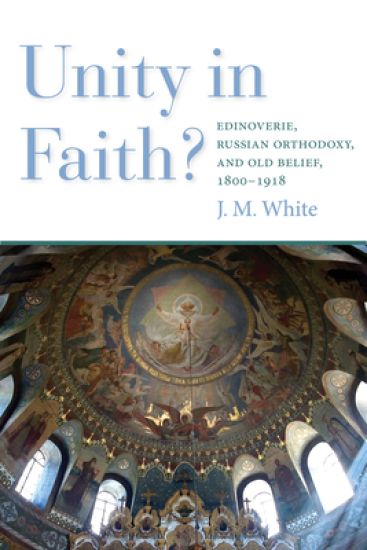
Established in 1800, edinoverie (translated as "unity in faith") was intended to draw back those who had broken with the Russian Orthodox Church over ritual reforms in the 17th century. Called Old Believers, they had been persecuted as heretics. In time, the Russian state began tolerating Old Believers in order to lure them out of hiding and make use of their financial resources as a means of controlling and developing Russia's vast and heterogeneous empire. However, the Russian Empire was also an Orthodox state, and conversion from Orthodoxy constituted a criminal act. So, which was better for ensuring the stability of the Russian Empire: managing heterogeneity through religious toleration, or enforcing homogeneity through missionary campaigns? Edinoverie remained contested and controversial throughout the 19th and early 20th centuries, as it was distrusted by both the Orthodox Church and the Old Believers themselves. The state reinforced this ambivalence, using edinoverie as a means by which to monitor Old Believer communities and employing it as a carrot to the stick of prison, exile, and the deprivation of rights. In Unity in Faith?, James White's study of edinoverie offers an unparalleled perspective of the complex triangular relationship between the state, the Orthodox Church, and religious minorities in imperial Russia.
Unity in Faith?

Unity in Faith?

James White

Indiana University Press
2020
pokkari
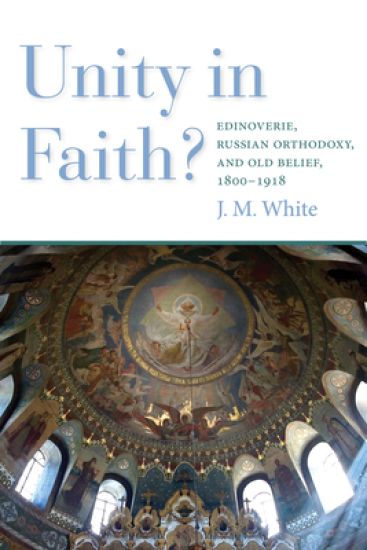
Established in 1800, edinoverie (translated as "unity in faith") was intended to draw back those who had broken with the Russian Orthodox Church over ritual reforms in the 17th century. Called Old Believers, they had been persecuted as heretics. In time, the Russian state began tolerating Old Believers in order to lure them out of hiding and make use of their financial resources as a means of controlling and developing Russia's vast and heterogeneous empire. However, the Russian Empire was also an Orthodox state, and conversion from Orthodoxy constituted a criminal act. So, which was better for ensuring the stability of the Russian Empire: managing heterogeneity through religious toleration, or enforcing homogeneity through missionary campaigns? Edinoverie remained contested and controversial throughout the 19th and early 20th centuries, as it was distrusted by both the Orthodox Church and the Old Believers themselves. The state reinforced this ambivalence, using edinoverie as a means by which to monitor Old Believer communities and employing it as a carrot to the stick of prison, exile, and the deprivation of rights. In Unity in Faith?, James White's study of edinoverie offers an unparalleled perspective of the complex triangular relationship between the state, the Orthodox Church, and religious minorities in imperial Russia.
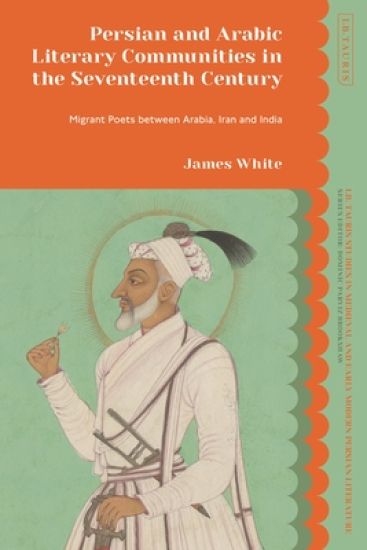
Persian and Arabic Literary Communities in the Seventeenth Century
Shortlisted for the 2024 British-Kuwait Friendship Society Book PrizeA wealth of scholarship has highlighted how commercial, political and religious networks expanded across the Arabian Sea during the seventeenth century, as merchants from South Asia traded goods in the ports of Yemen, noblemen from Safavid Iran established themselves in the courts of the Mughal Empire, and scholars from across the region came together to debate the Islamic sciences in the Arabian Peninsula’s holy cities of Mecca and Medina. This book demonstrates that the globalising tendency of migration created worldly literary systems which linked Iran, India and the Arabian Peninsula through the production and circulation of classicizing Arabic and Persian poetry. By close reading over seventy unstudied manuscripts of seventeenth-century Arabic and Persian poetry that have remained hidden on the shelves of libraries in India, Iran, Turkey and Europe, the book examines how migrant poets adapted shared poetic forms, imagery and rhetoric to engage with their interlocutors and create communities in the cities where they settled. The book begins by reconstructing overarching patterns in the movement of over a thousand authors, and the economic basis for their migration, before focusing on six case studies of literary communities, which each represent a different location in the circulatory system of the Arabian Sea. In so doing, the book demonstrates the plurality of seventeenth-century aesthetic movements, a diversity which later nationalisms purposefully simplified and misread.
Persian and Arabic Literary Communities in the Seventeenth Century
Shortlisted for the 2024 British-Kuwait Friendship Society Book PrizeA wealth of scholarship has highlighted how commercial, political and religious networks expanded across the Arabian Sea during the seventeenth century, as merchants from South Asia traded goods in the ports of Yemen, noblemen from Safavid Iran established themselves in the courts of the Mughal Empire, and scholars from across the region came together to debate the Islamic sciences in the Arabian Peninsula’s holy cities of Mecca and Medina. This book demonstrates that the globalising tendency of migration created worldly literary systems which linked Iran, India and the Arabian Peninsula through the production and circulation of classicizing Arabic and Persian poetry. By close reading over seventy unstudied manuscripts of seventeenth-century Arabic and Persian poetry that have remained hidden on the shelves of libraries in India, Iran, Turkey and Europe, the book examines how migrant poets adapted shared poetic forms, imagery and rhetoric to engage with their interlocutors and create communities in the cities where they settled. The book begins by reconstructing overarching patterns in the movement of over a thousand authors, and the economic basis for their migration, before focusing on six case studies of literary communities, which each represent a different location in the circulatory system of the Arabian Sea. In so doing, the book demonstrates the plurality of seventeenth-century aesthetic movements, a diversity which later nationalisms purposefully simplified and misread.