
Kirjahaku
Etsi kirjoja tekijän nimen, kirjan nimen tai ISBN:n perusteella.
93 kirjaa tekijältä James Williams

Life And Adventures Of James Williams, A Fugitive Slave: With A Full Description Of The Underground Railroad (1873)
James Williams
KESSINGER PUBLISHING, LLC
2008
sidottu
A Narrative of Events, Since the First of August, 1834, by James Williams, an Apprenticed Labourer in Jamaica
James Williams
Duke University Press
2001
pokkari
This book brings back into print, for the first time since the 1830s, a text that was central to the transatlantic campaign to fully abolish slavery in Britain’s colonies. James Williams, an eighteen-year-old Jamaican “apprentice” (former slave), came to Britain in 1837 at the instigation of the abolitionist Joseph Sturge. The Narrative he produced there, one of very few autobiographical texts by Caribbean slaves or former slaves, became one of the most powerful abolitionist tools for effecting the immediate end to the system of apprenticeship that had replaced slavery.Describing the hard working conditions on plantations and the harsh treatment of apprentices unjustly incarcerated, Williams argues that apprenticeship actually worsened the conditions of Jamaican ex-slaves: former owners, no longer legally permitted to directly punish their workers, used the Jamaican legal system as a punitive lever against them. Williams’s story documents the collaboration of local magistrates in this practice, wherein apprentices were routinely jailed and beaten for both real and imaginary infractions of the apprenticeship regulations. In addition to the complete text of Williams’s original Narrative, this fully annotated edition includes nineteenth-century responses to the controversy from the British and Jamaican press, as well as extensive testimony from the Commission of Enquiry that heard evidence regarding the Narrative’s claims. These fascinating and revealing documents constitute the largest extant body of direct testimony by Caribbean slaves or apprentices.

A Narrative of Events, Since the First of August, 1834, by James Williams, an Apprenticed Labourer in Jamaica
James Williams
Duke University Press
2001
sidottu
This book brings back into print, for the first time since the 1830s, a text that was central to the transatlantic campaign to fully abolish slavery in Britain’s colonies. James Williams, an eighteen-year-old Jamaican “apprentice” (former slave), came to Britain in 1837 at the instigation of the abolitionist Joseph Sturge. The Narrative he produced there, one of very few autobiographical texts by Caribbean slaves or former slaves, became one of the most powerful abolitionist tools for effecting the immediate end to the system of apprenticeship that had replaced slavery.Describing the hard working conditions on plantations and the harsh treatment of apprentices unjustly incarcerated, Williams argues that apprenticeship actually worsened the conditions of Jamaican ex-slaves: former owners, no longer legally permitted to directly punish their workers, used the Jamaican legal system as a punitive lever against them. Williams’s story documents the collaboration of local magistrates in this practice, wherein apprentices were routinely jailed and beaten for both real and imaginary infractions of the apprenticeship regulations. In addition to the complete text of Williams’s original Narrative, this fully annotated edition includes nineteenth-century responses to the controversy from the British and Jamaican press, as well as extensive testimony from the Commission of Enquiry that heard evidence regarding the Narrative’s claims. These fascinating and revealing documents constitute the largest extant body of direct testimony by Caribbean slaves or apprentices.
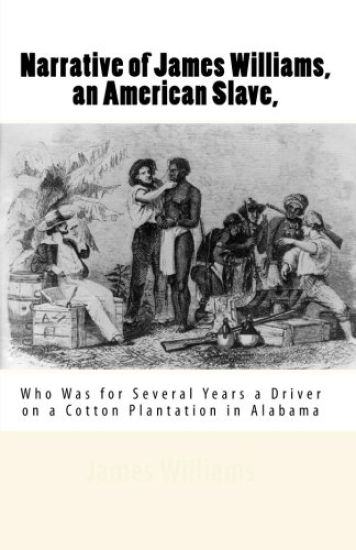
Narrative of James Williams, an American Slave,: Who Was for Several Years a Driver on a Cotton Plantation in Alabama
James Williams
Createspace Independent Publishing Platform
2010
nidottu
"AMERICAN SLAVERY," said the celebrated John Wesley," is the vilest beneath the sun " Of the truth of this emphatic remark no other proof is required than an examination of the statute books of the American slave states. Tested by its own laws, in all that facilitates and protects the hateful process of converting a man into a "chattel personal;" in all that stamps the law-maker and law-upholder with meanness and hypocrisy, it certainly has no present rival of its " bad eminence;" and we may search in vain the history of a world's despotism for a parallel. The civil code of Justinian never acknowledged, with that our democratic despotisms, the essential equality, of man. The dreamer in the gardens of Epicurus recognized neither in himself, nor in the slave who ministered to his luxury, the immortality of the spiritual. nature. Neither Solon nor Lycursus taught the inalienability of human rights.

Life and Adventures of James Williams, a Fugitive Slave, with a Full Description of the Underground Railroad
James Williams
Createspace Independent Publishing Platform
2014
nidottu

Narrative of James Williams, an American Slave: Who Was for Several Years a Driver on a Cotton Plantation in Alabama
James Williams
Createspace Independent Publishing Platform
2017
nidottu

Conquer Congestive Heart Failure: The Journey of James Williams
James Williams
Createspace Independent Publishing Platform
2018
nidottu
The life of James Williams Jr. was turned upside down when he was diagnosed with Cardiomyopathy, a congestive failure of the heart in which the vital organ becomes enlarged, thick or rigid. James did not allow his condition to define him; instead he chose to share his journey with the world. In this book, he talks about how he overcame many obstacles by using the L.OV.E Technique. He also includes many of his juicing recipes and shares how Juicing with The Williams came about. There is so much more to his story that will give you hope to get through any challenges you may be facing. He was once a man with no health issues, and although his condition is a life-changing one, he chose to make health changes to live a longer life. If you are someone who is battling with a condition and you need a little hope to keep fighting, then this book is for you. Don't let your condition define you, become a conqueror.



Lyotard and the Political is the first book to consider the full range of the political thought of the French philosopher François Lyotard and its broader implications for an understanding of the political. James Williams clearly and carefully traces the development of Lyotard's thought from his early Marxist essays on the Algerian struggle for independence to his break with the thought of Marx and Freud. This is compared with Lyotard's later, highly influental writings on the politics of desire and his attempts to base a postmodern political discourse on the sublime. An indispensable work for all who are interested in modern continental philosophy, Lyotard and the Political offers the first systematic analysis of the political dimension of the work of one of the most controversial and influential philosophers of the twentieth century. Also available in this series: Lacan and the Political Pb: 0-415-17187-3: £12.99Heidegger and the Political Pb:0-415-13064-6: £12.99Derrida and the Political Pb: 0-415-10967-1: £13.99Nietzche and the Political Pb: 0-41510069-0: £12.99Foucault and the Political Pb: 0-415-10066-6: £12.99

Lyotard and the Political is the first book to consider the full range of the political thought of the French philosopher François Lyotard and its broader implications for an understanding of the political. James Williams clearly and carefully traces the development of Lyotard's thought from his early Marxist essays on the Algerian struggle for independence to his break with the thought of Marx and Freud. This is compared with Lyotard's later, highly influental writings on the politics of desire and his attempts to base a postmodern political discourse on the sublime. An indispensable work for all who are interested in modern continental philosophy, Lyotard and the Political offers the first systematic analysis of the political dimension of the work of one of the most controversial and influential philosophers of the twentieth century. Also available in this series: Lacan and the Political Pb: 0-415-17187-3: £12.99Heidegger and the Political Pb:0-415-13064-6: £12.99Derrida and the Political Pb: 0-415-10967-1: £13.99Nietzche and the Political Pb: 0-41510069-0: £12.99Foucault and the Political Pb: 0-415-10066-6: £12.99

Set against the backdrop of the recurring waves of financial scandal and crisis to hit Canada, the US, the UK, and Europe over the last decade, this book examines the struggles of securities enforcement agencies to police the financial markets. While allegations of regulatory failure in this realm are commonplace and are well documented in policy and legal scholarship, James Williams seeks to move beyond these conventional accounts arguing that they are based on a limited view of the regulatory process and overlook the actual practices and dilemmas of enforcement work. Informed by interviews with police, regulators, lawyers, accountants, and investor advocates, along with a wealth of documentary materials, the book is rooted in a uniquely interdisciplinary social science perspective. Peering inside the black box of enforcement, it examines the organizational, professional, geographical, technological, and legal influences that shape securities enforcement as a distinctly knowledge-based enterprise. The result of these influences, Williams argues, is the production of a very particular vision of financial disorder which captures certain forms of misconduct while overlooking others, a reflection not of incompetence or capture but of the unique demands and constraints of the regulatory craft. Providing a very different, and much needed, account of the challenges faced by regulators and enforcement agencies, this book will be of enormous interest to current research on enforcement, regulation, and governance both within and beyond the financial realm.

Set against the backdrop of the recurring waves of financial scandal and crisis to hit Canada, the US, the UK, and Europe over the last decade, this book examines the struggles of securities enforcement agencies to police the financial markets. While allegations of regulatory failure in this realm are commonplace and are well documented in policy and legal scholarship, James Williams seeks to move beyond these conventional accounts arguing that they are based on a limited view of the regulatory process and overlook the actual practices and dilemmas of enforcement work. Informed by interviews with police, regulators, lawyers, accountants, and investor advocates, along with a wealth of documentary materials, the book is rooted in a uniquely interdisciplinary social science perspective. Peering inside the black box of enforcement, it examines the organizational, professional, geographical, technological, and legal influences that shape securities enforcement as a distinctly knowledge-based enterprise. The result of these influences, Williams argues, is the production of a very particular vision of financial disorder which captures certain forms of misconduct while overlooking others, a reflection not of incompetence or capture but of the unique demands and constraints of the regulatory craft. Providing a very different, and much needed, account of the challenges faced by regulators and enforcement agencies, this book will be of enormous interest to current research on enforcement, regulation, and governance both within and beyond the financial realm.
The Rise And Fall Of The Model Republic (1863)
James Williams
KESSINGER PUBLISHING, LLC
2008
sidottu
The South Vindicated; Being A Series Of Letters Written By The American Press During The Canvass For The Presidency In 1860 (1862)
James Williams
KESSINGER PUBLISHING, LLC
2008
sidottu
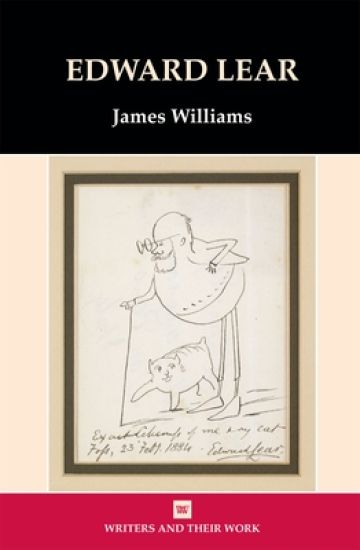
Edward Lear wrote a well-known autobiographical poem that begins ‘How pleasant to know Mr Lear!’ But how well do we really know him? On the one hand he is, in John Ashbery’s words, ‘one of the most popular poets who ever lived’; on the other hand he has often been overlooked or marginalized by scholars and in literary histories. James Williams’s account, the first book-length critical study of the poet since the 1980s, sets out to re-introduce Lear and to accord him his proper place: as a major Victorian figure of continuing appeal and relevance, and especially as a poet of beauty, comedy, and profound ingenuity. Williams approaches Lear’s work thematically, tracing some of its most fundamental subjects and situations. Grounded in attentive close readings, Williams also connects Lear’s nonsense with his various other creative endeavours: as a zoological illustrator and landscape painter, a travel writer, and a prolific diarist and correspondent.