Kirjojen hintavertailu. Mukana 11 244 527 kirjaa ja 12 kauppaa.

Kirjahaku

Etsi kirjoja tekijän nimen, kirjan nimen tai ISBN:n perusteella.

37 kirjaa tekijältä Jan Assmann

Of God and Gods

Of God and Gods

Jan Assmann

University of Wisconsin Press
2008
nidottu
For thousands of years, our world has been shaped by biblical monotheism. But its hallmark - a distinction between one true God and many false gods - was once a new and radical idea. ""Of God and Gods"" explores the revolutionary newness of biblical theology against a background of the polytheism that was once so commonplace.Jan Assmann, one of the most distinguished scholars of ancient Egypt working today, traces the concept of a true religion back to its earliest beginnings in Egypt and describes how this new idea took shape in the context of the older polytheistic world that it rejected. He offers readers a deepened understanding of Egyptian polytheism and elaborates on his concept of the ""Mosaic distinction,"" which conceives an exclusive and emphatic Truth that sets religion apart from beliefs shunned as superstition, paganism, or heresy.Without a theory of polytheism, Assmann contends, any adequate understanding of monotheism is impossible. This work will be of great interest to anyone seeking to understand the relationship between God and gods.
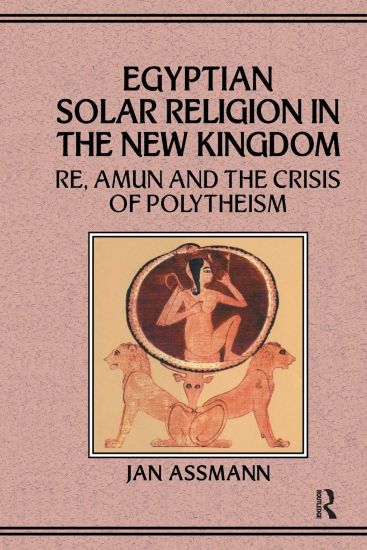
Egyptian Solar Religion in the New Kingdom
Revised and expanded, this volume deals with the religious traditions of ancient Egypt, which have come down to us in a state which is both extremely fragmentary and complex. New material - especially hymns collected in Theban tombs - now allows a much more precise allocation of religious texts and ideas in terms of time, place and social context. Within the field of solar religion, no less than five different traditions have to be distinguished: 1) the liturgical traditions of the royal solar cult, which for their secrecy and exclusivity are labelled the mysteries of the sun cult; 2) the traditional mythology of the solar course expressed in hymns and pictorial representations; 3) the revolutionary process culminating in the Amarna period, which discards the mythic images and gives a monotheistic construction of the solar course, a process which starts before Akhenaten's revolution; 4) the theology of Amun-Re, the God of Thebes, before the Amarna Period, a theology of primacy where one god acts as chief of a pantheon; and 5) the quite different theology of this same Amun-Re after Amarna, a theology which answers the monotheistic experience by developing a kind of pantheism - the concept of the hidden god - who is both cosmic god and personal saviour.
Cultural Memory and Early Civilization

Cultural Memory and Early Civilization

Jan Assmann

Cambridge University Press
2011
pokkari
Now available to an English-speaking audience, this book presents a groundbreaking theoretical analysis of memory, identity and culture. It investigates how cultures remember, arguing that human memory exists and is communicated in two ways, namely inter-human interaction and in external systems of notation, such as writing, which can span generations. Dr Assmann defines two theoretical concepts of cultural memory, differentiating between the long-term memory of societies, which can span up to 3,000 years, and communicative memory, which is typically restricted to 80 to 100 years. He applies this theoretical framework to case studies of four specific cultures, illustrating the function contexts and specific achievements, including the state, international law, religion and science. Ultimately, his research demonstrates that memory is not simply a means of retaining information, but rather a force that can shape cultural identity and allow cultures to respond creatively to both daily challenges and catastrophic changes.
Cultural Memory and Early Civilization

Cultural Memory and Early Civilization

Jan Assmann

Cambridge University Press
2011
sidottu
Now available to an English-speaking audience, this book presents a groundbreaking theoretical analysis of memory, identity and culture. It investigates how cultures remember, arguing that human memory exists and is communicated in two ways, namely inter-human interaction and in external systems of notation, such as writing, which can span generations. Dr Assmann defines two theoretical concepts of cultural memory, differentiating between the long-term memory of societies, which can span up to 3,000 years, and communicative memory, which is typically restricted to 80 to 100 years. He applies this theoretical framework to case studies of four specific cultures, illustrating the function contexts and specific achievements, including the state, international law, religion and science. Ultimately, his research demonstrates that memory is not simply a means of retaining information, but rather a force that can shape cultural identity and allow cultures to respond creatively to both daily challenges and catastrophic changes.
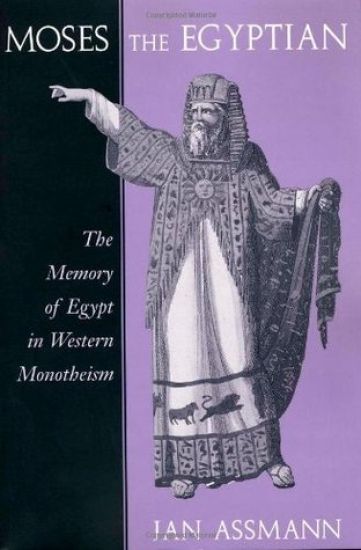
Moses the Egyptian

Moses the Egyptian

Jan Assmann

Harvard University Press
1998
nidottu
Standing at the very foundation of monotheism, and so of Western culture, Moses is a figure not of history, but of memory. As such, he is the quintessential subject for the innovative historiography Jan Assmann both defines and practices in this work, the study of historical memory--a study, in this case, of the ways in which factual and fictional events and characters are stored in religious beliefs and transformed in their philosophical justification, literary reinterpretation, philological restitution (or falsification), and psychoanalytic demystification.To account for the complexities of the foundational event through which monotheism was established, Moses the Egyptian goes back to the short-lived monotheistic revolution of the Egyptian king Akhenaten (1360-1340 B.C.E.). Assmann traces the monotheism of Moses to this source, then shows how his followers denied the Egyptians any part in the origin of their beliefs and condemned them as polytheistic idolaters. Thus began the cycle in which every "counter-religion," by establishing itself as truth, denounced all others as false. Assmann reconstructs this cycle as a pattern of historical abuse, and tracks its permutations from ancient sources, including the Bible, through Renaissance debates over the basis of religion to Sigmund Freud's Moses and Monotheism. One of the great Egyptologists of our time, and an exceptional scholar of history and literature, Assmann is uniquely equipped for this undertaking--an exemplary case study of the vicissitudes of historical memory that is also a compelling lesson in the fluidity of cultural identity and beliefs.
The Invention of Religion

The Invention of Religion

Jan Assmann

PRINCETON UNIVERSITY PRESS
2018
sidottu
A groundbreaking account of how the Book of Exodus shaped fundamental aspects of Judaism, Christianity, and IslamThe Book of Exodus may be the most consequential story ever told. But its spectacular moments of heaven-sent plagues and parting seas overshadow its true significance, says Jan Assmann, a leading historian of ancient religion. The story of Moses guiding the enslaved children of Israel out of captivity to become God's chosen people is the foundation of an entirely new idea of religion, one that lives on today in many of the world's faiths. The Invention of Religion sheds new light on ancient scriptures to show how Exodus has shaped fundamental understandings of monotheistic practice and belief.Assmann delves into the enduring mythic power of the Exodus narrative, examining the text's compositional history and calling attention to distinctive motifs and dichotomies: enslavement and redemption; belief and doubt; proper worship and idolatry; loyalty and betrayal. Revelation is a central theme--the revelation of God's power in miracles, of God's presence in the burning bush, and of God's chosen dwelling among the Israelites in the vision of the tabernacle. Above all, it is God's covenant with Israel—the binding obligation of the Israelites to acknowledge God as their redeemer and obey His law—that is Exodus's most encompassing and transformative idea, one that challenged basic assumptions about humankind's relationship to the divine in the ancient world.The Invention of Religion is a powerful account of how ideas of faith, revelation, and covenant, first introduced in Exodus, shaped Judaism and were later adopted by Christianity and Islam to form the bedrock of the world's Abrahamic religions.
The Invention of Religion

The Invention of Religion

Jan Assmann

Princeton University Press
2020
pokkari
A groundbreaking account of how the Book of Exodus shaped fundamental aspects of Judaism, Christianity, and IslamThe Book of Exodus may be the most consequential story ever told. But its spectacular moments of heaven-sent plagues and parting seas overshadow its true significance, says Jan Assmann, a leading historian of ancient religion. The story of Moses guiding the enslaved children of Israel out of captivity to become God's chosen people is the foundation of an entirely new idea of religion, one that lives on today in many of the world's faiths. First introduced in Exodus, new ideas of faith, revelation, and above all covenant transformed basic assumptions about humankind’s relationship to the divine and became the bedrock of Judaism, Christianity, and Islam.
Egyptian Solar Religion in the New Kingdom
Revised and expanded, this volume deals with the religious traditions of ancient Egypt, which have come down to us in a state which is both extremely fragmentary and complex. New material - especially hymns collected in Theban tombs - now allows a much more precise allocation of religious texts and ideas in terms of time, place and social context. Within the field of solar religion, no less than five different traditions have to be distinguished: 1) the liturgical traditions of the royal solar cult, which for their secrecy and exclusivity are labelled the mysteries of the sun cult; 2) the traditional mythology of the solar course expressed in hymns and pictorial representations; 3) the revolutionary process culminating in the Amarna period, which discards the mythic images and gives a monotheistic construction of the solar course, a process which starts before Akhenaten's revolution; 4) the theology of Amun-Re, the God of Thebes, before the Amarna Period, a theology of primacy where one god acts as chief of a pantheon; and 5) the quite different theology of this same Amun-Re after Amarna, a theology which answers the monotheistic experience by developing a kind of pantheism - the concept of the hidden god - who is both cosmic god and personal saviour.
Religio Duplex

Religio Duplex

Jan Assmann

Polity Press
2014
sidottu
In this important new book, the distinguished Egyptologist Jan Assmann provides a masterful overview of a crucial theme in the religious history of the West - that of 'religio duplex', or dual religion. He begins by returning to the theology of the Ancient Egyptians, who set out to present their culture as divided between the popular and the elite. By examining their beliefs, he argues, we can distinguish the two faces of ancient religions more generally: the outer face (that of the official religion) and the inner face (encompassing the mysterious nature of religious experience). Assmann explains that the Early Modern period witnessed the birth of the idea of dual religion with, on the one hand, the religion of reason and, on the other, that of revelation. This concept gained new significance in the Enlightenment when the dual structure of religion was transposed onto the individual. This meant that man now owed his allegiance not only to his native religion, but also to a universal 'religion of mankind'. In fact, argues Assmann, religion can now only hold a place in our globalized world in this way, as a religion that understands itself as one among many and has learned to see itself through the eyes of the other. This bold and wide-ranging book will be essential reading for historians, theologians and anyone interested in the nature of religion and its role in the shaping of the modern world.
Religio Duplex

Religio Duplex

Jan Assmann

Polity Press
2014
nidottu
In this important new book, the distinguished Egyptologist Jan Assmann provides a masterful overview of a crucial theme in the religious history of the West - that of 'religio duplex', or dual religion. He begins by returning to the theology of the Ancient Egyptians, who set out to present their culture as divided between the popular and the elite. By examining their beliefs, he argues, we can distinguish the two faces of ancient religions more generally: the outer face (that of the official religion) and the inner face (encompassing the mysterious nature of religious experience). Assmann explains that the Early Modern period witnessed the birth of the idea of dual religion with, on the one hand, the religion of reason and, on the other, that of revelation. This concept gained new significance in the Enlightenment when the dual structure of religion was transposed onto the individual. This meant that man now owed his allegiance not only to his native religion, but also to a universal 'religion of mankind'. In fact, argues Assmann, religion can now only hold a place in our globalized world in this way, as a religion that understands itself as one among many and has learned to see itself through the eyes of the other. This bold and wide-ranging book will be essential reading for historians, theologians and anyone interested in the nature of religion and its role in the shaping of the modern world.
Death and Salvation in Ancient Egypt

Death and Salvation in Ancient Egypt

Jan Assmann

Cornell University Press
2014
pokkari
"Human beings," the acclaimed Egyptologist Jan Assmann writes, "are the animals that have to live with the knowledge of their death, and culture is the world they create so they can live with that knowledge." In his new book, Assmann explores images of death and of death rites in ancient Egypt to provide startling new insights into the particular character of the civilization as a whole.Drawing on the unfamiliar genre of the death liturgy, he arrives at a remarkably comprehensive view of the religion of death in ancient Egypt. Assmann describes in detail nine different images of death: death as the body being torn apart, as social isolation, the notion of the court of the dead, the dead body, the mummy, the soul and ancestral spirit of the dead, death as separation and transition, as homecoming, and as secret. Death and Salvation in Ancient Egypt also includes a fascinating discussion of rites that reflect beliefs about death through language and ritual.
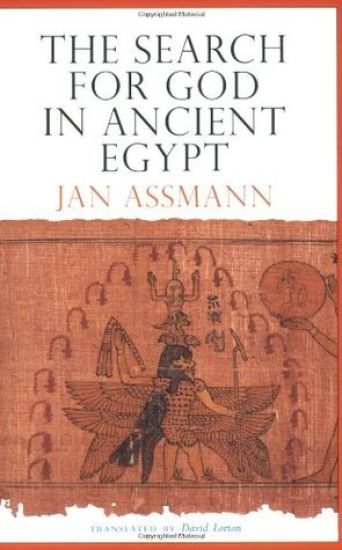
The Search for God in Ancient Egypt

The Search for God in Ancient Egypt

Jan Assmann

Cornell University Press
2001
pokkari
First English-language edition, with revisions and additions by the author.This classic work by one of the world's most distinguished Egyptologists was first published in German in 1984. The Search for God in Ancient Egypt offers a distillation of Jan Assmann's views on ancient Egyptian religion, with special emphasis on theology and piety. Deeply rooted in the texts of ancient Egypt and thoroughly informed by comparative religion, theology, anthropology, and semiotic analysis, Assmann's interpretations reveal the complexity of Egyptian thought in a new way.Assmann takes special care to distinguish between the "implicit" theology of Egyptian polytheism and the "explicit" theology that is concerned with exploring the problem of the divine. His discussion of polytheism and mythology addresses aspects of ritual, the universe, and myth; his consideration of explicit theology deals with theodicy and the specifics of Amarna religion.
Religion and Cultural Memory

Religion and Cultural Memory

Jan Assmann

Stanford University Press
2005
sidottu
In ten brilliant essays, Jan Assmann explores the connections between religion, culture, and memory. Building on Maurice Halbwachs's idea that memory, like language, is a social phenomenon as well as an individual one, he argues that memory has a cultural dimension too. He develops a persuasive view of the life of the past in such surface phenomena as codes, religious rites and festivals, and canonical texts on the one hand, and in the Freudian psychodrama of repressing and resurrecting the past on the other. Whereas the current fad for oral history inevitably focuses on the actual memories of the last century or so, Assmann presents a commanding view of culture extending over five thousand years. He focuses on cultural memory from the Egyptians, Babylonians, and the Osage Indians down to recent controversies about memorializing the Holocaust in Germany and the role of memory in the current disputes between Israelis and Palestinians in the Middle East and between Protestants and Catholics in Northern Ireland.
Religion and Cultural Memory

Religion and Cultural Memory

Jan Assmann

Stanford University Press
2005
pokkari
In ten brilliant essays, Jan Assmann explores the connections between religion, culture, and memory. Building on Maurice Halbwachs's idea that memory, like language, is a social phenomenon as well as an individual one, he argues that memory has a cultural dimension too. He develops a persuasive view of the life of the past in such surface phenomena as codes, religious rites and festivals, and canonical texts on the one hand, and in the Freudian psychodrama of repressing and resurrecting the past on the other. Whereas the current fad for oral history inevitably focuses on the actual memories of the last century or so, Assmann presents a commanding view of culture extending over five thousand years. He focuses on cultural memory from the Egyptians, Babylonians, and the Osage Indians down to recent controversies about memorializing the Holocaust in Germany and the role of memory in the current disputes between Israelis and Palestinians in the Middle East and between Protestants and Catholics in Northern Ireland.
The Price of Monotheism

The Price of Monotheism

Jan Assmann

Stanford University Press
2009
sidottu
Nothing has so radically transformed the world as the distinction between true and false religion. In this nuanced consideration of his own controversial Moses the Egyptian, renowned Egyptologist Jan Assmann answers his critics, extending and building upon ideas from his previous book. Maintaining that it was indeed the Moses of the Hebrew Bible who introduced the true-false distinction in a permanent and revolutionary form, Assmann reiterates that the price of this monotheistic revolution has been the exclusion, as paganism and heresy, of everything deemed incompatible with the truth it proclaims. This exclusion has exploded time and again into violence and persecution, with no end in sight. Here, for the first time, Assmann traces the repeated attempts that have been made to do away with this distinction since the early modern period. He explores at length the notions of primary versus secondary religions, of "counter-religions," and of book religions versus cultic religions. He also deals with the entry of ethics into religion's very core. Informed by the debate his own work has generated, he presents a compelling lesson in the fluidity of cultural identity and beliefs.
The Price of Monotheism

The Price of Monotheism

Jan Assmann

Stanford University Press
2009
pokkari
Nothing has so radically transformed the world as the distinction between true and false religion. In this nuanced consideration of his own controversial Moses the Egyptian, renowned Egyptologist Jan Assmann answers his critics, extending and building upon ideas from his previous book. Maintaining that it was indeed the Moses of the Hebrew Bible who introduced the true-false distinction in a permanent and revolutionary form, Assmann reiterates that the price of this monotheistic revolution has been the exclusion, as paganism and heresy, of everything deemed incompatible with the truth it proclaims. This exclusion has exploded time and again into violence and persecution, with no end in sight. Here, for the first time, Assmann traces the repeated attempts that have been made to do away with this distinction since the early modern period. He explores at length the notions of primary versus secondary religions, of "counter-religions," and of book religions versus cultic religions. He also deals with the entry of ethics into religion's very core. Informed by the debate his own work has generated, he presents a compelling lesson in the fluidity of cultural identity and beliefs.