Kirjojen hintavertailu. Mukana 11 244 527 kirjaa ja 12 kauppaa.

Kirjahaku

Etsi kirjoja tekijän nimen, kirjan nimen tai ISBN:n perusteella.

4 kirjaa tekijältä Jan Machielsen

Martin Delrio

Martin Delrio

Jan Machielsen

Oxford University Press
2015
sidottu
If the Jesuit Martin Delrio (1551-1608) is remembered at all today, it is for his Disquisitiones magicae (1599-1600), a voluminous tome on witchcraft and superstition which was reprinted numerous times until 1755. The present volume recovers the lost world of Delrio's wider scholarship. Delrio emerges here as a figure of considerable interest not only to historians of witchcraft but to the broader fields of early modern cultural, religious and intellectual history as well. As the editor of classical texts, notably Senecan tragedy, Delrio had a number of important philological achievements to his name. A friend of the Flemish philosopher Justus Lipsius (1547-1606) and an enemy of the Huguenot scholar Joseph Scaliger (1540-1609), he played an important part in the Republic of Letters and the confessional polemics of his day. Delrio's publications after his admission to the Society of Jesus (the Disquisitiones included) marked a significant contribution to the intellectual culture of the Counter-Reformation. Catholic contemporaries accordingly rated him highly, but later generations proved less kind. As attitudes towards witchcraft changed, the context in which the Disquisitiones first emerged disappeared from view and its author became a byword for credulity and cruelty. Recovering this background throws important new light on a period in history when the worlds of humanism and Catholic Reform collided. In an important chapter, the book demonstrates that demonology, in Delrio's hands, was a textual science, an insight that sheds new light on the way witchcraft was believed in. At the same time, the book also develops a wider argument about the significance of Delrio's writings, arguing that the Counter-Reformation can also be seen as a textual project and Delrio's contribution to it as the product of a mindset forged in its fragile borderlands.
The War on Witchcraft

The War on Witchcraft

Jan Machielsen

Cambridge University Press
2021
pokkari
Historians of the early modern witch-hunt often begin histories of their field with the theories propounded by Margaret Murray and Montague Summers in the 1920s. They overlook the lasting impact of nineteenth-century scholarship, in particular the contributions by two American historians, Andrew Dickson White (1832–1918) and George Lincoln Burr (1857–1938). Study of their work and scholarly personae contributes to our understanding of the deeply embedded popular understanding of the witch-hunt as representing an irrational past in opposition to an enlightened present. Yet the men's relationship with each other, and with witchcraft sceptics – the heroes of their studies – also demonstrates how their writings were part of a larger war against 'unreason'. This Element thus lays bare the ways scholarly masculinity helped shape witchcraft historiography, a field of study often seen as dominated by feminist scholarship. Such meditation on past practice may foster reflection on contemporary models of history writing.
The Basque Witch-Hunt

The Basque Witch-Hunt

Jan Machielsen

BLOOMSBURY PUBLISHING PLC
2024
sidottu
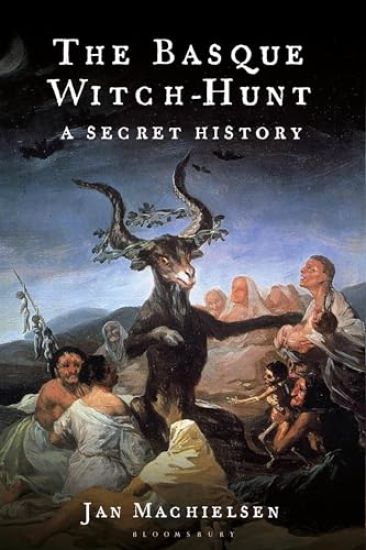
2025 AMERICAN ASSOCIATION OF PUBLISHERS PROSE AWARDS WINNER: EUROPEAN HISTORYIn June 1609, two judges left Bordeaux for a territory at the very edge of their jurisdiction, a Basque-speaking province on the Atlantic coast called the Pays de Labourd. In four months, they executed up to 80 women and men for the crime of witchcraft, causing a wave of suspects to flee into Spain and sparking terror there. Witnesses, many of them children, described lurid tales of cannibalism, vampirism, and demonic sex. One of the judges, Pierre de Lancre, published a sensationalist account of this diabolical netherworld. With other accounts seemingly destroyed, this witch-hunt – France's largest – has always been seen through de Lancre’s eyes. The narrative, re-told over the centuries, is that of a witch-hunt caused by a bigoted outsider. Newly discovered evidence paints a very different, still darker picture, revealing a secret history underneath de Lancre’s well-known tale. Far from an outside imposition, witchcraft was a home-grown problem. Panic had been building up over a number of years and the region was fractured by factionalism and a struggle over scarce resources. The Basque Witch-Hunt reveals that de Lancre was no outsider; he was a local partisan, married into the Basque nobility. Living at the Franco-Spanish border, the Basques were victims of geography. Geo-politics caused a local conflict which made the witch-hunt inevitable. The same forces eventually sent thousands of religious refugees from Spain to France where they, in turn, became new objects of popular fear and anger. The Basque witch-hunt is justly infamous. This book shows that almost everything historians thought they knew about it is wrong.
The Basque Witch-Hunt

The Basque Witch-Hunt

Jan Machielsen

BLOOMSBURY PUBLISHING PLC
2026
nidottu
2025 AMERICAN ASSOCIATION OF PUBLISHERS PROSE AWARDS WINNER: EUROPEAN HISTORY In June 1609, two judges left Bordeaux for a territory at the very edge of their jurisdiction, a Basque-speaking province on the Atlantic coast called the Pays de Labourd. In four months, they executed up to 80 women and men for the crime of witchcraft, causing a wave of suspects to flee into Spain and sparking terror there. Witnesses, many of them children, described lurid tales of cannibalism, vampirism, and demonic sex. One of the judges, Pierre de Lancre, published a sensationalist account of this diabolical netherworld. With other accounts seemingly destroyed, this witch-hunt – France's largest – has always been seen through de Lancre’s eyes. The narrative, re-told over the centuries, is that of a witch-hunt caused by a bigoted outsider. Newly discovered evidence paints a very different, still darker picture, revealing a secret history underneath de Lancre’s well-known tale. Far from an outside imposition, witchcraft was a home-grown problem. Panic had been building up over a number of years and the region was fractured by factionalism and a struggle over scarce resources. The Basque Witch-Hunt reveals that de Lancre was no outsider; he was a local partisan, married into the Basque nobility. Living at the Franco-Spanish border, the Basques were victims of geography. Geo-politics caused a local conflict which made the witch-hunt inevitable. The same forces eventually sent thousands of religious refugees from Spain to France where they, in turn, became new objects of popular fear and anger. The Basque witch-hunt is justly infamous. This book shows that almost everything historians thought they knew about it is wrong.