

Kirjahaku
Etsi kirjoja tekijän nimen, kirjan nimen tai ISBN:n perusteella.
10 kirjaa tekijältä Jan Marsh

Aubrey Beardsley (1872–1898) was only 25 when he died from tuberculosis, but in his short life he established a reputation as one of the most accomplished – and controversial – illustrators of his day, whose contribution to the visual language of Art Nouveau was profound. Astonishingly, all his work was created in the course of only six years, and is today instantly recognizable for its use of black ink and flowing lines on white paper – and its erotically charged subject matter. Not all his work was lubricious – some of it was political, poking fun at the decadent mores of the time – but much of it was, taking its stylistic inspiration from Japanese shunga and Greek vase painting and its thematic inspiration from mythology, history, poetry and drama. This beautifully designed, accessibly priced gift book offers a wealth of illustrations by Beardsley, and introduces his exquisitely wrought drawings and prints to a new audience. With a text by Jan Marsh and around 110 illustrations from the extensive collections of the Victoria and Albert Museum, this book brings together a carefully curated selection of works from Beardsley’s tragically short but highly productive life.
In this most interesting book Jan Marsh examines the paradox underlying the transformation of England from an economy based on agriculture to one based on industry. By 1880 that had happened irreversibly and yet while the rural population was rapidly declining, the back-to-the land movement began to pervade all areas of life and thought. Jan Marsh chronicles the many manifestations of the pastoral impulse. From simple nostalgia to sophisticated political thought she looks at agrarian communes, the folk-song movement, peasant arts, garden cities, the reclamation of common lands, schools, dress and diet, and at the life and thought of such key figures as John Ruskin, William Morris and Edward Carpenter. The book is divided into four parts: The Cult of the Countryside, Tilling the Earth, Rustic Arts and Crafts, Pioneers of the New Life.'I read it with delight. It is beautifully done - the research, the argument and above all the clarity of the writing.' Adam Nicholson 'An eminently readable survey of the pastoral aspect of the aesthetic movement dominated by Ruskin, Morris and Carpenter around the turn of the century'. Deborah Singmaster, Times Literary Supplement'A synoptic study which includes dress reform, the folk-song and folk-dance movement, the impulse to safeguard commons, footpaths and ancient monuments, the revolution ins gardening, progressive schools like Abottsholme and Bedales... when we dine out in Fulham and sit round a scrubbed deal table with a string of onions hanging over earthenware crocks, we are paying tribute to the potency of the ideologies this book entertainingly chronicles.' Colin Ward, New Society
'Jan Marsh's book is the best researched and fullest biography of Rossetti we have yet had.' Fiona MacCarthy, New York Review of Books'Although never formally part of the Pre-Raphaelite poetic school, which included her brother Gabriel, William Morris, and Algernon Swinburne, Christina Rossetti has always been linked to it. [Jan Marsh] gives full attention to both the individual and her unique variety of fantastic and devotional poetry... Marsh delineates an appealing person while examining her adolescent nervous breakdown, abortive engagement to a lapsed Catholic painter, frustrated love for an absentminded scholar, and relationships with her devout but hearty sister, Maria, and with her brothers... The author's steady, sympathetic course through Rossetti's divided life enables readers to delve into the intense and original self most fully expressed in her poetry.' Kirkus Review

Who were those women who sat for the Pre-Raphaelite painters? Muses to an exclusively male genius, of tragic stature and uncertain health - were they indeed as passive as their portrait painters and their critics contrived to suggest? Jan Marsh reveals the actual lives behind the myth of the Pre-Raphaelite women: Elizabeth Siddal, Emma Brown, Annie Miller, Fannie Cornforth, Jane Morris and Georgina Burne-Jones. A meticulous testimony, this book records the rare vitality of these gifted and ambitious women. Delivering them from a century of masculine misrepresentation, Pre-Raphaelite Sisterhood is a fascinating tribute to their spirit of independence in circumstances which conspired to suppress it. It includes an intriguing set of photographs as well as reproductions of the paintings and studies they inspired.
Sharing Lives: Part 3 of the Foxwood Trilogy
Jan Marsh
Createspace Independent Publishing Platform
2016
nidottu
Getting by with a little help from your friends has been very important to the residents of Foxwood during the three years of its existence as an 'intentional community' on the Welsh border. But when glamorous Tricia Anstey moves in, the dynamic of the community changes. Old friendships are threatened and the harmony of the house is shattered by the secrets of her colourful past.And in the wider community, can Foxwood continue to live in harmony with its neighbours in the face of a changing world?The third part of the Foxwood trilogy continues the story of the lives of those who began living the dream and those who continue to let it evolve.
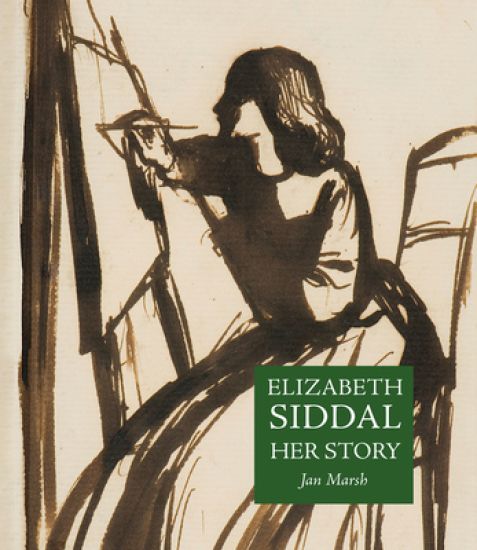
Elizabeth Siddal is remembered as a Pre-Raphaelite supermodel and the muse and wife of Gabriel Rossetti. She is cast as a tragic heroine much like the Ophelia she modelled in the renowned Millais painting. But Elizabeth Siddal: Her Story overturns this myth. ‘Lizzie’ is presented as an aspirational and independent woman who knew what she wanted and was not afraid to let it be known. With extraordinary stories, including previously undiscovered details of Siddal’s journeys across the UK and to the south of France, Jan Marsh reclaims Siddal’s narrative from the historical record. She brings new perspective to the post-natal, mental trauma Elizabeth suffered after a stillbirth. Furthermore, she casts new light on the renowned story of Siddal’s grave being exhumed for Rossetti’s poems. Jan Marsh explores the finer, little known details of Siddal’s life, including her four months at art school in Sheffield, which Rossetti’s brother always denied. In addition to this, few will know how Siddal was often regarded as difficult and ungrateful. Historical record tends to forget or misremember women, but with Elizabeth Siddal: Her Story, Jan Marsh forces us to take a closer look and see a very different picture. Siddal was not passive and lacking in agency, she was a woman with a strong mind, flourishing career and an admirable talent.

The story of how a group of precocious young artists shook up the British art establishment, told through their works, letters and diaries. An illustrated history of the linked lives and loves of a group of supremely talented artists of late Victorian Britain through their passionate writings. It features the painters, poets, critics and designers: Ford Madox Brown, Edward Burne-Jones, Fanny Cornforth, William Holman Hunt, John Everett Millais, William and Janey Morris, Christina, Dante Gabriel, and William Rossetti, John Ruskin, William Bell Scott and Lizzie Siddal. The artistic aspirations and achievements of the Pre-Raphaelite Brotherhood are revealed alongside the interwoven dramas of their personal lives, in letters, diaries and reminiscences, while their genius is displayed in vivid paintings, drawings, designs and poems. The Pre-Raphaelites was a charmed circles of love, friendship and art. Within an ever-changing flow of affections, and intimacies as richly patterned as a tapestry, they worked together as companions, lovers and partners. They shared tragedy as well as happiness, critical hostility as well as success, even the griefs of infidelity and discord. These creative partnerships, which also created the firm William Morris and Co, revitalised Victorian art and design. The new edition publishes in time for the start of the Burne Jones Exhibition at Tate Britain, starting in October 18. It is a vital book in understanding the Pre-Raphaelite art, which remains as popular and moving as ever.

For far too long the male protagonists of the Pre-Raphaelite movement have dominated accounts of this revolution in British art. This book aims to redress the balance in showing just how engaged and central women were to the endeavour – as the subjects of the images themselves, certainly, but also in their production. When the Pre-Raphaelite Brotherhood (the ‘PRB’) exhibited their first works in 1849 it heralded a revolution in British art. Styling themselves the ‘Young Painters of England’ this group of young men aimed to overturn stale Victorian artistic conventions and challenge the previous generation with their startling colours and compositions. Think of the images created by William Holman Hunt, John Everett Millais, Dante Gabriel Rossetti and others in their circle, however, and it is not men but pale-faced young women with lustrous, tumbling locks that spring to mind, gazing soulfully from the picture frame or in dramatic scenes painted in glowing colours. Who were these women? What is known of their lives and their roles in a movement that, in successive phases, spanned over half a century? Some were models, plucked from obscurity to pose for figures in Pre-Raphaelite paintings, while others were sisters, wives, daughters and friends of the artists. Several were artists themselves, with aspirations to match those of the men, sharing the same artistic and social networks yet condemned by their gender to occupy a separate sphere. Others inhabited and sustained a male-dominated art world as partners in production, maintaining households and studios and socialising with patrons. Some were skilled in the arts of interior decoration, dressmaking, embroidery, jewellery-making – the fine crafts that formed a supportive tier for the ‘higher’ arts of painting and sculpture. And although their backgrounds and life-experiences certainly varied widely, all were engaged in creating Pre-Raphaelite art.

Dealing with Depression offers a simple, easy to follow, non-judgmental and, above all, effective exploration of depression and how to manage it. A range of strategies is outlined, including the physiological fundamentals of sleep, healthy diet and exercise as well as ideas from positive psychology that help us to take care of ourselves. Learning to regulate emotions and show compassion to ourselves and others not only reduces the impact of depression but also improves life and relationships, building resilience and decreasing the likelihood of recurring depressive episodes. Part One provides the essential background information for understanding depression. It demystifies depression and aims to remove any sense of shame about it. Instead it explains depression as a process that follows the laws of nature and is no more shameful than catching the flu. Part Two gives specific tips to improve well-being in body, mind and spirit. This prescription for physical, mental and spiritual fitness can go a long way towards both curing and preventing depression. Good self-care can improve connections to the world and to other people, creating resilience for facing the ups and downs of life. Case studies follow six people who suffered from depression for a variety of reasons and who have used the strategies outlined here to successfully deal with their depression and get their lives back.