Kirjojen hintavertailu. Mukana 11 244 527 kirjaa ja 12 kauppaa.

Kirjahaku

Etsi kirjoja tekijän nimen, kirjan nimen tai ISBN:n perusteella.

14 kirjaa tekijältä Jan Vansina

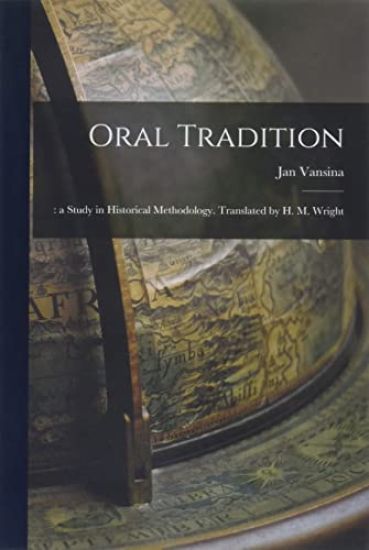
Oral Tradition

Oral Tradition

Jan Vansina

AldineTransaction
2006
nidottu
Oral traditions are historical sources of a special nature. Their special nature derives from the fact that they are "unwritten" sources couched in a form suitable for oral transmission, and that their preservation depends on the powers of memory of successive generations of human beings. In many parts of the world inhabited by peoples without writing, oral tradition forms the main available source for a reconstruction of the past. Do the special characteristics of oral traditions u "unwritten" information dependent on the memory of successive generations u invalidate them as sources of historical data? If not, are there means for testing their reliability? Professor Vansina shows in Oral Tradition that with knowledge of the language and of the society, the anthropologist and historian can extract or deduce the historical content of oral testimonies. Based on the author's many years of fieldwork in Africa, this definitive work explores the possibility of reconstructing the history of non-literate peoples from their oral traditions, surveys existing literature, offers a typology of oral traditions, and evaluates methods of collection and interpretation. On first publication, Daniel McCall in the American Anthropologist called Oral Tradition " a tour de force. Indeed this may well be the most significant work written on the relation of oral tradition to history in thirty yearsafor any field worker who intends to collect oral traditions, this work is indispensable."
BEING COLONIZED

BEING COLONIZED

Jan Vansina

University of Wisconsin Press
2010
nidottu
What was it like to be colonized by foreigners? Highlighting a region in central Congo, in the center of sub-Saharan Africa, Being Colonized places Africans at the heart of the story. In a richly textured history that will appeal to general readers and students as well as to scholars, the distinguished historian Jan Vansina offers not just accounts of colonial administrators, missionaries, and traders, but the varied voices of a colonized people. Vansina uncovers the history revealed in local news, customs, gossip, and even dreams, as related by African villagers through archival documents, material culture, and oral interviews. Vansina’s case study of the colonial experience is the realm of Kuba, a kingdom in Congo about the size of New Jersey—and two-thirds the size of its colonial master, Belgium. The experience of its inhabitants is the story of colonialism, from its earliest manifestations to its tumultuous end. What happened in Kuba happened to varying degrees throughout Africa and other colonized regions: racism, economic exploitation, indirect rule, Christian conversion, modernization, disease and healing, and transformations in gender relations. The Kuba, like others, took their own active part in history, responding to the changes and calamities that colonization set in motion. Vansina follows the region’s inhabitants from the late nineteenth century to the middle of the twentieth century, when a new elite emerged on the eve of Congo’s dramatic passage to independence.
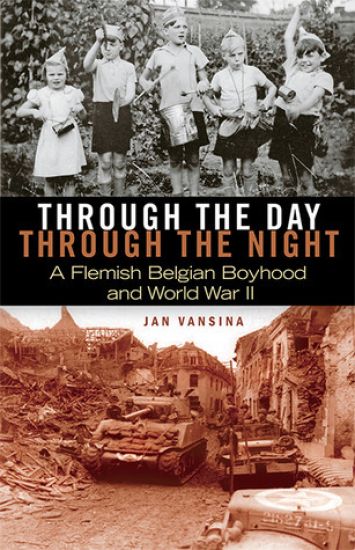
Through the Day, Through the Night

Through the Day, Through the Night

Jan Vansina

University of Wisconsin Press
2014
nidottu
One of twelve children in a close-knit, affluent Catholic Belgian family, Jan Vansina began life in a seemingly sheltered environment. But that cocoon was soon pierced by the escalating tensions and violence that gripped Europe in the 1930s and 1940s. In this book Vansina recalls his boyhood and youth in Antwerp, Bruges, and the Flemish countryside as the country was rocked by waves of economic depression, fascism, competing nationalisms, and the occupation of first Axis and then Allied forces.Within the vast literature on World War II, a much smaller body of work treats the everyday experiences of civilians, particularly in smaller countries drawn into the conflict. Recalling the war in Belgium from a child’s-eye perspective, Vansina describes pangs of hunger so great as to make him crave the bitter taste of cod-liver oil. He vividly remembers the shock of seeing severely wounded men on the grounds of a field hospital, the dangers of crossing fields and swimming in ponds strafed by planes, and his family’s interactions with occupying and escaping soldiers from both sides. After the war he recalls emerging numb from the cinema where he first saw the footage of the Nazi death camps, and he describes a new phase of unrest marked by looting, vigilante justice, and the country’s efforts at reunification.Vansina, a historian and anthropologist best known for his insights into oral tradition and social memory, draws on his own memories and those of his siblings to reconstruct daily life in Belgium during a tumultuous era.
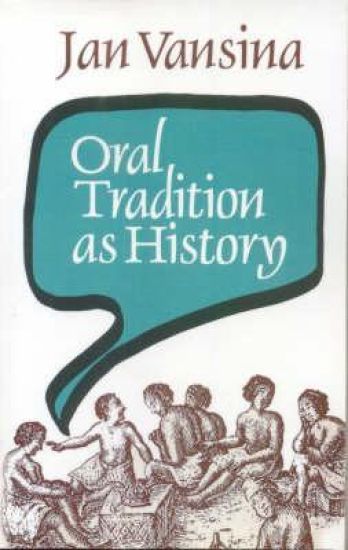
Oral Tradition as History

Oral Tradition as History

Jan Vansina

James Currey
1985
pokkari
Since the publication of Vansina's earlier book, oral traditions have now become widely accepted as a legitimate source of history. Although written by a leading historian of Africa, Vansina's work on oral traditions ranges far beyond Africa, so has a wider relevance. Vansina explains not only how oral traditions have been used in the past but also how they should be used by historians in their research. North America: University of Wisconsin Press; Kenya: EAEP
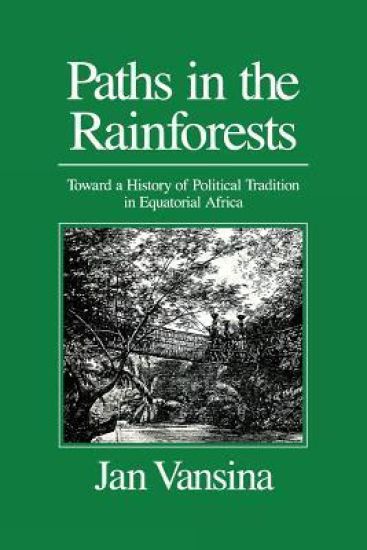
Paths in the Rainforests

Paths in the Rainforests

Jan Vansina

James Currey
1991
pokkari
A synthesis of more than 3000 years of equatorial African history. The rainforests of equatorial Africa cover an area almost as large as Western Europe and some 12 million people live there. So why has this area remained without a historiography? Vansina disputes the myth of an unchanging past ina hostile environment and demonstrates that there are rich and complex political, social and economic histories to be uncovered, as varied as the forest habitats themselves. North America: University of Wisconsin Press
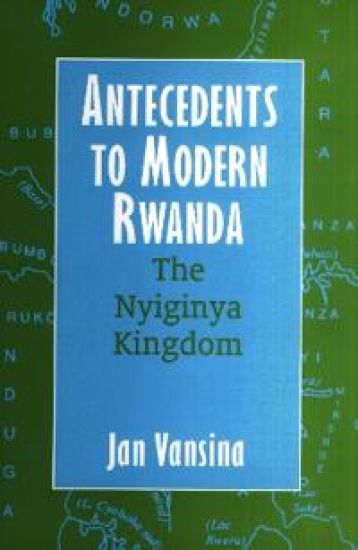
Antecedents to Modern Rwanda

Antecedents to Modern Rwanda

Jan Vansina

James Currey
2005
pokkari
Professor Vansina is the foremost authority on the history of Rwanda. The author of the classic Oral Tradition as History bases his account on hundreds of grass-roots narratives. It shows the historical roots of the Rwandan genocide of 1994 through an investigation of Rwanda's Nyiginya Dynasty of the 18th and 19th centuries. It demystifies Rwanda's precolonial past and colonial historiography. It describes the genesis of the Hutu and Tutsi identities, their growing social and political differences, their bitter feuds,revolts and massacres. North America: University of Wisconsin Press
Habitat, Economy and Society in the Central Africa Rain Forest
Over 50 years ago, the renowned anthropologist Daryll Forde strongly advocated comparative anthropological studies. Professor Vansina argues that 50 years later, Forde's criticisms still apply despite both Forde's considerable intellectual legacy and an exponential increase in available information. Using the example of Central African peoples, Professor Vansina challenges the current scholarship of sociologists and anthropologists, and makes a compelling case for broad, historical, comparative studies.
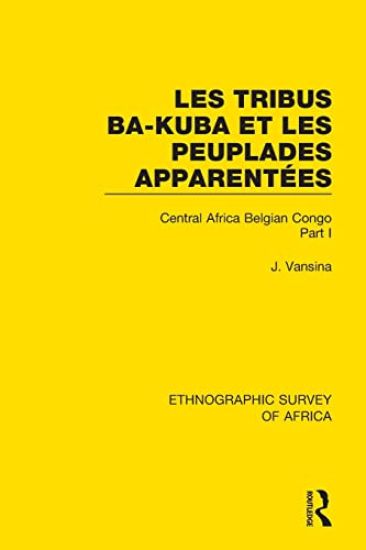
Les Tribus Ba-Kuba et les Peuplades Apparentées
Routledge is proud to be re-issuing this landmark series in association with the International African Institute. The series, published between 1950 and 1977, brings together a wealth of previously un-co-ordinated material on the ethnic groupings and social conditions of African peoples.Concise, critical and (for its time) accurate, the Ethnographic Survey contains sections as follows: Physical Environment Linguistic Data Demography History & Traditions of Origin Nomenclature Grouping Cultural Features: Religion, Witchcraft, Birth, Initiation, Burial Social & Political Organization: Kinship, Marriage, Inheritance, Slavery, Land Tenure, Warfare & Justice Economy & Trade Domestic ArchitectureEach of the 50 volumes will be available to buy individually, and these are organized into regional sub-groups: East Central Africa, North-Eastern Africa, Southern Africa, West Central Africa, Western Africa, and Central Africa Belgian Congo. The volumes are supplemented with maps, available to view on routledge.com or available as a pdf from the publishers.
Les Tribus Ba-Kuba et les Peuplades Apparentées
Routledge is proud to be re-issuing this landmark series in association with the International African Institute. The series, published between 1950 and 1977, brings together a wealth of previously un-co-ordinated material on the ethnic groupings and social conditions of African peoples.Concise, critical and (for its time) accurate, the Ethnographic Survey contains sections as follows: Physical Environment Linguistic Data Demography History & Traditions of Origin Nomenclature Grouping Cultural Features: Religion, Witchcraft, Birth, Initiation, Burial Social & Political Organization: Kinship, Marriage, Inheritance, Slavery, Land Tenure, Warfare & Justice Economy & Trade Domestic ArchitectureEach of the 50 volumes will be available to buy individually, and these are organized into regional sub-groups: East Central Africa, North-Eastern Africa, Southern Africa, West Central Africa, Western Africa, and Central Africa Belgian Congo. The volumes are supplemented with maps, available to view on routledge.com or available as a pdf from the publishers.
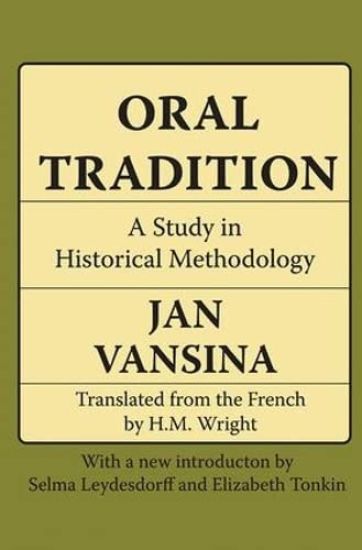
Oral Tradition

Oral Tradition

Jan Vansina

Routledge
2017
sidottu
Oral traditions are historical sources of a special nature. Their special nature derives from the fact that they are "unwritten" sources couched in a form suitable for oral transmission, and that their preservation depends on the powers of memory of successive generations of human beings. In many parts of the world inhabited by peoples without writing, oral tradition forms the main available source for a reconstruction of the past. Do the special characteristics of oral traditions u "unwritten" information dependent on the memory of successive generations u invalidate them as sources of historical data? If not, are there means for testing their reliability? Professor Vansina shows in Oral Tradition that with knowledge of the language and of the society, the anthropologist and historian can extract or deduce the historical content of oral testimonies. Based on the author's many years of fieldwork in Africa, this definitive work explores the possibility of reconstructing the history of non-literate peoples from their oral traditions, surveys existing literature, offers a typology of oral traditions, and evaluates methods of collection and interpretation. On first publication, Daniel McCall in the American Anthropologist called Oral Tradition " a tour de force. Indeed this may well be the most significant work written on the relation of oral tradition to history in thirty yearsafor any field worker who intends to collect oral traditions, this work is indispensable."
The Tio Kingdom of The Middle Congo
Originally published in 1973, this book reconstructs the political and economic organization and the social life of the Tio kingdom at the end of the 19th century by means of a critical synthesis of documentary and ethnographic data. Based on a detailed study of rich docuemntary sources and fieldwork, it analyses the persistent features of Tio social organization and political relations as well as the extensive economic changes associated with the development and later decline of caravan trading at Stanley Pool. It is fully illustrated with maps, tables and diagrams. This book shows the importance for both anthropoligical theory and historical interpreation of obtaining comprehensive data on the state of a particular society at a given time.
The Tio Kingdom of The Middle Congo
Originally published in 1973, this book reconstructs the political and economic organization and the social life of the Tio kingdom at the end of the 19th century by means of a critical synthesis of documentary and ethnographic data. Based on a detailed study of rich docuemntary sources and fieldwork, it analyses the persistent features of Tio social organization and political relations as well as the extensive economic changes associated with the development and later decline of caravan trading at Stanley Pool. It is fully illustrated with maps, tables and diagrams. This book shows the importance for both anthropoligical theory and historical interpreation of obtaining comprehensive data on the state of a particular society at a given time.