Kirjojen hintavertailu. Mukana 11 342 296 kirjaa ja 12 kauppaa.

Kirjahaku

Etsi kirjoja tekijän nimen, kirjan nimen tai ISBN:n perusteella.

8 kirjaa tekijältä Jan W. Gooch

Lead-Based Paint Handbook

Lead-Based Paint Handbook

Jan W. Gooch

Kluwer Academic/Plenum Publishers
1993
sidottu
Lead-based paint has become a national issue and will continue to be a hi- priority focus ofnational, state, and local agencies until there is no lead-based paint in the United States. Lead-based paint has become a tremendous health hazard for people and animals. Lead-based paint has been in widespread use throughout Europe and the United States. Lead has been known to be a health hazard since the time ofPliny the Elder (A. D. 23–79), but it was deemed that the advantages of lead in paint outweighed the health hazards. There has been a change in outlook, and in 1973 the U. S. Congress banned all lead paint from residential structures. A voluminous number of law suits have been initiated since, and continue to be litigated with the purpose of determining the parties responsible for the lead poisoning of children and others and to exact the indemnities. Lead-based paint is still authorized for use on bridges and nonresidential structures, and thousands of city, state, military, and federal government housing projects still contain lead-based paint. This paint must be removed if these dwellings are to be safe living quarters, especially for children. Aba- ment techniques continue to be evaluated; some have been used successfully. Lead-based paint abatement will continue into the next century, and it is hoped that this comprehensive volume will serve as a guide for those seriously interested in this important subject.
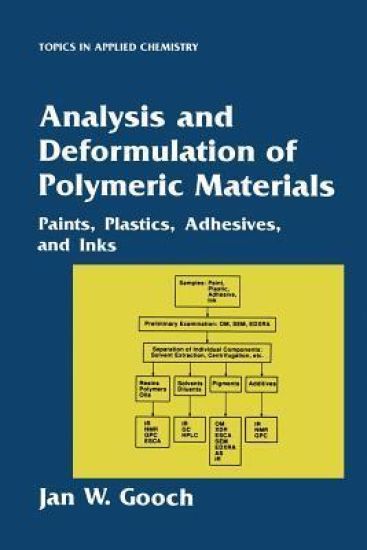
Analysis and Deformulation of Polymeric Materials

Analysis and Deformulation of Polymeric Materials

Jan W. Gooch

Kluwer Academic/Plenum Publishers
1997
sidottu
This book is designed for the chemist, formulator, student, teacher, forensic scientist, or others who wish to investigate the composition of polymeric materials. Theinformationwithinthesepagesisintendedtoarmthereaderwiththenecessary workingknowledgetoanalyze,characterize, anddeformulatematerials. ThestructureoftheContentsisintendedtoassistthereaderinquicklylocating the subject of interest and proceed to it with a minimum of expended time and effort. The Contents provides an outline of major topics and relevant materials char- terizedforthereader'sconvenience. Anintroductiontoanalysisanddeformulation is provided in Chapter 1 to acquaint the reader with analytical methods and their applications. Extensive references are provided as additional sources ofinfor- tion. All tables arelocatedin theAppendix, beginning onp. 235. GUIDE FOR USE This is a practical book structured to efficiently use the reader's time with a minimum effort of searching for entries and information by following these brief instructions: 1. Searchthe Contents and/orIndex fora subject withinthe text. 2. Analysis/deformulation principles are discussed at the outset to familiarize the reader with analysis methods and instruments; followed by formu- tions, materials, and analysis ofpaint, plastics, adhesives, and inks; and finally reformulation methods to test the results of analysis. 3. Materials and a wide assortment of formulations are discussed within the text by chapter/section number. 4. Materials are referred toby various names (trivial, trade, and scientific), and these are listed in tables and cross-referenced to aid the reader.
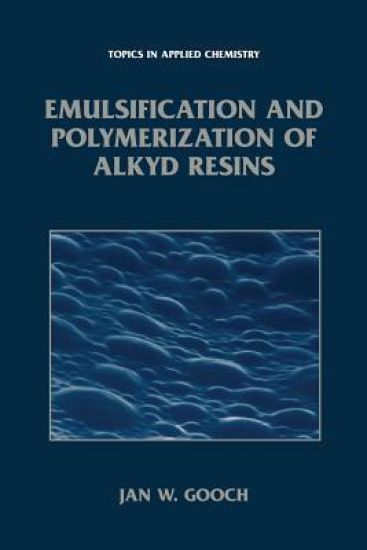
Emulsification and Polymerization of Alkyd Resins

Emulsification and Polymerization of Alkyd Resins

Jan W. Gooch

Kluwer Academic/Plenum Publishers
2002
sidottu
Emulsification of vegetable oil-based resins was a daunting task when the author began his research, but the subsequent technology spawned a generation of stable emulsions for waterborne coatings based on vegetable oil-based alkyd resins, oils and fatty acids. Autoxidative polymerization of emulsified alkyd resins is an innovative and original contribution to emulsion technology, because conventional emulsion-polymerization is not applicable to alkyd resins. Emulsified alkyd particles are polymerized while dispersed in stable aqueous media—an original and patented innovation. Smooth and fa- drying alkyd coatings are generated from non-polymerized emulsions and air-dried with conventional metal driers, and have met with marketing success. The pre-polymerization innovation for emulsified alkyd particles provides very fast air-drying coatings that have potential markets for interior architectural latex coatings and waterborne pressure-sensitive adhesives and inks. The author demonstrates his knowledge of chemical reaction kinetics by employing a combination of oxygen concentration, internal reactor pressure and other reactor variables to finely control the rate and degree of autoxidative polymerization. He meticulously calculates surfactant chemistry by measuring hydrophile-lipophile balance values, and solubility parameters to emulsify characterized resins. The relationship between hydrophi- lipophile values and solubility parameters is shown in explicit equations. Homogenization equipment used during the course of this research to generate emulsions is shown in detailed drawings together with concise particle size and distribution data. The author reports research spawned internationally by his research in the fields of alkyd-acrylic hybrids, polyester and oil-modifiedurethane resins.
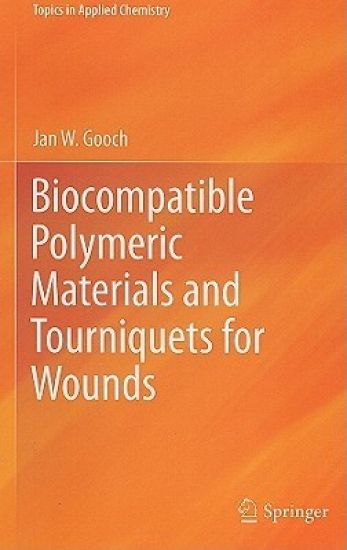
Biocompatible Polymeric Materials and Tourniquets for Wounds

Biocompatible Polymeric Materials and Tourniquets for Wounds

Jan W. Gooch

Springer-Verlag New York Inc.
2010
sidottu
In recent years biocompatible polymers for injuries and wounds have seen advances and innovations that have outpaced the growing field's literature. In this book Dr. Jan W. Gooch, a National Research Council Research Associateship Award recipient, reveals how innovative polymer technology can be applied to the common combat and trauma wounds associated with damaged soft tissue and bleeding. The scope of his investigation spans four distinct devices for wounds, liquid and particulate barrier dressings for soft tissue wounds, sutureless tissue adhesives, antibacterial nanoemulsions, one-hand operated and automatic tourniquets for the battlefield.
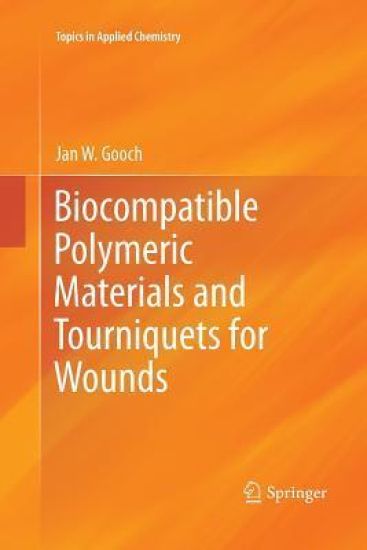
Biocompatible Polymeric Materials and Tourniquets for Wounds

Biocompatible Polymeric Materials and Tourniquets for Wounds

Jan W. Gooch

Springer-Verlag New York Inc.
2012
nidottu
In recent years biocompatible polymers for injuries and wounds have seen advances and innovations that have outpaced the growing field's literature. In this book Dr. Jan W. Gooch, a National Research Council Research Associateship Award recipient, reveals how innovative polymer technology can be applied to the common combat and trauma wounds associated with damaged soft tissue and bleeding. The scope of his investigation spans four distinct devices for wounds, liquid and particulate barrier dressings for soft tissue wounds, sutureless tissue adhesives, antibacterial nanoemulsions, one-hand operated and automatic tourniquets for the battlefield.
Analysis and Deformulation of Polymeric Materials

Analysis and Deformulation of Polymeric Materials

Jan W. Gooch

Springer-Verlag New York Inc.
2013
nidottu
This book is designed for the chemist, formulator, student, teacher, forensic scientist, or others who wish to investigate the composition of polymeric materials. Theinformationwithinthesepagesisintendedtoarmthereaderwiththenecessary workingknowledgetoanalyze,characterize, anddeformulatematerials. ThestructureoftheContentsisintendedtoassistthereaderinquicklylocating the subject of interest and proceed to it with a minimum of expended time and effort. The Contents provides an outline of major topics and relevant materials char- terizedforthereader'sconvenience. Anintroductiontoanalysisanddeformulation is provided in Chapter 1 to acquaint the reader with analytical methods and their applications. Extensive references are provided as additional sources ofinfor- tion. All tables arelocatedin theAppendix, beginning onp. 235. GUIDE FOR USE This is a practical book structured to efficiently use the reader's time with a minimum effort of searching for entries and information by following these brief instructions: 1. Searchthe Contents and/orIndex fora subject withinthe text. 2. Analysis/deformulation principles are discussed at the outset to familiarize the reader with analysis methods and instruments; followed by formu- tions, materials, and analysis ofpaint, plastics, adhesives, and inks; and finally reformulation methods to test the results of analysis. 3. Materials and a wide assortment of formulations are discussed within the text by chapter/section number. 4. Materials are referred toby various names (trivial, trade, and scientific), and these are listed in tables and cross-referenced to aid the reader.
Lead-Based Paint Handbook

Lead-Based Paint Handbook

Jan W. Gooch

Springer-Verlag New York Inc.
2013
nidottu
Lead-based paint has become a national issue and will continue to be a hi- priority focus ofnational, state, and local agencies until there is no lead-based paint in the United States. Lead-based paint has become a tremendous health hazard for people and animals. Lead-based paint has been in widespread use throughout Europe and the United States. Lead has been known to be a health hazard since the time ofPliny the Elder (A. D. 23–79), but it was deemed that the advantages of lead in paint outweighed the health hazards. There has been a change in outlook, and in 1973 the U. S. Congress banned all lead paint from residential structures. A voluminous number of law suits have been initiated since, and continue to be litigated with the purpose of determining the parties responsible for the lead poisoning of children and others and to exact the indemnities. Lead-based paint is still authorized for use on bridges and nonresidential structures, and thousands of city, state, military, and federal government housing projects still contain lead-based paint. This paint must be removed if these dwellings are to be safe living quarters, especially for children. Aba- ment techniques continue to be evaluated; some have been used successfully. Lead-based paint abatement will continue into the next century, and it is hoped that this comprehensive volume will serve as a guide for those seriously interested in this important subject.
Emulsification and Polymerization of Alkyd Resins

Emulsification and Polymerization of Alkyd Resins

Jan W. Gooch

Springer-Verlag New York Inc.
2013
nidottu
Emulsification of vegetable oil-based resins was a daunting task when the author began his research, but the subsequent technology spawned a generation of stable emulsions for waterborne coatings based on vegetable oil-based alkyd resins, oils and fatty acids. Autoxidative polymerization of emulsified alkyd resins is an innovative and original contribution to emulsion technology, because conventional emulsion-polymerization is not applicable to alkyd resins. Emulsified alkyd particles are polymerized while dispersed in stable aqueous media—an original and patented innovation. Smooth and fa- drying alkyd coatings are generated from non-polymerized emulsions and air-dried with conventional metal driers, and have met with marketing success. The pre-polymerization innovation for emulsified alkyd particles provides very fast air-drying coatings that have potential markets for interior architectural latex coatings and waterborne pressure-sensitive adhesives and inks. The author demonstrates his knowledge of chemical reaction kinetics by employing a combination of oxygen concentration, internal reactor pressure and other reactor variables to finely control the rate and degree of autoxidative polymerization. He meticulously calculates surfactant chemistry by measuring hydrophile-lipophile balance values, and solubility parameters to emulsify characterized resins. The relationship between hydrophi- lipophile values and solubility parameters is shown in explicit equations. Homogenization equipment used during the course of this research to generate emulsions is shown in detailed drawings together with concise particle size and distribution data. The author reports research spawned internationally by his research in the fields of alkyd-acrylic hybrids, polyester and oil-modifiedurethane resins.