Kirjojen hintavertailu. Mukana 12 016 292 kirjaa ja 12 kauppaa.

Kirjahaku

Etsi kirjoja tekijän nimen, kirjan nimen tai ISBN:n perusteella.

19 kirjaa tekijältä Jan-Werner Müller

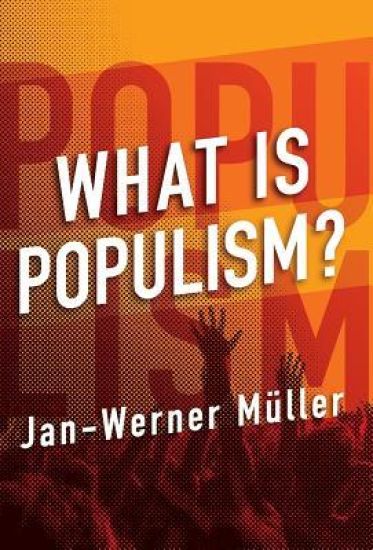
What Is Populism?

What Is Populism?

Jan-Werner Müller

Penguin Books Ltd
2017
pokkari
'This lucid guide is essential reading' GuardianFrom Donald Trump to Recep Erdogan, populists are on the rise across the globe. But what exactly is populism? Should everyone who criticizes Wall Street or Washington be called a populist? What precisely is the difference between right-wing and left-wing populism? Does populism bring government closer to the people or is it a threat to democracy? Who are "the people" anyway and who can speak in their name? These questions have never been more pressing.In this provocative book, Jan-Werner Müller argues that at populism's core is a rejection of pluralism. Populists will always claim that they and they alone represent the people and their true interests. Contrary to conventional wisdom, populists can govern on the basis of their claim to exclusive moral representation of the people: if populists have enough power, they will end up creating an authoritarian state that excludes all those not considered part of the proper "people". Proposing a number of concrete strategies for how liberal democrats should best deal with populists, Müller shows how to counter their claims to speak exclusively for "the silent majority".*Updated with a new afterword*
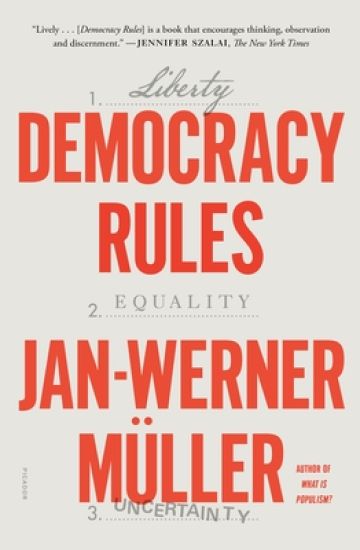
Democracy Rules

Democracy Rules

Jan-Werner Müller

PENGUIN BOOKS LTD
2022
pokkari
'Lively. . . This is one of those rare books about a pressing subject that reads less like a forced march than an inviting stroll . . . A book that encourages thinking, observation and discernment' New York TimesOne of our most essential political thinkers offers a vital account of democracy in the twenty-first centuryEveryone knows that democracy is in trouble, but do we know what democracy actually is? Political philosopher Jan-Werner Müller, author of the widely acclaimed What Is Populism?, takes us back to basics. In this short, elegant volume, he explains how democracy is founded on three vital principles: liberty, equality, and also uncertainty. The latter, he argues, is crucial for ensuring democracy's dynamic and creative character. Authoritarians, as well as Big Tech, seek to render politics (and individual citizens) predictable; democracy holds open the possibility that new ideas, movements and identities can be created.Acknowledging fully the dangers posed by populism, by kleptocratic autocracies like Russia's and by the digital authoritarianism of Xi, Müller also challenges the assumptions made by many liberals defending democracy in recent years. He shows how the secession of plutocratic elites in the West has undermined much of democracy's promise. In response, we need to re-invigorate our institutions, especially political parties and professional media, but also make it easier for citizens to mobilize. Taking on many of the most difficult political questions we face, this book is a vital rethinking of what democracy is, and how we can reinvent our social contract.
Street, Palace, Square

Street, Palace, Square

Jan-Werner Müller

PENGUIN BOOKS LTD
2026
sidottu
Building requires power and resources – then, once created, our environment structures how we relate to each other. But what would a distinctly democratic built environment look like? Should we prioritize an inclusive process by which as many citizens as possible can decide how a building is designed? Or is it about how architecture and urban spaces can best represent democracy to citizens – and how building and city planning can concretely facilitate democratic action by citizens? In Street, Palace, Square, political theorist Jan-Werner Müller offers an elegant new account of architecture and democracy that draws on examples from Washington DC to Dhaka, Cairo to Berlin. Ranging widely across political philosophy, history and design, he shows that bringing architecture and democracy together has an unexpected benefit. As we reflect on spaces and symbols on the one hand and our understandings of democracy on the other, we might see possibilities we did not see before: how to create spaces for citizens to make politics their own.
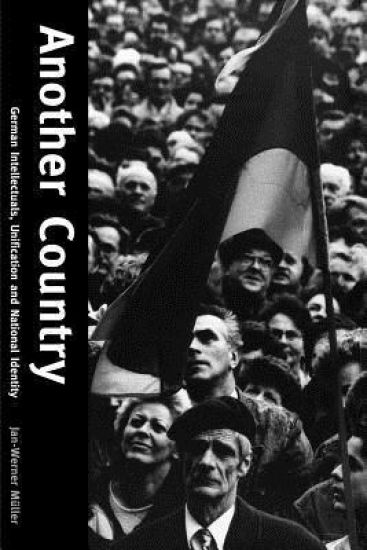
Another Country

Another Country

Jan-Werner Müller

Yale University Press
2012
pokkari
How did German intellectuals react to unification and how have they conceived the country’s national identity and its new international position? This important book not only examines changing notions of nationhood and their complicated relationship to the Nazi past but also charts the wider history of the development of German political thought since World War II—while critically reflecting on some of the continuing blind spots among German writers and thinkers.Jan-Werner Müller explains why many intellectuals reacted so defensively to unification and why unification plunged the Left in particular into a major crisis that is yet to be overcome. He analyzes the responses of Günter Grass, Jürgen Habermas, and others of the so-called skeptical generation, who broke with the tradition of the illiberal interwar intellectuals and reinvented themselves as a “democratic elite” who sought to transform political culture after the war—and tried to do so again after 1989. He discusses the German idea of “constitutional patriotism” as well as the antinationalism of the “generation of 1968,” and provides the first full-scale analysis of Germany’s “New Right.” Written clearly and elegantly, the book assesses the acrimonious debates about the future of the nation-state and public memory in Germany and offers more general reflections on the role intellectuals can play in post-totalitarian societies.
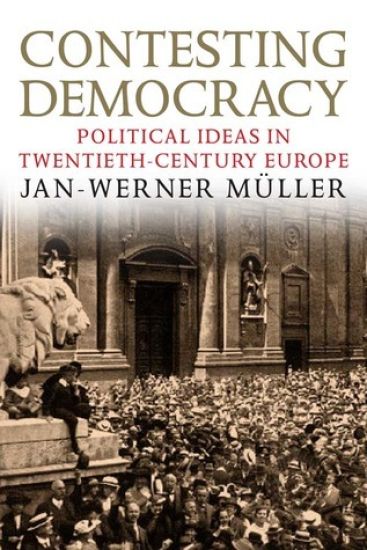
Contesting Democracy

Contesting Democracy

Jan-Werner Müller

Yale University Press
2013
pokkari
In this brilliant guide to modern European political ideas and thinkers spans the twentieth century, the author illuminates both the twentieth-century's ideological extremes and how Europeans built lasting liberal democracies in the second half of the century. This book is the first major account of political thought in twentieth-century Europe, both West and East, to appear since the end of the Cold War. Skillfully blending intellectual, political, and cultural history, Jan-Werner Müller elucidates the ideas that shaped the period of ideological extremes before 1945 and the liberalization of West European politics after the Second World War. He also offers vivid portraits of famous as well as unjustly forgotten political thinkers and the movements and institutions they inspired.Müller pays particular attention to ideas advanced to justify fascism and how they relate to the special kind of liberal democracy that was created in postwar Western Europe. He also explains the impact of the 1960s and neoliberalism, ending with a critical assessment of today's self-consciously post-ideological age.
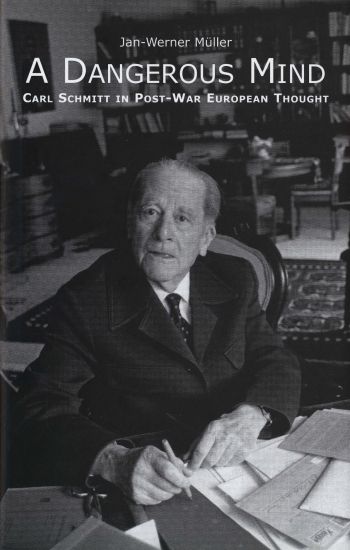
A Dangerous Mind

A Dangerous Mind

Jan-Werner Müller

Yale University Press
2013
pokkari
Carl Schmitt (1888-1985) was one of the twentieth century’s most brilliant and disturbing critics of liberalism. He was also one of the most important intellectuals to offer his services to the Nazis, for which he was dubbed the “crown jurist of the Third Reich.” Despite this fateful alliance Schmitt has exercised a profound influence on post-war European political and legal thought—on both the Right and the Left. In this illuminating book, Jan-Werner Müller traces for the first time the permutations of Schmitt’s ideas after the Second World War and relates them to broader political developments in Europe.Offering a fresh account of Schmitt’s life and career along with discussions of his key concepts, Müller explains why interest in the political theorist continues. He assesses the current uses of Schmitt’s thought in debates on globalization and the quest for a liberal world order. He also offers new insights into the liberalization of political thinking in post-authoritarian societies and the persistent vulnerabilities and blind spots of certain strands of Western liberalism.
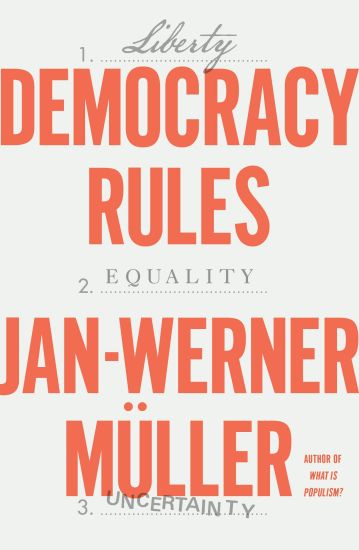
Democracy Rules

Democracy Rules

Jan-Werner Müller

Farrar, Straus and Giroux
2021
sidottu
A much-anticipated guide to saving democracy, from one of our most essential political thinkers. Everyone knows that democracy is in trouble, but do we know what democracy actually is? Jan-Werner M ller, author of the widely translated and acclaimed What Is Populism?, takes us back to basics in Democracy Rules. In this short, elegant volume, he explains how democracy is founded not just on liberty and equality, but also on uncertainty. The latter will sound unattractive at a time when the pandemic has created unbearable uncertainty for so many. But it is crucial for ensuring democracy's dynamic and creative character, which remains one of its signal advantages over authoritarian alternatives that seek to render politics (and individual citizens) completely predictable. M ller shows that we need to re-invigorate the intermediary institutions that have been deemed essential for democracy's success ever since the nineteenth century: political parties and free media. Contrary to conventional wisdom, these are not spent forces in a supposed age of post-party populist leadership and post-truth. M ller suggests concretely how democracy's critical infrastructure of intermediary institutions could be renovated, re-empowering citizens while also preserving a place for professionals such as journalists and judges. These institutions are also indispensable for negotiating a democratic social contract that reverses the secession of plutocrats and the poorest from a common political world.
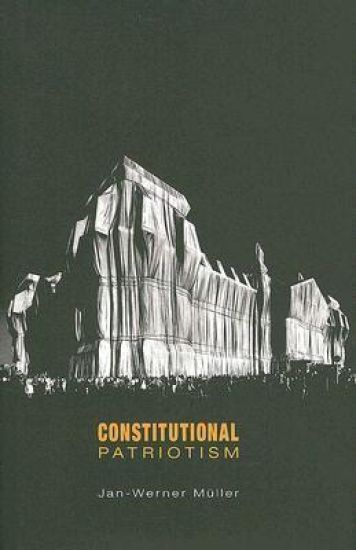
Constitutional Patriotism

Constitutional Patriotism

Jan-Werner Müller

Princeton University Press
2007
sidottu
Constitutional Patriotism offers a new theory of citizenship and civic allegiance for today's culturally diverse liberal democracies. Rejecting conventional accounts of liberal nationalism and cosmopolitanism, Jan-Werner Muller argues for a form of political belonging centered on universalist norms, adapted for specific constitutional cultures. At the same time, he presents a novel approach to thinking about political belonging and the preconditions of democratic legitimacy beyond the nation-state. The book takes the development of the European Union as a case study, but its lessons apply also to the United States and other parts of the world. Muller's essay starts with an engaging historical account of the origins and spread of the concept of constitutional patriotism-the idea that political attachment ought to center on the norms and values of a liberal democratic constitution rather than a national culture or the "global human community." In a more analytical part, he then proposes a critical conception of citizenship that makes room for dissent and civil disobedience while taking seriously a polity's need for stability over time. Muller's theory of constitutional patriotism responds to the challenges of the de facto multiculturalism of today's states--with a number of concrete policy implications about immigration and the preconditions for citizenship clearly spelled out. And it asks what civic empowerment could mean in a globalizing world.
What Is Populism?

What Is Populism?

Jan-Werner Müller

University of Pennsylvania Press
2016
sidottu
Donald Trump, Silvio Berlusconi, Marine Le Pen, Hugo ChÁvez-populists are on the rise across the globe. But what exactly is populism? Should everyone who criticizes Wall Street or Washington be called a populist? What precisely is the difference between right-wing and left-wing populism? Does populism bring government closer to the people or is it a threat to democracy? Who are "the people" anyway and who can speak in their name? These questions have never been more pressing. In this groundbreaking volume, Jan-Werner MÜller argues that at populism's core is a rejection of pluralism. Populists will always claim that they and they alone represent the people and their true interests. MÜller also shows that, contrary to conventional wisdom, populists can govern on the basis of their claim to exclusive moral representation of the people: if populists have enough power, they will end up creating an authoritarian state that excludes all those not considered part of the proper "people." The book proposes a number of concrete strategies for how liberal democrats should best deal with populists and, in particular, how to counter their claims to speak exclusively for "the silent majority" or "the real people." Analytical, accessible, and provocative, What Is Populism? is grounded in history and draws on examples from Latin America, Europe, and the United States to define the characteristics of populism and the deeper causes of its electoral successes in our time.
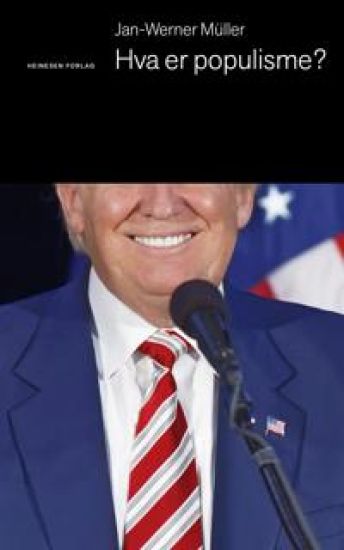
Hva er populisme?

Hva er populisme?

Jan-Werner Müller

Heinesen Forlag
2016
sidottu
Vi kaller folk fra høyre og venstre for populister i fleng - brexit-fortalere, innvandrerskeptiske politikere som krever grensene stengt, og alle dem som hevder å tale folkets sak - eller som mener de snakker på vegne av folk flest. Men hva er populisme? Hvem er populist? Jan-Werner Müller leverer med sin lille, skarpe bok en glimrende forklaring på populismens fremgang - fra Trump i USA over Marine Le Pen i Frankrike til Viktor Orbán i Ungarn. Populisme kan nemlig ikke bare bortforklares som tapernes protest, demagogenes spill på befolkningens fremtidsangst eller velgernes idioti. Populisme, argumenterer Müller, er først og fremst kjennetegnet ved forestillingen om folket som en entydig moralsk størrelse, og dernest ved at alle andres holdninger avvises som ufolkelige. Det sistnevnte gjør populismen anti-demokratisk.
Kampen om demokratiet

Kampen om demokratiet

Jan-Werner Müller

Informations Forlag
2018
sidottu
Europas nyere intellektuelle historie fortalt af en af Europas førende intellektuelle.Jan-Werner Müller blander både intellektuel, politisk og kulturel historie og kaster lys over de ideer, der formede perioden kendetegnet af ideologiske ekstremer før 1945. En periode som vi i lyset af nutidens samfundsudvikling i den grad kan lære af. Hvilke personer, kulturelle strømninger, ideologiske nybrud og generelle samfundstanker prægede Europa op til, under og efter de to store krige, som rystede Europa, og som vi indtil for nylig aldrig troede, vi skulle frygte igen?ANMELDELSER"Jan Werner Müller tegner et fabelagtigt panorama over de intellektuelle og magtgriske kræfter, der formede den styreform, der i dag hævder sig som den mest retfærdige." ?????? – Politiken"Den hidtil bedste bog om moderne europæisk politisk idehistorie er udkommet på dansk. " ?– Dagbladet Information"En interessant og oplysende gennemgang af demokratiets udfordringer og kriser i det 20. århundrede" – Per Stig Møller, Flensborg Avis"En beundringsværdig, grundig og vidtfavnende bog" - Jürgen Habermas"Et imponerende overblik over det 20. århundredes europæiske politiske tænkning" - Financial Times"Der er ikke et eneste kapitel af det 20. århundredes europæiske politiske tænkning, der ikke er oplysende analyseret i denne overlegent skrevne, klart argumenterede og usigeligt engagerende bog." - International AffairsOM FORFATTERENTysk idehistoriker og professor i politisk teori på Princeton University. Han er en af Europas førende intellektuelle og forfatter til en lang række politiske og idéhistoriske bøger, senest Hvad er populisme? (2016).
Demokratiet styrer

Demokratiet styrer

Jan-Werner Müller

Informations Forlag
2021
nidottu
Demokratiet er udfordret, men det er hverken forældet eller umuligt. I Demokratiet styrer vender Jan-Werner Müller tilbage til demokratiets grundprincipper for at vise nye veje frem. Foruden at basere sig på frihed og lighed har demokratiet også uvished som grundsøjle. Uvisheden skaber dynamik og forandring. Og netop uvished adskiller demokrati fra autoritære alternativer, der er fastlåste og forudsigelige i politik og menneskesyn. Demokratiet styrer er en vital gentænkning af, hvad demokrati er, og hvordan vi kan genopfinde den sociale kontrakt. Jan-Werner Müller (f. 1970) er tysk idéhistoriker og professor i politisk teori på Princeton University. Han er en af Europas førende intellektuelle og forfatter til en lang række politiske og idéhistoriske bøger, senest Hvad er populisme? (2016) og Kampen om demokratiet (2018). ”En af de sjældne bøger om et vigtigt emne, som ikke læses som en langstrakt march, men i ét inviterende stræk.” - The New York Times ”Et fremragende værk om demokratisk teori” - Ivan Krastev ???? "Solide og træfsikre råd til, hvordan vi gør verden lidt bedre" - Politiken "Jan-Werner Müllers nye bog om demokrati er et godt sted at begynde, hvis man vil undgå den perspektivløse opgivelse og håbløshed." - Uffe Østergaard, Information
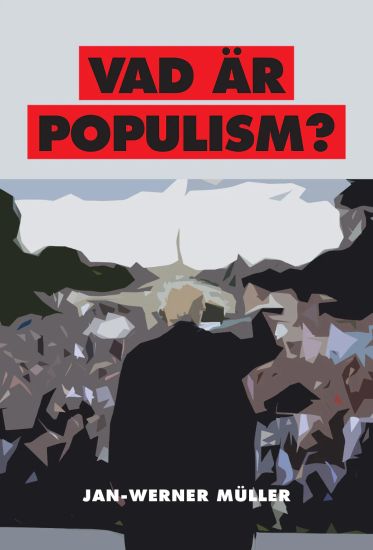
Vad är populism? : en essä

Vad är populism? : en essä

Jan-Werner Müller

Bokförlaget Daidalos
2019
nidottu
"Bertolt Brecht formulerade följande sats: "All makt kommer från folket. Men vart tar den vägen?" Jan-Werner Müller, en av vår tids främsta statsvetare, har använt en stor del av sin forskning till att söka ge svar på frågan." /Olle Svenning i Aftonbladet "Det är en akademisk bok, men med en angelägenhet för debatten som få. Det Müller beskriver är alldeles nödvändigt att förstå för att vi ska kunna förhålla oss till det på ett konstruktivt sätt, för populismen, inte minst den högerpopulism som är den som har störst genomslag just nu, kan i förlängningen verkligen hota våra demokratiska samhällsskick." /Torbjörn Elensky i SvD Populister överallt, till höger och till vänster, i Europa, i USA och i Latinamerika. Så ter sig det politiska landskapet i dag. Populismen drar fram som ett spöke. Men vem är egentlig populist? Alla som vänder sig mot etablissemanget, mot eliterna? Vad är skillnaden mellan vänster- och högerpopulism? Vad är "folket" - och vem kan tala i dess namn? I denna högaktuella essä skisserar Jan-Werner Müller en teori om populismen som en otvivelaktigt antidemokratisk företeelse. Populisternas slagord är: "Vi är folket!" Vad de menar är: "Vi - och bara vi - representerar folket". Därmed stämplas alla som tänker annorlunda, oavsett om det är motdemonstranter på gatan eller riksdagsledamöter, som illegitima, oavsett med hur många procent av rösterna en officiell representant har valts in i parlamentet. Alla populister är emot "the establishment" - men alla som kritiserar eliter är inte populister. Populister är alltid antipluralistiska; den som motsätter sig dem och bestrider deras anspråk på att representera det "äkta folket" hör automatiskt inte till detta folk. Och när populister får tillräcklig makt skapar de auktoritära stater som utesluter alla som inte hör dit. Mot bakgrund av sin analys av populismen föreslår Müller olika konkreta strategier för att bemöta populisters anspråk på att tala "den tysta majoritetens" sak och därmed skydda liberala demokratier mot det populistiska hotet. Müller kombinerar politisk teori och historia i sin skarpa analys. Med exempel från Europa, USA och Latinamerika spårar han orsakerna till populismens framgång i våra dagar. Jan-Werner Müller är professor i statsvetenskap vid Princeton University. Han är författare till bland annat "Demokratins tidsålder. Politiska idéer i 1900-talets Europa".
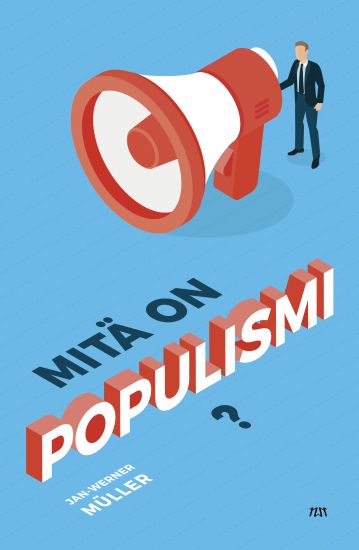
Mitä on populismi?

Mitä on populismi?

Jan-Werner Müller

Eurooppalaisen filosofian seura
2017
nidottu
Populistit sanovat päästävänsä kansan äänen kuuluville. Unkarin, Puolan, Turkin ja Latinalaisen Amerikan esimerkit kuitenkin osoittavat, ettei populistien menestys ole suinkaan korjannut demokratiavajetta vaan johtanut kansan nimissä harjoitettuun autoritaarisuuteen. Viestimien valjastaminen ja kansalaisyhteiskunnan kurittaminen perustellaan sillä, että kaikki tapahtuu kansan tahdosta. Mitä on populismi? osoittaa, ettei populistien kansa koskaan ole todellinen kansa vaan silkka retorinen rakennelma.Saksalainen Jan-Werner Müller (s. 1970) toimii politiikantutkimuksen professorina Princetonin yliopistossa. Hän on julkaissut useita teoksia ja artikkeleita populismista, Saksan lähihistorian politiikasta ja liberaalin demokratian nykytilasta.
Pelko ja vapaus

Pelko ja vapaus

Jan-Werner Müller

Eurooppalaisen filosofian seura
2021
nidottu
Saksalaisen politiikantutkijan analyysi siitä, miksi liberalismista on tullut yleinen kritiikin kohde ja miten liberalismista voitaisiin vielä tehdä vaikuttava ajatussuuntaus.
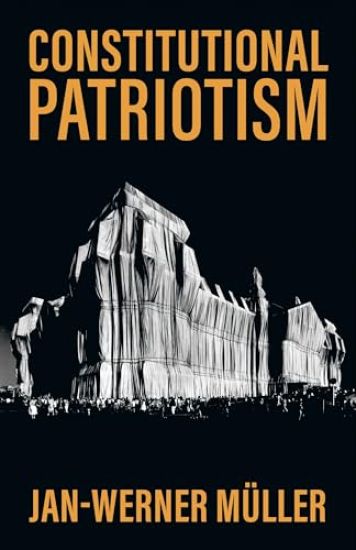
Constitutional Patriotism

Constitutional Patriotism

Jan-Werner Müller

PRINCETON UNIVERSITY PRESS
2026
pokkari
A powerful rethinking of citizenship and democratic belonging for a global age Constitutional Patriotism offers a bold theory of citizenship and civic allegiance for today’s culturally diverse liberal democracies. Rejecting conventional accounts of liberal nationalism and cosmopolitanism, Jan-Werner Müller argues for a form of political belonging centered on universalist norms, adapted for specific constitutional cultures. At the same time, he presents a novel approach to thinking about political belonging and the preconditions of democratic legitimacy beyond the nation-state. The book takes the development of the European Union as a case study, but its lessons apply also to the United States and other parts of the world. Müller’s essay starts with an engaging historical account of the origins and spread of the concept of constitutional patriotism-the idea that political attachment ought to center on the norms and values of a liberal democratic constitution rather than a national culture or the “global human community.” In a more analytical part, he then proposes a critical conception of citizenship that makes room for dissent and civil disobedience while taking seriously a polity’s need for stability over time. Müller’s theory of constitutional patriotism responds to the challenges of the de facto multiculturalism of today’s states—with a number of concrete policy implications about immigration and the preconditions for citizenship clearly spelled out. And it asks what civic empowerment could mean in a globalizing world.