Kirjojen hintavertailu. Mukana 11 244 527 kirjaa ja 12 kauppaa.

Kirjahaku

Etsi kirjoja tekijän nimen, kirjan nimen tai ISBN:n perusteella.

5 kirjaa tekijältä Jane Carroll

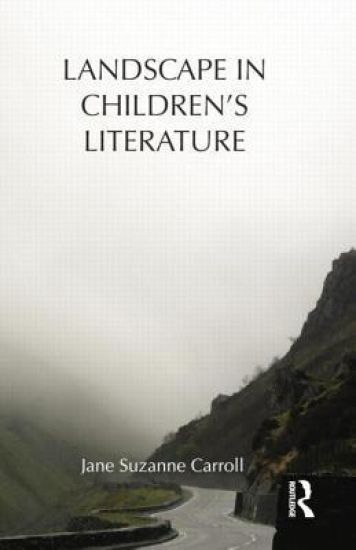
Landscape in Children's Literature
This book provides a new critical methodology for the study of landscapes in children's literature. Treating landscape as the integration of unchanging and irreducible physical elements, or topoi, Carroll identifies and analyses four kinds of space — sacred spaces, green spaces, roadways, and lapsed spaces — that are the component elements of the physical environments of canonical British children’s fantasy. Using Susan Cooper's The Dark Is Rising Sequence as the test-case for this methodology, the book traces the development of the physical features and symbolic functions of landscape topoi from their earliest inception in medieval vernacular texts through to contemporary children's literature. The identification and analysis of landscape topoi synthesizes recent theories about interstitial space together with earlier morphological and topoanalytical studies, enabling the study of fictional landscapes in terms of their physical characteristics as well as in terms of their relationship with contemporary texts and historical precedents. Ultimately, by providing topoanalytical studies of other children’s texts, Carroll proposes topoanalysis as a rich critical method for the study and understanding of children’s literature and indicates how the findings of this approach may be expanded upon. In offering both transferable methodologies and detailed case-studies, this book outlines a new approach to literary landscapes as geographical places within socio-historical contexts.
Bertha-Size Your Life

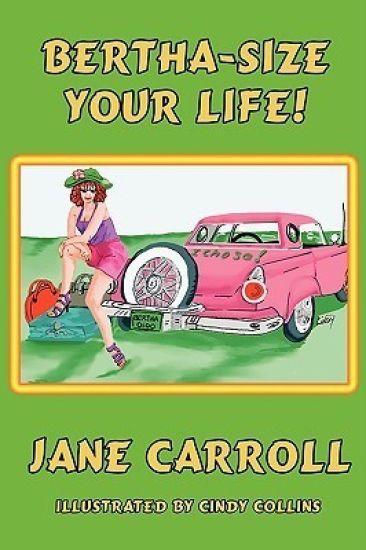
Bertha-Size Your Life

Jane Carroll

Master Koda Select Publishing
2015
nidottu
Bertha-Size Your Life Is a book of personal transformation that reads like a series of entertaining and humorous stories. Bertha, a zany redhead, mysteriously appears in the narrator's life during a walk in the park. Quicker than a man can hand off a baby with a dirty diaper, she has moved into the narrator's empty nest and the fun begins. You never know what Bertha will think up next from flying a hot air balloon to singing to her begonia, she's always up to something. Bertha delights in standing on her soapbox while dispensing down-home wisdom and perky advice, explaining The Law of Attraction in a refreshing, humor-filled, practical way that has the reader going aha instead of humph Throw in a conniving nemesis, an antagonistic cat, lime green spandex and high-heels and you've got a book that's sure to tickle your funny bone and leave you wearing your thinking cap as you read and reread each vignette.
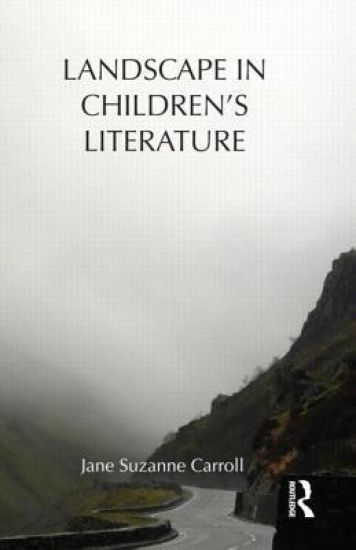
Landscape in Children's Literature
This book provides a new critical methodology for the study of landscapes in children's literature. Treating landscape as the integration of unchanging and irreducible physical elements, or topoi, Carroll identifies and analyses four kinds of space — sacred spaces, green spaces, roadways, and lapsed spaces — that are the component elements of the physical environments of canonical British children’s fantasy. Using Susan Cooper's The Dark Is Rising Sequence as the test-case for this methodology, the book traces the development of the physical features and symbolic functions of landscape topoi from their earliest inception in medieval vernacular texts through to contemporary children's literature. The identification and analysis of landscape topoi synthesizes recent theories about interstitial space together with earlier morphological and topoanalytical studies, enabling the study of fictional landscapes in terms of their physical characteristics as well as in terms of their relationship with contemporary texts and historical precedents. Ultimately, by providing topoanalytical studies of other children’s texts, Carroll proposes topoanalysis as a rich critical method for the study and understanding of children’s literature and indicates how the findings of this approach may be expanded upon. In offering both transferable methodologies and detailed case-studies, this book outlines a new approach to literary landscapes as geographical places within socio-historical contexts.