Kirjojen hintavertailu. Mukana 11 699 587 kirjaa ja 12 kauppaa.

Kirjahaku

Etsi kirjoja tekijän nimen, kirjan nimen tai ISBN:n perusteella.

11 kirjaa tekijältä Jane Hiddleston

Writing After Postcolonialism

Writing After Postcolonialism

Jane Hiddleston

Bloomsbury Academic
2017
sidottu
‘Focusing on francophone writing from North Africa as it has developed since the 1980s, Writing After Postcolonialism explores the extent to which the notion of ‘postcolonialism’ is still resonant for literary writers a generation or more after independence, and examines the troubled status of literature in society and politics during this period. Whilst analysing the ways in which writers from Algeria, Morocco and Tunisia have reacted to political unrest and social dissatisfaction, Jane Hiddleston offers a compelling reflection on literature’s ability to interrogate the postcolonial nation as well as on its own uncertain role in the current context. The book sets out both to situate the recent generation of francophone writers in North Africa in relation to contemporary politics, to postcolonial theory, and evolving notions of ‘world literature, and to probe the ways in which a new and highly sophisticated set of writers reflect on the very notion of ‘the literary’ during this period of transition.’
Writing After Postcolonialism

Writing After Postcolonialism

Jane Hiddleston

Bloomsbury Academic
2019
nidottu
‘Focusing on francophone writing from North Africa as it has developed since the 1980s, Writing After Postcolonialism explores the extent to which the notion of ‘postcolonialism’ is still resonant for literary writers a generation or more after independence, and examines the troubled status of literature in society and politics during this period. Whilst analysing the ways in which writers from Algeria, Morocco and Tunisia have reacted to political unrest and social dissatisfaction, Jane Hiddleston offers a compelling reflection on literature’s ability to interrogate the postcolonial nation as well as on its own uncertain role in the current context. The book sets out both to situate the recent generation of francophone writers in North Africa in relation to contemporary politics, to postcolonial theory, and evolving notions of ‘world literature, and to probe the ways in which a new and highly sophisticated set of writers reflect on the very notion of ‘the literary’ during this period of transition.’
Aimé Césaire

Aimé Césaire

Jane Hiddleston

JOHN WILEY AND SONS LTD
2025
sidottu
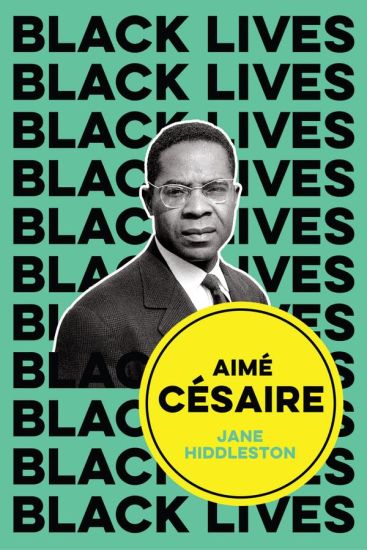
Aimé Césaire is arguably the greatest Caribbean literary writer in history. Best known for his incendiary epic poem Notebook of a Return to My Native Land, Césaire reinvented black culture by conceiving 'négritude' as a dynamic and continuous process of self-creation. In this essential new account of his life and work, Jane Hiddleston introduces readers to Césaire's unique poetic voice and to his role as a figurehead for intellectuals pursuing freedom and equality for black people. Césaire was deeply immersed in the political life of his native Martinique for over fifty years: as Mayor of Fort-de-France and Deputy at the French National Assembly, he called for the liberation of oppressed people at home and abroad, while celebrating black creativity and self-invention to resist a history of racism. Césaire's extraordinary life reminds us that the much-needed revolt against oppression and subjugation can—and should—come from within the establishment, as well as without.
Aimé Césaire

Aimé Césaire

Jane Hiddleston

JOHN WILEY AND SONS LTD
2025
nidottu
Aimé Césaire is arguably the greatest Caribbean literary writer in history. Best known for his incendiary epic poem Notebook of a Return to My Native Land, Césaire reinvented black culture by conceiving 'négritude' as a dynamic and continuous process of self-creation. In this essential new account of his life and work, Jane Hiddleston introduces readers to Césaire's unique poetic voice and to his role as a figurehead for intellectuals pursuing freedom and equality for black people. Césaire was deeply immersed in the political life of his native Martinique for over fifty years: as Mayor of Fort-de-France and Deputy at the French National Assembly, he called for the liberation of oppressed people at home and abroad, while celebrating black creativity and self-invention to resist a history of racism. Césaire's extraordinary life reminds us that the much-needed revolt against oppression and subjugation can—and should—come from within the establishment, as well as without.
Decolonising the Intellectual

Decolonising the Intellectual

Jane Hiddleston

Liverpool University Press
2014
sidottu
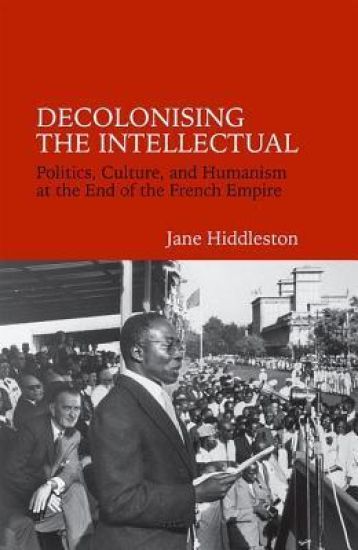
Francophone intellectuals writing in the lead-up to the decolonisation were faced with an impossible dilemma. How could they redefine their culture, and the ‘humanity’ they felt had been denied by the colonial project, in terms that did not replicate the French thinking by which they were formed? Figures such as Senghor, Césaire, Fanon, Amrouche, Feraoun and Kateb were all educated, indeed immersed, in French culture and language, yet they intervened forcefully in political debates surrounding decolonisation and sought to contribute to the reinvention of local cultures in a gesture of resistance to the ongoing French presence. Despite their pivotal role during this period of upheaval, then, their project was fraught with tensions that form the focus of this study. In particular, these writers reflected on the relation between universality and particularity in intellectual work, and struggled to avoid the traps associated with an over-investment in either domain. They also all learned from metropolitan French humanist thought but strove continually to reinvent that humanism so as to account for colonised experience and culture. Their work also readdresses the ongoing question of the relation between literature or culture and politics, and testifies to a moment of intense dialogue, and potential conflict, between contrasting but complementary spheres of activity.
Frantz Fanon

Frantz Fanon

Jane Hiddleston

MODERN HUMANITIES RESEARCH ASSOCIATION
2022
sidottu
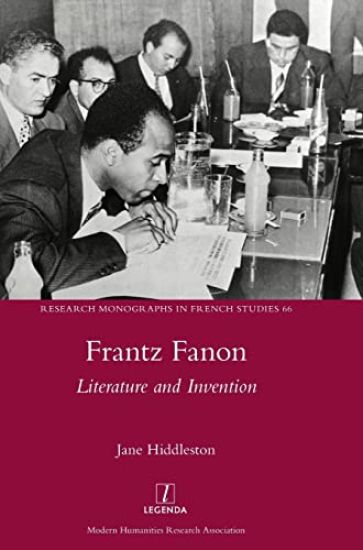
Frantz Fanon remains one of the greatest and most influential postcolonial thinkers. If he has been analysed by turns as a political thinker, a philosopher and a psychiatrist, however, he has less often been examined as a reader of literature. Yet his writing is littered with references to literary works, he is often cited by postcolonial literary critics as a reference point, and his own work is a richly textured aesthetic enterprise. Literary texts are woven into his philosophical, political, and psychological analyses, and repeatedly serve as springboards and interlocutors for his own, interdisciplinary reflections on racism, colonialism, and revolution.Hiddleston offers a rigorous analysis of Fanon's engagement with literature, and provides detailed readings of Fanon's often eclectic and wayward readings of literary works in order to uncover both his mixed responses to them and his evolving understanding of literarity. In so doing, she examines his vision for the transformative power of literature and its capacity for a dynamic, revolutionary form of 'invention', while analysing how far this vision is played out in works he read or that complement his thought.Jane Hiddleston is Professor of Literatures in French, and a Fellow of Exeter College, at the University of Oxford.
Decolonising the Intellectual

Decolonising the Intellectual

Jane Hiddleston

Liverpool University Press
2021
nidottu
Francophone intellectuals writing in the lead-up to the decolonisation were faced with an impossible dilemma. How could they redefine their culture, and the ‘humanity’ they felt had been denied by the colonial project, in terms that did not replicate the French thinking by which they were formed? Figures such as Senghor, Césaire, Fanon, Amrouche, Feraoun and Kateb were all educated, indeed immersed, in French culture and language, yet they intervened forcefully in political debates surrounding decolonisation and sought to contribute to the reinvention of local cultures in a gesture of resistance to the ongoing French presence. Despite their pivotal role during this period of upheaval, then, their project was fraught with tensions that form the focus of this study. In particular, these writers reflected on the relation between universality and particularity in intellectual work, and struggled to avoid the traps associated with an over-investment in either domain. They also all learned from metropolitan French humanist thought but strove continually to reinvent that humanism so as to account for colonised experience and culture. Their work also readdresses the ongoing question of the relation between literature or culture and politics, and testifies to a moment of intense dialogue, and potential conflict, between contrasting but complementary spheres of activity.
Understanding Postcolonialism

Understanding Postcolonialism

Jane Hiddleston

Acumen Publishing Ltd
2009
sidottu
Postcolonialism offers challenging and provocative ways of thinking about colonial and neocolonial power, about self and other, and about the discourses that perpetuate postcolonial inequality and violence. Much of the seminal work in postcolonialism has been shaped by currents in philosophy, notably Marxism and ethics. "Understanding Postcolonialism" examines the philosophy of postcolonialism in order to reveal the often conflicting systems of thought which underpin it. In so doing, the book presents a reappraisal of the major postcolonial thinkers of the twentieth century.Ranging beyond the narrow selection of theorists to which the field is often restricted, the book explores the work of Fanon and Sartre, Gandhi, Nandy, and the Subaltern Studies Group, Foucault and Said, Derrida and Bhabha, Khatibi and Glissant, and Spivak, Mbembe and Mudimbe. A clear and accessible introduction to the subject, "Understanding Postcolonialism" reveals how, almost half a century after decolonisation, the complex relation between politics and ethics continues to shape postcolonial thought.
Understanding Postcolonialism

Understanding Postcolonialism

Jane Hiddleston

Acumen Publishing Ltd
2009
nidottu
Postcolonialism offers challenging and provocative ways of thinking about colonial and neocolonial power, about self and other, and about the discourses that perpetuate postcolonial inequality and violence. Much of the seminal work in postcolonialism has been shaped by currents in philosophy, notably Marxism and ethics. "Understanding Postcolonialism" examines the philosophy of postcolonialism in order to reveal the often conflicting systems of thought which underpin it. In so doing, the book presents a reappraisal of the major postcolonial thinkers of the twentieth century.Ranging beyond the narrow selection of theorists to which the field is often restricted, the book explores the work of Fanon and Sartre, Gandhi, Nandy, and the Subaltern Studies Group, Foucault and Said, Derrida and Bhabha, Khatibi and Glissant, and Spivak, Mbembe and Mudimbe. A clear and accessible introduction to the subject, "Understanding Postcolonialism" reveals how, almost half a century after decolonisation, the complex relation between politics and ethics continues to shape postcolonial thought.
Poststructuralism and Postcoloniality

Poststructuralism and Postcoloniality

Jane Hiddleston

Liverpool University Press
2010
sidottu
This book explores the relation between poststructuralist thought and postcoloniality, and identifies in that interaction the expression of a particular anxiety concerning the form of theoretical writing. Many so-called poststructuralist thinkers, such as Derrida, Cixous, Lyotard, Barthes, Kristeva and Spivak, have turned their attention at some point in their career towards questions either of postcolonialism, or of cultural domination and difference. For all these thinkers, however, a reflection on such questions has generated a sense of unease concerning the assumed neutrality of theoretical discourse, and the inevitable subjective or autobiographical investments of the writing self. The book argues that this anxiety betrays an unprecedented lucidity concerning the particular challenges of writing about ourselves and others at a time of postcolonial upheaval.
Assia Djebar

Assia Djebar

Jane Hiddleston

Liverpool University Press
2011
nidottu
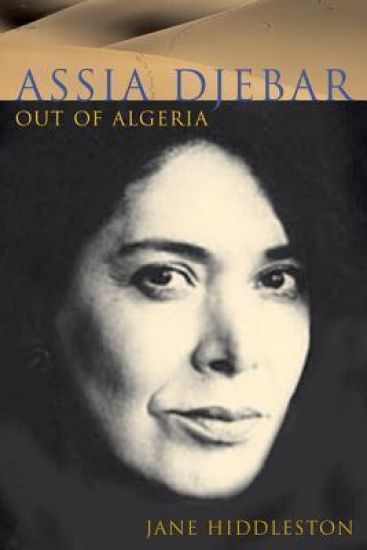
For more than fifty years, Assia Djebar, former Silver Chair of French at New York University and winner of the Neustadt Prize for Contribution to World Literature, used the tools of poetry, fiction, drama and film to vividly portray the world of Muslim women in all its complexity. In the process, she became one of the most important figures in North African literature. In Assia Djebar, Jane Hiddleston traces Djebar’s development as a writer against the backdrop of North Africa’s tumultuous history. Whereas Djebar’s early writings were largely an attempt to delineate clearly the experience of being a woman, an intellectual, and an Algerian embedded in that often violent history, she had in her more recent work evinced a growing sense that the influence of French culture on Algerian letters may make such a project impossible. The first book-length study of this significant writer, Assia Djebar will be of tremendous interest to anyone studying post-colonial literature, women’s studies or Francophone culture in general.