Kirjojen hintavertailu. Mukana 11 244 527 kirjaa ja 12 kauppaa.

Kirjahaku

Etsi kirjoja tekijän nimen, kirjan nimen tai ISBN:n perusteella.

5 kirjaa tekijältä Jane Little Botkin

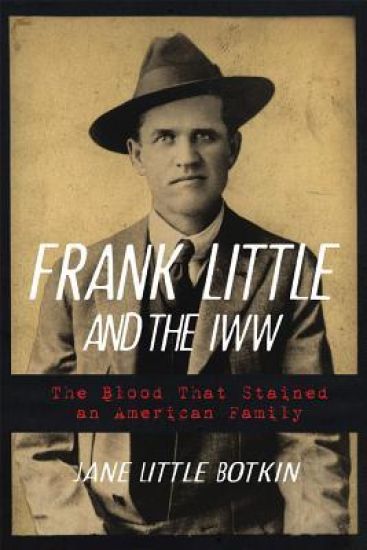
Frank Little and the IWW

Frank Little and the IWW

Jane Little Botkin

University of Oklahoma Press
2017
sidottu
Franklin Henry Little (1878-1917), an organizer for the Western Federation of Miners and the Industrial Workers of the World (IWW), fought in some of the early twentieth century's most contentious labor and free-speech struggles. Following his lynching in Butte, Montana, his life and legacy became shrouded in tragedy and family secrets. In Frank Little and the IWW, author Jane Little Botkin chronicles her great-granduncle's fascinating life and reveals its connections to the history of American labor and the first Red Scare. Beginning with Little's childhood in Missouri and territorial Oklahoma, Botkin recounts his evolution as a renowned organizer and agitator on behalf of workers in corporate agriculture, oil, logging, and mining. Frank Little traveled the West and Midwest to gather workers beneath the banner of the Wobblies (as IWW members were known), making soapbox speeches on city street corners, organizing strikes, and writing polemics against unfair labor practices. His brother and sister-in-law also joined the fight for labor, but it was Frank who led the charge - and who was regularly threatened, incarcerated, and assaulted for his efforts. In his final battles in Arizona and Montana, Botkin shows, Little and the IWW leadership faced their strongest opponent yet as powerful copper magnates countered union efforts with deep-laid networks of spies and gunmen, an antilabor press, and local vigilantes. For a time, Frank Little's murder became a rallying cry for the IWW. But after the United States entered the Great War and Congress passed the Sedition Act (1918) to ensure support for the war effort, many politicians and corporations used the act to target labor ""radicals,"" squelch dissent, and inspire vigilantism. Like other wage-working families smeared with the traitor label, the Little family endured raids, arrests, and indictments in IWW trials. Having scoured the West for firsthand sources in family, library, and museum collections, Botkin melds the personal narrative of an American family with the story of the labor movements that once shook the nation to its core. In doing so, she throws into sharp relief the lingering consequences of political repression.
Frank Little and the IWW

Frank Little and the IWW

Jane Little Botkin

University of Oklahoma Press
2019
nidottu
Franklin Henry Little (1878-1917), an organizer for the Western Federation of Miners and the Industrial Workers of the World (IWW), fought in some of the early twentieth century's most contentious labor and free-speech struggles. Following his lynching in Butte, Montana, his life and legacy became shrouded in tragedy and family secrets. In Frank Little and the IWW, author Jane Little Botkin chronicles her great-granduncle's fascinating life and reveals its connections to the history of American labor and the first Red Scare. Beginning with Little's childhood in Missouri and territorial Oklahoma, Botkin recounts his evolution as a renowned organizer and agitator on behalf of workers in corporate agriculture, oil, logging, and mining. Frank Little traveled the West and Midwest to gather workers beneath the banner of the Wobblies (as IWW members were known), making soapbox speeches on city street corners, organizing strikes, and writing polemics against unfair labor practices. His brother and sister-in-law also joined the fight for labor, but it was Frank who led the charge - and who was regularly threatened, incarcerated, and assaulted for his efforts. In his final battles in Arizona and Montana, Botkin shows, Little and the IWW leadership faced their strongest opponent yet as powerful copper magnates countered union efforts with deep-laid networks of spies and gunmen, an antilabor press, and local vigilantes. For a time, Frank Little's murder became a rallying cry for the IWW. But after the United States entered the Great War and Congress passed the Sedition Act (1918) to ensure support for the war effort, many politicians and corporations used the act to target labor ""radicals,"" squelch dissent, and inspire vigilantism. Like other wage-working families smeared with the traitor label, the Little family endured raids, arrests, and indictments in IWW trials. Having scoured the West for firsthand sources in family, library, and museum collections, Botkin melds the personal narrative of an American family with the story of the labor movements that once shook the nation to its core. In doing so, she throws into sharp relief the lingering consequences of political repression.
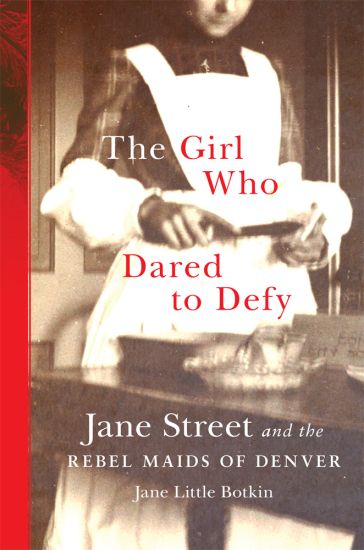
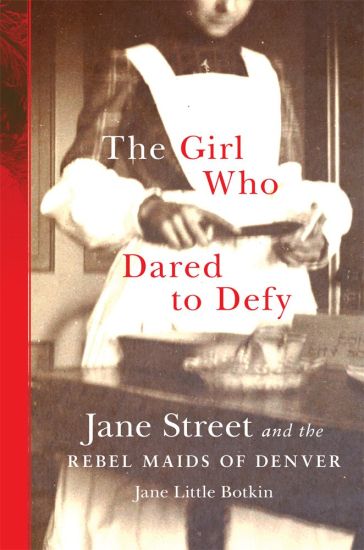
The Girl Who Dared to Defy

The Girl Who Dared to Defy

Jane Little Botkin

University of Oklahoma Press
2021
sidottu
In the wake of the violent labor disputes in Colorado's two-year Coalfield War, a young woman and single mother resolved in 1916 to change the status quo for 'girls,' as well-to-do women in Denver referred to their hired help. Her name was Jane Street, and this compelling biography is the first to chronicle her defiant efforts - and devastating misfortunes - as a leader of the so-called housemaid rebellion. A native of Indiana, Jane Street (1887 - 1966) began her activist endeavors as an organizer for the Industrial Workers of the World (IWW). In riveting detail, author Jane Little Botkin recounts Street's attempts to orchestrate a domestic mutiny against Denver's elitist Capitol Hill women, including wives of the state's national guard officers and Colorado Fuel and Iron operators. It did not take long for the housemaid rebellion to make local and national news. Despite the IWW's initial support of the housemaids' fight for fairness and better pay, Street soon found herself engaged in a gender war, the target of sexism within the very organization she worked so hard to support. The abuses she suffered ranged from sabotage and betrayal to arrests and abandonment. After the United States entered World War I and the first Red Scare arose, Street's battle to balance motherhood and labor organizing began to take its toll. Legal troubles, broken relationships, and poverty threatened her very existence. In previous western labor and women's studies accounts, Jane Street has figured only marginally, credited in passing as the founder of a housemaids' union. To unearth the rich detail of her story, Botkin has combed through case histories, family archives, and - perhaps most significant - Street's own writings, which express her greatest joys, her deepest sorrows, and her unfortunate dealings with systematic injustice. Setting Jane's story within the wider context of early-twentieth-century class struggles and the women's suffrage movement, The Girl Who Dared to Defy paints a fascinating - and ultimately heartbreaking - portrait of one woman's courageous fight for equality.
The Girl Who Dared to Defy

The Girl Who Dared to Defy

Jane Little Botkin

UNIVERSITY OF OKLAHOMA PRESS
2022
nidottu
In the wake of the violent labor disputes in Colorado’s two-year Coalfield War, a young woman and single mother resolved in 1916 to change the status quo for “girls,” as well-to-do women in Denver referred to their hired help. Her name was Jane Street, and this compelling biography is the first to chronicle her defiant efforts—and devastating misfortunes—as a leader of the so-called housemaid rebellion. A native of Indiana, Jane Street (1887–1966) began her activist endeavors as an organizer for the Industrial Workers of the World (IWW). In riveting detail, author Jane Little Botkin recounts Street’s attempts to orchestrate a domestic mutiny against Denver’s elitist Capitol Hill women, including wives of the state’s national guard officers and Colorado Fuel and Iron operators. It did not take long for the housemaid rebellion to make local and national news. Despite the IWW’s initial support of the housemaids’ fight for fairness and better pay, Street soon found herself engaged in a gender war, the target of sexism within the very organization she worked so hard to support. The abuses she suffered ranged from sabotage and betrayal to arrests and abandonment. After the United States entered World War I and the first Red Scare arose, Street’s battle to balance motherhood and labor organizing began to take its toll. Legal troubles, broken relationships, and poverty threatened her very existence. In previous western labor and women’s studies accounts, Jane Street has figured only marginally, credited in passing as the founder of a housemaids’ union. To unearth the rich detail of her story, Botkin has combed through case histories, family archives, and—perhaps most significant—Street’s own writings, which express her greatest joys, her deepest sorrows, and her unfortunate dealings with systematic injustice. Setting Jane’s story within the wider context of early-twentieth-century class struggles and the women’s suffrage movement, The Girl Who Dared to Defy paints a fascinating—and ultimately heartbreaking—portrait of one woman’s courageous fight for equality.
The Pink Dress

The Pink Dress

Jane Little Botkin

She Writes Press
2024
nidottu
Growing up in West Texas, Jane Little Botkin didn't have designs on becoming a beauty queen. But not long after joining a pageant on a whim in college, she became the first protege of El Paso's Richard Guy and Rex Holt, known as the 'Kings of Beauty' - just as the 1970's counterculture movement began to take off. A pink, rose-covered gown - a Guyrex creation - symbolizes the fairy tale life that young women in Jane's time imagined beauty queens had. Its near destruction exposes reality: the author's failed relationship with her mother, and her parents' failed relationship with one another. Weaving these narrative threads together is the Wild West notion that anything is possible, especially do-overs. The Pink Dress awakens nostalgia for the 1960s and 1970s, the era's conflicts and growth pains. A common expectation that women went to college to get 'MRS' degrees - to find a husband and become a stay-at-home wife and mother - often prevailed. How does one swim upstream against this notion among feminist voices that protest 'If You Want Meat, Go to a Butcher!' at beauty pageants, two flamboyant showmen, and a developing awareness of self? Torn between women's traditional roles and what women could be, Guyrex Girls evolved, as did the author.