Kirjojen hintavertailu. Mukana 12 301 700 kirjaa ja 12 kauppaa.

Kirjahaku

Etsi kirjoja tekijän nimen, kirjan nimen tai ISBN:n perusteella.

3 kirjaa tekijältä Jane Mace

Talking About Literacy

Talking About Literacy

Jane Mace

Routledge
1992
nidottu
Talking about Literacy re-examines dominant notions of what litreracy is, and challenges the problem-solution reflex to the issue (the problem is illiteracy: the solution is more literacy). Literacy has enormous emotional and political associations, and the job of literacy educator often concerns changing attitudes and challenging prejudices - whether in the form of publicity strategies, counselling new students, or in curriculum design. In short, adult literacy education means not only teaching courses like 'fresh start', 'basic skills', 'study skills', 'communication skills', 'language support' and 'return to study', but also designing strategies to encourage people to see that these courses may meet their own interests - and educating them and others to rethink their own negative attitudes to 'illiteracy'. The book looks in detail in at five principles put forward by Jane Mace as central to the education of people who often can read, but wish they could read better; who, technically can write, but have a desire to do so with more expression and coherence. These principles focus on five themes: context, inquiy, authorship, equality and community. Since it is all too easy for literacy education involving adults who do not have formal qualifications to stop short of teaching techniques for 'correct' writing, these principles mean taking seriously a view that adult students are writers as well as readers - that they have an entitlement to be read, as well as to read others.
Talking About Literacy

Talking About Literacy

Jane Mace

Routledge
1992
sidottu
Talking about Literacy re-examines dominant notions of what litreracy is, and challenges the problem-solution reflex to the issue (the problem is illiteracy: the solution is more literacy). Literacy has enormous emotional and political associations, and the job of literacy educator often concerns changing attitudes and challenging prejudices - whether in the form of publicity strategies, counselling new students, or in curriculum design. In short, adult literacy education means not only teaching courses like 'fresh start', 'basic skills', 'study skills', 'communication skills', 'language support' and 'return to study', but also designing strategies to encourage people to see that these courses may meet their own interests - and educating them and others to rethink their own negative attitudes to 'illiteracy'. The book looks in detail in at five principles put forward by Jane Mace as central to the education of people who often can read, but wish they could read better; who, technically can write, but have a desire to do so with more expression and coherence. These principles focus on five themes: context, inquiy, authorship, equality and community. Since it is all too easy for literacy education involving adults who do not have formal qualifications to stop short of teaching techniques for 'correct' writing, these principles mean taking seriously a view that adult students are writers as well as readers - that they have an entitlement to be read, as well as to read others.
Playing With Time

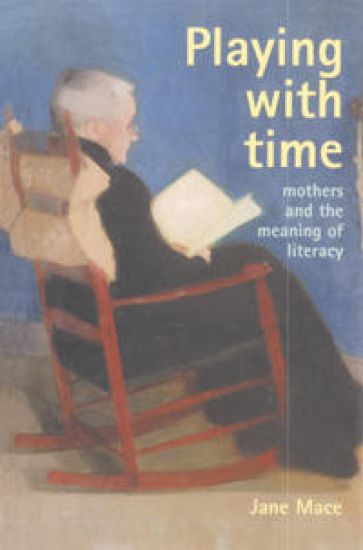
Playing With Time

Jane Mace

Routledge
1998
nidottu
With a background of a reported decline in literacy standards, the author investigates the relationship between gender and literacy, revealing how families, and women in particular, feel pressurized to be responsible for their children's literacy.