Kirjojen hintavertailu. Mukana 11 717 486 kirjaa ja 12 kauppaa.

Kirjahaku

Etsi kirjoja tekijän nimen, kirjan nimen tai ISBN:n perusteella.

7 kirjaa tekijältä Jane Tompkins

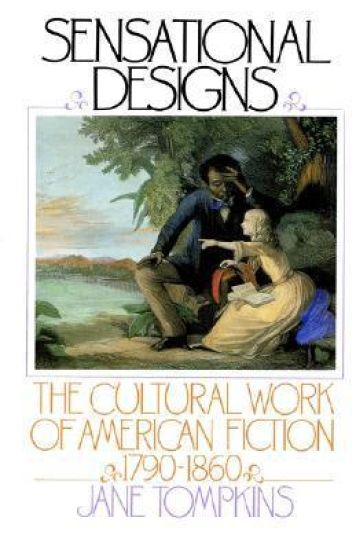
Sensational Designs

Sensational Designs

Jane Tompkins

Oxford University Press Inc
1986
nidottu
In this provocative book, Jane Tompkins seeks to move the study of literature away from the small group of critically approved texts that have dominated literary discussion over the decades, to allow inclusion of texts ignored or denigrated by the literary academy. Sensational Designs challenges comfortable assumptions about what makes a literary work a "classic."
West of Everything

West of Everything

Jane Tompkins

Oxford University Press Inc
1992
sidottu
Is there anyone who has not seen a Western film, or read a Western novel? In West of Everything, Jane Tompkins asks what the Western hero has meant for Americans in the twentieth century. Thoughtful, insightful, and often refreshingly personal, Tompkins' book explores how the reader or viewer experience the wild west of the psyche.
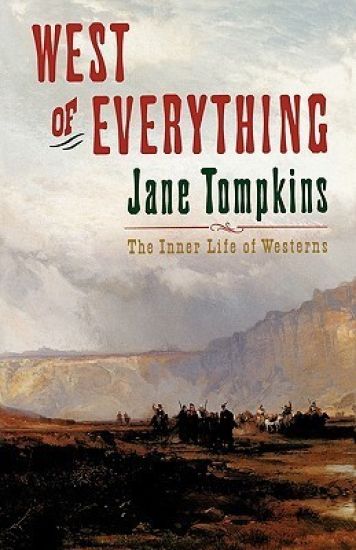
West of Everything

West of Everything

Jane Tompkins

Oxford University Press Inc
1993
nidottu
A leading figure in the debate over the literary canon, Jane Tompkins was one of the first to point to the ongoing relevance of popular women's fiction in the 19th century, long overlooked or scorned by literary critics. Now, in West of Everything, Tompkins shows how popular novels and films of the American west have shaped the emotional lives of people in our time. Into this world full of violence and manly courage, the world of John Wayne and Louis L'Amour, Tompkins takes her readers, letting them feel what the hero feels, endure what he endures. Writing with sympathy, insight, and respect, she probes the main elements of the Western--its preoccupation with death, its barren landscapes, galloping horses, hard-bitten men and marginalized women--revealing the view of reality and code of behavior these features contain. She considers the Western hero's attraction to pain, his fear of women and language, his desire to dominate the environment--and to merge with it. In fact, Tompkins argues, for better or worse Westerns have taught us all--men especially--how to behave. It was as a reaction against popular women's novels and women's invasion of the public sphere that Westerns originated, Tompkins maintains. With Westerns, men were reclaiming cultural territory, countering the inwardness, spirituality, and domesticity of the sentimental writers, with a rough and tumble, secular, man-centered world. Tompkins brings these insights to bear in considering film classics such as Red River and Lonely Are the Brave, and novels such as Louis L'Amour's Last of the Breed and Owen Wister's The Virginian. In one of the most moving chapters (chosen for Best American Essays of 1991), Tompkins shows how the life of Buffalo Bill Cody, killer of Native Americans and charismatic star of the Wild West show, evokes the contradictory feelings which the Western typically elicits--horror and fascination with violence, but also love and respect for the romantic ideal of the cowboy. Whether interpreting a photograph of John Wayne of meditating on the slaughter of cattle, Jane Tompkins writes with humor, compassion, and a provocative intellect. Her book will appeal to many Americans who read or watch Westerns, and to all those interested in a serious approach to popular culture.
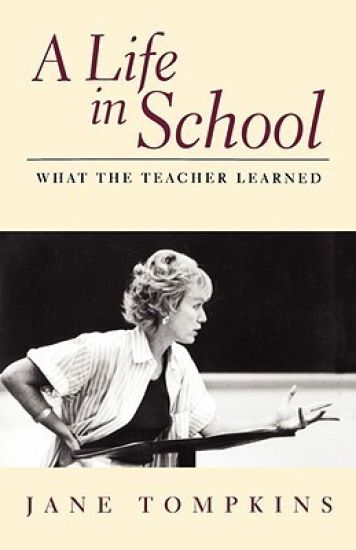
A Life In School

A Life In School

Jane Tompkins

Basic Books
1997
pokkari
Here one of our leading literary scholars looks back on her own life in the classroom, and discovers how much of what she learned there needs to be unlearned. Jane Tompkins' memoir shows how her education shaped her in the mould of a high achiever who could read five languages but had little knowledge of herself. As she slowly awakens to the needs of her body, heart, and spirit, she discards the conventions of classroom teaching and learns what her students' lives are like. A painful and exhilarating story of spiritual awakening, Tompkins' book critiques our educational system while also paying tribute to it.
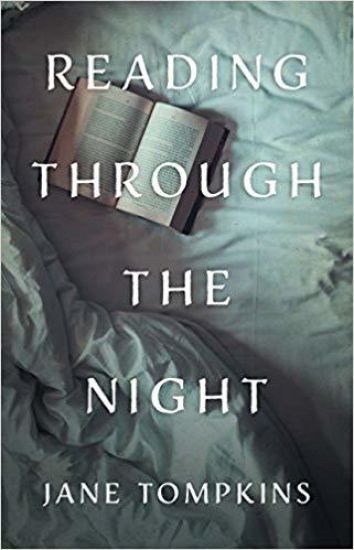
Reading Through the Night

Reading Through the Night

Jane Tompkins

University of Virginia Press
2018
sidottu
Jane Tompkins, a renowned literature professor and award-winning author, thought she knew what reading was until, struck by a debilitating illness, she finds herself reading day and night because it is all she can do. A lifelong lover of books, she realizes for the first time that if you pay close attention to your reactions as you read, literature can become a path of self-discovery.Tompkins’s inner journey begins when she becomes captivated unexpectedly by an account of friendship between two writers to whom she’d given little thought, Paul Theroux and V. S. Naipaul. Theroux’s memoir launches her on a path of introspection that stretches back to the first weeks of her life in a Bronx hospital, and forward to her relationship with her mother and the structure of her present marriage. Her reading experience, intensified by the feelings of powerlessness and loss of self that come with chronic illness, expands to include writers such as Henning Mankell and Ann Patchett, Alain de Botton, Elena Ferrante, and Anthony Trollope. As she makes her way through their books, she recognizes herself in them, stumbling across patterns of feeling and behavior that have ruled her without her knowing it—envy, a desire for fame, fear of confronting the people she loves, a longing for communion.The reader, along with Tompkins, comes to the realization that literature can be not only a source of information and entertainment, not only a balm and a refuge, but also a key to unlocking long-forgotten memories that lead to a new understanding of one’s life.
Reading through the Night

Reading through the Night

Jane Tompkins

University of Virginia Press
2020
nidottu
Jane Tompkins, a renowned literature professor and award-winning author, thought she knew what reading was until, struck by a debilitating illness, she finds herself reading day and night because it is all she can do. A lifelong lover of books, she realizes for the first time that if you pay close attention to your reactions as you read, literature can become a path of self-discovery. Tompkins's inner journey begins when she becomes captivated unexpectedly by an account of friendship between two writers to whom she'd given little thought, Paul Theroux and V. S. Naipaul. Theroux's memoir launches her on a path of introspection that stretches back to the first weeks of her life in a Bronx hospital, and forward to her relationship with her mother and the structure of her present marriage. Her reading experience, intensified by the feelings of powerlessness and loss of self that come with chronic illness, expands to include writers such as Henning Mankell and Ann Patchett, Alain de Botton, Elena Ferrante, and Anthony Trollope. As she makes her way through their books, she recognizes herself in them, stumbling across patterns of feeling and behavior that have ruled her without her knowing it—envy, a desire for fame, fear of confronting the people she loves, a longing for communion. The reader, along with Tompkins, comes to the realization that literature can be not only a source of information and entertainment, not only a balm and a refuge, but also a key to unlocking long-forgotten memories that lead to a new understanding of one's life.
My Victorian Novel

My Victorian Novel

Jane Tompkins

University of Missouri Press
2020
sidottu
Reviewed by The TLSThe previously unpublished essays collected here are by literary scholars who have dedicated their lives to reading and studying nineteenth-century British fiction and the Victorian world. Each writes about a novel that has acquired personal relevance to them - a work that has become entwined with their own story, or that remains elusive or compelling for reasons hard to explain. These are essays in the original sense of the word, attempts: individual and experiential approaches to literary works that have subjective meanings beyond social facts. By reflecting on their own histories with novels taught, studied, researched, and re-experienced in different contexts over many years, the contributors reveal how an aesthetic object comes to inhabit our critical, pedagogical, and personal lives. By inviting scholars to share their experiences with a favorite novel without the pressure of an analytical agenda, the sociable essays in My Victorian Novel seek to restore some vitality to the act of literary criticism, and encourage other scholars to talk about the importance of reading in their lives and the stories that have enchanted and transformed them.