Kirjojen hintavertailu. Mukana 11 518 949 kirjaa ja 12 kauppaa.

Kirjahaku

Etsi kirjoja tekijän nimen, kirjan nimen tai ISBN:n perusteella.

6 kirjaa tekijältä Jane Tylus

Siena

Siena

Jane Tylus

University of Chicago Press
2015
sidottu
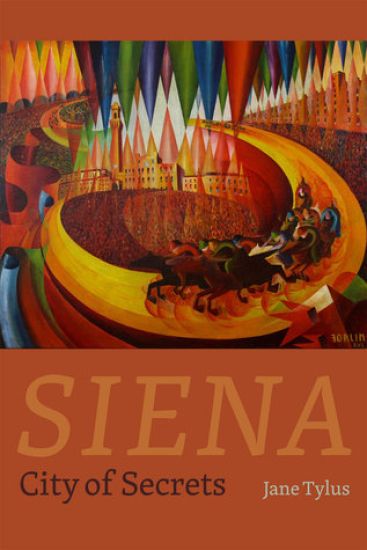
Jane Tylus's Siena is a compelling and intimate portrait of this most secretive of cities, often overlooked by travelers to Italy. Cultural history and intellectual memoir, travelogue and guidebook, it takes the reader on a quest of discovery through the well- and not-so-well-traveled roads and alleys of a town both medieval and modern. As Tylus leads us through the city, she shares her passion for Siena in novelistic prose, while never losing sight of the historical complexities that have made Siena one of the most fascinating and beautiful towns in Europe. Today, Siena can appear on the surface standoffish and old-fashioned, especially when compared to its larger, flashier cousins Rome and Florence. But first impressions wear away as we learn from Tylus that Siena was an innovator among the cities of Italy: the first to legislate the building and maintenance of its streets, the first to publicly fund its university, the first to institute a municipal bank, and even the first to ban automobile traffic from its city center. We learn about Siena's great artistic and architectural past, hidden behind centuries of painting and rebuilding, and about the distinctive characters of its different neighborhoods, exemplified in the Palio, the highly competitive horserace that takes place twice a year in the city's main piazza and that serves as both a dividing and a uniting force for the Sienese. Throughout we are guided by the assured voice of a seasoned scholar with a gift for spinning a good story and an eye for the telling detail, whether we are traveling Siena's modern highways, exploring its underground tunnels, tracking the city's financial history, or celebrating giants of painting like Simone Martini or giants of the arena, Siena's former Serie A soccer team. A practical and engaging guide for tourists and armchair travelers alike, Siena is a testament to the powers of community and resilience in a place that is not quite as timeless and serene as it may at first appear.
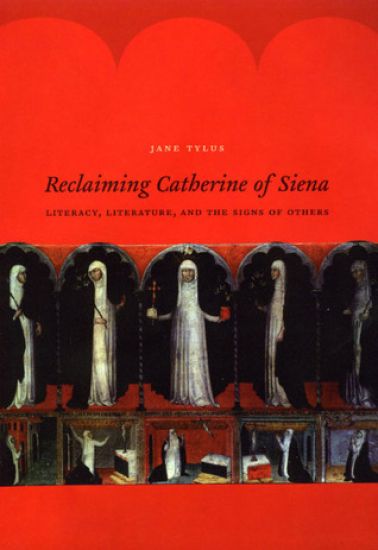
Reclaiming Catherine of Siena

Reclaiming Catherine of Siena

Jane Tylus

University of Chicago Press
2018
nidottu
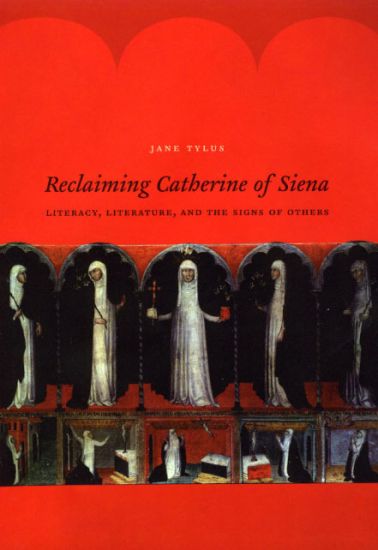
Catherine of Siena (1347-1380) wrote almost four hundred epistles in her lifetime, effectively insinuating herself into the literary, political, and theological debates of her day. At the same time, as the daughter of a Sienese dyer, Catherine had no formal education, and her accomplishments were considered miracles rather than the work of her own hand. As a result, she has been largely excluded from accounts of the development of European humanism and the language and literature of Italy. Reclaiming Catherine of Siena makes the case for considering Catherine alongside literary giants such as Dante and Petrarch, as it underscores Catherine's commitment to using the vernacular to manifest Christ's message and her own. Jane Tylus charts here the contested struggles of scholars over the centuries to situate Catherine in the history of Italian culture in early modernity. But she mainly focuses on Catherine's works, calling attention to the interplay between orality and textuality in the letters and demonstrating why it was so important for Catherine to envision herself as a writer. Tylus argues for a reevalution of Catherine as not just a medieval saint, but one of the major figures at the birth of the Italian literary canon.
Reclaiming Catherine of Siena

Reclaiming Catherine of Siena

Jane Tylus

University of Chicago Press
2009
sidottu
Catherine of Siena (1347-80) wrote almost four hundred epistles in her lifetime, effectively insinuating herself into the literary, political, and theological debates of her day. At the same time, as the daughter of a Sienese dyer, Catherine had no formal education, and her accomplishments were considered miracles rather than the work of her own hand. As a result, she has been largely excluded from accounts of the development of European humanism and the language and literature of Italy. "Reclaiming Catherine of Siena" makes the case for considering Catherine alongside literary giants such as Dante and Petrarch, as it underscores Catherine's commitment to using the vernacular to manifest Christ's message - and her own.Jane Tylus charts here the contested struggles of scholars over the centuries to situate Catherine in the history of Italian culture in early modernity. But she mainly focuses on Catherine's works, calling attention to the interplay between orality and textuality in the letters and demonstrating why it was so important for Catherine to envision herself as a writer. Tylus argues for a reevalution of Catherine as not just a medieval saint, but one of the major figures at the birth of the Italian literary canon.
Who Owns Literature?

Who Owns Literature?

Jane Tylus

Cambridge University Press
2025
pokkari
Interest in material culture has produced a rigorous body of scholarship that considers the dynamics of licensing, permissions, and patronage - an ongoing history of the estrangement of works from their authors. Additionally, translation studies is enabling new ways to think about the emergence of European vernaculars and the reappropriation of classical and early Christian texts. This Element emerges from these intersecting stories. How did early modern authors say goodbye to their works; how do translators and editors articulate their duty to the dead or those incapable of caring for their work; what happens once censorship is invoked in the name of other forms of protection? The notion of the work as orphan, sent out and unable to return to its author, will take us from Horace to Dante, Montaigne, Anne Bradstreet, and others as we reflect on the relevance of the vocabularies of loss, charity, and licence for literature.
Who Owns Literature?

Who Owns Literature?

Jane Tylus

Cambridge University Press
2025
sidottu
Interest in material culture has produced a rigorous body of scholarship that considers the dynamics of licensing, permissions, and patronage - an ongoing history of the estrangement of works from their authors. Additionally, translation studies is enabling new ways to think about the emergence of European vernaculars and the reappropriation of classical and early Christian texts. This Element emerges from these intersecting stories. How did early modern authors say goodbye to their works; how do translators and editors articulate their duty to the dead or those incapable of caring for their work; what happens once censorship is invoked in the name of other forms of protection? The notion of the work as orphan, sent out and unable to return to its author, will take us from Horace to Dante, Montaigne, Anne Bradstreet, and others as we reflect on the relevance of the vocabularies of loss, charity, and licence for literature.
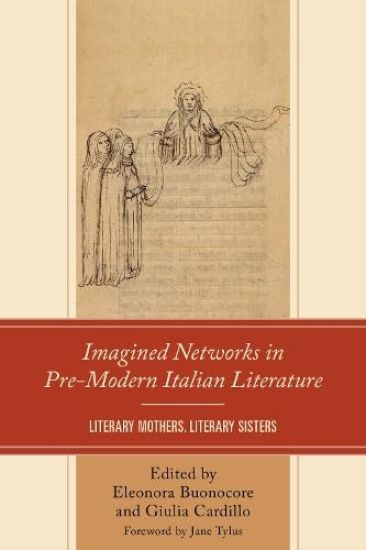
Imagined Networks in Pre-Modern Italian Literature

Imagined Networks in Pre-Modern Italian Literature

Jane Tylus

BLOOMSBURY PUBLISHING PLC
2024
sidottu
Imagined Networks in Pre-Modern Italian Literature: Literary Mothers, Literary Sisters presents the untold stories of the literary mothers and sisters in pre-modern Italian literature and the vibrant intellectual networks they forged. The authors argue that these women writers became adoptive references for other authors, often as an alternative to an established canon of textual authority. The proposed concepts of literary motherhood and sisterhood focus on the agency of the writers in choosing a model, rather than adhering to hierarchical structures. The women showcased in this book defied conventions, and are aware of the generative power of their works and regard themselves as literary guiding lights for future authors. They built prolific communities through exchanges, correspondences, debates, oblique conversations, and sometimes subtle allusions that confer authority to each other. The six essays in this book bring to life the figures of Caterina da Siena, Isabella Andreini, Giulia Bigolina, Margherita Costa, Lucrezia Marinella, Arcangela Tarabotti, and the relationship between Gaspara Stampa and Luisa Bergalli, as well as that between Bianca Milesi Mojon and Maria Edgeworth.