Kirjojen hintavertailu. Mukana 11 699 587 kirjaa ja 12 kauppaa.

Kirjahaku

Etsi kirjoja tekijän nimen, kirjan nimen tai ISBN:n perusteella.

12 kirjaa tekijältä Janet Coleman

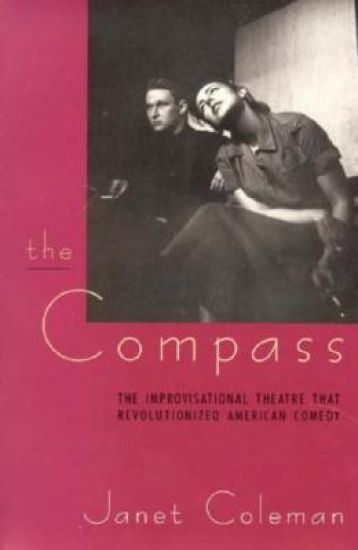
The Compass: The Improvisational Theatre That Revolutionized American Comedy
Janet Coleman brilliantly recreates the time, the place, the personalities, and the neurotic magic whereby the Compass made theater history in America. The Compass began in a storefront theater near the University of Chicago campus in the summer of 1955 and lasted only a few years before its players--including David Shepherd, Paul Sills, Elaine May, Mike Nichols, Barbara Harris, and Shelley Berman--moved on. Out of this group was born a new form: improvisational theater and a radically new kind of comedian. "They did not plan to be funny or to change the course of comedy," writes Coleman. "But that is what happened." "For anyone who is interested in theatre, underground theatre, improvisational theatre, and the sheer madness of trying something new with a repertory group, The Compass will prove a welcome history with fascinating details."--Norman Mailer "Janet Coleman has done a spectacular job of capturing the history, the almost alarmingly diverse cultural influences, and the extraordinary people who made up the Compass."--Neal Weaver, Los Angeles Village View "Engrossing. . . . An open window on a part of the theater that should be known."--Arthur Miller "A valuable chronicle of an important chapter in the history of comedy and theater."--William Wolf, New York Observer "The eruptive, disruptive talents who made the theater memorable are the same ones who make The Compass a good read."--Jay Cocks, Time "A moving, inspirational, anecdote-studded feast."--Publishers Weekly
Ancient and Medieval Memories

Ancient and Medieval Memories

Janet Coleman

Cambridge University Press
2005
pokkari
This book is an analysis of thinking, remembering and reminiscing according to ancient authors, and their medieval readers. The author argues that behind the various medieval methods in interpreting texts of the past lie two apparently incompatible theories of human knowledge and remembering, as well as two differing attitudes to matter and intellect. The book comprises a series of studies which take ancient texts as evidence of the past, and show how medieval readers and writers understood them. The studies confirm that medieval and renaissance interpretations and uses of the past differ greatly from modern interpretation and yet betray many startling continuities between modern and ancient and medieval theories.
Ancient and Medieval Memories

Ancient and Medieval Memories

Janet Coleman

Cambridge University Press
1992
sidottu
This book is an analysis of thinking, remembering and reminiscing according to ancient authors, and their medieval readers. The author argues that behind the various medieval methods in interpreting texts of the past lie two apparently incompatible theories of human knowledge and remembering, as well as two differing attitudes to matter and intellect. The book comprises a series of studies which take ancient texts as evidence of the past, and show how medieval readers and writers understood them. The studies confirm that medieval and renaissance interpretations and uses of the past differ greatly from modern interpretation and yet betray many startling continuities between modern and ancient and medieval theories.
A History of Political Thought

A History of Political Thought

Janet Coleman

Blackwell Publishers
2000
sidottu
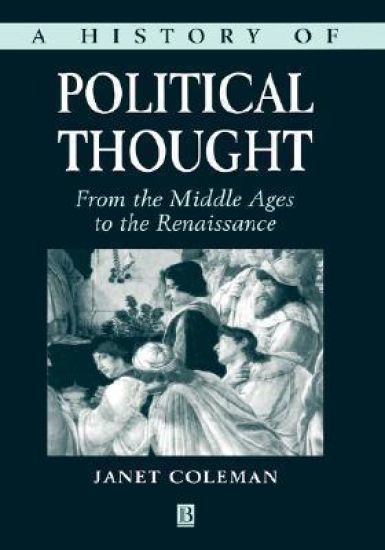
This volume continues the story of European political theorising by focusing on medieval and Renaissance thinkers. It includes extensive discussion of the practices that underpinned medieval political theories and which continued to play crucial roles in the eventual development of early-modern political institutions and debates. The author strikes a balance between trying to understand the philosophical cogency of medieval and Renaissance arguments on the one hand, elucidating why historically-suited medieval and Renaissance thinkers thought the ways they did about politics; and why we often think otherwise.
A History of Political Thought

A History of Political Thought

Janet Coleman

JOHN WILEY AND SONS LTD
2000
nidottu
This volume continues the story of European political theorising by focusing on medieval and Renaissance thinkers. It includes extensive discussion of the practices that underpinned medieval political theories and which continued to play crucial roles in the eventual development of early-modern political institutions and debates. The author strikes a balance between trying to understand the philosophical cogency of medieval and Renaissance arguments on the one hand, elucidating why historically-suited medieval and Renaissance thinkers thought the ways they did about politics; and why we often think otherwise.
A History of Political Thought

A History of Political Thought

Janet Coleman

Blackwell Publishers
2000
nidottu
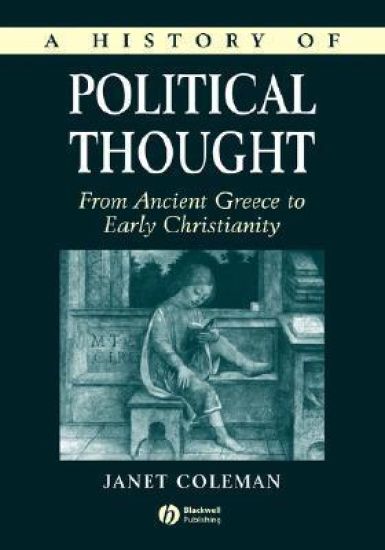
Janet Coleman's two volume history of European political theorising, from the ancient Greeks to the Renaissance is the introduction which many have been waiting for. In this volume, Coleman discusses the acknowledged great works of Greek, Roman, and early Christian writers to show how the historical contexts in which certain ideas about ethics and politics became dominant or fell from dominance, help to explain the ideas themselves. Throughout she draws on recent scholarly commentaries written by specialists in philosophy, contemporary political theory, classical languages and cultures, and on ancient and early Christian history and theology. Janet Coleman shows that the Greeks and Romans' arguments can be seen as logical and coherent if we can grasp the questions they thought it important to answer.
Mingus/Mingus

Mingus/Mingus

Janet Coleman

Limelight Editions
1991
pokkari
Charles Mingus was one of the greatest talents in the jazz world, as a bassist, bandleader, and composer. Mingus comes to life again through these two memoirs written by two of his friends. "This book is a breezy but heartfelt tribute to an arascible talent, a collection as passionate and unruly as its subject...funny, respectful and revealing." - The New York Times Book Review
English Literature in History, 1350–1400

English Literature in History, 1350–1400

Janet Coleman

TAYLOR FRANCIS LTD
2026
sidottu
The second half of the fourteenth century was an important transition period both in the spheres of literary form and message, and of social, economic, and political power. First published in 1981, English Literature in History, 1350–1400 discusses fourteenth-century literature, verse and prose, in Anglo-Norman, Latin, and Middle English, and with the way in which social change—particularly the growth of lay literacy and social mobility—is expressed in the literature. Dr Coleman argues that relatively few works were meant merely to entertain, but rather to instruct, exhort, and ultimately inspire readers to criticize and reform social practice. The increasing emphasis on private responsibility, to bring the practice of Christian ethics more in line with ideals, is also apparent in the growing emphasis on authorial responsibility. This concern reflected the developing public voice of a powerful section of the population—the middle class. The book begins with the vexed question of literacy and lay education, proceeds to an exploration of the growth in the literature of social unrest, and attempts to draw some conclusions about the nature of preaching and the gradual decline of memory in favour of the written text. Finally, the book focuses on the way in which school theology filtered down into non-scholastic literature, to enlighten an enlarged readership on the issues that confronted them as private, individual Christians, and as servants and citizens devoted to the common weal. This book will help students to read fourteenth-century literature with an eye and ear better able to realize the significance of its subject matter, and to recognize the subtleties of stylistic experiment. Dr Coleman discusses in detail many of the standard texts of medieval literature (including works by Gower and Langland), presenting complex and unfamiliar ideas in a lively and engrossing way.