Kirjojen hintavertailu. Mukana 12 016 292 kirjaa ja 12 kauppaa.

Kirjahaku

Etsi kirjoja tekijän nimen, kirjan nimen tai ISBN:n perusteella.

4 kirjaa tekijältä Janet Hoskins

Biographical Objects

Biographical Objects

Janet Hoskins

Routledge
1998
nidottu
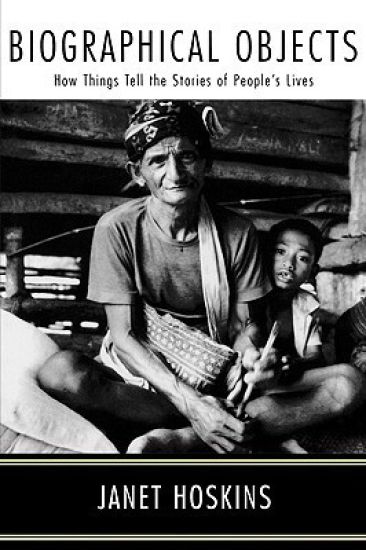
In this innovative study, six women and men from Eastern Indonesia narrate their own lives by talking about their possessions--domestic objects used to construct a coherent identity through a process of identification and self-historicizing. Janet Hoskins explores how things are given biographical significance and entangled in sexual politics, expressed in dualistic metaphors where the familiar distinctions between person and object and female and male are drawn in unfamiliar ways. Biographical Objects is an ethnography of persons which takes the form of a study of things, showing how the object is not only a metaphor for the self but a pivot for reflexivity and introspection, a tool for autobiographic elaboration, a way of knowing oneself through things.
The Play of Time

The Play of Time

Janet Hoskins

University of California Press
1997
pokkari
Janet Hoskins provides both an ethnographic study of the organization of time in an Eastern Indonesian society and a theoretical argument about alternate temporalities in the modern world. Based on more than three years of field work with the Kodi people of the island of Sumba, her book focuses on Kodi calendrical rituals, exchange transactions, and confrontations with the historical forces of the colonial and postcolonial world. Hoskins explores the contingent, contested, and often contradictory precedent of the past to show how local systems of knowledge are in dialogue with wider historical forces. Arguing that traditional temporality is more complex than many theorists have realized, Hoskins highlights the flexibility and relativity of local time concepts, whose sophistication belies the cliche of simple societies living in a world outside of time.
The Divine Eye and the Diaspora

The Divine Eye and the Diaspora

Janet Hoskins

University of Hawai'i Press
2015
sidottu
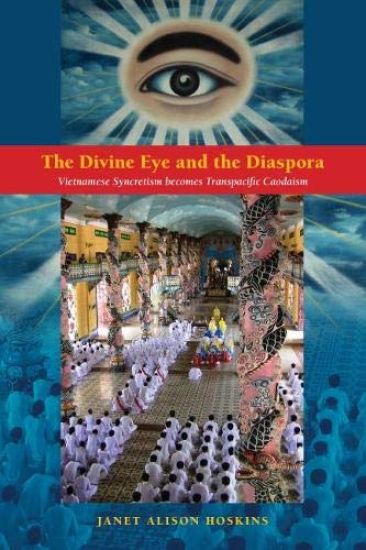
Caodaism is a new religion born in Vietnam during the struggles of decolonization, shattered and spatially dispersed by cold war conflicts, now trying to reshape the goals of its four million followers. Colorful and strikingly syncretistic, it incorporates elements of Chinese, Buddhist, and Western religions as well as more recent outstanding world figures like Victor Hugo, Jeanne d’Arc, Vladimir Lenin, and (in the United States) Joseph Smith, the founder of Mormonism.The book looks at the connections between “the age of revelations” (1925–1934) in French Indochina and the “age of diaspora” (1975–present) when many Caodai leaders and followers went into exile. Structured in paired biographies to trace relations between masters and disciples, now separated by oceans, it focuses on five members of the founding generation and their followers or descendants in California, showing the continuing obligation to honor those who forged the initial vision to “bring the gods of the East and West together.” The syncretism of the colonialperiod has been transformed by the experience of exile into a diasporic formation, at the same time that Caodaism in Vietnam has emerged from a period of severe restrictions to return to the public arena. Caodaism forces us to reconsider how anthropologistsstudy religious mixtures in postcolonial settings, since its dynamics challenge the unconscious Eurocentrism of our notions of how religions are bounded and conceptualized.
The Divine Eye and the Diaspora

The Divine Eye and the Diaspora

Janet Hoskins

University of Hawai'i Press
2015
nidottu
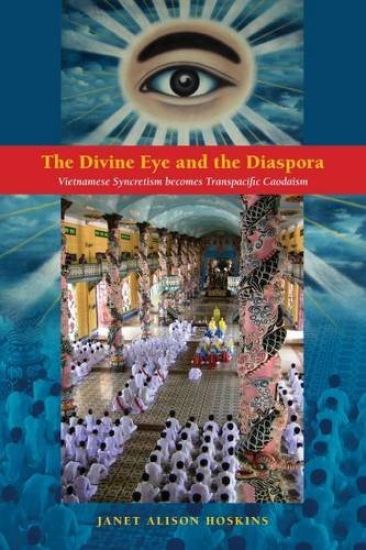
Caodaism is a new religion born in Vietnam during the struggles of decolonization, shattered and spatially dispersed by cold war conflicts, now trying to reshape the goals of its four million followers. Colorful and strikingly syncretistic, it incorporates elements of Chinese, Buddhist, and Western religions as well as more recent outstanding world figures like Victor Hugo, Jeanne d’Arc, Vladimir Lenin, and (in the United States) Joseph Smith, the founder of Mormonism.The book looks at the connections between “the age of revelations” (1925–1934) in French Indochina and the “age of diaspora” (1975–present) when many Caodai leaders and followers went into exile. Structured in paired biographies to trace relations between masters and disciples, now separated by oceans, it focuses on five members of the founding generation and their followers or descendants in California, showing the continuing obligation to honor those who forged the initial vision to “bring the gods of the East and West together.” The syncretism of the colonialperiod has been transformed by the experience of exile into a diasporic formation, at the same time that Caodaism in Vietnam has emerged from a period of severe restrictions to return to the public arena. Caodaism forces us to reconsider how anthropologistsstudy religious mixtures in postcolonial settings, since its dynamics challenge the unconscious Eurocentrism of our notions of how religions are bounded and conceptualized.