Kirjojen hintavertailu. Mukana 12 016 292 kirjaa ja 12 kauppaa.

Kirjahaku

Etsi kirjoja tekijän nimen, kirjan nimen tai ISBN:n perusteella.

2 kirjaa tekijältä Janet Huskinson

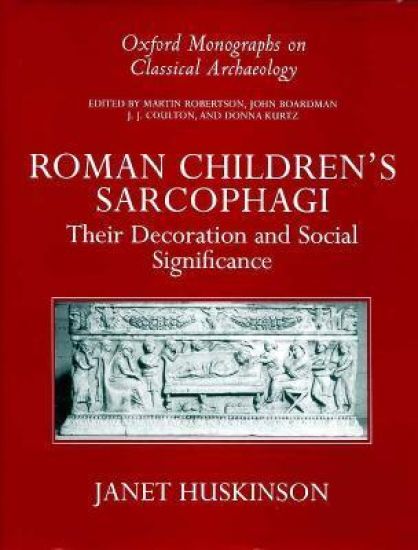
Roman Children's Sarcophagi

Roman Children's Sarcophagi

Janet Huskinson

Clarendon Press
1996
sidottu
This book is the first major study of the themes which were used in the decoration of sarcophagi made for children in Rome and Ostia from the late first to early fourth century AD. It provides a selective catalogue of examples of each type, followed by discussion of how these fit into the general pattern. This allows certain themes to be identified which are virtually exclusive to childre's sarcophagi. The second part of the book discusses the choice of subjects and how these reflect the standing of children in Roman society: to what extent, for instance, was childhood shown as a differentiated stage of life, or was it dominated by aspirations of the adult world? How is the death of a child treated in art? There are separate sections on the role of workshops and customers in the development of child-specific imagery, and on material from the early Christian era, providing some interesting differences resulting from differing attitudes towards children and beliefs about life and death.
Roman Strigillated Sarcophagi

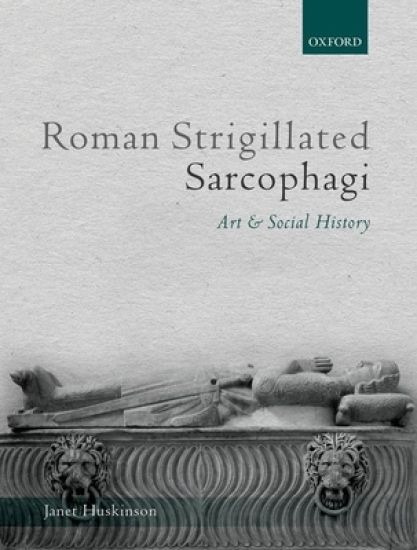
Roman Strigillated Sarcophagi

Janet Huskinson

Oxford University Press
2015
sidottu
This is the first full study of Roman strigillated sarcophagi, which are the largest group of decorated marble sarcophagi to survive in the city of Rome. Characterized by panels of carved fluting - hence the description 'strigillated', after the curved strigil used by Roman bathers to scrape off oil - and limited figure scenes, they were produced from the mid-second to the early fifth century AD, and thus cover a critical period in Rome, from empire to early Christianity. Roman Strigillated Sarcophagi focuses on their rich potential as an historical source for exploring the social and cultural life of the city in the later empire. The first part of the volume examines aspects of their manufacture, use, and viewing, emphasizing distinctive features. The second part looks at the figured representations carved on the sarcophagi, and at their social significance and creativity, concentrating on how their various arrangements allowed viewers to develop their own interpretations. The subjects represented by the figures and the flexibility with which they might be read, provide invaluable insights into how Romans thought about life and death during these changing times. The final part of the volume surveys how later societies responded to Roman strigillated sarcophagi. From as early as the fifth century AD their distinctive decoration and allusions to the Roman past made them especially attractive for reuse in particular contemporary contexts, notably for elite burials and the decoration of prominent buildings. The motif of curved fluting was also adopted and adapted: it decorated neo-classical memorials to Captain Cook, Napoleon's sister-in-law Christine Boyer, and Penelope Boothby, and its use continues into this century, well over one and a half millennia since it first decorated Roman sarcophagi.