Kirjojen hintavertailu. Mukana 11 622 693 kirjaa ja 12 kauppaa.

Kirjahaku

Etsi kirjoja tekijän nimen, kirjan nimen tai ISBN:n perusteella.

3 kirjaa tekijältä Janet L. Hiebert

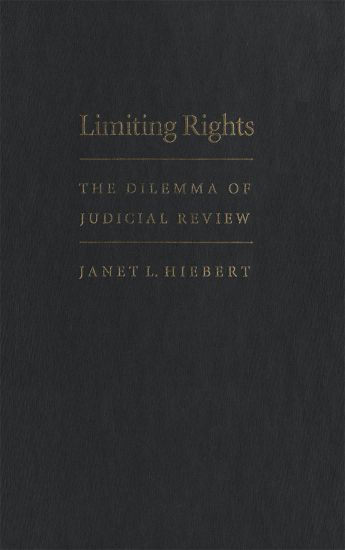
Limiting Rights

Limiting Rights

Janet L. Hiebert

McGill-Queen's University Press
1996
sidottu
Through an extended analysis of Supreme Court decisions involving limits on protected rights, Hiebert explores the issues surrounding judicial review. She explores how difficult it is for judges to determine the reasonableness of legislative initiatives and examines the considerable influence exerted by Canadian politicians in decisions about which legislative activities will be considered justifiable limits on protected rights. Politicians have, in other words, helped define the very constraints that the Charter was intended to impose on them. Limiting Rights sheds light on one of the most contentious issues in a political system with entrenched rights.
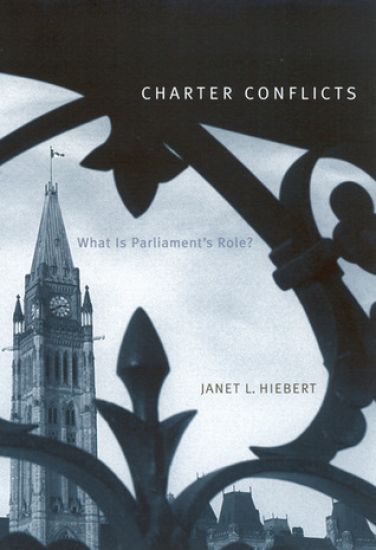
Charter Conflicts

Charter Conflicts

Janet L. Hiebert

McGill-Queen's University Press
2002
sidottu
Although the Canadian Charter of Rights and Freedoms is twenty years old, little is known about how it affects those who wield power, what influence it has on legislative decisions, or to what extent the government believes it should be constrained by Charter concerns. For most laws Parliament has the final word on how social policy is balanced against protected rights. Thus the extent to which legislation is sensitive towards rights depends on how those who develop, propose, and assess policy view the Charter. How influential are governmental legal advisors? How risk averse or risk tolerant are government ministers when pursuing legislative goals that may result in Charter challenges? How capable is Parliament in requiring government to justify and explain legislative choices that may impair rights? In Charter Conflicts Janet Hiebert examines these questions while analyzing the Charter's influence on controversial legislative decisions such as social benefits for lesbians and gay men, the regulation of tobacco advertising, the rules of evidence for sexual assault trials, the use of DNA for law enforcement purposes, and the rules for police searches of private residences. She questions the broadly held assumption that only courts are capable of respecting rights, arguing that Parliament shares responsibility with the judiciary for resolving Charter conflicts. She views the Charter's significance less in terms of the judiciary overruling Parliament than in the incentives and pressures it provides for public and political officials to satisfy themselves that legislation is consistent with protected rights.
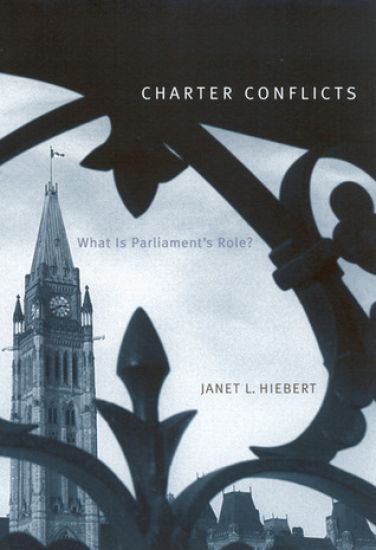
Charter Conflicts

Charter Conflicts

Janet L. Hiebert

McGill-Queen's University Press
2002
nidottu
Although the Canadian Charter of Rights and Freedoms is twenty years old, little is known about how it affects those who wield power, what influence it has on legislative decisions, or to what extent the government believes it should be constrained by Charter concerns. For most laws Parliament has the final word on how social policy is balanced against protected rights. Thus the extent to which legislation is sensitive towards rights depends on how those who develop, propose, and assess policy view the Charter. How influential are governmental legal advisors? How risk averse or risk tolerant are government ministers when pursuing legislative goals that may result in Charter challenges? How capable is Parliament in requiring government to justify and explain legislative choices that may impair rights? In Charter Conflicts Janet Hiebert examines these questions while analyzing the Charter's influence on controversial legislative decisions such as social benefits for lesbians and gay men, the regulation of tobacco advertising, the rules of evidence for sexual assault trials, the use of DNA for law enforcement purposes, and the rules for police searches of private residences. She questions the broadly held assumption that only courts are capable of respecting rights, arguing that Parliament shares responsibility with the judiciary for resolving Charter conflicts. She views the Charter's significance less in terms of the judiciary overruling Parliament than in the incentives and pressures it provides for public and political officials to satisfy themselves that legislation is consistent with protected rights.