Kirjojen hintavertailu. Mukana 11 244 527 kirjaa ja 12 kauppaa.

Kirjahaku

Etsi kirjoja tekijän nimen, kirjan nimen tai ISBN:n perusteella.

7 kirjaa tekijältä Janet L. Nelson

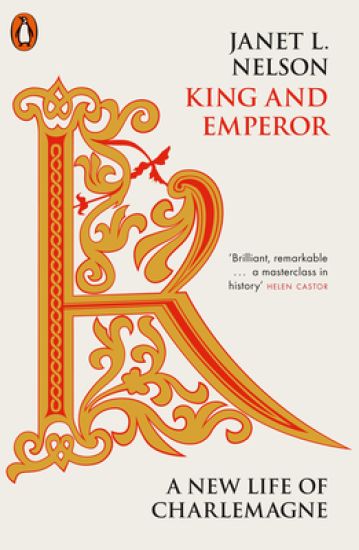
King and Emperor

King and Emperor

Janet L. Nelson

Penguin Books Ltd
2020
pokkari
A DAILY TELEGRAPH AND BBC HISTORY MAGAZINE BOOK OF THE YEAR 2019 'A remarkable book: the dramatic story of a truly extraordinary man ... brilliant' Helen Castor, author of She-Wolves A major new biography of one of the most extraordinary of all rulers, and the father of present-day EuropeCharles, King of the Franks, is one of the most remarkable figures ever to rule a European super-state. That is why he is so often called 'Charles the Great': by the French 'Charlemagne', and by the Germans 'Karl der Grosse'. His strength of character was felt to be remarkable from early in his long reign. Warfare and accident, vermin and weather have destroyed much of the evidence for his rule in the twelve centuries since his death, but a remarkable amount still survives. Janet L. Nelson's wonderful new book brings together everything we know about Charlemagne and sifts through the evidence to come as close as we can to understanding the man and his motives. Nelson has an extraordinary knowledge of the sources and much of the book is a sort of detective story, prying into and interpreting fascinating material and often obdurate scraps, from prayerbooks to skeletons, gossip to artwork. Above all, Charles' legacy lies in his deeds and their continuing resonance, as he shaped duchies and counties, rebuilt and founded towns and monasteries, and consciously set himself up not just as King of the Franks, but as the new 'Emperor governing the Roman Empire'. His successors - in some ways to the present day - have struggled to interpret, misinterpret, copy or subvert Charlemagne's legacy. Nelson gets us as close as we can ever hope to come to the real figure, as understood in his own time.
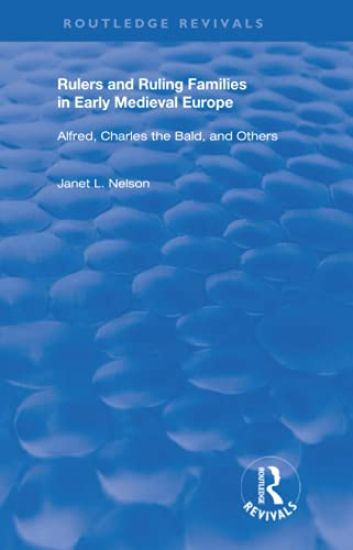
Rulers and Ruling Families in Early Medieval Europe
First published in 1999, the ideas and practices involved in early medieval royal family politics are the central theme of this collection of papers by Janet L. Nelson. She first examines King Alfred of Wessex (871-99) in the context of Anglo-Saxon conditions and in comparison with his Carolingian contemporaries. When tension and conflict within the royal family are highlighted, she argues that Alfred’s talents and political thought emerge the more impressively. A second group of papers deals with the reign of Charles the Bald (840-77): his patronage of learning and his interest in Spanish martyrs are set in political context, while contemporary historiography is considered as a form of counsel and critique. The third section reflects Nelson’s growing interest in the political importance and gendered roles of royal women. Consecration rites are analysed as ritual expressions and factors in the shaping of the queenship, while two final papers also examine the making and unmaking of Frankish kings and princes.
Rulers and Ruling Families in Early Medieval Europe
First published in 1999, the ideas and practices involved in early medieval royal family politics are the central theme of this collection of papers by Janet L. Nelson. She first examines King Alfred of Wessex (871-99) in the context of Anglo-Saxon conditions and in comparison with his Carolingian contemporaries. When tension and conflict within the royal family are highlighted, she argues that Alfred’s talents and political thought emerge the more impressively. A second group of papers deals with the reign of Charles the Bald (840-77): his patronage of learning and his interest in Spanish martyrs are set in political context, while contemporary historiography is considered as a form of counsel and critique. The third section reflects Nelson’s growing interest in the political importance and gendered roles of royal women. Consecration rites are analysed as ritual expressions and factors in the shaping of the queenship, while two final papers also examine the making and unmaking of Frankish kings and princes.
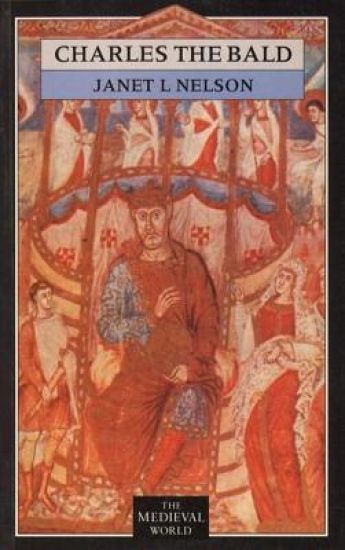
Charles The Bald

Charles The Bald

Janet L. Nelson

Routledge
1992
nidottu
This important and long-awaited study is the first full-scale biography of Charlemagne's grandson, King of the West Franks from 843 to 877, and Emperor from 875. Posterity has not been kind to Charles or his age, seeing him as a fatally weak ruler in decadent times, threatened by Viking invaders and overmighty subjects. Janet Nelson, however, reveals an able and resourceful ruler who, under challenging conditions, maintained and enhanced royal authority, and held together the kingdom that, outlasting the Carolingians themselves, in due course became France.
Courts, Elites, and Gendered Power in the Early Middle Ages

Courts, Elites, and Gendered Power in the Early Middle Ages

Janet L. Nelson

Ashgate Publishing Limited
2007
sidottu
A major theme in the volume of articles by Janet Nelson is the usefulness of gender as a category of historical analysis. Papers range widely across early medieval time and geographical as well as social space, but most focus on the Carolingian period and on royalty and elites. The workings of dynastic political power are viewed in social as well as political context, and the author explores the realities of gendered power, which while constraining women, gave them distinctive possibilities for agency. These papers offer new perspectives on the Carolingian world in general and on Charlemagne's reign in particular.
Rulers and Ruling Families in Early Medieval Europe
The ideas and practices involved in early medieval royal family politics are the central theme of this collection of papers by Janet L. Nelson. She first examines King Alfred of Wessex (871-99) in the context of Anglo-Saxon conditions and in comparison with his Carolingian contemporaries. When tension and conflict within the royal family are highlighted, she argues that Alfred’s talents and political thought emerge the more impressively. A second group of papers deals with the reign of Charles the Bald (840-77): his patronage of learning and his interest in Spanish martyrs are set in political context, while contemporary historiography is considered as a form of counsel and critique. The third section reflects Nelson’s growing interest in the political importance and gendered roles of royal women. Consecration rites are analysed as ritual expressions and factors in the shaping of the queenship, while two final papers also examine the making and unmaking of Frankish kings and princes.
Charles The Bald

Charles The Bald

Janet L. Nelson

Routledge
2016
sidottu
This important and long-awaited study is the first full-scale biography of Charlemagne's grandson, King of the West Franks from 843 to 877, and Emperor from 875. Posterity has not been kind to Charles or his age, seeing him as a fatally weak ruler in decadent times, threatened by Viking invaders and overmighty subjects. Janet Nelson, however, reveals an able and resourceful ruler who, under challenging conditions, maintained and enhanced royal authority, and held together the kingdom that, outlasting the Carolingians themselves, in due course became France.