Kirjojen hintavertailu. Mukana 11 244 527 kirjaa ja 12 kauppaa.

Kirjahaku

Etsi kirjoja tekijän nimen, kirjan nimen tai ISBN:n perusteella.

4 kirjaa tekijältä Janet M. Hartley

Russia, 1762-1825

Russia, 1762-1825

Janet M. Hartley

Praeger Publishers Inc
2008
sidottu
A study of the Russian Empire at the peak of its military power and success (1762-1825), this important book examines how a country with none of the obvious trappings of modernization was able to significantly expand its territory. Russia's military and naval victories culminated in the triumphal entrance of Russian forces into Paris in 1814 in celebration of the defeat of Napoleon. Hartley's treatment is wide-ranging and discusses many aspects of the nature of the Russian state and society-not merely issues such as recruitment, but also institutional, legal, and fiscal structures of the state, the unique nature of Russian industrialization and social organization at the urban and village level, as well as the impact on cultural life. She covers the reign of two of Russia's most prominent rulers: Catherine II (1762-1796) and Alexander I (1801-25).How could a country lacking modernized structures-political, institutional, social, fiscal, economic, industrial, and cultural-sustain this level of military effort and support the largest standing army in Europe? What impact did the strain of this commitment of men and money, including the invasion of 1812, have on the state and society-particularly on those who were either conscripted or the dependents they left behind? Despite the success of the Russian state, by 1825 the strains would become almost unsustainable.
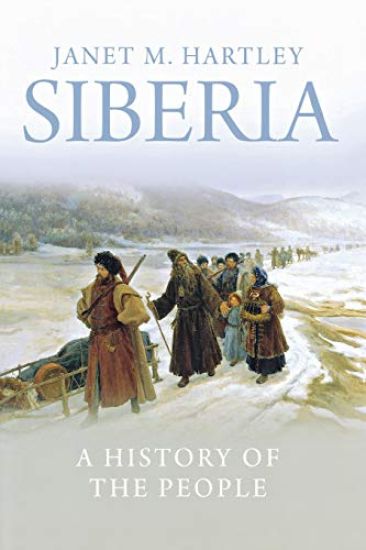
Siberia

Siberia

Janet M. Hartley

Yale University Press
2018
pokkari
Larger in area than the United States and Europe combined, Siberia is a land of extremes, not merely in terms of climate and expanse, but in the many kinds of lives its population has led over the course of four centuries. Janet M. Hartley explores the history of this vast Russian wasteland—whose very name is a common euphemism for remote bleakness and exile—through the lives of the people who settled there, either willingly, desperately, or as prisoners condemned to exile or forced labor in mines or the gulag. From the Cossack adventurers’ first incursions into “Sibir” in the late sixteenth century to the exiled criminals and political prisoners of the Soviet era to present-day impoverished Russians and entrepreneurs seeking opportunities in the oil-rich north, Hartley’s comprehensive history offers a vibrant, profoundly human account of Siberia’s development. One of the world’s most inhospitable regions is humanized through personal narratives and colorful case studies as ordinary—and extraordinary—everyday life in “the nothingness” is presented in rich and fascinating detail.
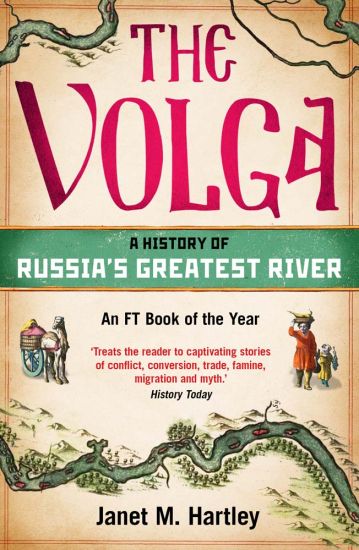
The Volga

The Volga

Janet M. Hartley

YALE UNIVERSITY PRESS
2022
pokkari
A rich and fascinating exploration of the Volga River and its vital place in Russian history—named a Best Book of 2021 by the Financial Times “A memorable journey into the heart of Russian social, political, and cultural history.”—Jennifer Eremeeva, Moscow Times “‘Without the Volga, there would be no Russia.’ The final words of Janet Hartley’s book sound sweeping. But its 400 pages make the case powerfully.”—The Economist The longest river in Europe, the Volga stretches more than three and a half thousand km from the heart of Russia to the Caspian Sea, separating west from east. The river has played a crucial role in the history of the peoples who are now a part of the Russian Federation—and has united and divided the land through which it flows. Janet Hartley explores the history of Russia through the Volga from the seventh century to the present day. She looks at it as an artery for trade and as a testing ground for the Russian Empire’s control of the borderlands, at how it featured in Russian literature and art, and how it was crucial for the outcome of the Second World War at Stalingrad. This vibrant account unearths what life on the river was really like, telling the story of its diverse people and its vital place in Russian history.
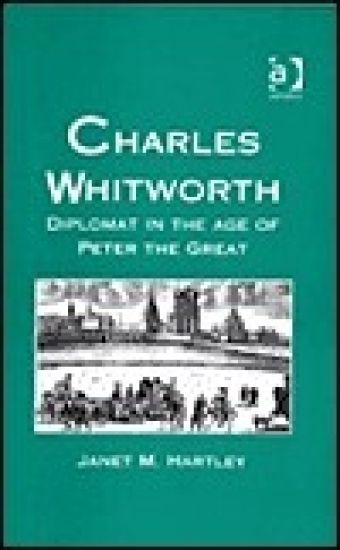
Charles Whitworth

Charles Whitworth

Janet M. Hartley

Ashgate Publishing Limited
2002
sidottu
In 1700 the armies of the Russian Tsar Peter the Great and Charles XII of Sweden met at Narva to fight the first battle of what was to be known as the Great Northern War. Although this first engagement was to result in a humiliating defeat for Peter, it marked the start of a struggle that twenty years later would see Russia emerge as a major power and radically alter the balance of power in Europe. This work examines the changes in the balance of power in Europe in the early eighteenth century as a result of the Great Northern War and the War of the Spanish Succession through the writings and career of Charles Whitworth, the first British Ambassador to Russia, and Minister in The Hague, Berlin, Ratisbon and Cambrai. Whitworth was an acute, witty and indefatigable writer. His long and detailed dispatches and reports comment on Russian, Prussian, Austrian and Dutch domestic and foreign policy, on trading and commercial matters, on leading personalities and events, and on the diplomacy of the Great Northern War and the War of Spanish Succession. He was in Russia from 1705 to 1712 and witnessed the growing military, naval and commercial power of the state and was acutely aware of the potential threat of Russia to British interests. The period of Whitworth's diplomatic career, from 1702-1725, witnessed a dramatic shift in the balance of power in the North, and the nature, and timing, of Whitworth's postings made him uniquely qualified to chart and analyse this development. Drawing on a wide variety of manuscript sources, Dr Hartley has produced a compelling account both of Whitworth and the momentous events taking place in Europe at the beginning of the eighteenth century.