Kirjojen hintavertailu. Mukana 11 244 527 kirjaa ja 12 kauppaa.

Kirjahaku

Etsi kirjoja tekijän nimen, kirjan nimen tai ISBN:n perusteella.

21 kirjaa tekijältä Janet Malcolm

Janet Malcolm: The Last Interview

Janet Malcolm: The Last Interview

Janet Malcolm

Melville House Publishing
2022
nidottu
A provocative collection of interviews with the sublimely talented writer, author of the shattering Journalist and the Murderer The legendary journalist, Janet Malcolm, opened her most famous work The Journalist and the Murderer with the line: "Every journalist who is not too stupid or too full of himself to notice what is going on knows that what he does is morally indefensible." Ever since its publication in 1980, she only increased her reputation as a devastatingly sharp writer, whose eye for observation is matched only by her formal inventiveness and philosophical interrogations of the relationship between journalist and subject. Predictably, as an interview subject herself, she was an intimidating mark. In this collection, interviewers tangle with their own projections and identifications, while she often, gamely, plays along. Full of insights about her writing process, the craft of journalism, and her own analysis of her most famous works, this collection proves that Janet Malcolm is just as elusive and enlightening in conversation as she was on paper.
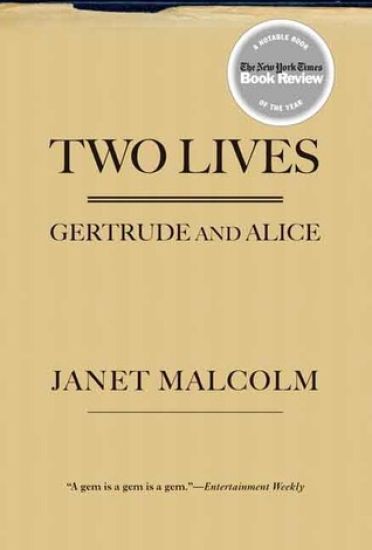
Two Lives

Two Lives

Janet Malcolm

Yale University Press
2008
pokkari
Winner of the PEN/Jacqueline Bograd Weld Award for Biography: the story of the mystifying relationship between the brilliant and affable Gertrude Stein and her brooding companion, Alice B. Toklas"Janet Malcolm deftly captures Alice B. Toklas's legendary 40-year partnership with the brilliant modernist Gertrude Stein in Two Lives, clearing up a few mysteries along the way—including how two Jewish women were able to survive World War II in their provincial French château with the help of a Vichy collaborator."—Vogue"Shrewd, humane, and beautifully written."— John Gross, Wall Street Journal "How had the pair of elderly Jewish lesbians survived the Nazis?” Janet Malcolm asks at the beginning of this extraordinary work of literary biography and investigative journalism. The pair, of course, is Gertrude Stein, the modernist master “whose charm was as conspicuous as her fatness” and “thin, plain, tense, sour” Alice B. Toklas, the “worker bee” who ministered to Stein’s needs throughout their forty-year expatriate “marriage.” As Malcolm pursues the truth of the couple’s charmed life in a village in Vichy France, her subject becomes the larger question of biographical truth. “The instability of human knowledge is one of our few certainties,” she writes. The portrait of the legendary couple that emerges from this work is unexpectedly charged. The two world wars Stein and Toklas lived through together are paralleled by the private war that went on between them. This war, as Malcolm learned, sometimes flared into bitter combat.Two Lives is also a work of literary criticism. “Even the most hermetic of [Stein’s] writings are works of submerged autobiography,” Malcolm writes. “The key of 'I' will not unlock the door to their meaning—you need a crowbar for that—but will sometimes admit you to a kind of anteroom of suggestion.” Whether unpacking the accessible Autobiography of Alice B. Toklas, in which Stein “solves the koan of autobiography,” or wrestling with The Making of Americans, a masterwork of “magisterial disorder,” Malcolm is stunningly perceptive.Praise for the author:“[Janet Malcolm] is among the most intellectually provocative of authors . . .able to turn epiphanies of perception into explosions of insight.”—David Lehman, Boston Globe“Not since Virginia Woolf has anyone thought so trenchantly about the strange art of biography.”—Christopher Benfey
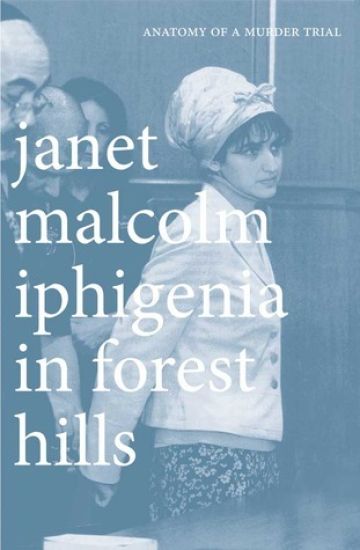
Iphigenia in Forest Hills

Iphigenia in Forest Hills

Janet Malcolm

Yale University Press
2012
pokkari
Prizewinning journalist Janet Malcolm discovers the elements of Greek tragedy in a sensational New York City murder trial"Astringent and absorbing. . . . Iphigenia in Forest Hills casts, from its first pages, a genuine spell — the kind of spell to which Ms. Malcolm’s admirers (and I am one) have become addicted."—Dwight Garner, New York Times"This is shrewd and quirky crime reporting at its irresistible and disabused best."—Louis Begley, Wall Street Journal "She couldn't have done it and she must have done it." This is the enigma at the heart of Janet Malcolm's riveting book about a murder trial in the insular Bukharan-Jewish community of Forest Hills, Queens, that captured national attention. The defendant, Mazoltuv Borukhova, a beautiful young physician, is accused of hiring an assassin to kill her estranged husband, Daniel Malakov, a respected orthodontist, in the presence of their four-year old child. The prosecutor calls it an act of vengeance: just weeks before Malakov was killed in cold blood, he was given custody of Michelle for inexplicable reasons. It is the "Dickensian ordeal" of Borukhova's innocent child that drives Malcolm's inquiry.With the intellectual and emotional precision for which she is known, Malcolm looks at the trial—"a contest between competing narratives"—from every conceivable angle. It is the chasm between our ideals of justice and the human factors that influence every trial—from divergent lawyering abilities to the nature of jury selection, the malleability of evidence, and the disposition of the judge—that is perhaps most striking.Surely one of the most keenly observed trial books ever written, Iphigenia in Forest Hills is ultimately about character and "reasonable doubt." As Jeffrey Rosen writes, it is "as suspenseful and exciting as a detective story, with all the moral and intellectual interest of a great novel.""Iphigenia in Forest Hills is another dazzling triumph from Janet Malcolm. Here, as always, Malcolm’s work inspires the best kind of disquiet in a reader—the obligation to think." —Jeffrey Toobin, author of The Nine: Inside the Secret World of the Supreme Court"A remarkable achievement that ranks with Malcolm's greatest books. Her scrupulous reporting and interviews with protagonists on both sides of the trial make her own narrative as suspenseful and exciting as a detective story, with all the moral and intellectual interest of a great novel." —Jeffrey Rosen, author of The Supreme Court: The Personalities and Rivalries that Defined America
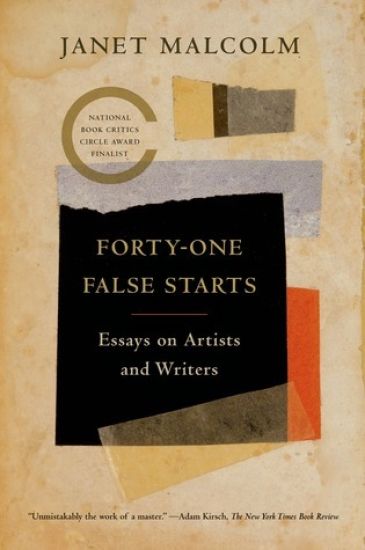
Forty-One False Starts

Forty-One False Starts

Janet Malcolm

Farrar, Straus Giroux Inc
2014
nidottu
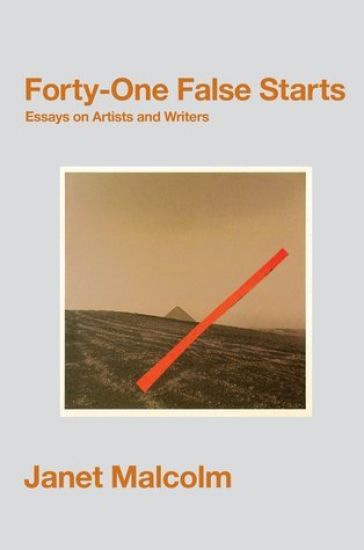
Janet Malcolm's In the Freud Archives and The Journalist and the Murderer, as well as her biographies of Sylvia Plath and Gertrude Stein, are canonical in the realm of nonfiction - as is the title essay of this collection, with its forty-one "false starts," or serial attempts to capture the essence of the painter David Salle, which become a dazzling portrait of an artist. "She is among the most intellectually provocative of authors," writes David Lehman in The Boston Globe, "able to turn epiphanies of perception into explosions of insight." Forty-one False Starts brings together for the first time essays published over the course of several decades (many from The New Yorker and The New York Review of Books) that reflect Malcolm's preoccupation with artists and their work. Her subjects are painters, photographers, writers, and critics. She explores the "dominating passion" of Bloomsbury to create things visual and literary, the "passionate collaborations" behind Edward Weston's nudes, and the psyche of the German photographer Thomas Struth. She delves beneath the "onyx surface" of Edith Wharton's fiction, appreciates the black comedy of the Gossip Girl novels, and confronts the false starts of her own autobiography. As Ian Frazier writes in the introduction, "Over and over Malcolm has demonstrated that an article in a magazine-something we see every day-can rise to the highest level of literature."
The Crime of Sheila McGough

The Crime of Sheila McGough

Janet Malcolm

VINTAGE
2000
nidottu
The Crime of Sheila McGough is Janet Malcolm's brilliant expos of miscarriage of justice in the case of Sheila McGough, a disbarred lawyer recently released from prison. McGough had served 2 1/2 years for collaborating with a client in his fraud, but insisted that she didn't commit any of the 14 felonies she was convicted. " N]o other writer tells better stories about the perpetual, the unwinnable, battle between narrative and truth." --The New York Times Book Review An astonishingly persuasive condemnation of the cupidity of American law and its preference for convincing narrative rather than the truth, this is also a story with an unconventional heroine. McGough is a zealous defense lawyer duped by a white-collar con man; a woman who lives, at the age of 54, with her parents; a journalistic subject who frustrates her interviewer with her maddening literal-mindedness. Spirited, illuminating, delightfully detailed, The Crime of Sheila McGough is both a dazzling work of journalism and a searching meditation on character and the law.
Psychoanalysis: The Impossible Profession
From the author of In the Freud Archives and The Journalist and the Murderer comes an intensive look at the practice of psychoanalysis through interviews with "Aaron Green," a Freudian analyst in New York City. "Janet Malcom has managed somehow to peer into the reticent, reclusive world of psychoanalysis and to report to us, with remarkable fidelity, what she has seen. Her book is journalism become art." --Joseph Andelson, The New York Times Book Review Malcolm is accessible and lucid in describing the history of psychoanalysis and its development in the United States. It provides rare insight into the contradictory world of psychoanalytic training and treatment and a foundation for our understanding of psychiatry and mental health.
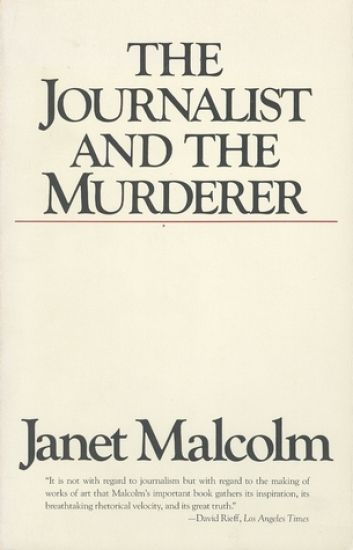
The Journalist and the Murderer

The Journalist and the Murderer

Janet Malcolm

VINTAGE
1990
nidottu
Named one of the 100 Best Nonfiction Books by The Modern Library and The Guardian - With surgical precision, Janet Malcolm dissects the famous case of journalist Joe McGinniss and murderer Jeffrey MacDonald. A riveting exploration of the uneasy dynamic between writers and their subjects and a must-read for anyone intrigued by journalism, the complexities of human nature, and true crime Malcolm deftly analyzes the real-life lawsuit of Jeffrey MacDonald, a convicted murderer, against Joe McGinniss, the author of Fatal Vision. At the heart of this masterfully crafted narrative is McGinniss's controversial portrayal of MacDonald, a former Green Beret convicted of murdering his pregnant wife and two young daughters. While writing the true crime book Fatal Vision, McGinniss ingratiated himself with MacDonald under the guise of supporting his innocence, only to portray him as guilty in the final publication. The resulting libel case put McGinniss's methods on trial, sparking a gripping examination of the ethics governing the writer-subject covenant. Through probing interviews with the key players - the principals, their lawyers, members of the jury, and expert witnesses - Malcolm provides an atmospheric retelling of the sensational trial. But her true subject is the treacherous territory writers must navigate when trying to objectively chronicle the lives of others. With piercing self-awareness, Malcolm examines her own role and motivations, laying bare the inherent conflicts and power dynamics that arise when a journalist pursues a story. Her candid, rueful reflections transform a seemingly straightforward work of reportage into a profound exploration of journalistic ethics and the limits of factual truth.
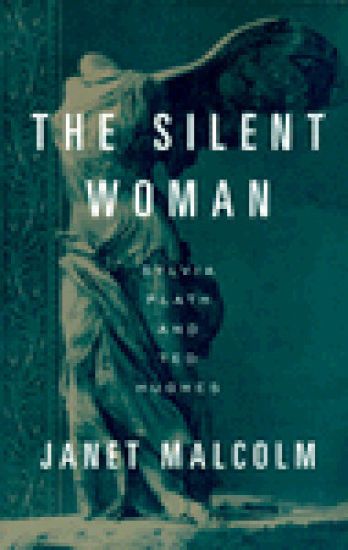
The Silent Woman: Sylvia Plath and Ted Hughes
In an astonishing feat of literary detection, one of the most provocative critics of our time and the author of In the Freud Archives and The Purloined Clinic offers an elegantly reasoned meditation on the art of biography. "Among the most intellectually provocative of authors . . . able to turn epiphanies of perception into explosions of insight."--David Lehman, Boston Globe In The Silent Woman, Janet Malcolm examines the biographies of Sylvia Plath to create a book not about Plath's life but about her afterlife: how her estranged husband, the poet Ted Hughes, as executor of her estate, tried to serve two masters--Plath's art and his own need for privacy; and how it fell to his sister, Olwyn Hughes, as literary agent for the estate, to protect him by limiting access to Plath's work. Even as Malcolm brings her skepticism to bear on the claims of biography to present the truth about a life, a portrait of Sylvia Plath emerges that gives us a sense of "knowing" this tragic poet in a way we have never known her before. And she dispels forever the innocence with which most of us have approached the reading of any biography.
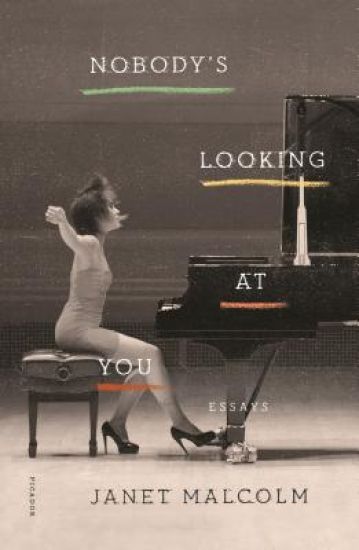
Nobody's Looking at You

Nobody's Looking at You

Janet Malcolm

Picador USA
2020
nidottu
A New York Times Book Review Editors' Choice. A 2019 NPR Staff Pick."Malcolm is always worth reading; it can be instructive to see how much satisfying craft she brings to even the most trivial article." --Phillip Lopate, TLS Janet Malcolm's previous collection, Forty-One False Starts: Essays on Artists and Writers, was "unmistakably the work of a master" (The New York Times Book Review). Like Forty-One False Starts, Nobody's Looking at You brings together previously uncompiled pieces, mainly from The New Yorker and The New York Review of Books. The title piece of this wonderfully eclectic collection is a profile of the fashion designer Eileen Fisher, whose mother often said to her, "Nobody's looking at you." But in every piece in this volume, Malcolm looks closely and with impunity at a broad range of subjects, from Donald Trump's TV nemesis Rachel Maddow, to the stiletto-heel-wearing pianist Yuju Wang, to "the big-league game" of Supreme Court confirmation hearings. In an essay called "Socks," the Pevears are seen as the "sort of asteroid that] has hit the safe world of Russian Literature in English translation," and in "Dreams and Anna Karenina," the focus is Tolstoy, "one of literature's greatest masters of manipulative techniques." Nobody's Looking at You concludes with "Pandora's Click," a brief, cautionary piece about e-mail etiquette that was written in the early two thousands, and that reverberates--albeit painfully--to this day.
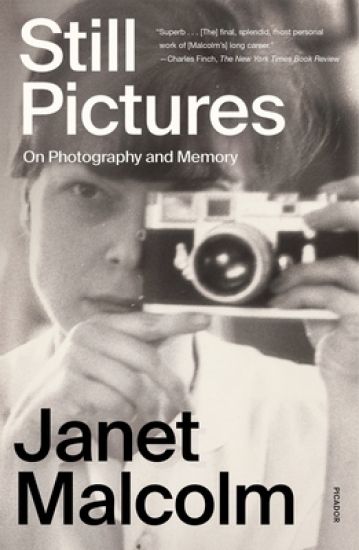
Still Pictures: On Photography and Memory
"Superb . . . The] final, splendid, most personal work of Janet Malcolm's] long career." --Charles Finch, The New York Times Book Review For decades, Janet Malcolm's books and dispatches for The New Yorker and The New York Review of Books poked and prodded at reportorial and biographical convention, gesturing toward the artifice that underpins both public and private selves. In Still Pictures, she turns her gimlet eye on her own life--a task demanding a writer just as peerlessly skillful as she was widely known to be. Still Pictures, then, is not the story of a life but an event on its own terms, an encounter with identity and family photographs as poignant and original as anything since Roland Barthes's Camera Lucida. Malcolm looks beyond the content of the image and the easy seductions of self-recognition, constructing a memoir from memories that pose questions of their own. Still Pictures begins with the image of a morose young girl on a train, leaving Prague for New York at the age of five in 1939. From her fitful early loves, to evenings at the old Metropolitan Opera House, to her fascination with what it might mean to be a "bad girl," Malcolm assembles a composite portrait of a New York childhood, one that never escapes the tug of Europe and the mysteries of fate and family. Later, Still Pictures delves into her marriage to Gardner Botsford, the world of William Shawn's New Yorker, and the libel trial that led Malcolm to become a character in her own drama. Displaying the sharp wit and astute commentary that are Malcolmian trademarks, this brief volume develops into a memoir like few others in our literature.
Psychoanalysis

Psychoanalysis

Janet Malcolm

Jason Aronson Inc. Publishers
1977
sidottu
Through an intensive study of 'Aaron Green,' a Freudian analyst in New York City, New Yorker writer Janet Malcolm reveals the inner workings of psychoanalysis.
In The Freud Archives

In The Freud Archives

Janet Malcolm

NYRB Classics
2002
nidottu
Includes an afterword by the author In the Freud Archives tells the story of an unlikely encounter among three men: K. R. Eissler, the venerable doyen of psychoanalysis; Jeffrey Moussaieff Masson, a flamboyant, restless forty-two-year-old Sanskrit scholar turned psychoanalyst turned virulent anti-Freudian; and Peter Swales, a mischievous thirty-five-year-old former assistant to the Rolling Stones and self-taught Freud scholar. At the center of their Oedipal drama are the Sigmund Freud Archives--founded, headed, and jealously guarded by Eissler--whose sealed treasure gleams and beckons to the community of Freud scholarship as if it were the Rhine gold. Janet Malcolm's fascinating book first appeared some twenty years ago, when it was immediately recognized as a rare and remarkable work of nonfiction. A story of infatuation and disappointment, betrayal and revenge, In the Freud Archives is essentially a comedy. But the powerful presence of Freud himself and the harsh bracing air of his ideas about unconscious life hover over the narrative and give it a tragic dimension.
Psychoanalysis

Psychoanalysis

Janet Malcolm

Granta Books
2018
nidottu
The process known as psychoanalysis is sometimes revered, sometimes derided, and most often misunderstood. What good does it do? Can it help anyone? What risks does it pose to both patient and analyst? None of these questions can be easily answered, but in Janet Malcolm's narrative, in which all her skills as a reporter and interviewer come into play, their complexity is limpidly revealed.
The Journalist And The Murderer

The Journalist And The Murderer

Janet Malcolm

Granta Books
2018
nidottu
'Every journalist who is not too stupid or too full of himself to notice what is going on knows that what he does is morally indefensible' In equal measure famous and infamous, Janet Malcolm's book charts the true story of a lawsuit between Jeffrey MacDonald, a convicted murderer, and Joe McGinniss, the author of a book about the crime. Lauded as one of the Modern Libraries "100 Best Works of Nonfiction", The Journalist and the Murderer is fascinating and controversial, a contemporary classic of reportage.
In The Freud Archives

In The Freud Archives

Janet Malcolm

Granta Books
2018
nidottu
Who will inherit the secrets of Sigmund Freud? Who will protect his reputation? Who may destroy it? Janet Malcolm's investigation into the personalities who clash over Freud's legacy has become a celebrated story of seduction and betrayal, love and hatred, fantasy and reality. It is both a comedy and a tragedy. Malcolm's cast of characters includes K. R. Eissler, a venerable psychoanalyst and keeper of the Freud flame; Jeffrey Mason, a flamboyant Sanskrit scholar and virulent anti-Freudian; and Peter Swales, a former assistant to the Rolling Stones and indefatigable researcher. Each of them thinks they know the truth about Freud, and each needs the help of the other. Malcolm endeavours to untangle the causes of their rivalry and soured friendships, while the flaws and mysteries of Freud's early work tower in the background.
The Silent Woman

The Silent Woman

Janet Malcolm

Granta Books
2020
nidottu
Is it ever possible to know 'the truth' about Sylvia Plath and her marriage to Ted Hughes, which ended with her suicide? In The Silent Woman, renowned writer Janet Malcolm examines the biographies of Sylvia Plath, with particular focus on Anne Stevenson's Bitter Fame, to discover how Plath became an enigma in literary history. The Silent Woman is a brilliant, elegantly reasoned inquiry into the nature of biography, dispelling our innocence as readers, as well as shedding a light onto why Plath's legend continues to exert such a hold on our imaginations.
Still Pictures

Still Pictures

Janet Malcolm

GRANTA BOOKS
2024
nidottu
For decades, Janet Malcolm's books and dispatches for the New Yorker have poked and prodded at biographical convention, gesturing towards the artifice that underpins both public and private selves. Here, Malcolm turns her gimlet eye on her own life, examining twelve family photographs to construct a memoir from camera-caught moments, each of which pose questions of their own. She begins with the picture of a morose young girl on a train, leaving Prague at the age of five in 1939. From there we follow her to the Czech enclave of Yorkville in Manhattan, where her father, a psychiatrist and neurologist, and her mother, an attorney from a bourgeois family, traded their bohemian, Dada-inflected lives for the ambitions of middle-class America. From her early, fitful loves to evenings at the old Metropolitan Opera House to her fascination with what it might mean to be a "bad girl," Malcolm assembles a composite portrait of a New York childhood, one that never escaped the tug of Europe and the mysteries of fate and family. Later, Malcolm delves into her marriage to Gardner Botsford, the world of William Shawn's New Yorker, and the libel trial that led her to become a character in her own drama. Displaying the sharp wit and astute commentary that are Malcolmian trademarks, this brief volume develops into a memoir like no other.
Reading Chekhov

Reading Chekhov

Janet Malcolm

Granta Books
2012
nidottu
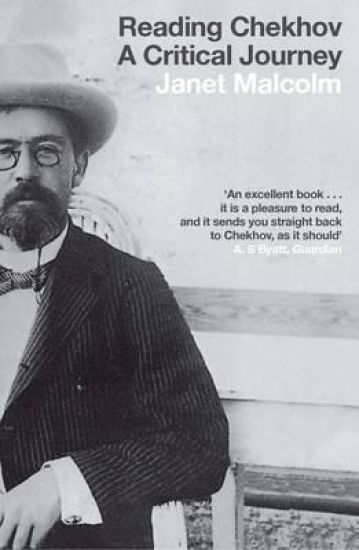
In Reading Chekhov Janet Malcolm takes on three roles: literary critic, biographer and journalist. Her close readings of Chekhov's stories and plays are interwoven with episodes from his life and framed by an account of a recent journey she made to St Petersburg. Malcolm demonstrates how the shadow of death that hovered over most of Chekhov's literary career - he became consumptive in his twenties and died in his forties - is almost everywhere reflected in the work. She writes of his childhood, his relationship with his family, his marriage, his travels, his early success, his exile to Yalta - always with an eye to connecting them to his themes and characters.
Forty-One False Starts

Forty-One False Starts

Janet Malcolm

Granta Books
2014
nidottu
Selected essays from America's foremost literary journalist and essayist, featuring ruminations on writers and artists as diverse as Edith Wharton, Diane Arbus and the Bloomsbury Group. This charismatic and penetrating collection includes Malcolm's now iconic essay about the painter David Salle.