Kirjojen hintavertailu. Mukana 11 244 527 kirjaa ja 12 kauppaa.

Kirjahaku

Etsi kirjoja tekijän nimen, kirjan nimen tai ISBN:n perusteella.

9 kirjaa tekijältä Janis P. Stout

The Journey Narrative in American Literature

The Journey Narrative in American Literature

Janis P. Stout

Praeger Publishers Inc
1983
sidottu
Stout identifies five basic, recurring patterns of the journey narrative: exploration and escape; homeseeking; return; heroic quest; and wandering. Discussion of these patterns is based on considerations such as the direction of the journey, its motivation, and reference to historical precedents. Stout considers works that demonstrate the complex and interwoven patterns of the journey narrative. The more complex the work, the more intricately interwoven these patterns are. To illustrate the all-inclusiveness of the journey motif in American literature Stout pursues the theme into the realm of poetry and relates the fictional journey narrative to the American historical experience.
Katherine Anne Porter

Katherine Anne Porter

Janis P. Stout

University of Virginia Press
1995
sidottu
Katherine Anne Porter's life (1890-1980) closely parallelled that of her century, not only in its span but in its interests and contradictions. She was a Communist sympathiser who later became quasi-fascist, a cosmopolitan who embraced Southern agrarianism, a femme fatale and a feminist.
Willa Cather

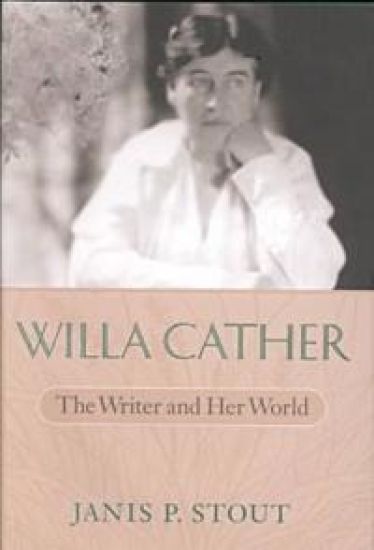
Willa Cather

Janis P. Stout

University of Virginia Press
2000
sidottu
A biography of Willa Cather, presenting a writer whose life and quietly modernist work reflected the artistic and cultural tensions of her day. It seeks to portray a woman and an artist who exemplifies the ambivalence, foreboding and complexity which we associate with the 20th-century mind.
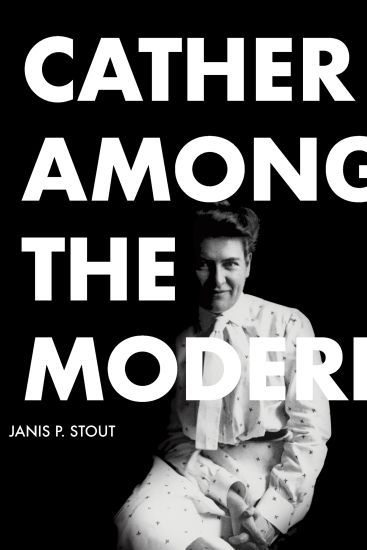
Cather Among the Moderns

Cather Among the Moderns

Janis P. Stout

The University of Alabama Press
2019
sidottu
A masterful study by a preeminent scholar that situates Cather as a visionary practitioner of literary modernism. Willa Cather is often pegged as a regionalist, a feminine and domestic writer, or a social realist. In Cather Among the Moderns, Janis P. Stout firmly situates Cather as a visionary practitioner of literary modernism, something other scholars have hinted at but rarely affirmed. Stout presents Cather on a large, dramatic stage among a sizable cast of characters and against a brightly lit social and historical backdrop, invoking numerous figures and instances from the broad movement in the arts and culture that we call modernism. Early on, Stout addresses the matter of gender. The term ""cross-dresser"" has often been applied to Cather, but Stout sees Cather's identity as fractured or ambiguous, a reading that links her firmly to early twentieth-century modernity. Later chapters take up topics of significance both to Cather and to twentieth-century American modernists, including shifting gender roles, World War I's devastation of social and artistic norms, and strains in racial relations. She explores Cather's links to a small group of modernists who, after the war, embraced life in New Mexico, a destination of choice for many artists, and which led to two of Cather's most fully realized modernist novels, The Professor's House and Death Comes for the Archbishop. The last chapter addresses Cather's place within modernism. Stout first places her in relation to Ezra Pound and T. S. Eliot with their shared ties to tradition even while making, sometimes startling, innovations in literary form, then showing parallels with William Faulkner with respect to economic disparity and social injustice.
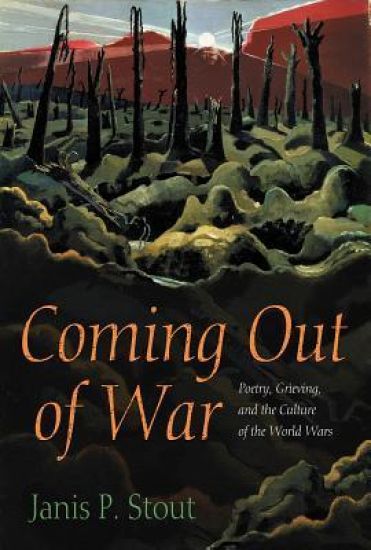
Coming Out of War

Coming Out of War

Janis P. Stout

The University of Alabama Press
2016
nidottu
American and British poetry, music, and visual art born of World Wars I and II.World War I is widely considered “the Great War” and World War II, “the Good War.” Janis Stout thinks of them as two parts of a whole that continues to engage historians and literary scholars searching for an understanding of both the actual war experiences and the modern culture of grief they embody. Poetry, of all the arts, Stout argues, most fully captures and conveys those cultural responses.While probing the work of such well known war poets as Rupert Brooke, Wilfred Owen, and Randall Jarrell, Stout also highlights the impact of the wars on lesser studied, but equally compelling, sources such as the music of Charles Ives and Cole Porter, Aaron Copland and Irving Berlin. She challenges the commonplace belief that war poetry came only from the battlefield and was written only by men by examining the wartime writings of women poets such as Rose Macaulay, Marianne Moore, Elizabeth Bishop, and Gwendolyn Brooks. She also challenges the assumption that World War II did not produce poetry of distinction by studying the work of John Ciardi, Karl Shapiro, Louis Simpson, Robert Frost, and Wallace Stevens. While emphasizing aesthetic continuity between the wars, Stout stresses that the poetry that emerged from each displays a greater variety than is usually recognized.A final chapter considers Benjamin Britten’s War Requiem as a culmination and embodiment of the anti-war tradition in 20th-century poetry and music, and speculates on the reasons why, despite their abundance and eloquence, these expressions of grief and opposition to war have effected so little change.
Cather Among the Moderns

Cather Among the Moderns

Janis P. Stout

THE UNIVERSITY OF ALABAMA PRESS
2023
nidottu
A masterful study by a preeminent scholar that situates Cather as a visionary practitioner of literary modernism Willa Cather is often pegged as a regionalist, a feminine and domestic writer, or a social realist. In Cather Among the Moderns, Janis P. Stout firmly situates Cather as a visionary practitioner of literary modernism, something other scholars have hinted at but rarely affirmed. Stout presents Cather on a large, dramatic stage among a sizable cast of characters and against a brightly lit social and historical backdrop, invoking numerous figures and instances from the broad movement in the arts and culture that we call modernism. Early on, Stout addresses the matter of gender. The term “cross-dresser” has often been applied to Cather, but Stout sees Cather’s identity as fractured or ambiguous, a reading that links her firmly to early twentieth-century modernity. Later chapters take up topics of significance both to Cather and to twentieth-century American modernists, including shifting gender roles, World War I’s devastation of social and artistic norms, and strains in racial relations. She explores Cather’s links to a small group of modernists who, after the war, embraced life in New Mexico, a destination of choice for many artists, and which led to two of Cather’s most fully realized modernist novels, The Professor’s House and Death Comes for the Archbishop. The last chapter addresses Cather’s place within modernism. Stout first places her in relation to Ezra Pound and T. S. Eliot with their shared ties to tradition even while making, sometimes startling, innovations in literary form, then showing parallels with William Faulkner with respect to economic disparity and social injustice.
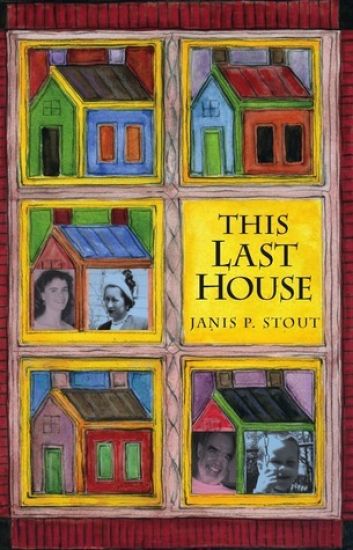
This Last House

This Last House

Janis P. Stout

Texas Christian University Press,U.S.
2010
nidottu
Memoirs are tricky, especially when the author isn't widely known. But Janis Stout tackles the memoir with a new and inventive approach—she organizes her memories around the houses she's lived in. “Sometimes,' she wrote, “I picture my life as a long row of houses.' Houses, she claims, are metaphors for the structures of our lives, and Stout's houses twine their way through this memoir along with reflections on work and retirement, marriages good and bad, and quietness for engaging in the important last work of life. She is, she says, a little different in each house—but each house shaped who she became as she prepared to move into the last house, the house of retirement.A college professor, mother of four sons, and wife, she writes of her early life through the lens of the houses she lived in at the time of events. There was the rock house of her early childhood from which she escaped to a failed early marriage that produced her sons. Other houses enfold her determination to finish college and her PhD; her concern for a son who is blind and brain-damaged; and, finally, a new, happy and enduring marriage.Stout recounts the planning and building of the dream house in the New Mexico mountains, where she and her husband, Loren, would build new lives in retirement. And then their lives take a sudden turn when health issues made the house impractical. New Mexico wasn't, after all, the last house.
Picturing a Different West

Picturing a Different West

Janis P. Stout

Texas Tech Press,U.S.
2007
sidottu
Picturing a Different West addresses Willa Cather and Mary Austin as central figures in a womens tradition of the pictured West. Both Cather and Austin moved west in their youth and spent much of their lives there. Cather lived on the Great Plains, while Austin resided in California and the Southwest. Cathers travels repeatedly took her to the Southwest, and she wrote three novels with Southwestern settings. Starting with the masculine tradition of Western art that was prevalent when Austin and Cather launched their careers, Janis P. Stout shows how the authors challenged and revised that tradition. Rather than a West of adventure, violence, and conquest, open only to rugged and daring men, the authors envisioned a new West - not conventionally feminine so much as an androgynous space of freedom for women and men alike. Their vision of an alternative West and their alternative ways of thinking about and portraying gender are inseparable. Placing Cather and Austin alongside contemporaries Elsie Clews Parsons, Mabel Dodge Luhan, Georgia O Keeffe, and Laura Gilpin, Stout emphasizes the visual nature of Austins and Cathers personal experiences of the West and Southwest, their awareness of the prevailing visual representations of the West, and the visual nature of their books about the West, with respect to both prose style and illustrations. In closing, Stout demonstrates the continuance of their tradition in illustrated western books by Leslie Marmon Silko and by Margaret Randall and Barbara Byers.