Kirjojen hintavertailu. Mukana 12 016 292 kirjaa ja 12 kauppaa.

Kirjahaku

Etsi kirjoja tekijän nimen, kirjan nimen tai ISBN:n perusteella.

5 kirjaa tekijältä Jason Baird Jackson

Concept Work

Concept Work

Jason Baird Jackson

INDIANA UNIVERSITY PRESS
2025
sidottu
Folklorists study the richness of customary forms of cultural expression and the everyday social worlds in which all people interact and communicate. They use a range of methods—literary, ethnographic, philological, visual, historical, comparative, artifactual—to engage with and learn from diverse peoples, but they also rely on a stock of key concepts that have grown up within their discipline, including tradition, performance, genre, text, context, community, and identity. But folklorists and their interlocutors live in an ever-changing world in which making sense of new social dynamics requires additional foundational concepts. In Concept Work, folklorist and ethnologist Jason Baird Jackson illustrates scholarly concept work in folklore studies through fresh accounts of four concepts that are significant to the field but not yet richly explored by its practitioners—colonization, cultural heritage, cultural appropriation, and the place of folklore and folklore studies within the capitalist world system. Jackson closes the volume with a reflection on teaching and doing concept work with his students-turned-colleagues. Concept Work is an essential introduction to the current work being done within folklore studies for teachers and students alike.
Concept Work

Concept Work

Jason Baird Jackson

INDIANA UNIVERSITY PRESS
2025
pokkari
Folklorists study the richness of customary forms of cultural expression and the everyday social worlds in which all people interact and communicate. They use a range of methods—literary, ethnographic, philological, visual, historical, comparative, artifactual—to engage with and learn from diverse peoples, but they also rely on a stock of key concepts that have grown up within their discipline, including tradition, performance, genre, text, context, community, and identity. But folklorists and their interlocutors live in an ever-changing world in which making sense of new social dynamics requires additional foundational concepts. In Concept Work, folklorist and ethnologist Jason Baird Jackson illustrates scholarly concept work in folklore studies through fresh accounts of four concepts that are significant to the field but not yet richly explored by its practitioners—colonization, cultural heritage, cultural appropriation, and the place of folklore and folklore studies within the capitalist world system. Jackson closes the volume with a reflection on teaching and doing concept work with his students-turned-colleagues. Concept Work is an essential introduction to the current work being done within folklore studies for teachers and students alike.
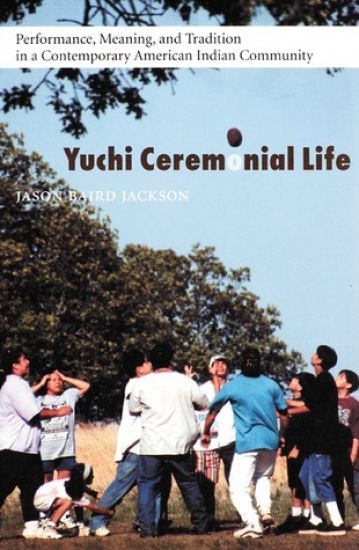
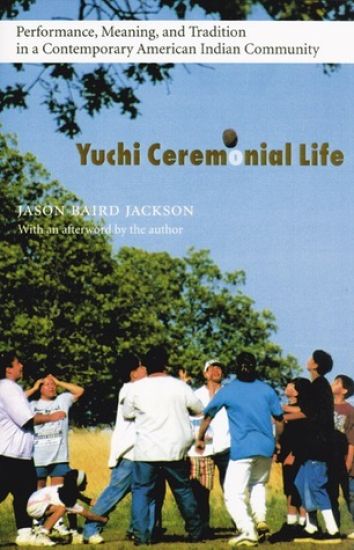
Yuchi Ceremonial Life

Yuchi Ceremonial Life

Jason Baird Jackson

University of Nebraska Press
2003
sidottu
The Yuchis are one of the least known yet most distinctive of the Native groups in the American southeast. Located in late prehistoric times in eastern Tennessee, they played an important historical role at various times during the last five centuries and in many ways served as a bridge between their southeastern neighbors and Native communities in the northeast. First noted by the de Soto expedition in the sixteenth century, the Yuchis moved several times and made many alliances over the next few centuries. The famous naturalist William Bartram visited a Yuchi town in 1775, at a time when the Yuchis had moved near and become allied with Creek communities in Georgia. This alliance had long-lasting repercussions: when the United States government forced most southeastern groups to move to Oklahoma in the early nineteenth century, the Yuchis were classified as Creeks and placed under the jurisdiction of the Creek Nation. Today, despite the existence of a separate language and their distinct history, culture, and religious traditions, the Yuchis are not recognized as a sovereign people by the Creek Nation or the United States. Jason Baird Jackson examines the significance of community ceremonies for the Yuchis today. For many Yuchis, traditional rituals remain important to their identity, and they feel an obligation to perform and renew them each year at one of three ceremonial grounds, called "Big Houses." The Big House acts as a periodic gathering place for the Yuchis, their Creator, and their ancestors. Drawing on a decade of collaborative study with tribal elders and using insights gained from ethnopoetics, Jackson captures in vivid detail the performance, impact, and motivations behind such rituals as the Stomp Dance, the Green Corn Ceremony, and the Soup Dance and discusses their continuing importance to the community.
Yuchi Ceremonial Life

Yuchi Ceremonial Life

Jason Baird Jackson

University of Nebraska Press
2005
pokkari
The Yuchis are one of the least known yet most distinctive of the Native groups in the American southeast. Located in late prehistoric times in eastern Tennessee, they played an important historical role at various times during the last five centuries and in many ways served as a bridge between their southeastern neighbors and Native communities in the northeast. First noted by the de Soto expedition in the sixteenth century, the Yuchis moved several times and made many alliances over the next few centuries. The famous naturalist William Bartram visited a Yuchi town in 1775, at a time when the Yuchis had moved near and become allied with Creek communities in Georgia. This alliance had long-lasting repercussions: when the United States government forced most southeastern groups to move to Oklahoma in the early nineteenth century, the Yuchis were classified as Creeks and placed under the jurisdiction of the Creek Nation. Today, despite the existence of a separate language and their distinct history, culture, and religious traditions, the Yuchis are not recognized as a sovereign people by the Creek Nation or the United States. Jason Baird Jackson examines the significance of community ceremonies for the Yuchis today. For many Yuchis, traditional rituals remain important to their identity, and they feel an obligation to perform and renew them each year at one of three ceremonial grounds, called "Big Houses." The Big House acts as a periodic gathering place for the Yuchis, their Creator, and their ancestors. Drawing on a decade of collaborative study with tribal elders and using insights gained from ethnopoetics, Jackson captures in vivid detail the performance, impact, and motivations behind such rituals as the Stomp Dance, the Green Corn Ceremony, and the Soup Dance and discusses their continuing importance to the community.
Yuchi Folklore

Yuchi Folklore

Jason Baird Jackson

University of Oklahoma Press
2013
nidottu
In countless ways, the Yuchi (Euchee) people are unique among their fellow Oklahomans and Native peoples of North America. Inheritors of a language unrelated to any other, the Yuchi preserve a strong cultural identity. In part because they have not yet won federal recognition as a tribe, the Yuchi are largely unknown among their non-Native neighbors and often misunderstood in scholarship. Jason Baird Jackson's Yuchi Folklore, the result of twenty years of collaboration with Yuchi people and one of just a handful of works considering their experience, brings Yuchi cultural expression to light. Yuchi Folklore examines expressive genres and customs that have long been of special interest to Yuchi people themselves. Beginning with an overview of Yuchi history and ethnography, the book explores four categories of cultural expression: verbal or spoken art, material culture, cultural performance, and worldview. In describing oratory, food, architecture, and dance, Jackson visits and revisits the themes of cultural persistence and social interaction, initially between Yuchi and other peoples east of the Mississippi and now in northeastern Oklahoma. The Yuchi exist in a complex, shifting relationship with the federally recognized Muscogee (Creek) Nation, with which they were removed to Indian Territory in the 1830s. Jackson shows how Yuchi cultural forms, values, customs, and practices constantly combine as Yuchi people adapt to new circumstances and everyday life. To be Yuchi today is, for example, to successfully negotiate a world where commercial rap and country music coexist with Native-language hymns and doctoring songs. While centered on Yuchi community life, this volume of essays also illustrates the discipline of folklore studies and offers perspectives for advancing a broader understanding of Woodlands peoples across the breadth of the American South and East.