Kirjojen hintavertailu. Mukana 11 342 296 kirjaa ja 12 kauppaa.

Kirjahaku

Etsi kirjoja tekijän nimen, kirjan nimen tai ISBN:n perusteella.

5 kirjaa tekijältä Jason Blakely

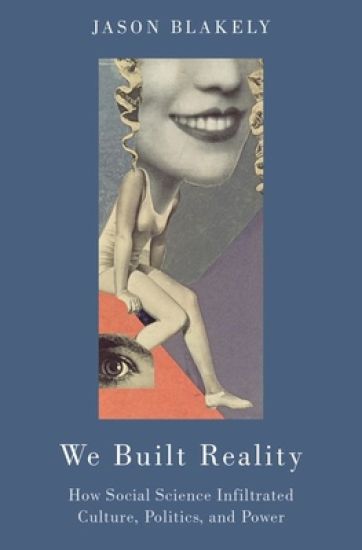
We Built Reality

We Built Reality

Jason Blakely

Oxford University Press Inc
2020
sidottu
Over the last fifty years, pseudoscience has crept into nearly every facet of our lives. Popular sciences of everything from dating and economics, to voting and artificial intelligence, radically changed the world today. The abuse of popular scientific authority has catastrophic consequences, contributing to the 2008 financial crisis; the failure to predict the rise of Donald Trump; increased tensions between poor communities and the police; and the sidelining of nonscientific forms of knowledge and wisdom. In We Built Reality, Jason Blakely explains how recent social science theories have not simply described political realities but also helped create them. But he also offers readers a way out of the culture of scientism: hermeneutics, or the art of interpretation. Hermeneutics urges sensitivity to the historical and cultural contexts of human behavior. It gives ordinary people a way to appreciate the insights of the humanities in guiding decisions. As Blakely contends, we need insights from the humanities to see how social science theories never simply neutrally describe reality, they also help build it.
We Built Reality

We Built Reality

Jason Blakely

Oxford University Press Inc
2020
nidottu
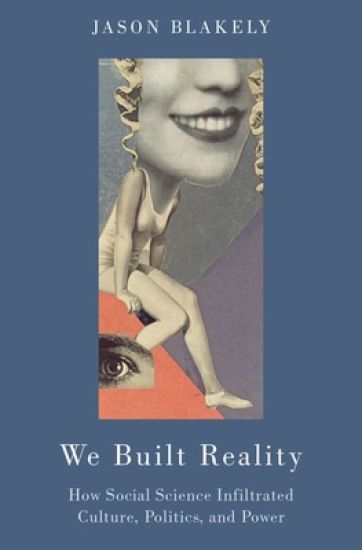
Over the last fifty years, pseudoscience has crept into nearly every facet of our lives. Popular sciences of everything from dating and economics, to voting and artificial intelligence, radically changed the world today. The abuse of popular scientific authority has catastrophic consequences, contributing to the 2008 financial crisis; the failure to predict the rise of Donald Trump; increased tensions between poor communities and the police; and the sidelining of nonscientific forms of knowledge and wisdom. In We Built Reality, Jason Blakely explains how recent social science theories have not simply described political realities but also helped create them. But he also offers readers a way out of the culture of scientism: hermeneutics, or the art of interpretation. Hermeneutics urges sensitivity to the historical and cultural contexts of human behavior. It gives ordinary people a way to appreciate the insights of the humanities in guiding decisions. As Blakely contends, we need insights from the humanities to see how social science theories never simply neutrally describe reality, they also help build it.
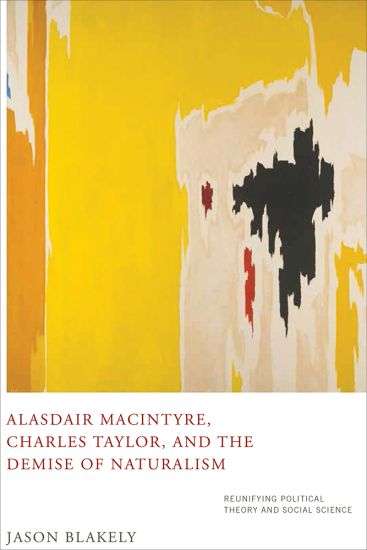
Alasdair MacIntyre, Charles Taylor, and the Demise of Naturalism

Alasdair MacIntyre, Charles Taylor, and the Demise of Naturalism

Jason Blakely

University of Notre Dame Press
2016
sidottu
Today the ethical and normative concerns of everyday citizens are all too often sidelined from the study of political and social issues, driven out by an effort to create a more "scientific" study. This book offers a way for social scientists and political theorists to reintegrate the empirical and the normative, proposing a way out of the scientism that clouds our age. In Alasdair MacIntyre, Charles Taylor, and the Demise of Naturalism, Jason Blakely argues that the resources for overcoming this divide are found in the respective intellectual developments of Charles Taylor and Alasdair MacIntyre. Blakely examines their often parallel intellectual journeys, which led them to critically engage the British New Left, analytic philosophy, phenomenology, continental hermeneutics, and modern social science. Although MacIntyre and Taylor are not sui generis, Blakely claims they each present a new, revived humanism, one that insists on the creative agency of the human person against reductive, instrumental, technocratic, and scientistic ways of thinking. The recovery of certain key themes in these philosophers' works generates a new political philosophy with which to face certain unprecedented problems of our age. Taylor's and MacIntyre's philosophies give social scientists working in all disciplines (from economics and sociology to political science and psychology) an alternative theoretical framework for conducting research.
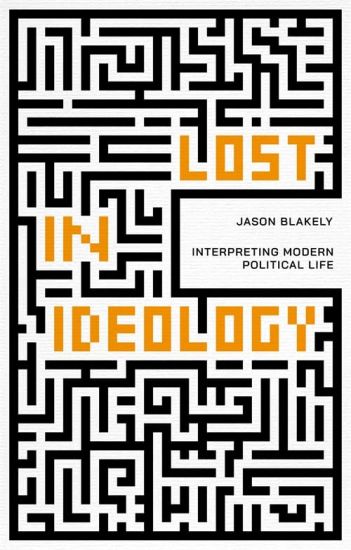
Lost in Ideology

Lost in Ideology

Jason Blakely

AGENDA PUBLISHING
2024
sidottu
Modern political life is a confusing and disorientating terrain of competing ideologies. Jason Blakely offers readers a lively, fresh and insightful guide through the labyrinth of conflicting and competing ideas in order to better understand why ideology in the modern era can be so divisive. Lost in Ideology sets out from the conviction that the current disorientation engulfing the world’s liberal democracies is in no small part ideological in origin. People feel confused because there are multiple ideological maps, so to speak, each marked by dramatically different points of interest, rivers, summits, roads, and total topographies. Ideology in the modern era has the paradoxical effect of orienting millions even as it disorients millions. This leads us to the present-day predicament in which individuals of every imaginable political stripe confidently declare: “I have a theory – but you? You have an ideology!”
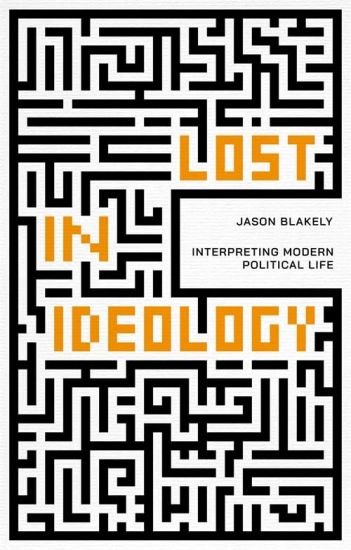
Lost in Ideology

Lost in Ideology

Jason Blakely

AGENDA PUBLISHING
2024
nidottu
Modern political life is a confusing and disorientating terrain of competing ideologies. Jason Blakely offers readers a lively, fresh and insightful guide through the labyrinth of conflicting and competing ideas in order to better understand why ideology in the modern era can be so divisive. Lost in Ideology sets out from the conviction that the current disorientation engulfing the world’s liberal democracies is in no small part ideological in origin. People feel confused because there are multiple ideological maps, so to speak, each marked by dramatically different points of interest, rivers, summits, roads, and total topographies. Ideology in the modern era has the paradoxical effect of orienting millions even as it disorients millions. This leads us to the present-day predicament in which individuals of every imaginable political stripe confidently declare: “I have a theory – but you? You have an ideology!”