Kirjojen hintavertailu. Mukana 11 342 296 kirjaa ja 12 kauppaa.

Kirjahaku

Etsi kirjoja tekijän nimen, kirjan nimen tai ISBN:n perusteella.

5 kirjaa tekijältä Jason M. Baxter

A Beginner`s Guide to Dante`s Divine Comedy

A Beginner`s Guide to Dante`s Divine Comedy

Jason M. Baxter

Baker Academic, Div of Baker Publishing Group
2018
nidottu
Dante's Divine Comedy is widely considered to be one of the most significant works of literature ever written. It is renowned not only for its ability to make truths known but also for its power to make them loved. It captures centuries of thought on sin, love, community, moral living, God's work in history, and God's ineffable beauty. Like a Gothic cathedral, the beauty of this great poem can be appreciated at first glance, but only with a guide can its complexity and layers of meaning be fully comprehended.This accessible introduction to Dante, which also serves as a primer to the Divine Comedy, helps readers better appreciate and understand Dante's spiritual masterpiece. Jason Baxter, an expert on Dante, covers all the basic themes of the Divine Comedy, such as sin, redemption, virtue, and vice. The book contains a general introduction to Dante and a specific introduction to each canticle (Inferno, Purgatorio, and Paradiso), making it especially well suited for classroom and homeschool use.
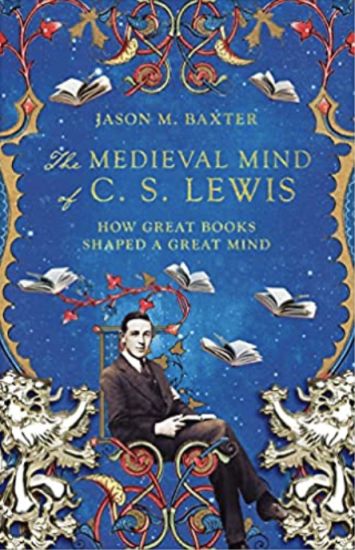
The Medieval Mind of C. S. Lewis – How Great Books Shaped a Great Mind
C. S. Lewis had one of the great minds of the twentieth century. Many readers know Lewis as an author of fiction and fantasy literature, including the Chronicles of Narnia and the Space Trilogy. Others know him for his books in apologetics, including Mere Christianity and The Problem of Pain. But few know him for his scholarly work as a professor of medieval and Renaissance literature. What shaped the mind of this great thinker? Jason Baxter argues that Lewis was deeply formed not only by the words of Scripture and his love of ancient mythology, but also by medieval literature. For this undeniably modern Christian, authors like Dante and Boethius provided a worldview that was relevant to the challenges of the contemporary world. Here, readers will encounter an unknown figure to guide them in their own journey: C. S. Lewis the medievalist.
An Introduction to Christian Mysticism – Recovering the Wildness of Spiritual Life

An Introduction to Christian Mysticism – Recovering the Wildness of Spiritual Life

Jason M. Baxter

Baker Academic, Div of Baker Publishing Group
2021
nidottu
This brief, accessibly written volume introduces key figures, texts, and themes of the mystical tradition and shows how and why the mystics can speak to the church today. Jason Baxter, an expert educator and storyteller, explains that the mystical tradition offers a more robust understanding of God than our current shallow conceptions. Featuring engagement with primary sources and suitable for use in a variety of courses, this book argues that the mystics have much to say to contemporary Christians searching for authentic modes of spirituality.
The Infinite Beauty of the World

The Infinite Beauty of the World

Jason M. Baxter

Peter Lang International Academic Publishers
2020
nidottu
This book proposes a radically new interpretation of the Comedy’s encyclopedism by focusing on Dante’s work in light of the medieval imago mundi tradition. The work opens with a discussion of how the Florentine poet transgressed every generic boundary in his effort to gather «into one volume» a vast and varied set of creatures, places, landscapes, historical and mythological persons, weather conditions, and arts. It then goes on to show that this extraordinary encyclopedic breadth should be understood in the terms of Boethian and Augustinian spiritual exercises of envisioning the whole world in the mind’s eye, which themselves became the interpretive framework for the spiritual ends behind medieval encyclopedic texts. By bringing attention to Latin Platonism and twelfth-century authors (such as Alan of Lille, Bernard Silvestris, William of Conches, Hugh of St. Victor, and Thierry of Chatres), this book provides compelling new readings of the De vulgari eloquentia, as well as provocative insights into key figures (such as Brunetto Latini, Pier della Vigna, and Ulysses) and key passages (Purgatorio 28, Paradiso 26, and Paradiso 33).