Kirjojen hintavertailu. Mukana 11 244 527 kirjaa ja 12 kauppaa.

Kirjahaku

Etsi kirjoja tekijän nimen, kirjan nimen tai ISBN:n perusteella.

7 kirjaa tekijältä Jason M. Wirth

Nietzsche and Other Buddhas

Nietzsche and Other Buddhas

Jason M. Wirth

Indiana University Press
2019
sidottu
In Nietzche and Other Buddhas, author Jason M. Wirth brings major East Asian Buddhist thinkers into radical dialogue with key Continental philosophers through a series of exercises that pursue what is traditionally called comparative or intercultural philosophy as he reflects on what makes such exercises possible and intelligible. The primary questions he asks are: How does this particular engagement and confrontation challenge and radicalize what is sometimes called comparative or intercultural philosophy? How does this task reconsider what is meant by philosophy? The confrontations that Wirth sets up between Dogen, Hakuin, Linji, Shinran, Nietzsche, and Deleuze ask readers to think more philosophically and globally about the nature of philosophy in general and comparative philosophy in particular. He opens up a new and challenging space of thought in and between the cutting edges of Western Continental philosophy and East Asian Buddhist practice.
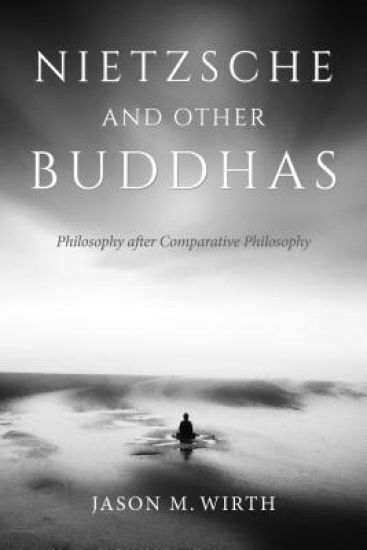
Nietzsche and Other Buddhas

Nietzsche and Other Buddhas

Jason M. Wirth

Indiana University Press
2019
pokkari
In Nietzche and Other Buddhas, author Jason M. Wirth brings major East Asian Buddhist thinkers into radical dialogue with key Continental philosophers through a series of exercises that pursue what is traditionally called comparative or intercultural philosophy as he reflects on what makes such exercises possible and intelligible. The primary questions he asks are: How does this particular engagement and confrontation challenge and radicalize what is sometimes called comparative or intercultural philosophy? How does this task reconsider what is meant by philosophy? The confrontations that Wirth sets up between Dogen, Hakuin, Linji, Shinran, Nietzsche, and Deleuze ask readers to think more philosophically and globally about the nature of philosophy in general and comparative philosophy in particular. He opens up a new and challenging space of thought in and between the cutting edges of Western Continental philosophy and East Asian Buddhist practice.
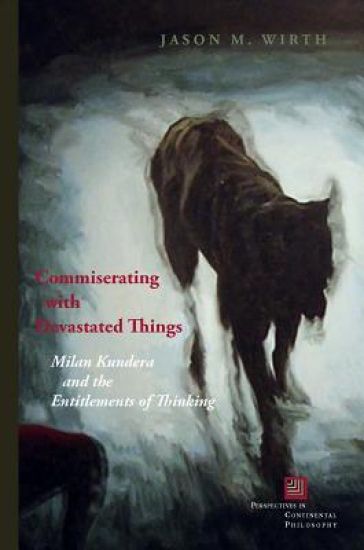
Commiserating with Devastated Things

Commiserating with Devastated Things

Jason M. Wirth

Fordham University Press
2015
sidottu
Commiserating with Devastated Things seeks to understand the place Milan Kundera calls "the universe of the novel." Working through Kundera's oeuvre as well as the continental philosophical tradition, Wirth argues that Kundera transforms—not applies—philosophical reflection within literature. Reading between Kundera's work and his self-avowed tradition, from Kafka to Hermann Broch, Wirth asks what it might mean to insist that philosophy does not have a monopoly on wisdom, that the novel has its own modes of wisdom that challenge philosophy's.
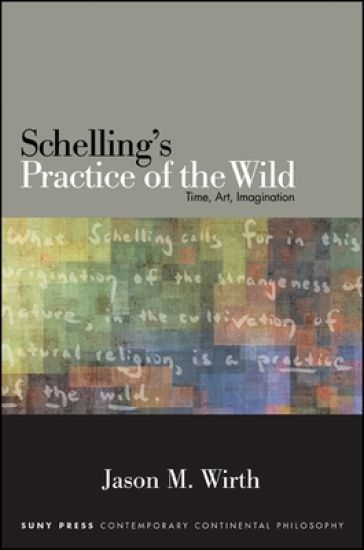
Schelling's Practice of the Wild

Schelling's Practice of the Wild

Jason M. Wirth

State University of New York Press
2016
pokkari
Reconsiders the contemporary relevance of Schelling's radical philosophical and religious ecology.The last two decades have seen a renaissance and reappraisal of Schelling's remarkable body of philosophical work, moving beyond explications and historical study to begin thinking with and through Schelling, exploring and developing the fundamental issues at stake in his thought and their contemporary relevance. In this book, Jason M. Wirth seeks to engage Schelling's work concerning the philosophical problem of the relationship of time and the imagination, calling this relationship Schelling's practice of the wild. Focusing on the questions of nature, art, philosophical religion (mythology and revelation), and history, Wirth argues that at the heart of Schelling's work is a radical philosophical and religious ecology. He develops this theme not only through close readings of Schelling's texts, but also by bringing them into dialogue with thinkers as diverse as Deleuze, Nietzsche, Melville, Musil, and many others. The book also features the first appearance in English translation of Schelling's famous letter to Eschenmayer regarding the Freedom essay.
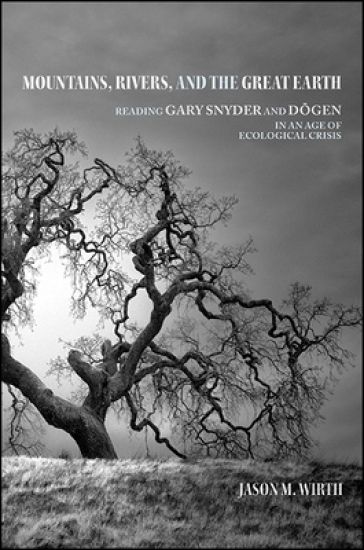
Mountains, Rivers, and the Great Earth

Mountains, Rivers, and the Great Earth

Jason M. Wirth

State University of New York Press
2018
pokkari
Engages the global ecological crisis through a radical rethinking of what it means to inhabit the earth.FINALIST for the 2017 Foreword INDIES Book of the Year Award in the Philosophy category Meditating on the work of American poet and environmental activist Gary Snyder and thirteenth-century Japanese Zen Master Eihei Dogen, Jason M. Wirth draws out insights for understanding our relation to the planet's ongoing ecological crisis. He discusses what Dogen calls "the Great Earth" and what Snyder calls "the Wild" as being comprised of the play of waters and mountains, emptiness and form, and then considers how these ideas can illuminate the spiritual and ethical dimensions of place. The book culminates in a discussion of earth democracy, a place-based sense of communion where all beings are interconnected and all beings matter. This radical rethinking of what it means to inhabit the earth will inspire lovers of Snyder's poetry, Zen practitioners, environmental philosophers, and anyone concerned about the global ecological crisis.
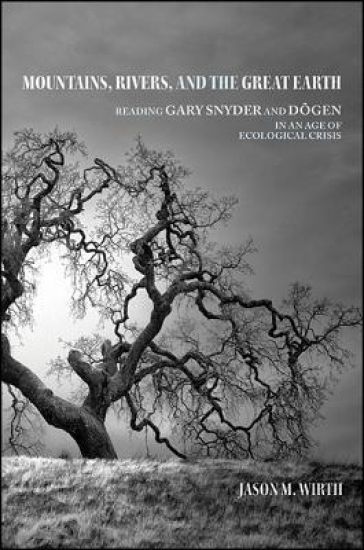
Mountains, Rivers, and the Great Earth

Mountains, Rivers, and the Great Earth

Jason M. Wirth

State University of New York Press
2017
sidottu
Engages the global ecological crisis through a radical rethinking of what it means to inhabit the earth.FINALIST for the 2017 Foreword INDIES Book of the Year Award in the Philosophy category Meditating on the work of American poet and environmental activist Gary Snyder and thirteenth-century Japanese Zen Master Eihei Dogen, Jason M. Wirth draws out insights for understanding our relation to the planet's ongoing ecological crisis. He discusses what Dogen calls "the Great Earth" and what Snyder calls "the Wild" as being comprised of the play of waters and mountains, emptiness and form, and then considers how these ideas can illuminate the spiritual and ethical dimensions of place. The book culminates in a discussion of earth democracy, a place-based sense of communion where all beings are interconnected and all beings matter. This radical rethinking of what it means to inhabit the earth will inspire lovers of Snyder's poetry, Zen practitioners, environmental philosophers, and anyone concerned about the global ecological crisis.
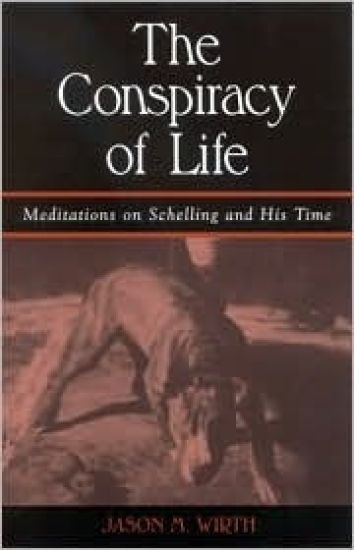
The Conspiracy of Life

The Conspiracy of Life

Jason M. Wirth

State University of New York Press
2003
pokkari
Puts Schelling in conversation with twentieth-century continental philosophy. The Conspiracy of Life offers a series of meditations on the philosophy of F. W. J. Schelling (1775–1854), a great-and greatly neglected-philosopher of life. Rather than construing him as a loopy mystic, or as an antiquated theologian, Jason M. Wirth attempts to locate Schelling as the belated contemporary of thinkers like Heidegger, Derrida, Bataille, Irigaray, Foucault, Deleuze, Levinas, and many others. As such, Schelling is already at the central nerve of current discussions concerning the crisis of truth; the primacy of the Good; the ecstatic nature of time; the nature of art; deep ecology; the world as an aesthetic phenomenon; comparative philosophy; the possibility of non-dialectical philosophy; radical evil; the haunting of philosophy; and the possibility of a philosophical religion.