Kirjojen hintavertailu. Mukana 11 703 791 kirjaa ja 12 kauppaa.

Kirjahaku

Etsi kirjoja tekijän nimen, kirjan nimen tai ISBN:n perusteella.

17 kirjaa tekijältä Jason Stanley

Language in Context

Language in Context

Jason Stanley

Clarendon Press
2007
sidottu
Natural languages all contain constructions the interpretation of which depends upon the situation in which they are used. In Language and Context, Jason Stanley presents a series of essays which develop a theory of how the situation in which we speak interacts with the words we use to help produce what we say. The reason we can so smoothly operate with sentences that can be used to express very different items of information, Stanley argues, is that there are linguistically mandated constraints on the effects of the situation on what we say. These linguistically mandated constraints are most evident in the cases of sentences containing explicit pronouns, such as 'She is a mathematician', where interpretation of the information expressed is guided by the use of the pronoun 'she'. But even when such explicit pronouns are lacking, our sentences provide similar cues to allow our interlocutors to determine the information expressed. We are, in the main, confident that our interlocutors will smoothly grasp what we say, because the grammar and meaning of our sentences encodes these constraints. In defending this theory, Stanley pays close attention to specific cases of context-sensitive constructions, such as quantified noun phrases, comparative adjectives, and conditionals. Philosophers and cognitive scientist have appealed to the dependence of what is intuitively said by a sentence on the situation in which it is uttered to argue against the possibility of a systematic theory of meaning for natural language. The theory developed in this book is a vigorous defence of the possibility of a systematic theory of meaning for natural language against these influential tendencies.
Language in Context

Language in Context

Jason Stanley

Clarendon Press
2007
nidottu
Natural languages all contain constructions the interpretation of which depends upon the situation in which they are used. In Language and Context, Jason Stanley presents a series of essays which develop a theory of how the situation in which we speak interacts with the words we use to help produce what we say. The reason we can so smoothly operate with sentences that can be used to express very different items of information, Stanley argues, is that there are linguistically mandated constraints on the effects of the situation on what we say. These linguistically mandated constraints are most evident in the cases of sentences containing explicit pronouns, such as 'She is a mathematician', where interpretation of the information expressed is guided by the use of the pronoun 'she'. But even when such explicit pronouns are lacking, our sentences provide similar cues to allow our interlocutors to determine the information expressed. We are, in the main, confident that our interlocutors will smoothly grasp what we say, because the grammar and meaning of our sentences encodes these constraints. In defending this theory, Stanley pays close attention to specific cases of context-sensitive constructions, such as quantified noun phrases, comparative adjectives, and conditionals. Philosophers and cognitive scientist have appealed to the dependence of what is intuitively said by a sentence on the situation in which it is uttered to argue against the possibility of a systematic theory of meaning for natural language. The theory developed in this book is a vigorous defence of the possibility of a systematic theory of meaning for natural language against these influential tendencies.
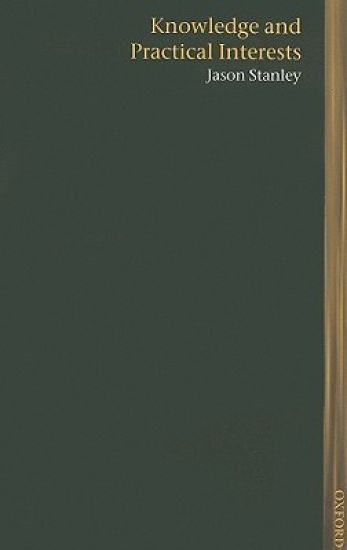
Knowledge and Practical Interests

Knowledge and Practical Interests

Jason Stanley

Clarendon Press
2007
nidottu
Jason Stanley presents a startling and provocative claim about knowledge: that whether or not someone knows a proposition at a given time is in part determined by his or her practical interests, i.e. by how much is at stake for that person at that time. So whether a true belief is knowledge is not merely a matter of supporting beliefs or reliability; in the case of knowledge, practical rationality and theoretical rationality are intertwined. Stanley defends this thesis against alternative accounts of the phenomena that motivate it, such as the claim that knowledge attributions are linguistically context-sensitive (contextualism about knowledge attributions), and the claim that the truth of a knowledge claim is somehow relative to the person making the claim (relativism about knowledge). In the course of his argument Stanley introduces readers to a number of strategies for resolving philosophical paradox, making the book essential not just for specialists in epistemology but for all philosophers interested in philosophical methodology. Since a number of his strategies appeal to linguistic evidence, it will be of great interest to linguists as well.
Know How

Know How

Jason Stanley

Oxford University Press
2013
nidottu
The goal of inquiry is to acquire knowledge of truths about the world. In this book, Jason Stanley argues that knowing how to do something amounts to knowing a truth about the world. When you learned how to swim, what happened is that you learned some truths about swimming. Knowledge of these truths is what gave you knowledge of how to swim. Something similar occurred with every other activity that you now know how to do, such as riding a bicycle or cooking a meal. Of course, when you learned how to swim, you didn't learn just any truth about swimming. You learned a special kind of truth about swimming, one that answers the question, 'How could you swim?' Know How develops an account of the kinds of answers to questions, knowledge of which explains skilled action. Drawing on work in epistemology, philosophy of mind, ethics, action theory, philosophy of language, linguistic semantics, and cognitive neuroscience, Stanley presents a powerful case that it is our success as inquirers that explains our capacity for skilful engagement with the world.
Know How

Know How

Jason Stanley

Oxford University Press
2011
sidottu
The goal of inquiry is to acquire knowledge of truths about the world. In this book, Jason Stanley argues that knowing how to do something amounts to knowing a truth about the world. When you learned how to swim, what happened is that you learned some truths about swimming. Knowledge of these truths is what gave you knowledge of how to swim. Something similar occurred with every other activity that you now know how to do, such as riding a bicycle or cooking a meal. Of course, when you learned how to swim, you didn't learn just any truth about swimming. You learned a special kind of truth about swimming, one that answers the question, 'How could you swim?' Know How develops an account of the kinds of answers to questions, knowledge of which explains skilled action. Drawing on work in epistemology, philosophy of mind, ethics, action theory, philosophy of language, linguistic semantics, and cognitive neuroscience, Stanley presents a powerful case that it is our success as inquirers that explains our capacity for skilful engagement with the world.
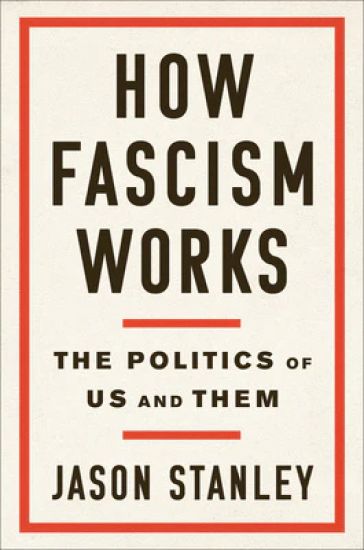
How Fascism Works

How Fascism Works

Jason Stanley

Random House USA Inc
2018
sidottu
"Reveals how the liberties of the people wither when voters embrace politicians who promote the divisive politics of us versus them."--David Cay Johnston, author of The Making of Donald Trump and It's Even Worse Than You Think "This is an important and essential book."--Errol Morris, filmmaker and author of The Ashtray Fascist politics are running rampant in America today--and spreading around the world. A Yale philosopher identifies the ten pillars of fascist politics, and charts their horrifying rise and deep history. As the child of refugees of World War II Europe and a renowned philosopher and scholar of propaganda, Jason Stanley has a deep understanding of how democratic societies can be vulnerable to fascism: Nations don't have to be fascist to suffer from fascist politics. In fact, fascism's roots have been present in the United States for more than a century. Alarmed by the pervasive rise of fascist tactics both at home and around the globe, Stanley focuses here on the structures that unite them, laying out and analyzing the ten pillars of fascist politics--the language and beliefs that separate people into an "us" and a "them." He knits together reflections on history, philosophy, sociology, and critical race theory with stories from contemporary Hungary, Poland, India, Myanmar, and the United States, among other nations. He makes clear the immense danger of underestimating the cumulative power of these tactics, which include exploiting a mythic version of a nation's past; propaganda that twists the language of democratic ideals against themselves; anti-intellectualism directed against universities and experts; law and order politics predicated on the assumption that members of minority groups are criminals; and fierce attacks on labor groups and welfare. These mechanisms all build on one another, creating and reinforcing divisions and shaping a society vulnerable to the appeals of authoritarian leadership. By uncovering disturbing patterns that are as prevalent today as ever, Stanley reveals that the stuff of politics--charged by rhetoric and myth--can quickly become policy and reality. Only by recognizing fascists politics, he argues, may we resist its most harmful effects and return to democratic ideals. "With unsettling insight and disturbing clarity, How Fascism Works is an essential guidebook to our current national dilemma of democracy vs. authoritarianism."--William Jelani Cobb, author of The Substance of Hope
How Fascism Works

How Fascism Works

Jason Stanley

Random House Trade Paperbacks
2020
pokkari
"A vital read for a nation under Trump."­--The Guardian "No single book is as relevant to the present moment."--Claudia Rankine, author of Citizen "One of the defining books of the decade."--Elizabeth Hinton, author of From the War on Poverty to the War on Crime NEW YORK TIMES BOOK REVIEW EDITORS' CHOICE - With a new preface - Fascist politics are running rampant in America today--and spreading around the world. A Yale philosopher identifies the ten pillars of fascist politics, and charts their horrifying rise and deep history. As the child of refugees of World War II Europe and a renowned philosopher and scholar of propaganda, Jason Stanley has a deep understanding of how democratic societies can be vulnerable to fascism: Nations don't have to be fascist to suffer from fascist politics. In fact, fascism's roots have been present in the United States for more than a century. Alarmed by the pervasive rise of fascist tactics both at home and around the globe, Stanley focuses here on the structures that unite them, laying out and analyzing the ten pillars of fascist politics--the language and beliefs that separate people into an "us" and a "them." He knits together reflections on history, philosophy, sociology, and critical race theory with stories from contemporary Hungary, Poland, India, Myanmar, and the United States, among other nations. He makes clear the immense danger of underestimating the cumulative power of these tactics, which include exploiting a mythic version of a nation's past; propaganda that twists the language of democratic ideals against themselves; anti-intellectualism directed against universities and experts; law and order politics predicated on the assumption that members of minority groups are criminals; and fierce attacks on labor groups and welfare. These mechanisms all build on one another, creating and reinforcing divisions and shaping a society vulnerable to the appeals of authoritarian leadership. By uncovering disturbing patterns that are as prevalent today as ever, Stanley reveals that the stuff of politics--charged by rhetoric and myth--can quickly become policy and reality. Only by recognizing fascists politics, he argues, may we resist its most harmful effects and return to democratic ideals. "With unsettling insight and disturbing clarity, How Fascism Works is an essential guidebook to our current national dilemma of democracy vs. authoritarianism."--William Jelani Cobb, author of The Substance of Hope
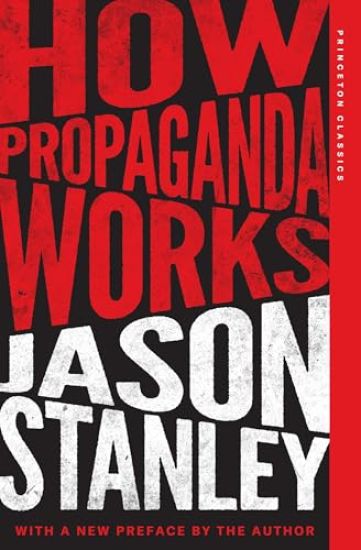
How Propaganda Works

How Propaganda Works

Jason Stanley

Princeton University Press
2016
pokkari
Our democracy today is fraught with political campaigns, lobbyists, liberal media, and Fox News commentators, all using language to influence the way we think and reason about public issues. Even so, many of us believe that propaganda and manipulation aren't problems for us--not in the way they were for the totalitarian societies of the mid-twentieth century. In How Propaganda Works, Jason Stanley demonstrates that more attention needs to be paid. He examines how propaganda operates subtly, how it undermines democracy--particularly the ideals of democratic deliberation and equality--and how it has damaged democracies of the past. Focusing on the shortcomings of liberal democratic states, Stanley provides a historically grounded introduction to democratic political theory as a window into the misuse of democratic vocabulary for propaganda's selfish purposes. He lays out historical examples, such as the restructuring of the US public school system at the turn of the twentieth century, to explore how the language of democracy is sometimes used to mask an undemocratic reality. Drawing from a range of sources, including feminist theory, critical race theory, epistemology, formal semantics, educational theory, and social and cognitive psychology, he explains how the manipulative and hypocritical declaration of flawed beliefs and ideologies arises from and perpetuates inequalities in society, such as the racial injustices that commonly occur in the United States. How Propaganda Works shows that an understanding of propaganda and its mechanisms is essential for the preservation and protection of liberal democracies everywhere.
How Propaganda Works

How Propaganda Works

Jason Stanley

PRINCETON UNIVERSITY PRESS
2026
pokkari
How propaganda undermines democracy and why we need to pay attentionOur democracy today is fraught with political campaigns, lobbyists, liberal media, and Fox News commentators, all using language to influence the way we think and reason about public issues. Even so, many of us believe that propaganda and manipulation aren't problems for us—not in the way they were for the totalitarian societies of the mid-twentieth century. In How Propaganda Works, Jason Stanley demonstrates that more attention needs to be paid. He examines how propaganda operates subtly, how it undermines democracy—particularly the ideals of democratic deliberation and equality—and how it has damaged democracies of the past.Focusing on the shortcomings of liberal democratic states, Stanley provides a historically grounded introduction to democratic political theory as a window into the misuse of democratic vocabulary for propaganda's selfish purposes. He lays out historical examples, such as the restructuring of the US public school system at the turn of the twentieth century, to explore how the language of democracy is sometimes used to mask an undemocratic reality. Drawing from a range of sources, including feminist theory, critical race theory, epistemology, formal semantics, educational theory, and social and cognitive psychology, he explains how the manipulative and hypocritical declaration of flawed beliefs and ideologies arises from and perpetuates inequalities in society, such as the racial injustices that commonly occur in the United States.How Propaganda Works shows that an understanding of propaganda and its mechanisms is essential for the preservation and protection of liberal democracies everywhere.
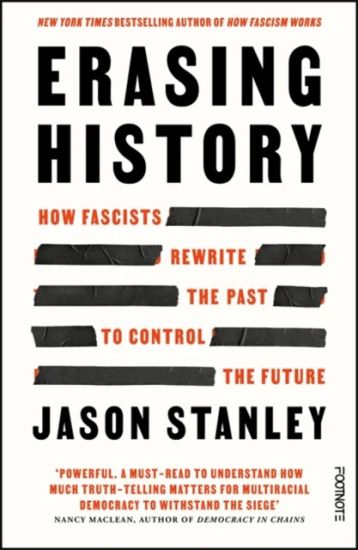
Erasing History: How Fascists Rewrite the Past to Control the Future
From the bestselling author of How Fascism Works, a global call to action that tells us "why the past is a frontline in the struggle for a future free of fascism" (Jeff Sharlet, New York Times bestselling author) as it reveals the far right's efforts to rewrite history and undo a century of progress on race, gender, sexuality, and class. In the United States, democracy is under attack by an authoritarian movement that has found fertile ground among the country's conservative politicians and voters, but similar movements have found homes in the hearts and minds of people around the globe. To understand the shape, form, and stakes of this assault, we must go back to extract lessons from our past. In authoritarian countries, critical examination of those nations' history and traditions is discouraged if not an outright danger to those who do it. And it is no accident that local and global institutions of education have become a battleground, where learning and efforts to upend a hierarchal status quo can be put to end by coercion and threats of violence. Democracies entrust schools and universities to preserve a common memory of positive change, generated by protests, social movements, and rebellions. The authoritarian right must erase this history, and, along with it, the very practice of critical inquiry that has so often been the engine of future progress. In Erasing History, Yale professor of philosophy Jason Stanley exposes the true danger of the authoritarian right's attacks on education, identifies their key tactics and funders, and traces their intellectual roots. He illustrates how fears of a fascist future have metastasized, from hypothetical threat to present reality. And with his "urgent, piercing, and altogether brilliant" (Johnathan M. Metzl, author of What We've Become) insight, he illustrates that hearts and minds are won in our schools and universities--places that democratic societies across the world are now ill-prepared to defend against the fascist assault currently underway.
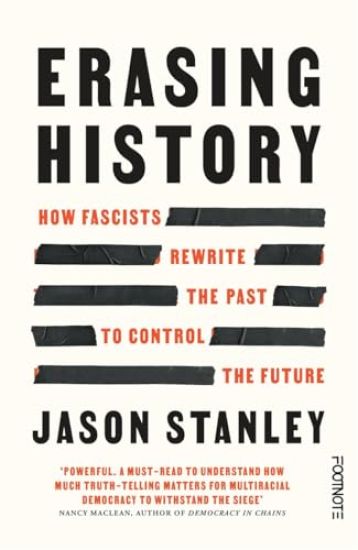
Erasing History

Erasing History

Jason Stanley

Footnote Press Ltd
2024
sidottu
From Yale professor and bestselling author of How Fascism Works, a searing confrontation with the authoritarian right's attacks to undo a century of work to advance social justice action on race, gender, sexuality and class.Combining historical research with an in-depth analysis of our modern political landscape, Erasing History issues a dire warning for the world: the worst fascist movements of humanity's past began in schools; the same place so many of today's right-wing political parties have trained their most vicious attacks.Donald Trump, Ron DeSantis, Vladimir Putin, Turkey's Recip Erdogan, and Argentina's Javier Milei have all reached the same conclusion: if you want to roll back the clock on civil rights, equity and inclusion, a great place to start is in schools.Yale professor Jason Stanley exposes the true danger of the right's tactics and traces their inspirations and funding back to some of the most dangerous ideas of human history. He shows that hearts and minds are won in our schools and universities - and that governments are currently ill-prepared to do the work of uprooting fascist policies being foisted upon our children through school boards, in courtrooms, and in the boardrooms of the organisations trusted to train teachers and create the materials they'll share with their students.Deeply informed and urgently needed, this book is a vibrant call to action for lovers of democracy worldwide.
Erasing History

Erasing History

Jason Stanley

Footnote Press Ltd
2025
nidottu
From Yale professor and bestselling author of How Fascism Works, a searing confrontation with the authoritarian right's attacks to undo a century of work to advance social justice action on race, gender, sexuality and class.Combining historical research with an in-depth analysis of our modern political landscape, Erasing History issues a dire warning for the world: the worst fascist movements of humanity's past began in schools; the same place so many of today's right-wing political parties have trained their most vicious attacks.Donald Trump, Ron DeSantis, Vladimir Putin, Turkey's Recip Erdogan, and Argentina's Javier Milei have all reached the same conclusion: if you want to roll back the clock on civil rights, equity and inclusion, a great place to start is in schools.Yale professor Jason Stanley exposes the true danger of the right's tactics and traces their inspirations and funding back to some of the most dangerous ideas of human history. He shows that hearts and minds are won in our schools and universities - and that governments are currently ill-prepared to do the work of uprooting fascist policies being foisted upon our children through school boards, in courtrooms, and in the boardrooms of the organisations trusted to train teachers and create the materials they'll share with their students.Deeply informed and urgently needed, this book is a vibrant call to action for lovers of democracy worldwide.
Fascismens metoder. Att skilja ”dom” från ”oss”
"Vi bevittnar fascismens återkomst, även om den är mer krypande och mindre iögonfallande än när det begav sig. Ämnet studeras närmare i en utomordentligt viktig bok, rykande aktuell, som nu föreligger på svenska tack vare det alerta lilla förlaget Daidalos. Den heter Fascismens metoder. Författare är Jason Stanley, professor i filosofi vid Yaleuniversitetet i USA." / Per T. Ohlsson i Sydsvenskan "Stanley bjuder på en fascinerande genomgång av den fascistiska ideologin där han väver in exempel från Tyskland, Italien, Ungern, från Rwanda och Burma och ja, från USA." /Tom McCarthy i The Guardian "Filosofen Jason Stanley har skrivit en kort, upplysande bok om fascismen. Den är obeveklig och kommer i rättan tid." /Jan Süselbeck i Die Zeit Fascistisk politik använder sig av en rad olika metoder. Den vill få oss att tro på en avgörande skillnad mellan ett ”vi” och ett ”dom” och på ett påhittat och romantiserat förflutet där det bara fanns ett ”vi” men inget ”dom”. Den vill skapa misstro mot etablerade sanningar av alla slag och få oss att börja lyssna till ledare som vet hur det ”egentligen” förhåller sig. Och den vill inte minst normalisera det moraliskt och ideologiskt extrema, så att exempelvis alla anklagelser om fascism ter sig ogrundade och överdrivna. Det normala kan ju per definition inte gärna vara fascistiskt, eller hur? I "Fascismens metoder" öppnar filosofen Jason Stanley denna fascistiska verktygslåda och visar metod för metod hur dagens fascism går tillväga för att störa och om möjligt förstöra demokratin. Fascistisk politik idag handlar lika mycket om att underminera det upplysta samtalet och försvåra en gemensam syn på samhällsproblemen som om att torgföra öppet fascis­tiska idéer. Poängen med ”fake news”-retoriken och med olika konspirationsteorier, exempelvis, är misstron de bidrar till att sprida, en misstro mot allt och alla – utom mot detta per definition normala och moraliska ”vi” förstås. Jason Stanley är professor i filosofi vid Yale University.
Näin toimii fasismi

Näin toimii fasismi

Jason Stanley

Eurooppalaisen filosofian seura
2022
nidottu
Filosofi Jason Stanley käy läpi fasismin tyypillisimmät toimintatavat: myyttisen menneisyyden rakentamisen, propagandan, älyllisyyden vastaisuuden, hierarkioiden pykäämisen, uhriksi asettumisen ja niin edelleen. Kaikki fasististyyppiset ajattelutavat kietoutuvat yhteen: Stanley varoittaa, että ne on opittava tunnistamaan ennen kuin ne normalisoituvat.