Kirjojen hintavertailu. Mukana 11 244 527 kirjaa ja 12 kauppaa.

Kirjahaku

Etsi kirjoja tekijän nimen, kirjan nimen tai ISBN:n perusteella.

4 kirjaa tekijältä Jay Clayton

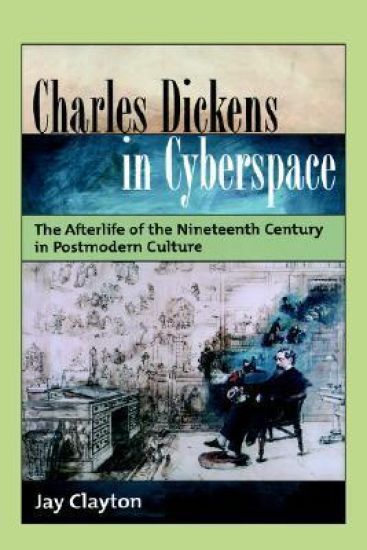
Charles Dickens in Cyberspace

Charles Dickens in Cyberspace

Jay Clayton

Oxford University Press Inc
2003
sidottu
Charles Dickens in Cyberspace opens a window on a startling set of literary and scientific links between contemporary American culture and the nineteenth-century heritage it often repudiates. Surveying a wide range of novelists, scientists, filmmakers, and theorists from the past two centuries, Jay Clayton traces the concealed circuits that connect the telegraph with the Internet, Charles Babbage's Difference Engine with the digital computer, Frankenstein's monster with cyborgs and clones, and Dickens' life and fiction with all manner of contemporary popular culture--from comic books and advertising to recent novels and films. In the process, Clayton argues for two important principles: that postmodernism has a hidden or repressed connection with the nineteenth-century and that revealing those connections can aid in the development of a historical cultural studies. In Charles Dickens in Cyberspace nineteenth-century figures--Jane Austen, Charles Darwin, Charles Dickens, Thomas Hardy, Henry James, Ada Lovelace, Joseph Paxton, Mary Shelley, and Mary Somerville--meet a lively group of counterparts from today: Andrea Barrett, Greg Bear, Peter Carey, Hélène Cixous, Alfonso Cuarón, William Gibson, Donna Haraway, David Lean, Richard Powers, Salman Rushdie, Ridley Scott, Susan Sontag, Neal Stephenson, Bruce Sterling, and Tom Stoppard. The juxtaposition of such a diverse cast of characters leads to a new way of understanding the "undisciplined culture" the two eras share, an understanding that can suggest ways to heal the gap that has long separated literature from science. Combining storytelling and scholarship, this engaging study demonstrates in its own practice the value of a self-reflective stance toward cultural history. Its personal voice, narrative strategies, multiple points of view, recursive loops, and irony emphasize the improvisational nature of the methods it employs. Yet its argument is serious and urgent: that the afterlife of the nineteenth century continues to shape the present in diverse and sometimes conflicting ways.
Charles Dickens in Cyberspace

Charles Dickens in Cyberspace

Jay Clayton

Oxford University Press Inc
2006
nidottu
Charles Dickens in Cyberspace opens a window on a startling set of literary and scientific links between contemporary American culture and the nineteenth-century heritage it often repudiates. Surveying a wide range of novelists, scientists, filmmakers, and theorists from the past two centuries, Jay Clayton traces the concealed circuits that connect the telegraph with the Internet, Charles Babbage's Difference Engine with the digital computer, Frankenstein's monster with cyborgs and clones, and Dickens' life and fiction with all manner of contemporary popular culture--from comic books and advertising to recent novels and films. In the process, Clayton argues for two important principles: that postmodernism has a hidden or repressed connection with the nineteenth-century and that revealing those connections can aid in the development of a historical cultural studies. In Charles Dickens in Cyberspace nineteenth-century figures--Jane Austen, Charles Darwin, Charles Dickens, Thomas Hardy, Henry James, Ada Lovelace, Joseph Paxton, Mary Shelley, and Mary Somerville--meet a lively group of counterparts from today: Andrea Barrett, Greg Bear, Peter Carey, Hélène Cixous, Alfonso Cuarón, William Gibson, Donna Haraway, David Lean, Richard Powers, Salman Rushdie, Ridley Scott, Susan Sontag, Neal Stephenson, Bruce Sterling, and Tom Stoppard. The juxtaposition of such a diverse cast of characters leads to a new way of understanding the "undisciplined culture" the two eras share, an understanding that can suggest ways to heal the gap that has long separated literature from science. Combining storytelling and scholarship, this engaging study demonstrates in its own practice the value of a self-reflective stance toward cultural history. Its personal voice, narrative strategies, multiple points of view, recursive loops, and irony emphasize the improvisational nature of the methods it employs. Yet its argument is serious and urgent: that the afterlife of the nineteenth century continues to shape the present in diverse and sometimes conflicting ways.
Romantic Vision and the Novel

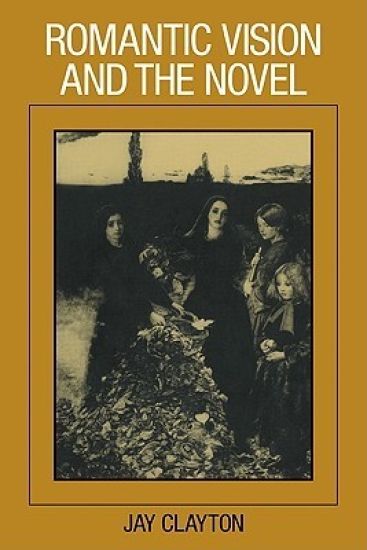
Romantic Vision and the Novel

Jay Clayton

Cambridge University Press
2009
pokkari
In this important contribution to the poetics of fiction Dr Jay Clayton examines the way the Romantic visionary moment alters narrative structure in the novel. This study provides the first account of the relationship between Romanticism and the English novel, giving detailed attention to the formal issues of genre and representation, as well as to the social and ethical assumptions that govern apparently formal considerations. Informed by literary, psychoanalytic and narrative theory, Romantic Vision and the Novel is written in a clear and forceful style that will help many readers come to terms with these difficult subjects. Through detailed and original interpretations of works by Richardson, Austen, Emily Bronte, Dickens, George Eliot and Lawrence, Clayton establishes the importance for what they can reveal about each other and for what their relationship reveals about the larger functional of literature in society.
Literature, Science, and Public Policy

Literature, Science, and Public Policy

Jay Clayton

Cambridge University Press
2023
sidottu
Literature, Science, and Public Policy shows how literature can influence public policy concerning scientific controversies in genetics and other areas. Literature brings unique insights to issues involving cloning, GMOs, gene editing, and more by dramatizing their full human complexity. Literature's value for public policy is demonstrated by striking examples that range from the literary response to evolution in the Victorian era through the modern synthesis of evolution and genetics in the mid-twentieth century to present-day genomics. Outlining practical steps for humanists who want to help shape public policy, this book offers vivid readings of novels by H. G. Wells, H. Rider Haggard, Aldous Huxley, Robert Heinlein, Octavia Butler, Samuel R. Delany, David Mitchell, Margaret Atwood, Ian McEwan, Kazuo Ishiguro, Gary Shteyngart, and others that illustrate the important insights that literary studies can bring to debates about science and society. This title is also available as Open Access on Cambridge Core.