Kirjojen hintavertailu. Mukana 11 342 296 kirjaa ja 12 kauppaa.

Kirjahaku

Etsi kirjoja tekijän nimen, kirjan nimen tai ISBN:n perusteella.

8 kirjaa tekijältä Jay L. Garfield

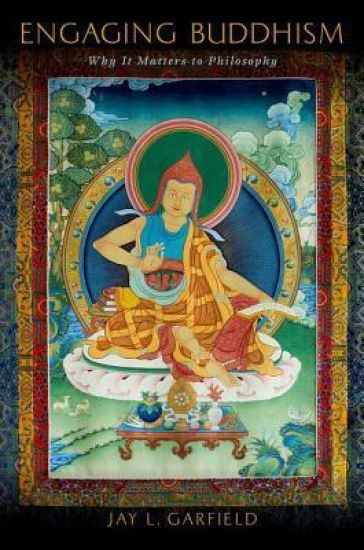
Engaging Buddhism

Engaging Buddhism

Jay L. Garfield

Oxford University Press Inc
2015
sidottu
This is a book for scholars of Western philosophy who wish to engage with Buddhist philosophy, or who simply want to extend their philosophical horizons. It is also a book for scholars of Buddhist studies who want to see how Buddhist theory articulates with contemporary philosophy. Engaging Buddhism: Why it Matters to Philosophy articulates the basic metaphysical framework common to Buddhist traditions. It then explores questions in metaphysics, the philosophy of mind, phenomenology, epistemology, the philosophy of language and ethics as they are raised and addressed in a variety of Asian Buddhist traditions. In each case the focus is on philosophical problems; in each case the connections between Buddhist and contemporary Western debates are addressed, as are the distinctive contributions that the Buddhist tradition can make to Western discussions. Engaging Buddhism is not an introduction to Buddhist philosophy, but an engagement with it, and an argument for the importance of that engagement. It does not pretend to comprehensiveness, but it does address a wide range of Buddhist traditions, emphasizing the heterogeneity and the richness of those traditions. The book concludes with methodological reflections on how to prosecute dialogue between Buddhist and Western traditions. "Garfield has a unique talent for rendering abstruse philosophical concepts in ways that make them easy to grasp. This is an important book, one that can profitably be read by scholars of Western and non-Western philosophy, including specialists in Buddhist philosophy. This is in my estimation the most important work on Buddhist philosophy in recent memory. It covers a wide range of topics and provides perhaps the clearest analysis of some core Buddhist ideas to date. This is landmark work. I think it's the best cross-cultural analysis of the relevance of Buddhist thought for contemporary philosophy in the present literature. "-C. John Powers, Professor, School of Culture, History & Language, Australian National University
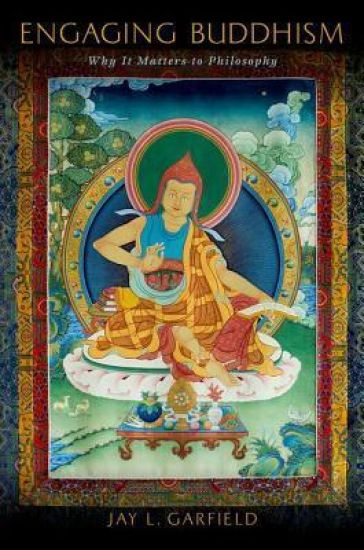
Engaging Buddhism

Engaging Buddhism

Jay L. Garfield

Oxford University Press Inc
2015
nidottu
This is a book for scholars of Western philosophy who wish to engage with Buddhist philosophy, or who simply want to extend their philosophical horizons. It is also a book for scholars of Buddhist studies who want to see how Buddhist theory articulates with contemporary philosophy. Engaging Buddhism: Why it Matters to Philosophy articulates the basic metaphysical framework common to Buddhist traditions. It then explores questions in metaphysics, the philosophy of mind, phenomenology, epistemology, the philosophy of language and ethics as they are raised and addressed in a variety of Asian Buddhist traditions. In each case the focus is on philosophical problems; in each case the connections between Buddhist and contemporary Western debates are addressed, as are the distinctive contributions that the Buddhist tradition can make to Western discussions. Engaging Buddhism is not an introduction to Buddhist philosophy, but an engagement with it, and an argument for the importance of that engagement. It does not pretend to comprehensiveness, but it does address a wide range of Buddhist traditions, emphasizing the heterogeneity and the richness of those traditions. The book concludes with methodological reflections on how to prosecute dialogue between Buddhist and Western traditions. "Garfield has a unique talent for rendering abstruse philosophical concepts in ways that make them easy to grasp. This is an important book, one that can profitably be read by scholars of Western and non-Western philosophy, including specialists in Buddhist philosophy. This is in my estimation the most important work on Buddhist philosophy in recent memory. It covers a wide range of topics and provides perhaps the clearest analysis of some core Buddhist ideas to date. This is landmark work. I think it's the best cross-cultural analysis of the relevance of Buddhist thought for contemporary philosophy in the present literature. "-C. John Powers, Professor, School of Culture, History & Language, Australian National University
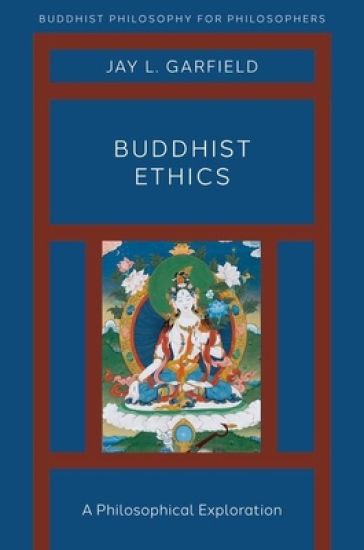
Buddhist Ethics

Buddhist Ethics

Jay L. Garfield

OXFORD UNIVERSITY PRESS INC
2022
sidottu
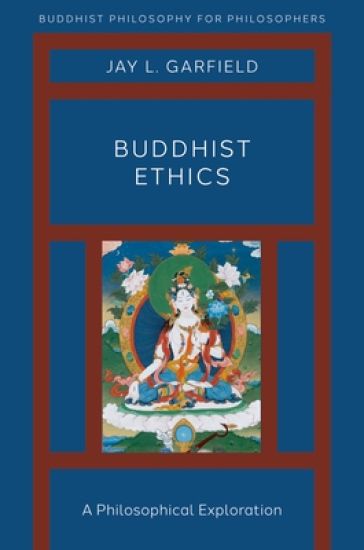
Buddhist Ethics presents an outline of Buddhist ethical thought. It is not a defense of Buddhist approaches to ethics as opposed to any other, nor is it a critique of the Western tradition. Garfield presents a broad overview of a range of Buddhist approaches to the question of moral philosophy. He draws on a variety of thinkers, reflecting the great diversity of this 2500-year-old tradition in philosophy but also the principles that tie them together. In particular, he engages with the literature that argues that Buddhist ethics is best understood as a species of virtue ethics, and with those who argue that it is best understood as consequentialist. Garfield argues that while there are important points of contact with these Western frameworks, Buddhist ethics is distinctive, and is a kind of moral phenomenology that is concerned with the ways in which we experience ourselves as agents and others as moral fellows. With this framework, Garfield explores the connections between Buddhist ethics and recent work in moral particularism, such as that of Jonathan Dancy, as well as the British and Scottish sentimentalist tradition represented by Hume and Smith.
Buddhist Ethics

Buddhist Ethics

Jay L. Garfield

OXFORD UNIVERSITY PRESS INC
2022
nidottu
Buddhist Ethics presents an outline of Buddhist ethical thought. It is not a defense of Buddhist approaches to ethics as opposed to any other, nor is it a critique of the Western tradition. Garfield presents a broad overview of a range of Buddhist approaches to the question of moral philosophy. He draws on a variety of thinkers, reflecting the great diversity of this 2500-year-old tradition in philosophy but also the principles that tie them together. In particular, he engages with the literature that argues that Buddhist ethics is best understood as a species of virtue ethics, and with those who argue that it is best understood as consequentialist. Garfield argues that while there are important points of contact with these Western frameworks, Buddhist ethics is distinctive, and is a kind of moral phenomenology that is concerned with the ways in which we experience ourselves as agents and others as moral fellows. With this framework, Garfield explores the connections between Buddhist ethics and recent work in moral particularism, such as that of Jonathan Dancy, as well as the British and Scottish sentimentalist tradition represented by Hume and Smith.
The Concealed Influence of Custom

The Concealed Influence of Custom

Jay L. Garfield

Oxford University Press Inc
2019
sidottu
Jay L. Garfield defends two exegetical theses regarding Hume's Treatise on Human Nature. The first is that Book II is the theoretical foundation of the Treatise. Second, Garfield argues that we cannot understand Hume's project without an appreciation of his own understanding of custom, and in particular, without an appreciation of the grounding of his thought about custom in the legal theory and debates of his time. Custom is the source of Hume's thoughts about normativity, not only in ethics and in political theory, but also in epistemological, linguistics, and scientific practice- and is the source of his insight that our psychological and social natures are so inextricably linked. The centrality of custom and the link between the psychological and the social are closely connected, which is why Garfield begins with Book II. There are four interpretative perspectives at work in this volume: one is a naturalistic skeptical interpretation of Hume's Treatise; a second is the foregrounding of Book II of the Treatise as foundational for Books I and III. A third is the consideration of the Treatise in relation to Hume's philosophical antecedents (particularly Sextus, Bayle, Hutcheson, Shaftesbury, and Mandeville), as well as eighteenth century debates about the status of customary law, with one eye on its sequellae in the work of Kant, the later Wittgenstein, and in contemporary cognitive science. The fourth is the Buddhist tradition in which many of the ideas Hume develops are anticipated and articulated in somewhat different ways. Garfield presents Hume as a naturalist, a skeptic and as, above all, a communitarian. In offering this interpretation, he provides an understanding of the text as a whole in the context of the literature to which it responded, and in the context of the literature it inspired.
Norms and Nature

Norms and Nature

Jay L. Garfield

OXFORD UNIVERSITY PRESS INC
2026
sidottu
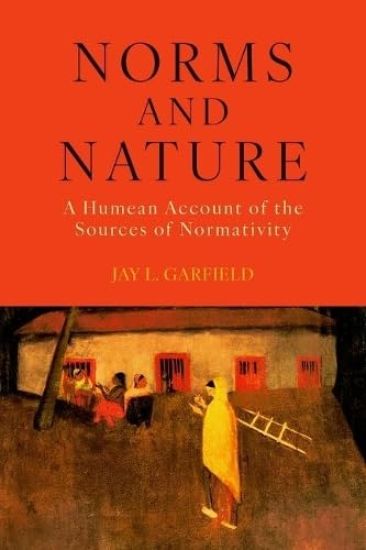
In The Treatise of Human Nature, Hume argued that we are normative animals, and he treats human nature in the context of, and on a par with, non-human nature. In Norms and Nature, Jay L. Garfield argues that Hume was right, and to demonstrate and explain this fact, he shows how the animals that we are construct norms, learn to conform to norms, and how we are transformed by the normative structures we come to inhabit. Garfield draws on the work of the American psychologist Edward Chace Tolman, who argued that the intentional could be naturalized without reducing it to the non-intentional and in the thought of those philosophers who shared that vision, including those in the Prasangika Madhyamaka tradition, as well as Nietzsche, Schopenhauer, Dewey, Wittgenstein, and Sellars. Norms and Nature examines what it is to be human in the full sense of the term: to be an organism that only comes to self-consciousness in virtue of being thrown into a world already pregnant with meaning; meaning that can only be constituted collectively. To be human is to be one whose very being is constituted both by the web of customs into which we are born. In this investigation, Garfield shows how much of our existence as persons depends upon a set of interlocking virtuous spirals that enable the development of the communities that make normativity possible, and on the development of the sets of norms that enable those communities to sustain themselves. Garfield argues that it is this very aspect of our nature which provides hope that we can improve ourselves. Norms and Nature offers a rich sense of our place as a species in the natural world, and of our places as individuals in the context of the social order that we create, and that in turn create us.
Losing Ourselves

Losing Ourselves

Jay L. Garfield

PRINCETON UNIVERSITY PRESS
2022
sidottu
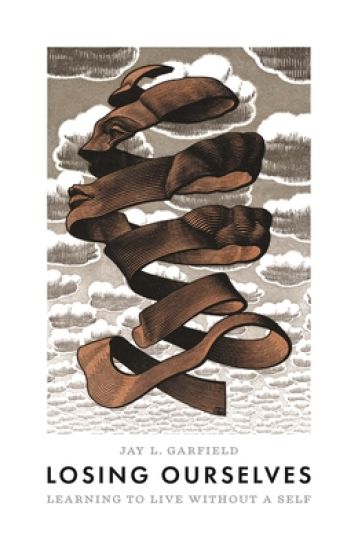
Why you don’t have a self—and why that’s a good thingIn Losing Ourselves, Jay Garfield, a leading expert on Buddhist philosophy, offers a brief and radically clear account of an idea that at first might seem frightening but that promises to liberate us and improve our lives, our relationships, and the world. Drawing on Indian and East Asian Buddhism, Daoism, Western philosophy, and cognitive neuroscience, Garfield shows why it is perfectly natural to think you have a self—and why it actually makes no sense at all and is even dangerous. Most importantly, he explains why shedding the illusion that you have a self can make you a better person.Examining a wide range of arguments for and against the existence of the self, Losing Ourselves makes the case that there are not only good philosophical and scientific reasons to deny the reality of the self, but that we can lead healthier social and moral lives if we understand that we are selfless persons. The book describes why the Buddhist idea of no-self is so powerful and why it has immense practical benefits, helping us to abandon egoism, act more morally and ethically, be more spontaneous, perform more expertly, and navigate ordinary life more skillfully. Getting over the self-illusion also means escaping the isolation of self-identity and becoming a person who participates with others in the shared enterprise of life.The result is a transformative book about why we have nothing to lose—and everything to gain—by losing our selves.
Losing Ourselves

Losing Ourselves

Jay L. Garfield

PRINCETON UNIVERSITY PRESS
2023
pokkari
Why you don’t have a self—and why that’s a good thingIn Losing Ourselves, Jay Garfield, a leading expert on Buddhist philosophy, offers a brief and radically clear account of an idea that at first might seem frightening but that promises to liberate us and improve our lives, our relationships, and the world. Drawing on Indian and East Asian Buddhism, Daoism, Western philosophy, and cognitive neuroscience, Garfield shows why it is perfectly natural to think you have a self—and why it actually makes no sense at all and is even dangerous. Most importantly, he explains why shedding the illusion that you have a self can make you a better person.Examining a wide range of arguments for and against the existence of the self, Losing Ourselves makes the case that there are not only good philosophical and scientific reasons to deny the reality of the self, but that we can lead healthier social and moral lives if we understand that we are selfless persons. The book describes why the Buddhist idea of no-self is so powerful and why it has immense practical benefits, helping us to abandon egoism, act more morally and ethically, be more spontaneous, perform more expertly, and navigate ordinary life more skillfully. Getting over the self-illusion also means escaping the isolation of self-identity and becoming a person who participates with others in the shared enterprise of life.The result is a transformative book about why we have nothing to lose—and everything to gain—by losing our selves.