Kirjojen hintavertailu. Mukana 11 717 486 kirjaa ja 12 kauppaa.

Kirjahaku

Etsi kirjoja tekijän nimen, kirjan nimen tai ISBN:n perusteella.

19 kirjaa tekijältä Jay Schulkin

Bodily Sensibility

Bodily Sensibility

Jay Schulkin

Oxford University Press Inc
2004
sidottu
The brain is a cognitive organ, and regions of the brain that traverse brainstem and cortical sites orchestrate the expression of bodily sensibility: intelligent action. They can appear perfunctory or intimate, calculating a sum or selecting a mate. Schulkin presents neuroscientific research demonstrating that thought is not on one side and bodily sensibility on the other; from a biological point of view, they are integrated. Schulkin further argues that this integration has important implications for judgements about the emotions, art and music, moral sensibilities, attraction and revulsion, and our perpetual inclination to explain ourselves and our surroundings. He begins the book by setting forth a view of the emotions not as a bodily burden to be borne, but rather as a great source of information. He then moves on to other domains, claiming that underlying the experience of aesthetics in at least some instances is the interplay between expectation and disappointment from its infraction, and suggesting that, among other things, repulsion and attraction to the cries and joys of others constitutes moral responsiveness. This book should appeal to researchers in behavioural neuroscience, emotion, and psychophysiology, as well as cognitive and social psychologists and philosophers of mind.
The CRF Signal

The CRF Signal

Jay Schulkin

Oxford University Press
2017
sidottu
Information molecules, such as Cortico-Releasing Factor (CRF), are ancient and widely distributed across diverse organs, playing various regulatory roles. CRF has been associated with a range of human conditions, including fear and anxiety, social contact, and most recently, addiction – in particular the euphoric feelings associated with alcohol consumption. Since its original discovery, research has unearthed that the role of this molecule is much broader than first thought. The scientific community now knows that CRF is a dynamic and diversely widespread peptide hormone that plays many roles and has many functions, in addition to its role as a releasing factor in the brain. This book explores the role of CRF, examining the relationship between location and function. It considers recurrent features that are linked to CRF - movement and change. CRF expression in regions of the brain is tied to paying attention to novel events and invoking movement in response to those events. Indeed, CRF provokes simple organized rhythmic behavior and can be mobilized under diverse conditions, including adversity. Examining the evolutionary origins of CRH, its neural functions, and its role in a variety of human characteristics and social behaviors, this book provides unique insights into CRF, and will be of interest to students and researchers in Neuroscience, Psychology, and Biology.
Sport

Sport

Jay Schulkin

Columbia University Press
2016
sidottu
Sports are as varied as the people who play them. We run, jump, and swim. We kick, hit, and shoot balls. We ride sleds in the snow and surf in the sea. From the Olympians of ancient Greece to today's professional athletes, from adult pickup soccer games to children's gymnastics classes, people at all levels of ability at all times and in all places have engaged in sport. What drives this phenomenon? In Sport, the neuroscientist Jay Schulkin argues that biology and culture do more than coexist when we play sports-they blend together seamlessly, propelling each other toward greater physical and intellectual achievement. To support this claim, Schulkin discusses history, literature, and art-and engages philosophical inquiry and recent behavioral research. He connects sport's basic neural requirements, including spatial and temporal awareness, inference, memory, agency, direction, competitive spirit, and endurance, to the demands of other human activities. He affirms sport's natural role as a creative evolutionary catalyst, turning the external play of sports inward and bringing insight to the diversion that defines our species. Sport, we learn, is a fundamental part of human life.
Sodium Hunger

Sodium Hunger

Jay Schulkin

Cambridge University Press
2005
pokkari
The hunger for sodium has been used as a model system in which to study how the brain produces motivated behaviour. In this account of the field Jay Schulkin draws together information across a range of disciplines and topics, ranging from the ecology of salt ingestion to the sodium molecule and the action of various hormones. The phenomenon of sodium hunger was discovered by Curt Richter, the great American psychobiologist, over 50 years ago. Its study has been of interest for some time: to naturalists, psychologists, endocrinologists, physiologists and neuroscientists. This book offers a systematic account of the behaviour of the sodium hungry animal, the endocrine and physiological mechanisms that act to maintain sodium balance and then act on the brain to promote the search for and the ingestion of salt. Finally, the book provides a description of a neural network that orchestrates the behaviour of salt seeking and salt ingestion. Graduate students and research workers in psychology, physiology and neuroscience will find valuable information in this review.
Sodium Hunger

Sodium Hunger

Jay Schulkin

Cambridge University Press
1992
sidottu
The hunger for sodium has been used as a model system in which to study how the brain produces motivated behaviour. In this account of the field Jay Schulkin draws together information across a range of disciplines and topics, ranging from the ecology of salt ingestion to the sodium molecule and the action of various hormones. The phenomenon of sodium hunger was discovered by Curt Richter, the great American psychobiologist, over 50 years ago. Its study has been of interest for some time: to naturalists, psychologists, endocrinologists, physiologists and neuroscientists. This book offers a systematic account of the behaviour of the sodium hungry animal, the endocrine and physiological mechanisms that act to maintain sodium balance and then act on the brain to promote the search for and the ingestion of salt. Finally, the book provides a description of a neural network that orchestrates the behaviour of salt seeking and salt ingestion. Graduate students and research workers in psychology, physiology and neuroscience will find valuable information in this review.
The Neuroendocrine Regulation of Behavior

The Neuroendocrine Regulation of Behavior

Jay Schulkin

Cambridge University Press
1998
sidottu
This text discusses the important role of steroids and neuropeptides in the regulation of behavior. The guiding principle behind the discussion is the concept of using good model animal systems to help us to understand how hormones influence the brain. The book emphasizes that steroids, and peptides or neuropeptides affect behavior by acting directly on the brain, and that common neural circuits underlie a variety of different central motive states. The first chapter focuses on developmental periods and sexually dimorphic behaviors; the second discusses sodium and water appetite, and ingestion; the third deals with appetite, food selection and ingestion. The fourth chapter examines how hormones influence parental behavior; the fifth is on fear and stress. The last chapter deals with biological clocks and endogenous rhythms. Senior undergraduate and graduate students in neuroscience, endocrinology, and physiology will find this text a useful guide to the role of hormones in behavior.
The Neuroendocrine Regulation of Behavior

The Neuroendocrine Regulation of Behavior

Jay Schulkin

Cambridge University Press
1998
pokkari
This text discusses the important role of steroids and neuropeptides in the regulation of behavior. The guiding principle behind the discussion is the concept of using good model animal systems to help us to understand how hormones influence the brain. The book emphasizes that steroids, and peptides or neuropeptides affect behavior by acting directly on the brain, and that common neural circuits underlie a variety of different central motive states. The first chapter focuses on developmental periods and sexually dimorphic behaviors; the second discusses sodium and water appetite, and ingestion; the third deals with appetite, food selection and ingestion. The fourth chapter examines how hormones influence parental behavior; the fifth is on fear and stress. The last chapter deals with biological clocks and endogenous rhythms. Senior undergraduate and graduate students in neuroscience, endocrinology, and physiology will find this text a useful guide to the role of hormones in behavior.
Adaptation and Well-Being

Adaptation and Well-Being

Jay Schulkin

Cambridge University Press
2011
sidottu
Recently, an interest in our understanding of well-being within the context of competition and cooperation has re-emerged within the biological and neural sciences. Given that we are social animals, our well-being is tightly linked to interactions with others. Pro-social behavior establishes and sustains human contact, contributing to well-being. Adaptation and Well-Being is about the evolution and biological importance of social contact. Social sensibility is an essential feature of our central nervous systems, and what have evolved are elaborate behavioral ways in which to sustain and maintain the physiological and endocrine systems that underlie behavioral adaptations. Writing for his fellow academics, and with chapters on evolutionary aspects, chemical messengers and social neuroendocrinology among others, Jay Schulkin explores this fascinating field of behavioral neuroscience.
Cognitive Adaptation

Cognitive Adaptation

Jay Schulkin

Cambridge University Press
2008
sidottu
Cognitive Adaptation: A Pragmatist Perspective argues that there is a fundamental link between cognitive/neural systems and evolution that underlies human activity. One important result is that the line between nature and culture and scientific and humanistic inquiry is quite permeable - the two are fairly continuous with each other. Two concepts figure importantly in our human ascent: agency and animacy. The first is the recognition of another person as having beliefs, desires, and a sense of experience. The second term is the recognition of an object as alive, a piece of biology. Both reflect a predilection in our cognitive architecture that is fundamental to an evolving, but fragile, sense of humanity. The book further argues for a regulative norm of self-corrective inquiry, an appreciation of the hypothetical nature of all knowledge. Schulkin's perspective is rooted in contemporary behavioral and cognitive neuroscience.
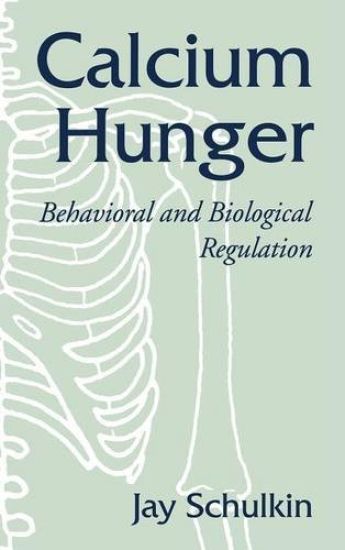
Calcium Hunger

Calcium Hunger

Jay Schulkin

Cambridge University Press
2000
sidottu
This book brings together the behavioral, physiological, and neuroendocrine regulation of calcium. An understanding of how the brain orchestrates whole-body demands for calcium is introduced. The approach is one in which behavior in addition to physiology serves bodily maintenance. The book links basic and clinical literature surrounding calcium homeostatis, as a wide variety of clinical syndromes are tied to calcium metabolism. Because calcium is so important during life stages particular to women, an emphasis is placed on the relevance of calcium to women's health throughout the book, though not exclusively since calcium is fundamental to both sexes.
Calcium Hunger

Calcium Hunger

Jay Schulkin

Cambridge University Press
2000
pokkari
This book brings together the behavioral, physiological, and neuroendocrine regulation of calcium. An understanding of how the brain orchestrates whole-body demands for calcium is introduced. The approach is one in which behavior in addition to physiology serves bodily maintenance. The book links basic and clinical literature surrounding calcium homeostatis, as a wide variety of clinical syndromes are tied to calcium metabolism. Because calcium is so important during life stages particular to women, an emphasis is placed on the relevance of calcium to women's health throughout the book, though not exclusively since calcium is fundamental to both sexes.
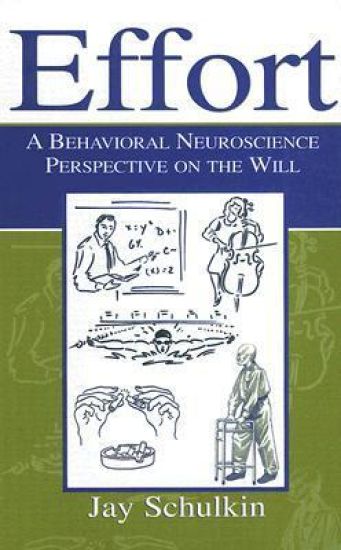
Effort

Effort

Jay Schulkin

Psychology Press
2006
sidottu
In Effort: A Behavioral Neuroscience Perspective on the Will, author Jay Schulkin presents a two-fold thesis: there is no absolute separation of the cognitive and non-cognitive brain, and there are diverse cognitive systems, many of which are embodied in motor systems that underlie self-regulation. Central to this thesis is that dopamine is the one neurotransmitter that underlies the diverse senses of effort, and is apparent in most everyday activity, whether solving a problem in our head or moving about. As scientific literature abounds with studies of decision-making and effort, this book emphasizes the importance of demythologizing our understanding of cognitive systems in order to link motivation, behavioral inhibition, self-regulation, and will.Effort will benefit researchers and students in neuroscience, behavioral neuroscience, cognitive psychology, clinical psychology, social psychology, as well as anyone with interest in this topic.
Effort

Effort

Jay Schulkin

Psychology Press
2006
nidottu
In Effort: A Behavioral Neuroscience Perspective on the Will, author Jay Schulkin presents a two-fold thesis: there is no absolute separation of the cognitive and non-cognitive brain, and there are diverse cognitive systems, many of which are embodied in motor systems that underlie self-regulation. Central to this thesis is that dopamine is the one neurotransmitter that underlies the diverse senses of effort, and is apparent in most everyday activity, whether solving a problem in our head or moving about. As scientific literature abounds with studies of decision-making and effort, this book emphasizes the importance of demythologizing our understanding of cognitive systems in order to link motivation, behavioral inhibition, self-regulation, and will.Effort will benefit researchers and students in neuroscience, behavioral neuroscience, cognitive psychology, clinical psychology, social psychology, as well as anyone with interest in this topic.
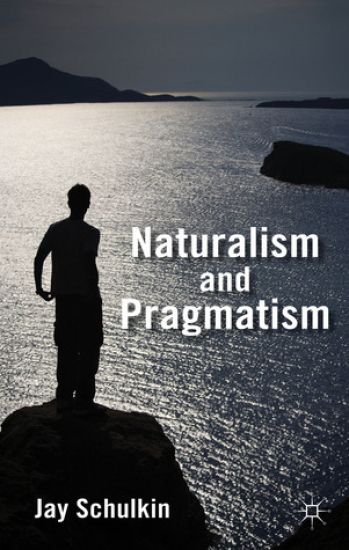
Naturalism and Pragmatism

Naturalism and Pragmatism

Jay Schulkin

Palgrave Macmillan
2012
sidottu
As a working neuroscientist, Jay Schulkin's ambitious exploration offers reflections on the pragmatic tradition from a fresh perspective, to present not only a scientist's take on the pragmatic tradition, but also a pragmatist's take on the evolution of human problem solving.
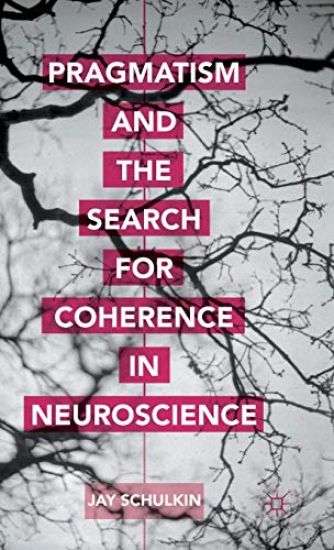
Pragmatism and the Search for Coherence in Neuroscience
We have known for over a thousand years that the brain underlies behavioral expression, but effective scientific study of the brain is only very recent. Two things converge in this book: a great respect for neuroscience and its many variations, and a sense of investigation and inquiry demythologized. Think of it as foraging for coherence.
Medical Decisions, Estrogen and Aging

Medical Decisions, Estrogen and Aging

Jay Schulkin

Springer-Verlag New York Inc.
2007
sidottu
If you are a woman between the ages of 45 and 75 and are trying to decide whether to try, or stick with, hormone therapy (HT), or if you are a physician with patients fitting this description, this book is for you – unless you are looking for a simple answer. If you are looking for a simple answer, you can go to the web site of one of the companies that manufactures hormones or makes money by administering hormone therapy (e. g. , AntiAgingGroup. com), or you can go to the we bsite of an organization that advocates ‘natural’ aging (e. g. , the Inter National Organization to Reclaim Menopause; Inorm. org). Any impartial advisor, however, is going to admit that the answer isn’t at all clear-cut. Jay Schulkin, I believe the reader will find, is such an impartial advisor, and he is going to take you several steps beyond simply acknowledging the ambiguity; he’s going to educate you about the biology, history, sociology, business, and ethics of hormone replacement therapy. As a prominent scientist doing research on hormones, a medical researcher, an expert on decision making, he is the ideal guide to the intricacies of the topic. You might think that all of this sounds superfluous for making an informed decision: “Just the facts, please.
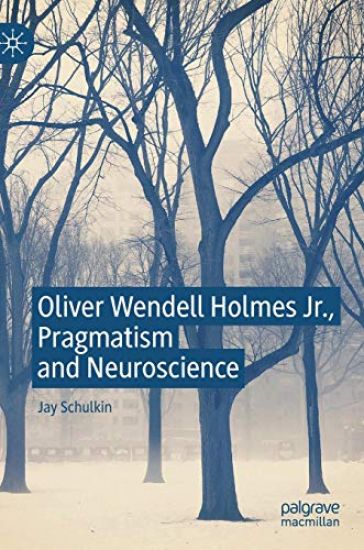
Oliver Wendell Holmes Jr., Pragmatism and Neuroscience

Oliver Wendell Holmes Jr., Pragmatism and Neuroscience

Jay Schulkin

Springer Nature Switzerland AG
2019
sidottu
This book explores the cultures of philosophy and the law as they interact with neuroscience and biology, through the perspective of American jurist Oliver Wendell Holmes’ Jr., and the pragmatist tradition of John Dewey. Schulkin proposes that human problem solving and the law are tied to a naturalistic, realistic and an anthropological understanding of the human condition. The situated character of legal reasoning, given its complexity, like reasoning in neuroscience, can be notoriously fallible. Legal and scientific reasoning is to be understood within a broader context in order to emphasize both the continuity and the porous relationship between the two. Some facts of neuroscience fit easily into discussions of human experience and the law. However, it is important not to oversell neuroscience: a meeting of law and neuroscience is unlikely to prove persuasive in the courtroom any time soon. Nevertheless, as knowledge of neuroscience becomes more reliableand more easily accepted by both the larger legislative community and in the wider public, through which neuroscience filters into epistemic and judicial reliability, the two will ultimately find themselves in front of a judge. A pragmatist view of neuroscience will aid and underlie these events.
Oliver Wendell Holmes Jr., Pragmatism and Neuroscience

Oliver Wendell Holmes Jr., Pragmatism and Neuroscience

Jay Schulkin

Springer Nature Switzerland AG
2020
nidottu
This book explores the cultures of philosophy and the law as they interact with neuroscience and biology, through the perspective of American jurist Oliver Wendell Holmes’ Jr., and the pragmatist tradition of John Dewey. Schulkin proposes that human problem solving and the law are tied to a naturalistic, realistic and an anthropological understanding of the human condition. The situated character of legal reasoning, given its complexity, like reasoning in neuroscience, can be notoriously fallible. Legal and scientific reasoning is to be understood within a broader context in order to emphasize both the continuity and the porous relationship between the two. Some facts of neuroscience fit easily into discussions of human experience and the law. However, it is important not to oversell neuroscience: a meeting of law and neuroscience is unlikely to prove persuasive in the courtroom any time soon. Nevertheless, as knowledge of neuroscience becomes more reliableand more easily accepted by both the larger legislative community and in the wider public, through which neuroscience filters into epistemic and judicial reliability, the two will ultimately find themselves in front of a judge. A pragmatist view of neuroscience will aid and underlie these events.
Medical Decisions, Estrogen and Aging
If you are a woman between the ages of 45 and 75 and are trying to decide whether to try, or stick with, hormone therapy (HT), or if you are a physician with patients fitting this description, this book is for you – unless you are looking for a simple answer. If you are looking for a simple answer, you can go to the web site of one of the companies that manufactures hormones or makes money by administering hormone therapy (e. g. , AntiAgingGroup. com), or you can go to the we bsite of an organization that advocates ‘natural’ aging (e. g. , the Inter National Organization to Reclaim Menopause; Inorm. org). Any impartial advisor, however, is going to admit that the answer isn’t at all clear-cut. Jay Schulkin, I believe the reader will find, is such an impartial advisor, and he is going to take you several steps beyond simply acknowledging the ambiguity; he’s going to educate you about the biology, history, sociology, business, and ethics of hormone replacement therapy. As a prominent scientist doing research on hormones, a medical researcher, an expert on decision making, he is the ideal guide to the intricacies of the topic. You might think that all of this sounds superfluous for making an informed decision: “Just the facts, please.