Kirjojen hintavertailu. Mukana 11 244 527 kirjaa ja 12 kauppaa.

Kirjahaku

Etsi kirjoja tekijän nimen, kirjan nimen tai ISBN:n perusteella.

3 kirjaa tekijältä Jay Sexton

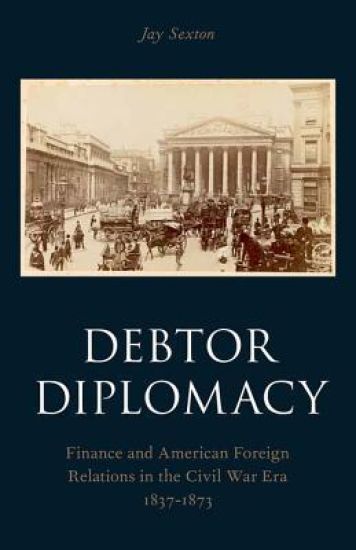
Debtor Diplomacy

Debtor Diplomacy

Jay Sexton

Oxford University Press Inc
2014
nidottu
The United States was a debtor nation in the mid-nineteenth century, with half of its national debt held overseas. Lacking the resources to develop the nation and to fund the wars necessary to expand and then preserve it, the United States looked across the Atlantic for investment capital. The need to obtain foreign capital greatly influenced American foreign policy, principally relations with Britain. The intersection of finance and diplomacy was particularly evident during the Civil War when both the North and South integrated attempts to procure loans from European banks into their larger international strategies. Furthermore, the financial needs of the United States (and the Confederacy) imparted significant political power to an elite group of London-based financiers who became intimately involved in American foreign relations during this period. This study explores and assesses how the United State's need for capital influenced its foreign relations in the tumultuous years wedged between the two great financial crises of the nineteenth century, 1837 to 1873. Drawing on the unused archives of London banks and the papers of statesmen on both sides of the Atlantic, this work illuminates our understanding of mid-nineteenth-century American foreign relations by highlighting how financial considerations influenced the formation of foreign policy and functioned as a peace factor in Anglo-American relations. This study also analyzes a crucial, but ignored, dimension of the Civil War - the efforts of both the North and the South to attract the support of European financiers. Though foreign contributions to each side failed to match the hopes of Union and Confederate leaders, the financial diplomacy of the Civil War shaped the larger foreign policy strategies of both sides and contributed to both the preservation of British neutrality and the ultimate defeat of the Confederacy.
Debtor Diplomacy

Debtor Diplomacy

Jay Sexton

Clarendon Press
2005
sidottu
The United States was a debtor nation in the mid-nineteenth century, with half of its national debt held overseas. Lacking the resources to develop the nation and to fund the wars necessary to expand and then preserve it, the United States looked across the Atlantic for investment capital. The need to obtain foreign capital greatly influenced American foreign policy, principally relations with Britain. The intersection of finance and diplomacy was particularly evident during the Civil War when both the North and South integrated attempts to procure loans from European banks into their larger international strategies. Furthermore, the financial needs of the United States (and the Confederacy) imparted significant political power to an elite group of London-based financiers who became intimately involved in American foreign relations during this period. This study explores and assesses how the United State's need for capital influenced its foreign relations in the tumultuous years wedged between the two great financial crises of the nineteenth century, 1837 to 1873. Drawing on the unused archives of London banks and the papers of statesmen on both sides of the Atlantic, this work illuminates our understanding of mid-nineteenth-century American foreign relations by highlighting how financial considerations influenced the formation of foreign policy and functioned as a peace factor in Anglo-American relations. This study also analyses a crucial, but ignored, dimension of the Civil War - the efforts of both the North and the South to attract the support of European financiers. Though foreign contributions to each side failed to match the hopes of Union and Confederate leaders, the financial diplomacy of the Civil War shaped the larger foreign policy strategies of both sides and contributed to both the preservation of British neutrality and the ultimate defeat of the Confederacy.
A Nation Forged by Crisis

A Nation Forged by Crisis

Jay Sexton

Basic Books
2019
sidottu
Americans have long understood their history as a story of inevitable progress, of a steadily rising standard of living and of the gradual extension of rights and freedoms to previously disenfranchised groups. Thus recent developments-9/11, the 2008 financial crash, the election of Donald Trump-have arrived as great shocks, each seemingly a wrench in the gears of history. How are we to understand our nation's past from the perspective of our volatile present?With A Nation Forged by Crisis, Jay Sexton has written a concise history of America for our time. He contends that from the start our national narrative has been punctuated by underappreciated moments of disruption, and that the roots of these disruptions can be traced to shifts in the international system. Sexton shows that the Revolution was not the inevitable result of American exceptionalism, but a consequence of Atlantic integration. By the 1760s, immigration to the colonies had spiked, and among the new arrivals were people like Thomas Paine who brought radical ideas to the continent. While Sexton does not dispute that the Civil War was caused by slavery, he argues that a necessary precondition for the conflict was the absence, for the first time in decades, of foreign threats. Both North and South were emboldened-with horrific results. In a similar way, it is impossible to understand the emergence of the New Deal without examining the role of "white ethnics"-first and second generation Germans, Poles, and Irish-in transforming and overseeing the mid-century Democratic Party. Sexton closes by pointing out that if recent developments are any indication, the politics of the future appear set to look less like those of the twentieth century than those of the nineteenth century, which was dominated by questions of labor and race, markets and tariffs, immigration and citizenship, international rivalry and geopolitical instability.A razor-sharp and necessary revision of American history, A Nation Forged by Crisis forces us to reckon with the reality that the United States has been and will always be entwined with the world beyond its borders