Kirjojen hintavertailu. Mukana 11 590 110 kirjaa ja 12 kauppaa.

Kirjahaku

Etsi kirjoja tekijän nimen, kirjan nimen tai ISBN:n perusteella.

4 kirjaa tekijältä Jean E. Jackson

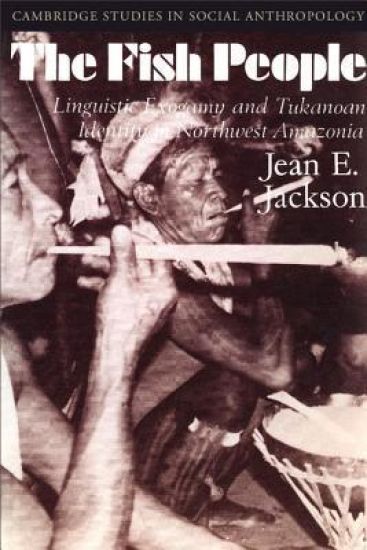
The Fish People

The Fish People

Jean E. Jackson

Cambridge University Press
1983
pokkari
The Bar, or Fish People, of the Northwest Amazon form part of an unusual, scattered network. This discussion of marriage, kinship, spatial organization, and other features of the social and geographic landscape, show how these "Tukanoans" conceptualize themselves and their universe.
"Camp Pain"

"Camp Pain"

Jean E. Jackson

University of Pennsylvania Press
1999
pokkari
Pain is the most frequent cause of disability in America. And pain specialists estimate that as many as thirty to sixty million Americans suffer from chronic pain. Chronic pain is a complex phenomenon-often extremely difficult to treat, and surprisingly difficult to define. Just as medical literature in general neglects the experience of illness, so the clinical literature on pain neglects the experience of pain. "Camp Pain" takes an approach different from most studies of chronic pain, which are typically written from a medical or social perspective. Based on a year's fieldwork in a pain treatment center, this book focuses on patients' perspectives-on their experiences of pain, what these experiences mean to them, and how this meaning is socially constructed. Jackson explores the psychological burden imposed on many sufferers when they are judged not to have "real" pain, and by harsh moral judgments that sufferers are weak, malingering, or responsible in some way for their pain. Jackson also looks at the ways in which severe pain erodes and destroys personal identity, studying in particular the role of language. While keeping her focus on patients' experiences, Jackson explores Western concepts of disease, health, mind, and body; assumptions about cause and effect; and notions of shame, guilt, and stigma. "Camp Pain" does not attempt to resolve the uncertainties and misperceptions associated with pain but rather aims at enhancing our understanding of the wider implications of chronic pain by focusing on the sufferers themselves.
Managing Multiculturalism

Managing Multiculturalism

Jean E. Jackson

Stanford University Press
2019
sidottu
Indigenous people in Colombia constitute a mere three percent of the national population. Colombian indigenous communities' success in gaining collective control of almost thirty percent of the national territory is nothing short of extraordinary. In Managing Multiculturalism, Jean E. Jackson examines the evolution of the Colombian indigenous movement over the course of her forty-plus years of research and fieldwork, offering unusually developed and nuanced insight into how indigenous communities and activists changed over time, as well as how she the ethnographer and scholar evolved in turn. The story of how indigenous organizing began, found its voice, established alliances, and won battles against the government and the Catholic Church has important implications for the indigenous cause internationally and for understanding all manner of rights organizing. Integrating case studies with commentaries on the movement's development, Jackson explores the politicization and deployment of multiculturalism, indigenous identity, and neoliberalism, as well as changing conceptions of cultural value and authenticity—including issues such as patrimony, heritage, and ethnic tourism. Both ethnography and recent history of the Latin American indigenous movement, this works traces the ideas motivating indigenous movements in regional and global relief, and with unprecedented breadth and depth.
Managing Multiculturalism

Managing Multiculturalism

Jean E. Jackson

Stanford University Press
2019
pokkari
Indigenous people in Colombia constitute a mere three percent of the national population. Colombian indigenous communities' success in gaining collective control of almost thirty percent of the national territory is nothing short of extraordinary. In Managing Multiculturalism, Jean E. Jackson examines the evolution of the Colombian indigenous movement over the course of her forty-plus years of research and fieldwork, offering unusually developed and nuanced insight into how indigenous communities and activists changed over time, as well as how she the ethnographer and scholar evolved in turn. The story of how indigenous organizing began, found its voice, established alliances, and won battles against the government and the Catholic Church has important implications for the indigenous cause internationally and for understanding all manner of rights organizing. Integrating case studies with commentaries on the movement's development, Jackson explores the politicization and deployment of multiculturalism, indigenous identity, and neoliberalism, as well as changing conceptions of cultural value and authenticity—including issues such as patrimony, heritage, and ethnic tourism. Both ethnography and recent history of the Latin American indigenous movement, this works traces the ideas motivating indigenous movements in regional and global relief, and with unprecedented breadth and depth.