Kirjojen hintavertailu. Mukana 11 717 486 kirjaa ja 12 kauppaa.

Kirjahaku

Etsi kirjoja tekijän nimen, kirjan nimen tai ISBN:n perusteella.

9 kirjaa tekijältä Jean Franco

Plotting Women

Plotting Women

Jean Franco

Columbia University Press
1991
pokkari
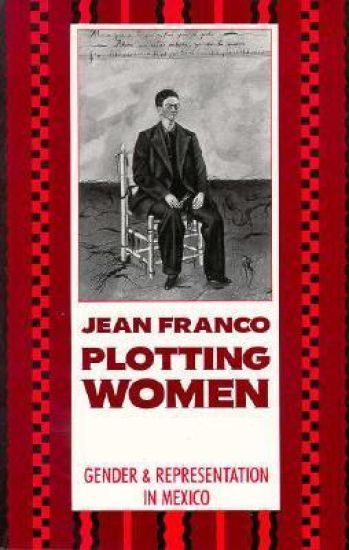
Where is the common ground for feminist theory and Latin American culture? Jean Franco explores Mexican women's struggle for interpretive power in relation to the Catholic religion, the nation, and post-modern society; and examines the writings of women who wrote under the shadow of recognized male writers, as well as the works of more marginal figures. In this original and skillfully written book Franco demonstrates the many feminisms that emerge in apparently rigid and adverse situations, and provides the foundation for a more comprehensive, less ethnocentric feminst theory.
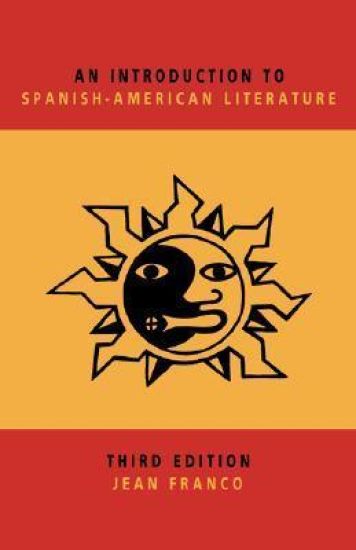
An Introduction to Spanish-American Literature

An Introduction to Spanish-American Literature

Jean Franco

Cambridge University Press
1995
sidottu
This is a revised, updated edition of Jean Franco’s classic Introduction to Spanish-American Literature, first published in 1969 and much recommended ever since. Its coverage ranges from colonial times to the present day, the later chapters having been radically rewritten to take account of the most recent developments in both literature and criticism. The book sets the literary works discussed in their historical, political and economic context, and explores the impact on Latin-American literature of European cultural traditions. English translations are provided for Spanish quotations in the text, and the extensively updated reading lists of primary and secondary material refer not only to Spanish texts but also, where available, to editions in English.
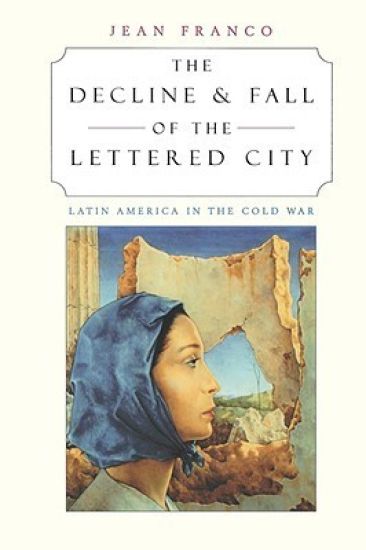
The Decline and Fall of the Lettered City

The Decline and Fall of the Lettered City

Jean Franco

Harvard University Press
2002
nidottu
The cultural Cold War in Latin America was waged as a war of values--artistic freedom versus communitarianism, Western values versus national cultures, the autonomy of art versus a commitment to liberation struggles--and at a time when the prestige of literature had never been higher. The projects of the historic avant-garde were revitalized by an anti-capitalist ethos and envisaged as the opposite of the republican state. The Decline and Fall of the Lettered City charts the conflicting universals of this period, the clash between avant-garde and political vanguard. This was also a twilight of literature at the threshold of the great cultural revolution of the seventies and eighties, a revolution to which the Cold War indirectly contributed. In the eighties, civil war and military rule, together with the rapid development of mass culture and communication empires, changed the political and cultural map.A long-awaited work by an eminent Latin Americanist widely read throughout the world, this book will prove indispensable to anyone hoping to understand Latin American literature and society. Jean Franco guides the reader across minefields of cultural debate and histories of highly polarized struggle. Focusing on literary texts by García Marquez, Vargas Llosa, Roa Bastos, and Juan Carlos Onetti, conducting us through this contested history with the authority of an eyewitness, Franco gives us an engaging overview as involving as it is moving.
Critical Passions

Critical Passions

Jean Franco

Duke University Press
1999
sidottu
Jean Franco’s work as a pathbreaking theorist, cultural critic, and scholar has helped to define Latin American studies over the last three decades. In the process, Franco has played a crucial role in developing cultural studies in both the English- and Spanish-speaking worlds. Critical Passions is the first volume to gather a wide-ranging selection of Franco’s influential essays.A key participant in the major debates in Latin American studies-beginning with the “boom” period of the 1960s and continuing through debates on ideology and discourse, Marxism, mass culture, and postmodernism-Franco is recognized for her feminist critique of Latin American writing. While her principal books are all readily available, Franco’s several dozen articles are dispersed in a variety of periodicals in Latin America, Europe, and the United States. Although many of these essays are considered pioneering and classic, they have never before been collected in a single work. In this volume, Mary Louise Pratt and Kathleen Newman have organized the essays into four interrelated sections: feminism and the critique of authoritarianism, mass and popular culture, Latin American literature from the “boom” onward, and the cultural history of Mexico. As a group, these writings demonstrate Franco’s ability to reflect on and judge with equal seriousness all spheres of expression, whether subway graffiti, a fashion manual, or an avant-garde haiku. A bona fide fan of popular and mass media, Franco never allows her critiques to dissolve into the puritanical or reductive; instead, she finds ways to present and debate complex theoretical questions in direct and accessible language. This volume will draw an extensive readership in Latin American, cultural, and women’s studies.
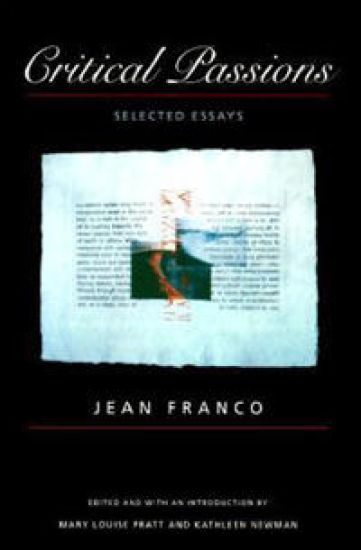
Critical Passions

Critical Passions

Jean Franco

Duke University Press
1999
pokkari
Jean Franco’s work as a pathbreaking theorist, cultural critic, and scholar has helped to define Latin American studies over the last three decades. In the process, Franco has played a crucial role in developing cultural studies in both the English- and Spanish-speaking worlds. Critical Passions is the first volume to gather a wide-ranging selection of Franco’s influential essays.A key participant in the major debates in Latin American studies-beginning with the “boom” period of the 1960s and continuing through debates on ideology and discourse, Marxism, mass culture, and postmodernism-Franco is recognized for her feminist critique of Latin American writing. While her principal books are all readily available, Franco’s several dozen articles are dispersed in a variety of periodicals in Latin America, Europe, and the United States. Although many of these essays are considered pioneering and classic, they have never before been collected in a single work. In this volume, Mary Louise Pratt and Kathleen Newman have organized the essays into four interrelated sections: feminism and the critique of authoritarianism, mass and popular culture, Latin American literature from the “boom” onward, and the cultural history of Mexico. As a group, these writings demonstrate Franco’s ability to reflect on and judge with equal seriousness all spheres of expression, whether subway graffiti, a fashion manual, or an avant-garde haiku. A bona fide fan of popular and mass media, Franco never allows her critiques to dissolve into the puritanical or reductive; instead, she finds ways to present and debate complex theoretical questions in direct and accessible language. This volume will draw an extensive readership in Latin American, cultural, and women’s studies.
Cruel Modernity

Cruel Modernity

Jean Franco

Duke University Press
2013
sidottu
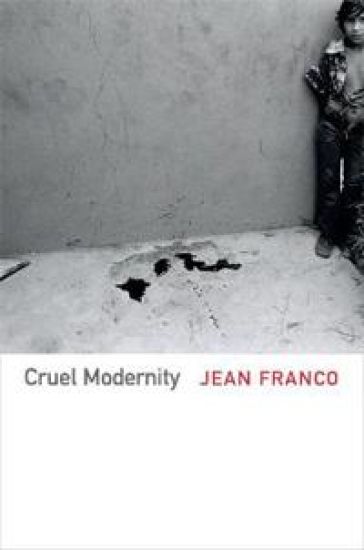
In Cruel Modernity, Jean Franco examines the conditions under which extreme cruelty became the instrument of armies, governments, rebels, and rogue groups in Latin America. She seeks to understand how extreme cruelty came to be practiced in many parts of the continent over the last eighty years and how its causes differ from the conditions that brought about the Holocaust, which is generally the atrocity against which the horror of others is measured. In Latin America, torturers and the perpetrators of atrocity were not only trained in cruelty but often provided their own rationales for engaging in it. When "draining the sea" to eliminate the support for rebel groups gave license to eliminate entire families, the rape, torture, and slaughter of women dramatized festering misogyny and long-standing racial discrimination accounted for high death tolls in Peru and Guatemala. In the drug wars, cruelty has become routine as tortured bodies serve as messages directed to rival gangs.Franco draws on human-rights documents, memoirs, testimonials, novels, and films, as well as photographs and art works, to explore not only cruel acts but the discriminatory thinking that made them possible, their long-term effects, the precariousness of memory, and the pathos of survival.
Cruel Modernity

Cruel Modernity

Jean Franco

Duke University Press
2013
pokkari
In Cruel Modernity, Jean Franco examines the conditions under which extreme cruelty became the instrument of armies, governments, rebels, and rogue groups in Latin America. She seeks to understand how extreme cruelty came to be practiced in many parts of the continent over the last eighty years and how its causes differ from the conditions that brought about the Holocaust, which is generally the atrocity against which the horror of others is measured. In Latin America, torturers and the perpetrators of atrocity were not only trained in cruelty but often provided their own rationales for engaging in it. When "draining the sea" to eliminate the support for rebel groups gave license to eliminate entire families, the rape, torture, and slaughter of women dramatized festering misogyny and long-standing racial discrimination accounted for high death tolls in Peru and Guatemala. In the drug wars, cruelty has become routine as tortured bodies serve as messages directed to rival gangs.Franco draws on human-rights documents, memoirs, testimonials, novels, and films, as well as photographs and art works, to explore not only cruel acts but the discriminatory thinking that made them possible, their long-term effects, the precariousness of memory, and the pathos of survival.