Kirjojen hintavertailu. Mukana 11 244 527 kirjaa ja 12 kauppaa.

Kirjahaku

Etsi kirjoja tekijän nimen, kirjan nimen tai ISBN:n perusteella.

10 kirjaa tekijältä Jean Grondin

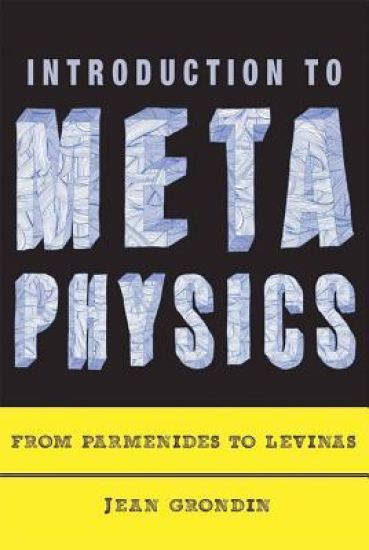
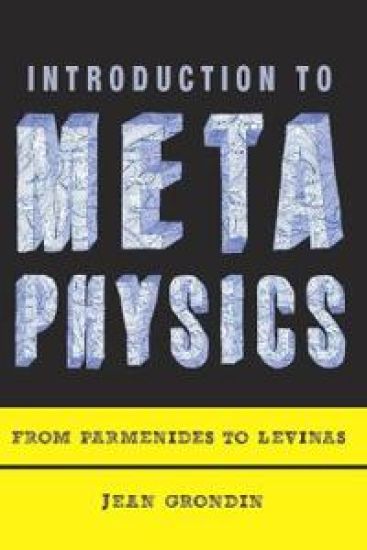
Introduction to Metaphysics

Introduction to Metaphysics

Jean Grondin

Columbia University Press
2012
pokkari
Jean Grondin completes the first history of metaphysics and respects both the analytical and the Continental schools while transcending the theoretical limitations of each. He reviews seminal texts by Parmenides, Plato, Aristotle, Plotinus, and Augustine. He follows the theological turn in the metaphysical thought of Avicenna, Anselm, Aquinas, and Duns Scotus, and he revisits Descartes and the cogito; Spinoza and Leibniz's rationalist approaches; Kant's reclaiming of the metaphysical tradition; and post-Kantian practice up to Hegel. He engages with twentieth century innovations that upended the discipline, particularly Heidegger's revival of the question of Being and the rediscovery of the metaphysics of existence by Sartre and the Existentialists, language by Gadamer and Derrida, and transcendence by Levinas. Metaphysics is often dismissed as a form or epoch of philosophy that must be overcome, yet by promoting a full understanding of its platform and processes, Grondin reveals its cogent approach to reality and foundational influence on modern philosophy and science. By restoring the value of metaphysics for contemporary audiences, Grondin showcases the rich currents and countercurrents of metaphysical thought and its future possibilities.
Introduction to Metaphysics

Introduction to Metaphysics

Jean Grondin

Columbia University Press
2012
sidottu
Jean Grondin completes the first history of metaphysics and respects both the analytical and the Continental schools while transcending the theoretical limitations of each. He reviews seminal texts by Parmenides, Plato, Aristotle, Plotinus, and Augustine. He follows the theological turn in the metaphysical thought of Avicenna, Anselm, Aquinas, and Duns Scotus, and he revisits Descartes and the cogito; Spinoza and Leibniz's rationalist approaches; Kant's reclaiming of the metaphysical tradition; and post-Kantian practice up to Hegel. He engages with twentieth century innovations that upended the discipline, particularly Heidegger's revival of the question of Being and the rediscovery of the metaphysics of existence by Sartre and the Existentialists, language by Gadamer and Derrida, and transcendence by Levinas. Metaphysics is often dismissed as a form or epoch of philosophy that must be overcome, yet by promoting a full understanding of its platform and processes, Grondin reveals its cogent approach to reality and foundational influence on modern philosophy and science. By restoring the value of metaphysics for contemporary audiences, Grondin showcases the rich currents and countercurrents of metaphysical thought and its future possibilities.
Introduction to Philosophical Hermeneutics

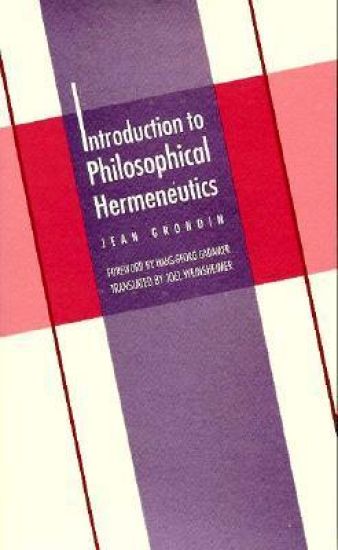
Introduction to Philosophical Hermeneutics

Jean Grondin

Yale University Press
1997
pokkari
In this wide-ranging historical introduction to philosophical hermeneutics, Jean Grondin discusses the major figures from Philo to Habermas, analyzes conflicts between various interpretive schools, and provides a persuasive critique of Gadamer's view of hermeneutic history, though in other ways Gadamer's Truth and Method serves as a model for Grondin's approach.Grondin begins with brief overviews of the pre-nineteenth-century thinkers Philo, Origen, Augustine, Luther, Flacius, Dannhauer, Chladenius, Meier, Rambach, Ast, and Schlegel. Next he provides more extensive treatments of such major nineteenth-century figures as Schleiermacher, Böckh, Droysen, and Dilthey. There are full chapters devoted to Heidegger and Gadamer as well as shorter discussions of Betti, Habermas, and Derrida. Because he is the first to pay close attention to pre-Romantic figures, Grondin is able to show that the history of hermeneutics cannot be viewed as a gradual, steady progression in the direction of complete universalization. His book makes it clear that even in the early period, hermeneutic thinkers acknowledged a universal aspect in interpretation—that long before Schleiermacher, hermeneutics was philosophical and not merely practical. In revising and correcting the standard account, Grondin's book is not merely introductory but revisionary, suitable for beginners as well as advanced students in the field.
Hans-Georg Gadamer

Hans-Georg Gadamer

Jean Grondin

Yale University Press
2011
pokkari
The first English-language biography of one of the leading intellectuals of the twentieth century Hans-Georg Gadamer (1900–2002) was one of the greatest philosophers of our era. He was also at the center of some of the century’s darkest, most complex historical events, for he chose to remain in his native Germany in the 1930s, neither supporting Hitler nor actively opposing him, but negotiating instead an “unpolitical” position that allowed him to continue his philosophical work. In this magisterial book, Jean Grondin appraises Gadamer’s life and achievement. Drawing on countless interviews with Gadamer and his contemporaries, Gadamer’s personal correspondence, and extensive archival research, Grondin traces Gadamer’s life as an academician and the development of his ideas, placing them in the context of his times. He sheds light on the genesis and accomplishment of Gadamer’s major opus, Truth and Method, the bible of modern-day hermeneutics. And he addresses the question of Gadamer’s attitude and actions amid the catastrophe of Nazi Germany, painting a balanced portrait of a scholar who tried to preserve German culture and tradition in the face of an invasive menace.
Metaphysical Hermeneutics

Metaphysical Hermeneutics

Jean Grondin

BLOOMSBURY PUBLISHING PLC
2024
sidottu
If in its simplest form, hermeneutics is a quest for understanding, then part of that quest will always include striving to understand being and the meaning of being. This open access book takes that ambition seriously, arguing that hermeneutics and metaphysics, so central to philosophical thought but so rarely put in tandem, are two complementary fundamentals of human existence.Metaphysical Hermeneutics puts forward the argument for a hermeneutical metaphysics in service of philosophy’s basic aim: to make sense of our experience. Jean Grondin builds his argument for this combined discipline around the idea of ‘sense’ – a theme that is both hermeneutical and metaphysical. What we seek to glimpse is not just a figment of the mind but always the meaning of something. Grondin calls on one of the founding figures of contemporary hermeneutics Hans-Georg Gadamer to test his theories, singling out the metaphysical dimension of Gadamer’s ideas and questioning his seeming embrace and rejection of that dimension. Rooting these questions in the human search for meaning is a major contribution to the scope and resources of hermeneutic philosophy.The ebook editions of this book are available open access under a CC BY-NC-ND 4.0 licence on bloomsburycollections.com. Open access was funded by the Department of Philosophy at the University of Montreal.
Metaphysical Hermeneutics

Metaphysical Hermeneutics

Jean Grondin

BLOOMSBURY PUBLISHING PLC
2026
nidottu
If in its simplest form, hermeneutics is a quest for understanding, then part of that quest will always include striving to understand being and the meaning of being. This open access book takes that ambition seriously, arguing that hermeneutics and metaphysics, so central to philosophical thought but so rarely put in tandem, are two complementary fundamentals of human existence. Metaphysical Hermeneutics puts forward the argument for a hermeneutical metaphysics in service of philosophy’s basic aim: to make sense of our experience. Jean Grondin builds his argument for this combined discipline around the idea of ‘sense’ – a theme that is both hermeneutical and metaphysical. What we seek to glimpse is not just a figment of the mind but always the meaning of something. Grondin calls on one of the founding figures of contemporary hermeneutics Hans-Georg Gadamer to test his theories, singling out the metaphysical dimension of Gadamer’s ideas and questioning his seeming embrace and rejection of that dimension. Rooting these questions in the human search for meaning is a major contribution to the scope and resources of hermeneutic philosophy. The ebook editions of this book are available open access under a CC BY-NC-ND 4.0 licence on bloomsburycollections.com. Open access was funded by the Department of Philosophy at the University of Montreal.
Die Philosophie der Religion

Die Philosophie der Religion

Jean Grondin

Mohr Siebeck
2012
nidottu
Was wäre die Philosophie ohne die Religion? Sie ist sicherlich aus ihr entstanden, denn die Idee eines von wohlwollenden Mächten oder mit Vernunft regierten Kosmos wurde von der Religion vorgebildet, bevor sie zum stillschweigenden Leitfaden der philosophischen Wahrheitssuche wurde. Aus ihr nährte sich die Evidenz eines Endziels des Lebens, das die Philosophie auch übernahm, als sie selber eine Art Weisheit ausarbeiten wollte, wohl wissend, dass alle Weisheitslehren aus der Religion stammten. Freilich wehrte sich die Philosophie von Anfang an gegen das, was ihr in der religiösen Überlieferung als willkürlich oder anstößig erschien. Ihre Beziehung zur Religion war also immer die einer Entmythologisierung, die bei gewissen Denkern konsequent zu einer systematischen Religionskritik entwickelt wurde. Damit wendeten aber die Philosophen auf die Überlieferung ein Vernünftigkeitskriterium an, das von der Religion selbst vorgespielt wurde: Es gibt kaum eine Religion, die nicht mithilfe dieses Maßstabes eine frühere oder andere hätte kritisieren, ablösen oder vollenden wollen. Es erscheint schwer, ja unmöglich, eine oder gar die Religion überhaupt anzuprangern, wenn man nicht selber eine bessere in Aussicht stellt.Die meisten Philosophen haben immer anerkannt, dass die Weisheitslehre der Religion der Philosophie vorausging. Deshalb gingen ihre Denkansätze stets mit einer behutsamen Religionsphilosophie einher, die heute nur vergessen wird und deren Grundzüge Jean Grondin rekapituliert. Denn die Religion bietet seit alters her die stärksten, meist geglaubten und diskutierten Antworten auf die Frage nach dem Sinn des menschlichen Treibens, und sie tut es mit unendlich mehr Wirksamkeit als jede Philosophie. An diese der Religion innewohnende Philosophie und ihre sinnvolle Seinserfahrung, die zu denken gibt, will dieses Buch erinnern.
Hans-Georg Gadamer - Eine Biographie

Hans-Georg Gadamer - Eine Biographie

Jean Grondin

Mohr Siebeck
2013
nidottu
Aus Rezensionen zur 1. Auflage: "Die gründliche Gadamer-Biographie von Jean Grondin ist [...] frei von hagiographischen Zügen. Um so überzeugender entwirft sie das Porträt eines zunächst zögernden und unsicheren, eines unpolitischen und anpassungsfähigen, aber stets liberalen und selbstkritischen, vom gutbürgerlichen Elternhaus mit Klugheit, Sensibilität und sicherem Blick ausgestatteten, humanistisch gebildeten und unabhängig urteilenden Geistes." Jürgen Habermas in Neue Zürcher Zeitung vom 12./13.2.2000, S. 49 "Jean Grondin […] hat es übernommen, das Jahrhundertleben Hans-Georg Gadamers zu beschreiben, und es ist ihm gelungen, ein hundertjähriges Leben […] mit Detailtreue und eindrücklicher Sprache in einer Weise erlebbar zu machen, die das Lesen dieser Biographie zu einem Erlebnis werden lässt." KVS-Mitteilungen, Nr. 2 (2000), S. 22 "Meisterhaft geschrieben, mit subtilem Einfühlungsvermögen und Feingefühl […]. Grondins feinsinniger Witz, rhetorischer Charme und sprachlicher Schliff machen die Lektüre auch zu einem literarischen Genuß." Annemarie C. Mayer in Theologische Revue, 97. Jahrgang, 6 (2001), S. 508-510
Vom Sinn Des Lebens

Vom Sinn Des Lebens

Jean Grondin

Vandenhoeck Ruprecht GmbH Co KG
2006
nidottu
Der Philosoph, sagt Jean Grondin in diesem Essay, hat nicht dem Leben einen Sinn zu geben. Er muss die Aufmerksamkeit auf den Sinn lenken, in den uns das Leben von selbst zieht und den Propheten, Vorbilder, Künstler und Denker in Wort, Bild und Tat umgesetzt haben. Von dieser Einsicht ausgehend lädt uns der Autor, Jean Grondin zu einem inneren Gespräch ein, das nichts Akademisches hat. "Jede Philosophie und jedes Leben gründet auf Hoffnung" schreibt er. "Die Hoffnung dieses Buches ist es, diese Philosophie verständlich zu machen." Von Hoffnung und Verantwortung, vom Glück und Mehr-Leben ist hier die Rede. Der Autor hilft uns zu sehen, dass das Leben trotz aller Leiden doch lebenswert und nicht nur eine nutzlose Leidenschaft ist, für die Jean-Paul Sartre es hielt.