Kirjojen hintavertailu. Mukana 12 459 402 kirjaa ja 12 kauppaa.

Kirjahaku

Etsi kirjoja tekijän nimen, kirjan nimen tai ISBN:n perusteella.

4 kirjaa tekijältä Jean Guex

Retrograde Evolution During Major Extinction Crises

Retrograde Evolution During Major Extinction Crises

Jean Guex

Springer International Publishing AG
2016
nidottu
This book is the first of its kind, providing in-depth analysis of the retrograde evolution occurring during major extinction periods. The text offers a non-strictly adaptative explanation of repetition of phyla after the major extinctions, utilizing a study of seven phylogenetically distinct groups. This opens a new experimental field in evolutionary biology with the possibility of reconstructing ancestral forms in lab by applying artificial stresses.
Biochronological Correlations

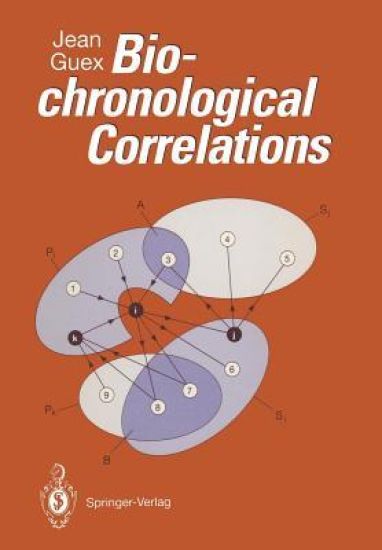
Biochronological Correlations

Jean Guex

Springer-Verlag Berlin and Heidelberg GmbH Co. K
1991
nidottu
The object of this book is to explain how to create a synthesis of complex biostratigraphic data, and how to extract from such a syn­ thesis a relative time scale based exclusively on the fossil content of sedimentary rocks. Such a time scale can be used to attribute relative ages to isolated fossil-bearing samples. From a practical point of view, the method described in this book will particularly interest paleontologists and geologists who must construct zonations and establish correlations on the basis of bio­ stratigraphic data that are both plentiful and apparently contra­ dictory. It is well known that the difficulties involved in constructing bio­ chronologic scales are largely due to the discontinuous nature of the fossil record. We know that the relationships between the first ap­ pearances (or disappearances) of different fossil species are rarely constant in stratigraphic sections that are distant from each other. It if often extremely difficult to discover datums or sets of species that are useful in making significant biochronologic correlations on a large scale. The theoretical model explained here (known as the Unitary As­ sociation Method) provides clear solutions to most of these problems. That method is purely deterministic, as opposed to statistical and probabilistic analytical techniques producing "average" ranges. We demonstrate in Chapter 15 why most of these techniques produce results which are usually not compatible with the original biostrati­ graphic observations (i.e., the taxonomic contents of the studied sam­ ples are not reproduced in the outputs).
Discrete Biochronological Time Scales

Discrete Biochronological Time Scales

Jean Guex; Federico Galster; Øyvind Hammer

Springer International Publishing AG
2015
sidottu
The object of this book is to explain how to create a synthesis of complex biostratigraphic data, and how to extract from such a synthesis a relative time scale based exclusively on the fossil content of sedimentary rocks. Such a time scale can be used to attribute relative ages to isolated fossil-bearing samples. The book is composed of 10 chapters together with several appendices. It is a totally revised version of “Biochronological Correlations” published in 1991 and includes various new chapters. The book offers a solution for the theoretical problem of how fossils can be used to make reliable quantitative stratigraphic correlations in sedimentary geology. It also describes the use of highly efficient software along with several examples. The authors compare their theoretical model with 2 other relevant studies: probabilistic stratigraphy and constrained optimization (CONOP).
Discrete Biochronological Time Scales

Discrete Biochronological Time Scales

Jean Guex; Federico Galster; Øyvind Hammer

Springer International Publishing AG
2016
nidottu
The object of this book is to explain how to create a synthesis of complex biostratigraphic data, and how to extract from such a synthesis a relative time scale based exclusively on the fossil content of sedimentary rocks. Such a time scale can be used to attribute relative ages to isolated fossil-bearing samples. The book is composed of 10 chapters together with several appendices. It is a totally revised version of “Biochronological Correlations” published in 1991 and includes various new chapters. The book offers a solution for the theoretical problem of how fossils can be used to make reliable quantitative stratigraphic correlations in sedimentary geology. It also describes the use of highly efficient software along with several examples. The authors compare their theoretical model with 2 other relevant studies: probabilistic stratigraphy and constrained optimization (CONOP).