Kirjojen hintavertailu. Mukana 11 717 486 kirjaa ja 12 kauppaa.

Kirjahaku

Etsi kirjoja tekijän nimen, kirjan nimen tai ISBN:n perusteella.

2 kirjaa tekijältä Jean M. Yarbrough

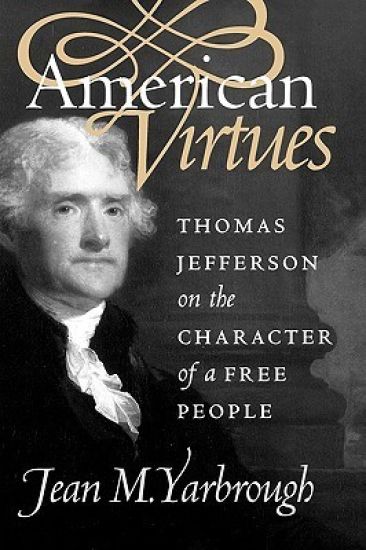
American Virtues

American Virtues

Jean M. Yarbrough

University Press of Kansas
1998
nidottu
Since the early days of the republic, Americans have recognized Thomas Jefferson's distinctive role in helping to shape the American national character. As Founder and statesman, Jefferson thought broadly about the virtues Americans would need to cultivate in order to preserve and perfect their experiment in republican self-government. Now in an age preoccupied with rights and divided over questions of character in public and private life, Jefferson can help us to think more clearly about our most urgent concerns. American Virtues is the first comprehensive analysis of Jefferson's moral and political philosophy in over twenty years and the first ever to focus exclusively on the full range of moral, civic, and intellectual virtues that together form the American character. It asks what kind of character Americans as a people must cultivate to ensure their freedom and happiness and how we as a free society can nurture moral and intellectual excellence in our citizens and statesmen. Beginning with the Declaration of Independence, Jean Yarbrough explores how Jefferson's conception of rights helps to form the American character. In subsequent chapters, she examines the moral sense virtues of justice and benevolence; the agrarian virtues of industry, moderation, patience, self-reliance, and independence; patriotism and modern republicanism; slavery and agrarian vice; the effect of commerce on character; the virtues connected with private property; the civic virtues of vigilance and spirited participation; the meaning of virtue and happiness for women; the virtues of republican statesmen; the place of the Epicurean virtues of wisdom and friendship in liberal republicanism; and piety and the secularized virtues of charity, toleration, and hope. In broadening the examination of virtue to include not only civic or republican virtue but the whole range of moral and intellectual excellence that perfect the individual character, American Virtues moves beyond the liberal-republican debates and makes a fresh contribution to the Jeffersonian literature.
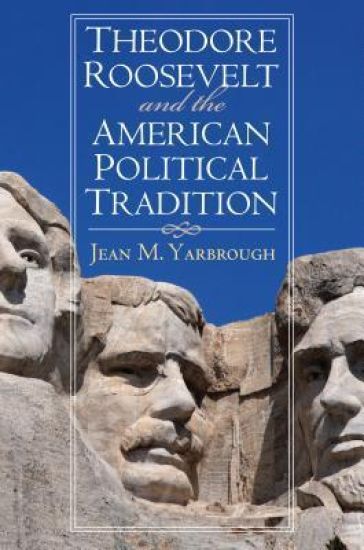
Theodore Roosevelt and the American Political Tradition

Theodore Roosevelt and the American Political Tradition

Jean M. Yarbrough

University Press of Kansas
2014
nidottu
Rough Rider, hunter, trust-buster, president and Bull Moose candidate. Biographers have long fastened on TR as man of action, while largely ignoring his political thought. Now, in time for the centennial of his Progressive run for the presidency, Jean Yarbrough provides a searching examination of TR’s political thought, especially in relation to the ideas of Washington, Hamilton and Lincoln - the statesmen TR claimed most to admire.Yarbrough sets out not only to explore Roosevelt’s vision for America but also to consider what his political ideas have meant for republican self-government. She praises TR for his fighting spirit, his love of country and efforts to promote republican greatness, but faults him for departing from the political principles of the more nationalistic Founders he esteemed. With the benefit of hindsight, she argues that the progressive policies he came to embrace have over time undermined the very qualities Roosevelt regarded as essential to civic life. In particular, the social welfare policies he championed have eroded industry and self-reliance; the expansion of the regulatory state has multiplied the special interests seeking access to political power; and the bureaucratic experts in whom he reposed such confidence have all too often turned out to be neither disinterested nor effective.Yarbrough argues that TR’s early historical studies - inspired by Darwinian biology and Hegelian political thought - treated westward expansion from an evolutionary and developmental perspective that placed race and conquest at the centre of the narrative, while relegating individual rights and consent of the governed to the sidelines.Although his early career showed him to be a moderate Republican reformer, Yarbrough argues that even then he did not share Hamilton’s enthusiasm for the commercial republic and substituted an appeal to “abstract duty” for The Federalist’s reliance on self-interest. As New York governor and first-term president, TR attempted to strike a “just balance” between democratic and oligarchic interests, but by the end of his presidency he had tipped the balance in favour of progressive policies. From the New Nationalism until his death in 1919, Roosevelt continued to claim the mantle of Washington and Lincoln, even as he moved further from their political principles.Through careful examination of TR’s political thought, Yarbrough’s book sheds new light on his place in the American political tradition, while enhancing our understanding of the roots of progressivism and its transformation of the Constitution.