Kirjojen hintavertailu. Mukana 12 016 292 kirjaa ja 12 kauppaa.

Kirjahaku

Etsi kirjoja tekijän nimen, kirjan nimen tai ISBN:n perusteella.

9 kirjaa tekijältä Jean Sprackland

Strands

Strands

Jean Sprackland

Vintage
2013
pokkari
Strands describes a year's worth of walking on the ultimate beach: inter-tidal and constantly turning up revelations: mermaid's purses, lugworms, sea potatoes, messages in bottles, buried cars, beached whales and a perfect cup from a Cunard liner. This is a series of meditations prompted by walking on the wild estuarial beaches of Ainsdale Sands between Blackpool and Liverpool, Strands is about what is lost and buried then discovered, about all the things you find on a beach, dead or alive, about flotsam and jetsam, about mutability and transformation - about sea-change.
These Silent Mansions

These Silent Mansions

Jean Sprackland

Vintage
2021
pokkari
'A refreshingly original meditation... I wish I had written it myself' Literary ReviewGraveyards are oases: places of escape, peace and reflection. Liminal sites of commemoration, where the past is close enough to touch. Yet they also reflect their living community - how in our restless, accelerated modern world, we are losing our sense of connection to the dead.Jean Sprackland - the prize-winning poet and author of Strands - travels back through her life, revisiting her once local graveyards. In seeking out the stories of those who lived and died there, remembered and forgotten, she unearths what has been lost.
Tilt

Tilt

Jean Sprackland

Jonathan Cape Ltd
2007
nidottu
Jean Sprackland's third collection describes a world in free-fall. Chaos and calamity are at our shoulder, in the shape of fire and flood, ice-storm and hurricane; trains stand still, zoos are abandoned, migrating birds lose their way - all surfaces are unreliable, all territories unmapped. These are poems that explore the ambivalence and dark unease of slippage and collapse, but they also carry a powerful sense of the miraculous made manifest amongst the ordinary: the mating of natterjack toads, ice on the beach ('dream stuff, with its own internal acoustic') or 'the fund of life' in a used contraceptive. Bracken may run wild across the planet 'waiting for the moment/to pounce on the accident/of the discarded match' but there are also the significant wonders of children and the natural beauty of the world they've inherited. Tilt is a collection of raw, distressed and beautiful poems, a hymn to the remarkable survival of things in the face of threat - for every degradation an epiphany, for every drowning a birth.
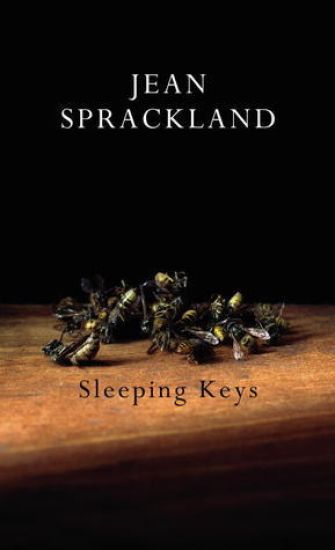
Sleeping Keys

Sleeping Keys

Jean Sprackland

Jonathan Cape Ltd
2013
nidottu
In her first collection since the Costa-winning Tilt, Jean Sprackland looks back at endings and beginnings: the end of a life, or of a marriage; old homes lived in and left, new homes discovered. There are poems that speak of the paralysis and bewilderment of knowing something is over, and of the strangely significant, almost votive nature of the things that are left behind: the biscuit tin ‘of old keys, decommissioned and sleeping’, the empty room fading ‘to a tinnitus of dust and dead wasps’.This is a book of transitions – domestic and emotional – and it explores how the experience of change is painful, disorientating, even catastrophic, but also profoundly necessary and revelatory. Change brings with it the hope that love can be recovered out of the ruins; change, in fact, is a creative, healing force that shows us we have been living among ruins – that even in the face of grief and loss there are ‘spectral futures / we must stride the ditch to reach’. Full of exact, vivid, clear-eyed observation of a world of failure and flux, Sleeping Keys also illuminates a future world beyond. For every object left emptied of significance, bereft, Jean Sprackland shows us another that is charged and radiant with possibility – the possibility of miracles.
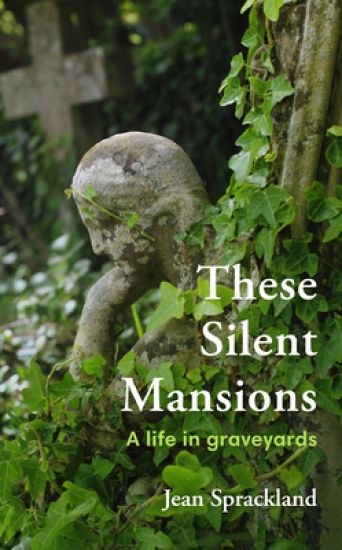
These Silent Mansions

These Silent Mansions

Jean Sprackland

Jonathan Cape Ltd
2020
sidottu
Graveyards are oases: places of escape, of peace and reflection. Each is a garden or nature reserve, but also a site of commemoration, where the past is close enough to touch: a liminal place, at the border of the living world.Jean Sprackland’s prize-winning book, Strands, brought to life the histories of objects found on a beach. These Silent Mansions is also an uncovering of individual stories: vivid, touching and intimately told. Sprackland travels back through her own life, revisiting graveyards in the ordinary towns and cities she has called home, seeking out others who lived, died and are remembered or forgotten there. With her poet’s eye, she makes chance discoveries among the stones and inscriptions: a notorious smuggler tucked up in a sleepy churchyard; ancient coins unearthed on a secret burial ground; a slow-worm basking in the sun. These Silent Mansions is an elegant, exhilarating meditation on the relationship between the living and the dead, the nature of time and loss, and how – in this restless, accelerated world – we can connect the here with the elsewhere, the present with the past.
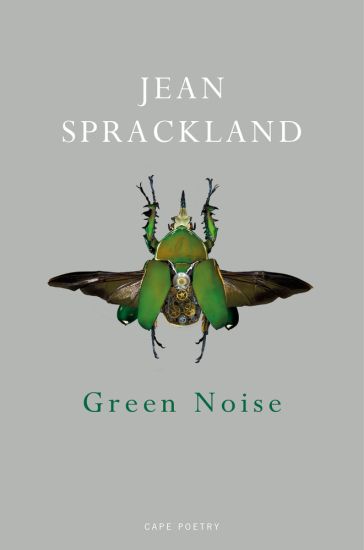
Green Noise

Green Noise

Jean Sprackland

Jonathan Cape Ltd
2018
nidottu
Jean Sprackland is celebrated for her tactile, transformative poetry which makes the miraculous seem familiar and the domestic other-worldly. Her new collection is tuned to new and deeper frequencies. ‘Green noise’ is the mid-frequency component of white noise – what some have called the background noise of the world – and these poems listen for what is audible, and available to be known and understood, and what is not. Each poem is an attempt at location – in time, in place, in language. Some enquire into the natural world and our human place in it, by investigating hidden worlds within worlds: oak-apples, aphid-farms, firewood teeming with small life. Others go in search of fragments of a mythic and often brutal past: the lost haunts of childhood, abandoned villages, scraps of shared history which are only ever partially remembered. A physical relic or a mark on the landscape seems briefly to offer a portal, where a sounding is taken from present to past and back again. Deeply engaged with the flux of the world, these poems are alert, precise and vividly memorable – listening to the ‘machine of spring/with all your levers thrown to max’, ‘hearing the long bones of the trees stretch and crack’.
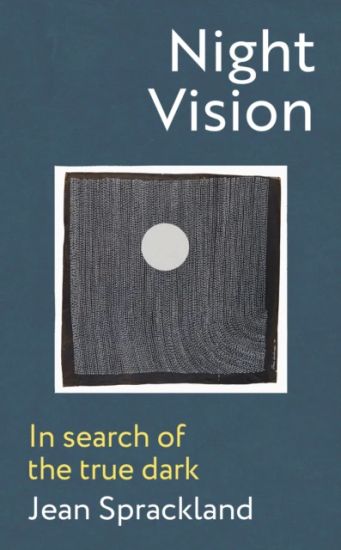
Night Vision

Night Vision

Jean Sprackland

Vintage Publishing
2025
sidottu
Darkness can make the most ordinary activity feel adventurous. Open a door and step through it. You can’t see a thing: you could be anywhere. Step over the threshold, into the dark, and feel your way.We humans have a complicated relationship with the dark. We fear it, and make great efforts to blot it out. But we also long for it, especially if we live in cities, or remember the starry skies of our childhoods. Darkness opens us up to risk, delight and transformation. Is it possible to prise it free of its negative associations, which are as old as human thought itself?Drawing on memory and imagination, history and ecology, literature and myth, Night Vision is an expansive, thrilling journey into the true dark. In her quest for a new, more intimate relationship with darkness, acclaimed poet and writer Jean Sprackland finds herself confronting some of the deepest – and darkest – questions about who we are and our place in the world.
Goyle, Chert, Mire

Goyle, Chert, Mire

Jean Sprackland

Vintage Publishing
2026
nidottu
A book-length sequence of poems about place, time, illness and recovery Each of the three sections in Goyle, Chert, Mire focuses on one of the distinctive elements characteristic of the Blackdown Hills – a little-known, sparsely populated area straddling the border between Somerset and Devon – and in particular the remote springline valley where the author lives. In this unique landscape, relatively unchanged over the centuries, the past is so evident that it can come to seem indistinguishable from the present. Illness causes a similar slippage in an individual’s sense of time. The poems trace an overlapping narrative of meningitis and the cognitive symptoms – at once distorting and revelatory – that came in its aftermath. In company with Geoffrey Hill, Ted Hughes and Pauline Stainer, Goyle, Chert, Mire employs a tough lyricism and taut line to scrutinise the natural world through historical and personal lenses. Alert to texture and temperature, humanity and history, time passing and time standing still, these poems are a deep examination of landscape, body and mind. 'Jean Sprackland’s poems are an uncommon pleasure to read' Observer ‘Accessible but worth close reading, she is among the best of her generation’ Herald