Kirjojen hintavertailu. Mukana 12 016 292 kirjaa ja 12 kauppaa.

Kirjahaku

Etsi kirjoja tekijän nimen, kirjan nimen tai ISBN:n perusteella.

13 kirjaa tekijältä Jean-Patrick Manchette

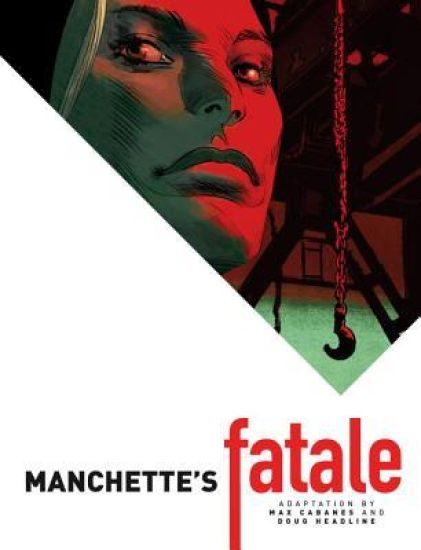
Manchette's Fatale

Manchette's Fatale

Jean-Patrick Manchette

Titan Comics
2016
sidottu
Aimee is a beautiful young widow - she's also a killer. Driven by a deep-rooted desire for revenge, she sets about uncovering the secrets of the inhabitants of the sleepy rural town of Bleville, before ruthlessly murdering them. Faced with corruption of a kind she had scarcely imagined, she discovers a deeply moral core under her murderous instincts.
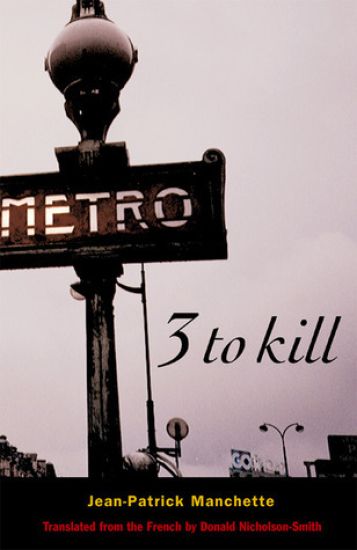
Three To Kill

Three To Kill

Jean-Patrick Manchette

City Lights Books
2002
pokkari
"The book that kept me up way too late:Three to Kill by Jean-Patrick Manchette: vicious and hilarious, Manchette was a new discovery for me about three years ago."—Rachel Kushner, author of Creation Lake in Elle Magazine "His books are all action, unfolding with a laconic efficiency that would make his killers proud."—The EconomistBusinessman Georges Gerfaut witnesses a murder—and is pursued by the killers. His conventional life knocked off the rails, Gerfaut turns the tables and sets out to track down his pursuers. Along the way, he learns a thing or two about himself. . . . Manchette—masterful stylist, ironist, and social critic—limns the cramped lives of professionals in a neoconservative world."Manchette has appropriated and subverted the classic thriller [with] descriptions of undiluted action, violence and suspense [and] a perspective on evil, a disenchanted world of manipulation and fury. . . ."—Times Literary Supplement"The petty exigencies of the classic thriller find themselves summarily reduced to cremains by the fiery blue jets of Jean-Patrick Manchette's concision, intelligence, tension, and style."—Jim Nisbet, author of Lethal Injection and Prelude to a Scream"Manchette is a must for the reading lists of all noir fans. . . . Manchette deserves a higher profile among noir fans."—Publishers Weekly"Manchette . . . performs miracles within this simple story. His style is very matter of fact, stark and almost cool like the jazz his hero or anti-hero Gerfaut devours at every opportunity. Yet in this short novel there is no lack of atmosphere, excitement, characters or descriptive writing, it is just the total lack of unnecessary material that makes the story seem so lean and mean."—Norman Price, EuroCrime"A social satire cum suspense equally interested in dissecting everyday banalities and manufacturing thrills. Writing with economy, deadpan irony, and an eye for the devastating detail, Manchette spins pulp fiction into literature."—Kirkus Reviews"While there isn’t much that’s obviously moral—in the good-versus-evil sense—[this novel] demonstrate[s] why Manchette is hailed as the man who kicked the French crime novel or 'polar' out of the apolitical torpor into which it had fallen by the time he started publishing his 'neo-polars' in the 1970s. . . . Grim and cerebral as they feel, it’s remarkable how comic—in an absurdist, laugh-or-you’ll-cry way—these books are, as if Manchette had decided that poking fun at the products of the capitalist system were the fittest way to attack the system itself."—Jennifer Howard, Boston Review"The pace is fast, the action sequences are superb, and the effect is just as striking as it must have been when the book was first published in 1976."—Laura Wilson, The Guardian"[T]he novel is brilliantly written, replete with allusions to art, literature, and music, papered with the very texture and furniture of our lives. Manchette is Camus on overdrive, at one and the same time white-hot, ice-cold. He deserves much the same attention."—James Sallis, Review of Contemporary FictionJean-Patrick Manchette (1942—1995) rescued the French crime novel from the grip of stodgy police procedurals—restoring the noir edge by virtue of his post-1968 leftism. Today, Manchette is a totem to the generation of French mystery writers who came in his wake. Jazz saxophonist, political activist, and screen writer, Manchette was influenced as much by Guy Debord as by Gustave Flaubert. City Lights has published more of his work, including The Gunman.
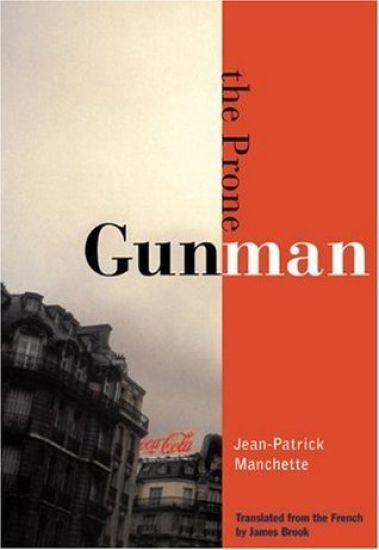
The Prone Gunman

The Prone Gunman

Jean-Patrick Manchette

City Lights Books
2002
pokkari
"His books are all action, unfolding with a laconic efficiency that would make his killers proud."—The EconomistMartin Terrier is a hired killer who wants out of the game—so he can settle down and marry his childhood sweetheart. After all, that's why he took up this profession! But "the company" won't let him go: they have other plans. Once again, the gunman must assume the prone firing position. A tour de force, this violent tale shatters as many illusions about life and politics as it does bodies. Jean-Patrick Manchette subjects his characters and the reader alike to a fierce exercise in style.This tightly plotted, corrosive parody of "the success story" is widely considered to be Manchette's masterpiece, and was named a New York Times "Notable Book." The Prone Gunman is a classic of modern noir."For Manchette and the generation of writers who followed him, the crime novel is no mere entertainment, but a means to strip bare the failures of society, ripping through veils of appearance, deceit, and manipulation to the greed and violence that are the society's true engines."—Boston Globe"There's not a superfluous word or overdone effect . . . one of the last cool, compact and shockingly original crime novels Manchette left as his legacy to modern noir fiction."—New York Times"For the first time readers can experience in English translation the masterful thriller considered Manchette's finest, proof positive that the French knew what they were talking about when they labeled this sort of novel 'noir'."—Publishers Weekly"This superbly muscular translation of the late French mystery writer Jean-Patrick Manchette's most celebrated work, The Prone Gunman, is the third volume issued [by] City Lights Noir. The series may prove to be the most needed contribution to contemporary fiction by any publisher in a good long while."—The San Francisco ChronicleJean-Patrick Manchette was a French crime novelist credited with reinventing and reinvigorating the genre. He wrote ten short novels in the 1970s and early 80s, and is widely recognized as the foremost French crime fiction author of that time. His stories are violent, existentialist explorations of the human condition and French society. Jazz saxophonist and screenwriter, Manchette was also a left-wing activist influenced as much by the writings of the Situationist International as by Dashiell Hammett. Jean-Patrick Manchette's Three to Kill as well as the movie tie-in The Gunman are also published by City Lights Publishers.
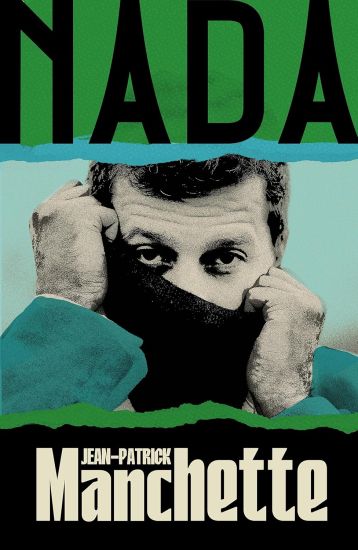
Nada

Nada

Jean-Patrick Manchette

Vintage Publishing
2026
pokkari
Long live the revolution. To hell with its children.In Paris, the Nada gang – a small cell of left-wing radicals – hatch a plan: kidnap the U.S. ambassador. They’re armed, angry, and almost successful – but totally unprepared for what follows.The state moves fast and without mercy. As the crackdown begins, the group splinters under pressure – exposing cowardice, betrayal, and the thin line between radical idealism and outright nihilism. There will be no heroes – only casualties.Jean-Patrick Manchette skewers both the establishment and its would-be destroyers in this pitch-black political thriller. Nada is his most overtly radical work: a savage, stylish dissection of violence, ideology, and the wreckage left behind.
Fatale

Fatale

Jean-Patrick Manchette

Vintage Publishing
2026
pokkari
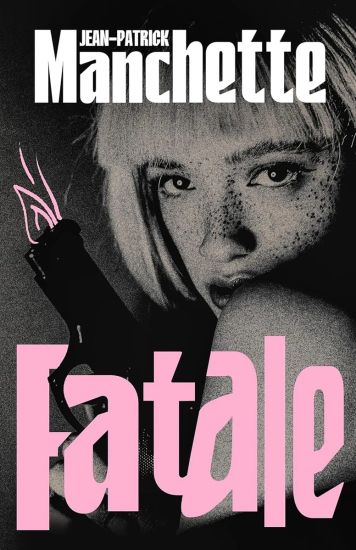
Murder isn’t always ugly.Aimée is drop-dead gorgeous, razor-sharp, and lethally efficient. A killer with a cool head and a taste for chaos, she arrives in the backwater town of Bléville – a festering stew of grudges, corruption, and small-town rot – ready to make a killing.She’s played this game before: stir up trouble, pit the locals against one another, then disappear with blood on her hands and money in her pocket. But this time, something breaks. Aimée lets someone in – and the game turns personal.Jean-Patrick Manchette transformed the crime novel into a weapon of satire and stylish mayhem. Fatale is his bloodiest, funniest, and most brilliantly unhinged work: a riot of revenge, farce, and gleeful destruction.PRAISE FOR JEAN-PARICK MANCHETTE‘Manchette was was Le Homme... We must revere him now and rediscover him this very instant. ’ James Ellroy‘Manchette is Camus on overdrive... He deserves much the same attention’ James Sallis‘Manchette is legend among all of the crime writers I know, and with good reason: his novels never fail to stun and thrill from page one’ Duane Swierczynski
Fatale

Fatale

Jean-Patrick Manchette

New York Review of Books
2011
nidottu
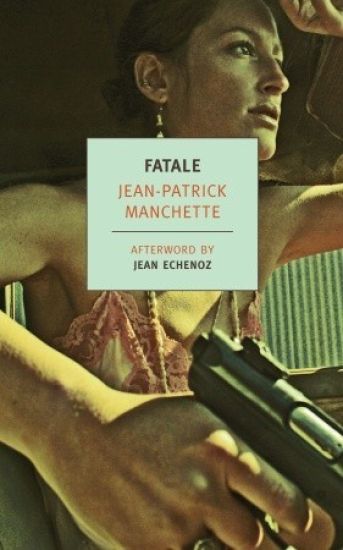
A New York Review Books OriginalWhether you call her a coldhearted grifter or the soul of modern capitalism, there's no question that Aim e is a killer and a more than professional one. Now she's set her eyes on a backwater burg--where, while posing as an innocent (albeit drop-dead gorgeous) newcomer to town, she means to sniff out old grudges and engineer new opportunities, deftly playing different people and different interests against each other the better, as always, to make a killing. But then something snaps: the master manipulator falls prey to a pure and wayward passion. Aim e has become the avenging angel of her own nihilism, exacting the destruction of a whole society of destroyers. An unholy original, Jean-Patrick Manchette transformed the modern detective novel into a weapon of gleeful satire and anarchic fun. In Fatale he mixes equal measures of farce, mayhem, and madness to prepare a rare literary cocktail that packs a devastating punch.
The Mad and the Bad

The Mad and the Bad

Jean-Patrick Manchette

New York Review of Books
2014
nidottu
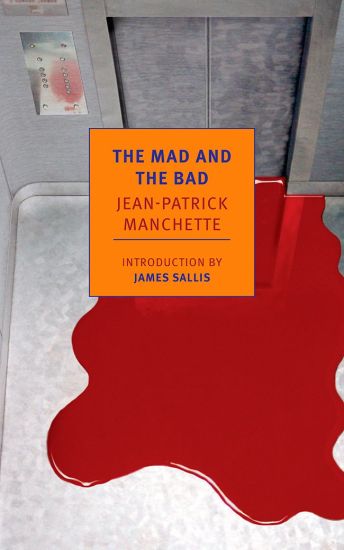
An NYRB Classics Original Winner of the French-American Foundation Translation Prize for Fiction Michel Hartog, a sometime architect, is a powerful businessman and famous philanthropist whose immense fortune has just grown that much greater following the death of his brother in an accident. Peter is his orphaned nephew--a spoiled brat. Julie is in an insane asylum. Thompson is a hired gunman with a serious ulcer. Michel hires Julie to look after Peter. And he hires Thompson to kill them. Julie and Peter escape. Thompson pursues. Bullets fly. Bodies accumulate. The craziness is just getting started. Like Jean-Patrick Manchette's celebrated Fatale, The Mad and the Bad is a clear-eyed, cold-blooded, pitch-perfect work of creative destruction.
NADA

NADA

Jean-Patrick Manchette

New York Review of Books
2019
nidottu
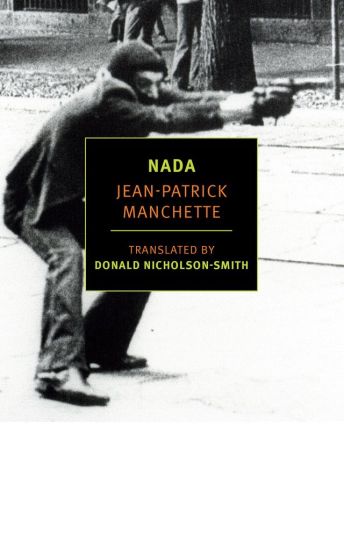
This tour de force political thriller, told in Manchette's signature noir style, follows a group of far left extremists in the throes of post-1968 disillusionment. The thrill of 1968 is long over, and the heavy fog of the 1970s has settled in. In Paris, however, the Nada gang--or groupuscule--still retains a militant attachment to its revolutionary dreams. Bringing together an anarchist orphaned by the Spanish Civil War, a Communist veteran of the French resistance, a frustrated high-school teacher of philosophy, a timid office worker, a terminal alcoholic, and one uncompromising young woman with a house in the country, Nada sets out to kidnap the American ambassador and issue a call to arms. What could possibly go wrong?
No Room at the Morgue

No Room at the Morgue

Jean-Patrick Manchette

New York Review of Books
2020
nidottu
Inspired by the works of Dashiell Hammett, No Room at the Morgue is Jean-Patrick Manchette's unparalleled take on the private eye novel -- fierce, politically inflected, and finely rendered by the haunting, pitch-black prose for which the author is famed. No Room at the Morgue came out after Jean-Patrick Manchette had transformed French crime fiction with such brilliantly plotted, politically charged, unrelentingly violent tales as Nada and The Mad and the Bad. Here, inspired by his love of Dashiell Hammett, Manchette introduces Eugene Tarpon, private eye, a sometime cop who has set up shop after being kicked off the force for accidentally killing a political demonstrator. Months have passed, and Tarpon desultorily tries to keep in shape while drinking all the time. No one has shown up at the door of his office in the midst of the market district of Les Halles. Then the bell rings and a beautiful woman bursts in, her hands dripping blood. It's Memphis Charles, her roommate's throat has been cut, and Memphis can't go to the police because they'll only suspect her. Can Tarpon help? Well, somehow he can't help trying. Soon bodies mount, and the craziness only grows.
Skeletons in the Closet

Skeletons in the Closet

Jean-Patrick Manchette

New York Review of Books
2023
nidottu
Eug ne Tarpon, the private-eye protagonist from Manchette's No Room at the Morgue, appears once more for a characteristically brisk and brutal story full of unexpected comedy and feeling. Private eye Eug ne Tarpon is back to sleeping in his office, waiting for a paying job to turn up. Then he gets a call from a sometime contact in the police department. He's referring a nice old lady--a distant relative--to Tarpon; her daughter's gone missing and, the copy says, there's no finding her. There are no leads. She's gone. But the old lady's pigheaded. Do me a favor, he tells Tarpon. Humor her. Take her off our hands. Take her money, too. And, by the way, there's no need to investigate the actual business at all. Tarpon may be down and out, but he's too much of a gentleman for that. Plus, fed an obviously fishy story, he doesn't have it in him to let well enough alone. Once again, Tarpon is making a very big mistake.
Fatale

Fatale

Jean-Patrick Manchette

Vertigo Förlag
2002
nidottu
En kvinnlig yrkesmördare anländer till den korrupta franska småstaden Bléville. Hon tar namnet Aimée Joubert och infiltrerar snabbt stadens borgerliga skikt. Hennessyfte är att mot betalning döda ”de stora svinen”. Men den här gången leder några oväntade händelser till ett mycket brutalare skeende än hon tänkt sig. Fatale (1977) är en av den franska kriminallitteraturens svarta klassiker: våldsam, gotisk och poetisk. Jean-Patrick Manchette (1942-1995) var kommunist och deckarförfattare, mycket läst i både sitt hemland och övriga världen. Med en hårdkokt stil som påminner om Dashiell Hammetts skildrar han brottslighet och terrorism i ett korrupt samhälle. Översättning: Kennet Klemets Recesionsutdrag: ” Det är egenartad och rolig läsningsom är nästan komiskt annorlunda. Längre ifrån den svenska normaldeckaren kan man inte komma.” Marie Peterson - DN
No Room at the Morgue

No Room at the Morgue

Jean-Patrick Manchette

Vintage Publishing
2026
pokkari
Ex-cop, ex-idealist, and man in free fall, Eugène Tarpon has been kicked off the force for killing a protester. Now he’s holed up in a dingy Les Halles office, drinking too much and waiting for something to happen. Then it does. Memphis Charles, wild-eyed and bloodstained, bursts in claiming her roommate’s been brutally murdered – but she can’t go to the police. She wants Tarpon. And for reasons even he can’t explain, he takes the case. As the bodies mount, Tarpon is dragged into a Parisian underworld of politics, sleaze, and paranoia – with nothing to guide him but instinct, stubbornness, and a battered sense of justice. With No Room at the Morgue, Manchette rewrote the American hardboiled detective novel into a bleak, boozy, and brilliantly French bruising meditation on guilt, truth, and the art of going down swinging.
Skeletons in the Closet

Skeletons in the Closet

Jean-Patrick Manchette

Vintage Publishing
2026
pokkari
Eugène Tarpon is back to sleeping in his office and waiting for a job that pays. Then he gets a call from an old contact in the police. A distant relative of his – a polite, persistent widow – wants someone to look into her daughter’s disappearance. The police have already given up. No leads, no hope, no point. Just take the case, take her money, and keep her busy. Tarpon’s too broke to refuse, and too much of a gentleman to brush her off. But the story doesn’t sit right. And when something smells off, he can’t help but start digging. With Skeletons in the Closet, Manchette sends his bruised, boozy detective stumbling deeper into the wreckage of modern France – exposing a world where justice is hollow, the missing stay missing, and decency is just another dead end.