Kirjojen hintavertailu. Mukana 11 244 527 kirjaa ja 12 kauppaa.

Kirjahaku

Etsi kirjoja tekijän nimen, kirjan nimen tai ISBN:n perusteella.

4 kirjaa tekijältä Jeff D. Colgan

Partial Hegemony

Partial Hegemony

Jeff D. Colgan

Oxford University Press Inc
2021
sidottu
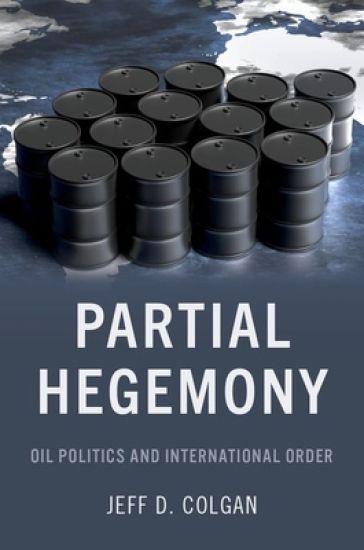
The global history of oil politics, from World War I to the present, can teach us much about world politics, climate change, and international order in the twenty-first century. When and why does international order change? The largest peaceful transfer of wealth across borders in all of human history began with the oil crisis of 1973. OPEC countries turned the tables on the most powerful businesses on the planet, quadrupling the price of oil and shifting the global distribution of profits. It represented a huge shift in international order. Yet, the textbook explanation for how world politics works-that the most powerful country sets up and sustains the rules of international order after winning a major war-doesn't fit these events, or plenty of others. Instead of thinking of "the" international order as a single thing, Jeff Colgan explains how it operates in parts, and often changes in peacetime. Partial Hegemony offers lessons for leaders and analysts seeking to design new international governing arrangements to manage an array of pressing concerns ranging from US-China rivalry to climate change, and from nuclear proliferation to peacekeeping. A major contribution to international relations theory, this book promises to reshape our understanding of the forces driving change in world politics.
Partial Hegemony

Partial Hegemony

Jeff D. Colgan

Oxford University Press Inc
2021
nidottu
The global history of oil politics, from World War I to the present, can teach us much about world politics, climate change, and international order in the twenty-first century. When and why does international order change? The largest peaceful transfer of wealth across borders in all of human history began with the oil crisis of 1973. OPEC countries turned the tables on the most powerful businesses on the planet, quadrupling the price of oil and shifting the global distribution of profits. It represented a huge shift in international order. Yet, the textbook explanation for how world politics works-that the most powerful country sets up and sustains the rules of international order after winning a major war-doesn't fit these events, or plenty of others. Instead of thinking of "the" international order as a single thing, Jeff Colgan explains how it operates in parts, and often changes in peacetime. Partial Hegemony offers lessons for leaders and analysts seeking to design new international governing arrangements to manage an array of pressing concerns ranging from US-China rivalry to climate change, and from nuclear proliferation to peacekeeping. A major contribution to international relations theory, this book promises to reshape our understanding of the forces driving change in world politics.
Petro-Aggression

Petro-Aggression

Jeff D. Colgan

Cambridge University Press
2013
sidottu
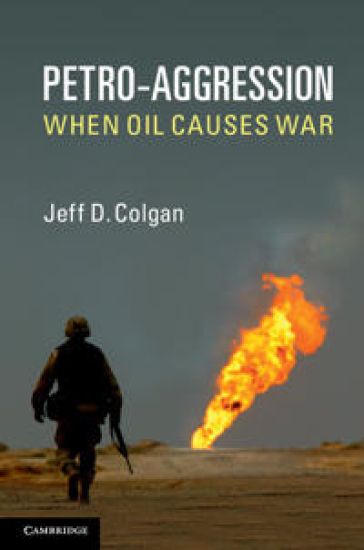
Oil is the world's single most important commodity and its political effects are pervasive. Jeff D. Colgan extends the idea of the resource curse into the realm of international relations, exploring how countries form their foreign policy preferences and intentions. Why are some but not all oil-exporting 'petrostates' aggressive? To answer this question, a theory of aggressive foreign policy preferences is developed and then tested, using both quantitative and qualitative methods. Petro-Aggression shows that oil creates incentives that increase a petrostate's aggression, but also incentives for the opposite. The net effect depends critically on its domestic politics, especially the preferences of its leader. Revolutionary leaders are especially significant. Using case studies including Iraq, Iran, Libya, Saudi Arabia and Venezuela, this book offers new insight into why oil politics has a central role in global peace and conflict.
Petro-Aggression

Petro-Aggression

Jeff D. Colgan

Cambridge University Press
2013
pokkari
Oil is the world's single most important commodity and its political effects are pervasive. Jeff D. Colgan extends the idea of the resource curse into the realm of international relations, exploring how countries form their foreign policy preferences and intentions. Why are some but not all oil-exporting 'petrostates' aggressive? To answer this question, a theory of aggressive foreign policy preferences is developed and then tested, using both quantitative and qualitative methods. Petro-Aggression shows that oil creates incentives that increase a petrostate's aggression, but also incentives for the opposite. The net effect depends critically on its domestic politics, especially the preferences of its leader. Revolutionary leaders are especially significant. Using case studies including Iraq, Iran, Libya, Saudi Arabia and Venezuela, this book offers new insight into why oil politics has a central role in global peace and conflict.