Kirjojen hintavertailu. Mukana 12 390 323 kirjaa ja 12 kauppaa.

Kirjahaku

Etsi kirjoja tekijän nimen, kirjan nimen tai ISBN:n perusteella.

7 kirjaa tekijältä Jeff Derksen

Jeff Derksen

Jeff Derksen

Jeff Derksen

JRP Ringier
2013
nidottu
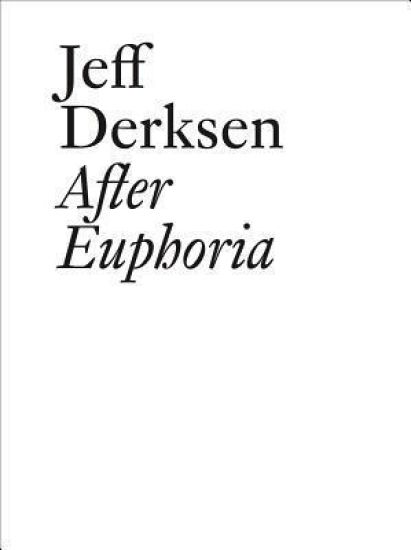
"After Euphoria" collects Jeff Derksen's writings on art, architecture and globalism. Focusing on artistic practice and cultural critique, these essays examine the questions, research and propositions of neoliberalism's synthesis of economy and affect. Exploring the works of Rem Koolhaas, Brian Jungen, Sam Durant, Andrea Geyer, Jin-me Yoon, Ken Lum, Ron Terada, Stan Douglas, Sabine Bitter/Helmut Weber and Alfredo Jaar, Derksen reveals the effects of globalization and its influence on the production and experience of culture. A founding member of Vancouver's writer-run center, The Kootenay School of Writing, Derksen is a writer, poet, critic and scholar based in Vancouver and Vienna. His critical writing has previously appeared in "Springerin," "Archis," "Open Letter," "Camera Austria," "C Magazine" and "Hunch." "After Euphoria" is the latest title from the "Documents" series, critical writings co-published with Les presses du reel.
Dwell

Dwell

Jeff Derksen

Talonbooks
1994
pokkari
A long poem that blends and bends the lyric, procedural poetry, the travelogue and extended forms, Dwell lives in, or dwells on, the interaction of a restless subjectivity with the seemingly transparent, yet identifiable, social codes that encase us.
Transnational Muscle Cars

Transnational Muscle Cars

Jeff Derksen

Talonbooks
2003
pokkari
Transnational Muscle Cars provides a withering critique of how it is that consumption, buying (into) something, buying anything, has become the prime mover in a transient global urbanism that now defines our everyday lives. Written over the past ten years in a quartet of cities--Calgary, Toronto, New York and Vienna--Transnational Muscle Cars is the second book in Jeff Derksen's trilogy addressing place, culture and capital, and draws on a wide array of North American post-war poetics--the declarative aspects of New American Poetry, the pop cultural details of the New York School, the reflexive politics of the Language Poets, the personal politics of the Kootenay School of Writing--and on contemporary cultural and political theory, critical geography, urban theory, and architectural concepts. Whereas the first book in this trilogy, Dwell, tried to work out a poetics of place still tied to questions of national culture, Transnational Muscle Cars rescales these questions. Moving from the national to the global-urban, it draws on a wide range of cultural references, from Keanu Reeves to the Russian Constructivists, from the Gap to inflatable architecture.While the politics of poetic form is still a key aspect of Derksen's work, geography has overtaken language as its central focus. What are the politics of this new cultural landscape? And how do you drive across it? And why does this new imperialism behave so much like a classic muscle car--all brawn and horsepower, but with little braking power and an inability to negotiate curves?
Annihilated Time

Annihilated Time

Jeff Derksen

Talonbooks
2009
pokkari
Reading against the grain of global ideological flows, Derksen demonstrates how borders, identities, national literatures, urban territories, built space and the spaces of culture and politics have not simply been eroded by globalization, but how the traditional identity-determined scales of culture are being re-imagined as contested spaces for dynamic communities of discourse. Apologists for the current global American imperialism ironically characterize it as a civilizing force generously brought to the world by a presumed American exceptionalism to empire. In their view, it is an extension of a neoliberal economic developmentalism, imagined as non-ideological and anti-authoritarian ("democratic") and as the highest cultural form of capitalism. Poetry, that under-achieving commodity, that "greeny flower," has not been exempt from the increased glare of what is now the new state cultural watchdog. An early public controversy--generating vitriolic discourse--was the long poem "Somebody Blew Up America," by Amiri Baraka, then poet laureate for the state of New Jersey. Jeff Derksen spins this controversial issue (and many others) around the pivot of September 11, 2001.To read these works in the cultural and social context that led to them being criminalized or erased, we can look to how 9/11 provided an historical occasion for a reconfiguration of the role of culture in the nation state. In this collection of essays, Derksen explores the ways in which seemingly minor forms of culture--poetry, visual art, and critical practices--encounter what he calls "the long present neoliberal moment" of the imperialist agenda of globalization. The title inverts Marx's famous view (central to critical geography) that "the problem of space" has been overcome: that capitalism annihilates space with time. Today, literary, cultural and geographical readings emphasize our lived experience of space and contest the representations of a globalized environment that capital and its ideological software, neoliberalism, promote.
The Vestiges

The Vestiges

Jeff Derksen

Talonbooks
2013
pokkari
Based on the experience of city life, The Vestiges moves across the uneven geography of the present, linking historical moments when quarters of cities were squatted, when social change boiled and the future was up for grabs. In the context of our precarious present, the poem "The Vestiges," around which the book is built, "sets out to explore / what happens / to humans when they are reduced / to things by other humans." In asking this question, "The Vestiges" is a long poem engaged with modernist poems that move from the particularities of everyday life to enduring and unanswered political and cultural questions. Covering a wide terrain of research, the other serial poems in the book mine various texts, from the Craigslist "auto parts" section to Jane Jacobs, from Marx to Marcuse, and from historical accounts of cities to contemporary real-estate promotions, in order to build up an eclectic atlas of this unstable moment. In terms of contemporary poetics, The Vestiges enters into dialogue with modernism, conceptual writing, and post-conceptual art.