Kirjojen hintavertailu. Mukana 11 342 296 kirjaa ja 12 kauppaa.

Kirjahaku

Etsi kirjoja tekijän nimen, kirjan nimen tai ISBN:n perusteella.

5 kirjaa tekijältä Jeff Eden

God Save the USSR

God Save the USSR

Jeff Eden

Oxford University Press Inc
2021
sidottu
During the Second World War, as the Soviet Red Army was locked in brutal combat against the Nazis, Joseph Stalin ended the state's violent, decades-long persecution of religion. In a stunning reversal, priests, imams, rabbis, and other religious elites--many of them newly-released from the Gulag--were tasked with rallying Soviet citizens to a "Holy War" against Hitler. To the delight of some citizens, and to the horror of others, Stalin's reversal encouraged a widespread perception that his "war on religion" was over. A revolution in Soviet religious life ensued: soldiers prayed on the battlefield, entire villages celebrated once-banned holidays, and state-backed religious leaders used their new positions not only to consolidate power over their communities, but also to petition for further religious freedoms. Offering a window on this wartime "religious revolution," God Save the USSR focuses on the Soviet Union's Muslims, using sources in several languages (including Russian, Tatar, Bashkir, Uzbek, and Persian). Drawing evidence from eyewitness accounts, interviews, soldiers' letters, frontline poetry, agents' reports, petitions, and the words of Soviet Muslim leaders, Jeff Eden argues that the religious revolution was fomented simultaneously by the state and by religious Soviet citizens: the state gave an inch, and many citizens took a mile, as atheist Soviet agents looked on in exasperation at the resurgence of unconcealed devotional life.
God Save the USSR

God Save the USSR

Jeff Eden

OXFORD UNIVERSITY PRESS INC
2025
nidottu
During the Second World War, as the Soviet Red Army was locked in brutal combat against the Nazis, Joseph Stalin ended the state's violent, decades-long persecution of religion. In a stunning reversal, priests, imams, rabbis, and other religious elites--many of them newly-released from the Gulag--were tasked with rallying Soviet citizens to a "Holy War" against Hitler. To the delight of some citizens, and to the horror of others, Stalin's reversal encouraged a widespread perception that his "war on religion" was over. A revolution in Soviet religious life ensued: soldiers prayed on the battlefield, entire villages celebrated once-banned holidays, and state-backed religious leaders used their new positions not only to consolidate power over their communities, but also to petition for further religious freedoms. Offering a window on this wartime "religious revolution," God Save the USSR focuses on the Soviet Union's Muslims, using sources in several languages (including Russian, Tatar, Bashkir, Uzbek, and Persian). Drawing evidence from eyewitness accounts, interviews, soldiers' letters, frontline poetry, agents' reports, petitions, and the words of Soviet Muslim leaders, Jeff Eden argues that the religious revolution was fomented simultaneously by the state and by religious Soviet citizens: the state gave an inch, and many citizens took a mile, as atheist Soviet agents looked on in exasperation at the resurgence of unconcealed devotional life.
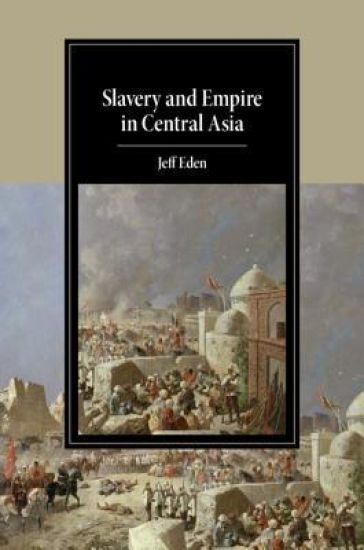
Slavery and Empire in Central Asia

Slavery and Empire in Central Asia

Jeff Eden

Cambridge University Press
2020
pokkari
The Central Asian slave trade swept hundreds of thousands of Iranians, Russians, and others into slavery during the eighteenth–nineteenth centuries. Drawing on eyewitness accounts, autobiographies, and newly-uncovered interviews with slaves, this book offers an unprecedented window into slaves' lives and a penetrating examination of human trafficking. Slavery strained Central Asia's relations with Russia, England, and Iran, and would serve as a major justification for the Russian conquest of this region in the 1860s–70s. Challenging the consensus that the Russian Empire abolished slavery with these conquests, Eden uses these documents to reveal that it was the slaves themselves who brought about their own emancipation by fomenting the largest slave uprising in the region's history.
Slavery and Empire in Central Asia

Slavery and Empire in Central Asia

Jeff Eden

Cambridge University Press
2018
sidottu
The Central Asian slave trade swept hundreds of thousands of Iranians, Russians, and others into slavery during the eighteenth–nineteenth centuries. Drawing on eyewitness accounts, autobiographies, and newly-uncovered interviews with slaves, this book offers an unprecedented window into slaves' lives and a penetrating examination of human trafficking. Slavery strained Central Asia's relations with Russia, England, and Iran, and would serve as a major justification for the Russian conquest of this region in the 1860s–70s. Challenging the consensus that the Russian Empire abolished slavery with these conquests, Eden uses these documents to reveal that it was the slaves themselves who brought about their own emancipation by fomenting the largest slave uprising in the region's history.
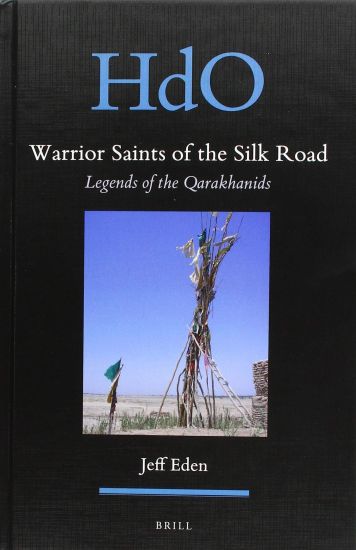
Warrior Saints of the Silk Road
For generations, Central Asian Muslims have told legends of medieval rulers who waged war, died in battle, and achieved sainthood. Among the Uyghurs of East Turkistan (present-day Xinjiang, China), some of the most beloved legends tell of the warrior-saint Satuq Bughra Khan and his descendants, the rulers of the Qarakhanid dynasty. To this day, these tales are recited at the saints' shrines and retold on any occasion. Warrior Saints of the Silk Road introduces this rich literary tradition, presenting the first complete English translation of the Qarakhanid narrative cycle along with an accessible commentary. At once mesmerizing, moving, and disturbing, these legends are essential texts in Central Asia's religious heritage as well as fine, enduring works of mystical literature.