Kirjojen hintavertailu. Mukana 11 717 486 kirjaa ja 12 kauppaa.

Kirjahaku

Etsi kirjoja tekijän nimen, kirjan nimen tai ISBN:n perusteella.

12 kirjaa tekijältä Jeff Ferrell

Making Trouble

Making Trouble

Jeff Ferrell

AldineTransaction
1999
sidottu
In Making Trouble leading scholars in criminology, sociology, criminal justice, women's studies, and social history explore the mediated cultural dynamics that construct images and understanding of crime, deviance, and control. Contributors examine the intertwined practices of the mass media, criminal justice agencies, political power holders, and criminal and deviant subcultures in producing and consuming contested representations of legality and illegality. While the collection provides broad analysis of contemporary topics, it also weaves this analysis around a set of innovative and unifying themes. These include the emergence of "situated media" within and between the various subcultures of crime, deviance, and control; the evolution of policing and social control as complex webs of mediated and symbolic meaning; the role of power, identity, and indifference in framing contemporary crime controversies, with special attention paid to the gendered construction of crime, deviance and control; and the importance of historical and cross-cultural dynamics in shaping understandings of crime, deviance, and control.
Making Trouble

Making Trouble

Jeff Ferrell

AldineTransaction
1999
nidottu
In Making Trouble leading scholars in criminology, sociology, criminal justice, women's studies, and social history explore the mediated cultural dynamics that construct images and understanding of crime, deviance, and control. Contributors examine the intertwined practices of the mass media, criminal justice agencies, political power holders, and criminal and deviant subcultures in producing and consuming contested representations of legality and illegality. While the collection provides broad analysis of contemporary topics, it also weaves this analysis around a set of innovative and unifying themes. These include the emergence of "situated media" within and between the various subcultures of crime, deviance, and control; the evolution of policing and social control as complex webs of mediated and symbolic meaning; the role of power, identity, and indifference in framing contemporary crime controversies, with special attention paid to the gendered construction of crime, deviance and control; and the importance of historical and cross-cultural dynamics in shaping understandings of crime, deviance, and control.
Crimes of Style

Crimes of Style

Jeff Ferrell

TAYLOR FRANCIS LTD
2023
nidottu
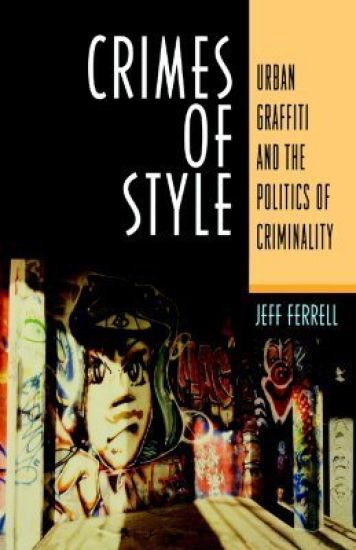
First published in 1993, Crimes of Style investigates the politics of culture and crime through an in-depth case study of graffiti in Denver and the official response to it. Focusing on the most prevalent form of graffiti writing in Denver, the book provides a detailed consideration of the social and cultural circumstances that surround its creation. It explores the national and international development and reception of hip hop graffiti that provided the context in which Denver’s hip hop graffiti emerged. It also examines the reaction of Denver’s corporate and political community, highlighting the establishment of campaigns to criminalise it and identifying both Denver’s graffiti scene and the response to it as interwoven with broader cultural processes. Most significantly, the book puts forward the circumstances surrounding the phenomenal growth of, and subsequent attempts to suppress, hip hop graffiti as indicative of injustice and inequality within the United States.
Crimes of Style

Crimes of Style

Jeff Ferrell

Routledge
2021
sidottu
First published in 1993, Crimes of Style investigates the politics of culture and crime through an in-depth case study of graffiti in Denver and the official response to it. Focusing on the most prevalent form of graffiti writing in Denver, the book provides a detailed consideration of the social and cultural circumstances that surround its creation. It explores the national and international development and reception of hip hop graffiti that provided the context in which Denver’s hip hop graffiti emerged. It also examines the reaction of Denver’s corporate and political community, highlighting the establishment of campaigns to criminalise it and identifying both Denver’s graffiti scene and the response to it as interwoven with broader cultural processes. Most significantly, the book puts forward the circumstances surrounding the phenomenal growth of, and subsequent attempts to suppress, hip hop graffiti as indicative of injustice and inequality within the United States.
Drift

Drift

Jeff Ferrell

University of California Press
2018
sidottu
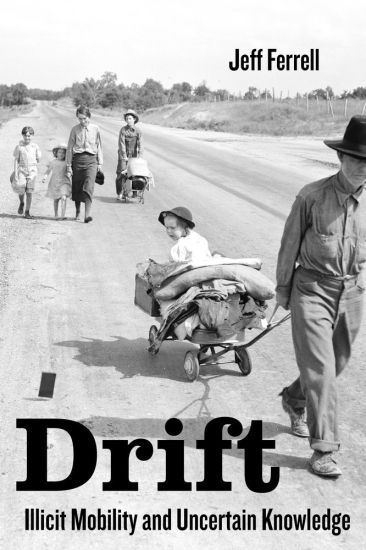
“This book was written late in the North American night, with the rumbling thuds and booming train horns of the nearby rail yard echoing through my windows, reminding me of the train hoppers and gutter punks out there rolling through the darkness.” In Drift, Jeff Ferrell shows how dislocation and disorientation can become phenomena in their own right. Examining the history of drifting, he situates contemporary drift within today’s economic, legal, and cultural dynamics. He also highlights a distinctly North American form of drift—that of the train-hopping hobo—by tracing the hobo’s legal and political history and by detailing his own immersion in the world of contemporary train-hoppers. Along the way, Ferrell sheds light on the ephemeral intensity of drifting communities and explores the contested politics of drift: the strategies that legal authorities employ to control drifters in the interest of economic development, the social and spatial dislocations that these strategies ironically exacerbate, and the ways in which drifters create their own slippery forms of resistance. Ferrell concludes that drift constitutes a necessary subject of social inquiry and a way of revitalizing social inquiry itself, offering as it does new models for knowing and engaging with the contemporary world.
Drift

Drift

Jeff Ferrell

University of California Press
2018
pokkari
“This book was written late in the North American night, with the rumbling thuds and booming train horns of the nearby rail yard echoing through my windows, reminding me of the train hoppers and gutter punks out there rolling through the darkness.” In Drift, Jeff Ferrell shows how dislocation and disorientation can become phenomena in their own right. Examining the history of drifting, he situates contemporary drift within today’s economic, legal, and cultural dynamics. He also highlights a distinctly North American form of drift—that of the train-hopping hobo—by tracing the hobo’s legal and political history and by detailing his own immersion in the world of contemporary train-hoppers. Along the way, Ferrell sheds light on the ephemeral intensity of drifting communities and explores the contested politics of drift: the strategies that legal authorities employ to control drifters in the interest of economic development, the social and spatial dislocations that these strategies ironically exacerbate, and the ways in which drifters create their own slippery forms of resistance. Ferrell concludes that drift constitutes a necessary subject of social inquiry and a way of revitalizing social inquiry itself, offering as it does new models for knowing and engaging with the contemporary world.
Cultural Criminology

Cultural Criminology

Jeff Ferrell

Ashgate Publishing Limited
2011
sidottu
Cultural criminology has now emerged as a distinct theoretical perspective, and as a notable intellectual alternative to certain aspects of contemporary criminology. Cultural criminology attempts to theorize the interplay of cultural processes, media practices, and crime; the emotional and embodied dimensions of crime and victimization; the particular characteristics of crime within late modern/late capitalist culture; and the role of criminology itself in constructing the reality of crime. In this sense cultural criminology not only offers innovative theoretical models for making sense of crime, criminality, and crime control, but presents as well a critical theory of criminology as a field of study. This collection is designed to highlight each of these dimensions of cultural criminology - its theoretical foundations, its current theoretical trajectories, and its broader theoretical critiques-by presenting the best of cultural criminological work from the United States, Europe, Australia, and elsewhere.
Empire of Scrounge

Empire of Scrounge

Jeff Ferrell

New York University Press
2005
sidottu
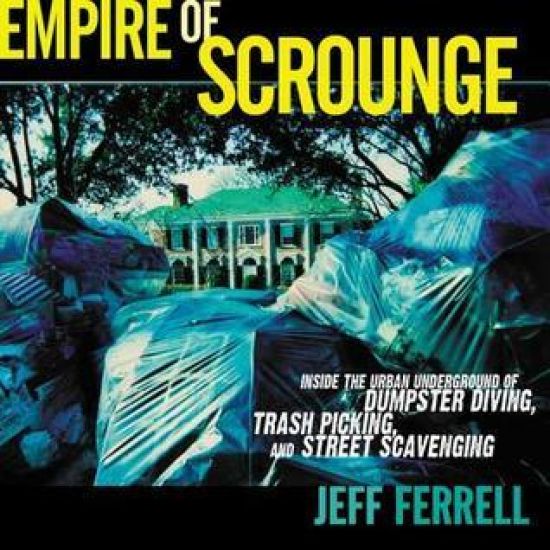
An illuminating and personal journey through Jeff Ferrell's eight month odyssey of living off the streets "Patrolling the neighborhoods of central Fort Worth, sorting through trash piles, exploring dumpsters, scanning the streets and the gutters for items lost or discarded, I gathered the city's degraded bounty, then returned home to sort and catalogue the take."—from the Introduction In December of 2001 Jeff Ferrell quit his job as tenured professor, moved back to his hometown of Fort Worth, Texas, and, with a place to live but no real income, began an eight-month odyssey of essentially living off of the street. Empire of Scrounge tells the story of this unusual journey into the often illicit worlds of scrounging, recycling, and second-hand living. Existing as a dumpster diver and trash picker, Ferrell adopted a way of life that was both field research and free-form survival. Riding around on his scrounged BMX bicycle, Ferrell investigated the million-dollar mansions, working-class neighborhoods, middle class suburbs, industrial and commercial strips, and the large downtown area, where he found countless discarded treasures, from unopened presents and new clothes to scrap metal and even food. Richly illustrated throughout, Empire of Scrounge is both a personal journey and a larger tale about the changing values of American society. Perhaps nowhere else do the fault lines of inequality get reflected so clearly than at the curbside trash can, where one person's garbage often becomes another's bounty. Throughout this engaging narrative, full of a colorful cast of characters, from the mansion living suburbanites to the junk haulers themselves, Ferrell makes a persuasive argument about the dangers of over-consumption. With landfills overflowing, today's highly disposable culture produces more trash than ever before—and yet the urge to consume seems limitless. In the end, while picking through the city's trash was often dirty and unpleasant work, unearthing other people's discards proved to be unquestionably illuminating. After all, what we throw away says more about us than what we keep.
Empire of Scrounge

Empire of Scrounge

Jeff Ferrell

New York University Press
2005
pokkari
An illuminating and personal journey through Jeff Ferrell's eight month odyssey of living off the streets "Patrolling the neighborhoods of central Fort Worth, sorting through trash piles, exploring dumpsters, scanning the streets and the gutters for items lost or discarded, I gathered the city's degraded bounty, then returned home to sort and catalogue the take."—from the Introduction In December of 2001 Jeff Ferrell quit his job as tenured professor, moved back to his hometown of Fort Worth, Texas, and, with a place to live but no real income, began an eight-month odyssey of essentially living off of the street. Empire of Scrounge tells the story of this unusual journey into the often illicit worlds of scrounging, recycling, and second-hand living. Existing as a dumpster diver and trash picker, Ferrell adopted a way of life that was both field research and free-form survival. Riding around on his scrounged BMX bicycle, Ferrell investigated the million-dollar mansions, working-class neighborhoods, middle class suburbs, industrial and commercial strips, and the large downtown area, where he found countless discarded treasures, from unopened presents and new clothes to scrap metal and even food. Richly illustrated throughout, Empire of Scrounge is both a personal journey and a larger tale about the changing values of American society. Perhaps nowhere else do the fault lines of inequality get reflected so clearly than at the curbside trash can, where one person's garbage often becomes another's bounty. Throughout this engaging narrative, full of a colorful cast of characters, from the mansion living suburbanites to the junk haulers themselves, Ferrell makes a persuasive argument about the dangers of over-consumption. With landfills overflowing, today's highly disposable culture produces more trash than ever before—and yet the urge to consume seems limitless. In the end, while picking through the city's trash was often dirty and unpleasant work, unearthing other people's discards proved to be unquestionably illuminating. After all, what we throw away says more about us than what we keep.
Crimes Of Style

Crimes Of Style

Jeff Ferrell

Northeastern University Press
1996
nidottu
Jeff Ferrell draws on his own extensive field research to thoroughly examine the practices of graffiti artists. Focusing on the city of Denver, he takes a close look at the war against graffiti and the interplay between cultural innovation and institutionalized intolerance, arguing that coordinated corporate and political campaigns to suppress and criminalize graffiti writers further disenfranchises the young, the poor, and people of color.