Kirjojen hintavertailu. Mukana 11 244 527 kirjaa ja 12 kauppaa.

Kirjahaku

Etsi kirjoja tekijän nimen, kirjan nimen tai ISBN:n perusteella.

10 kirjaa tekijältä Jeff Horn

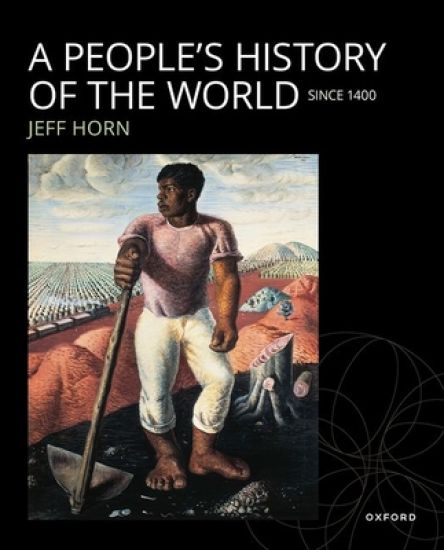
A People's History of the World

A People's History of the World

Jeff Horn

OXFORD UNIVERSITY PRESS INC
2022
nidottu
A People's History of the World offers a rethinking of who should be the focus of the tales we tell about the past . Taking a bold, new approach to understanding the nature of change over time on a global scale, the three temporal approaches in A People's History structure the analysis and reveal patterns, conjunctures, and tipping points, facilitating a thorough integration of social and economic history. The result is a text that more than any other shows how "the people" lived and acted.
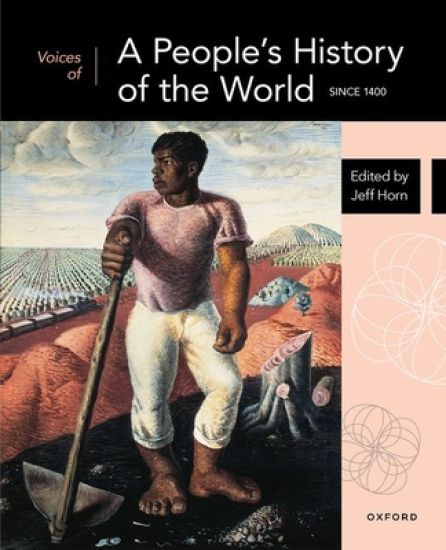
Voices of A People's History of the World

Voices of A People's History of the World

Jeff Horn

OXFORD UNIVERSITY PRESS INC
2022
nidottu
History is only as good as its sources. Primary sources are a necessary and essential part of global history in part because of students' lack of familiarity with distant places and themes. But primary sources are even more fundamental to history from below. Whenever possible this book uses the words of individuals who experienced or witnessed the event or issue under discussion.
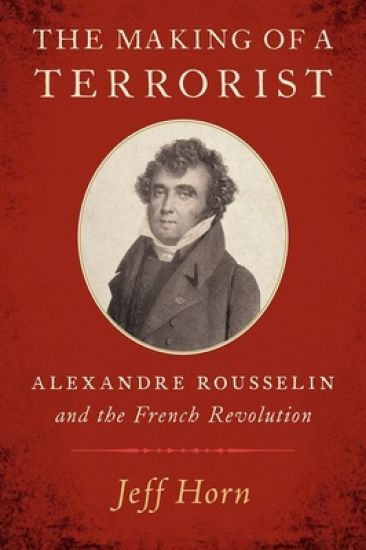
The Making of a Terrorist

The Making of a Terrorist

Jeff Horn

Oxford University Press Inc
2021
sidottu
Much has been written about the French Revolution and especially its bloody phase known as the Reign of Terror. The actions of the leaders who unleashed the massacres and public executions, especially Maximilien Robespierre and Georges Danton, are well known. They inspired many soldiers in the Revolutionary cause, who did not survive, let alone thrive, in the post-Revolutionary world. In this work of historical reconstruction, Jeff Horn recounts the life of Alexandre Rousselin and narrates the history of the age of the French Revolution from the perspective of an eyewitness. From a young age, Rousselin worked for and with some of the era's most important men and women, giving him access to the corridors of power. Dedication to the ideals of the Revolution led him to accept the need for a system of Terror to save the Republic in 1793-94. Rousselin personally utilized violent methods to accomplish the state's goals in Provins and Troyes. This terrorism marked his life. It led to his denunciation by its victims. He spent the next five decades trying to escape the consequences of his actions. His emotional responses as well as the practical measures he took to rehabilitate his reputation illuminate the hopes and fears of the revolutionaries. Across the first four decades of the nineteenth century, Rousselin acquired a noble title, the comte de Saint-Albin, and emerged as a wealthy press baron of the liberal newspaper Le Constitutionnel. But he could not escape his past. He retired to write his own version of his legacy and to protect his family from the consequences of his actions as a terrorist during the French Revolution. Rousselin's life traces the complex twists and turns of the Revolution and demonstrates how one man was able to remake himself, from a revolutionary to a liberal, to accommodate regime change.
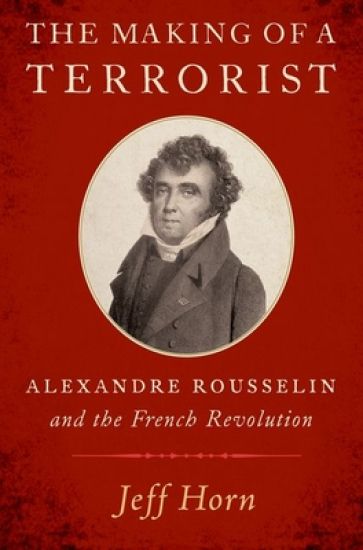
The Making of a Terrorist

The Making of a Terrorist

Jeff Horn

OXFORD UNIVERSITY PRESS INC
2023
nidottu
Much has been written about the French Revolution and especially its bloody phase known as the Reign of Terror. The actions of the leaders who unleashed the massacres and public executions, especially Maximilien Robespierre and Georges Danton, are well known. They inspired many soldiers in the Revolutionary cause, who did not survive, let alone thrive, in the post-Revolutionary world. In this work of historical reconstruction, Jeff Horn recounts the life of Alexandre Rousselin and narrates the history of the age of the French Revolution from the perspective of an eyewitness. From a young age, Rousselin worked for and with some of the era's most important men and women, giving him access to the corridors of power. Dedication to the ideals of the Revolution led him to accept the need for a system of Terror to save the Republic in 1793-94. Rousselin personally utilized violent methods to accomplish the state's goals in Provins and Troyes. This terrorism marked his life. It led to his denunciation by its victims. He spent the next five decades trying to escape the consequences of his actions. His emotional responses as well as the practical measures he took to rehabilitate his reputation illuminate the hopes and fears of the revolutionaries. Across the first four decades of the nineteenth century, Rousselin acquired a noble title, the comte de Saint-Albin, and emerged as a wealthy press baron of the liberal newspaper Le Constitutionnel. But he could not escape his past. He retired to write his own version of his legacy and to protect his family from the consequences of his actions as a terrorist during the French Revolution. Rousselin's life traces the complex twists and turns of the Revolution and demonstrates how one man was able to remake himself, from a revolutionary to a liberal, to accommodate regime change.
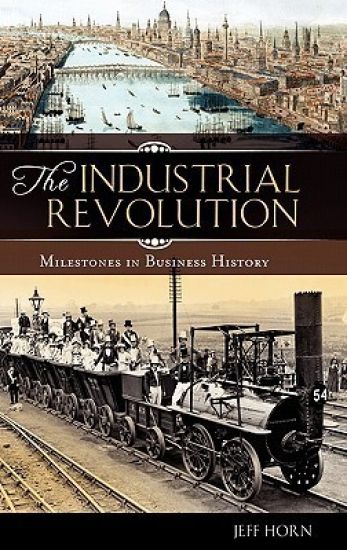
The Industrial Revolution

The Industrial Revolution

Jeff Horn

Greenwood Press
2007
sidottu
The confluence of developments in technology, labor and management practice, and market expansion in the period from 1760 to 1850 so drastically altered the context of economic relations that, taken together, these changes have earned the name, Industrial Revolution. This book, the first in a series of titles to explore turning points and important events in business history, explains the nature of these changes, how they came about, how people reacted to the new economic environment, and the direct impact that they have had on the way business is conducted today. This volume will address how the Industrial Revolution played out in Europe, the United States, and the rest of the world, emphasizing the role of the government in both promoting and regulating commerce. It will clarify the important distinctions between the original Industrial Revolution and the second Industrial Revolution (approximately 1850 to the early 20th century), which was characterized by accelerating growth, brought about the introduction of the internal combustion engine, electric power, and other technological and managerial developments. Featuring biographical sketches, photos, a timeline, a glossary of key terms, and excerpts of primary documents, The Industrial Revolution reveals the daily life of the entrepreneurs, bureaucrats, and workers who experienced the dramatic changes in technology, business, and trade, and the resulting changes in society and culture.
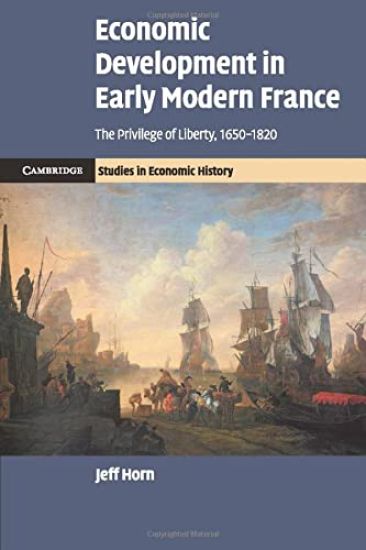
Economic Development in Early Modern France

Economic Development in Early Modern France

Jeff Horn

Cambridge University Press
2015
sidottu
Privilege has long been understood as the constitutional basis of Ancien Régime France, legalizing the provision of a variety of rights, powers and exemptions to some, whilst denying them to others. In this fascinating new study however, Jeff Horn reveals that Bourbon officials utilized privilege as an instrument of economic development, freeing some sectors of the economy from pre-existing privileges and regulations, while protecting others. He explores both government policies and the innovations of entrepreneurs, workers, inventors and customers to uncover the lived experience of economic development from the Fronde to the Restoration. He shows how, influenced by Enlightenment thought, the regime increasingly resorted to concepts of liberty to defend privilege as a policy tool. The book offers important new insights into debates about the impact of privilege on early industrialization, comparative economic development and the outbreak of the French Revolution.
Economic Development in Early Modern France

Economic Development in Early Modern France

Jeff Horn

Cambridge University Press
2017
pokkari
Privilege has long been understood as the constitutional basis of Ancien Régime France, legalizing the provision of a variety of rights, powers and exemptions to some, whilst denying them to others. In this fascinating new study however, Jeff Horn reveals that Bourbon officials utilized privilege as an instrument of economic development, freeing some sectors of the economy from pre-existing privileges and regulations, while protecting others. He explores both government policies and the innovations of entrepreneurs, workers, inventors and customers to uncover the lived experience of economic development from the Fronde to the Restoration. He shows how, influenced by Enlightenment thought, the regime increasingly resorted to concepts of liberty to defend privilege as a policy tool. The book offers important new insights into debates about the impact of privilege on early industrialization, comparative economic development and the outbreak of the French Revolution.
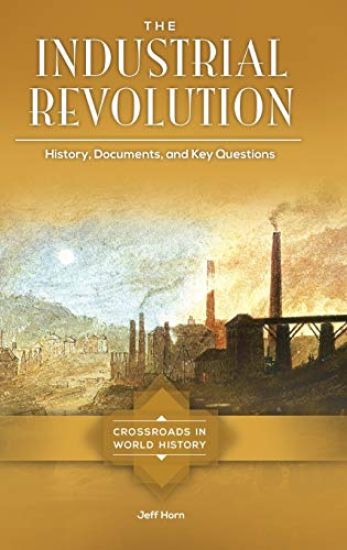
The Industrial Revolution

The Industrial Revolution

Jeff Horn

ABC-CLIO
2016
sidottu
Through this book's roughly 50 reference entries, readers will gain a better appreciation of what life during the Industrial Revolution was like and see how the United States and Europe rapidly changed as societies transitioned from an agrarian economy to one based on machines and mass production.The Industrial Revolution remains one of the most transformative events in world history. It forever changed the economic landscape and gave birth to the modern world as we know it. The content and primary documents within The Industrial Revolution: History, Documents, and Key Questions provide key historical background of the Industrial Revolution in Europe and the United States, enable students to gain unique insights into life during the period, and allow readers to perceive the similarities to developments in society today with ongoing advances in current science and technology.Roughly 50 reference entries provide essential information about the most important people and developments related to the Industrial Revolution, including Richard Arkwright, coal, colonialism, cotton, the factory system, pollution, railroads, and the steam engine. Each entry provides information that gives readers a sense of the importance of the topic within a historical and societal perspective. For example, the coverage of movements during the Industrial Revolution explains the origin of each, including when it was established, and by whom; its significance; and the social context in which the movement was formed. Each entry cites works for further reading to help users learn more about specific topics.