Kirjojen hintavertailu. Mukana 11 244 527 kirjaa ja 12 kauppaa.

Kirjahaku

Etsi kirjoja tekijän nimen, kirjan nimen tai ISBN:n perusteella.

10 kirjaa tekijältä Jeff Malpas

Heidegger and the Thinking of Place
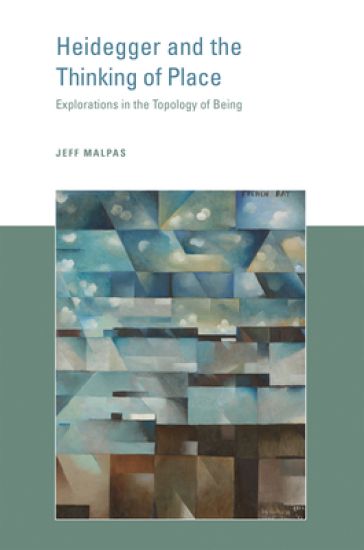
The philosophical significance of place-in Heidegger's work and as the focus of a distinctive mode of philosophical thinking.The idea of place-topos-runs through Martin Heidegger's thinking almost from the very start. It can be seen not only in his attachment to the famous hut in Todtnauberg but in his constant deployment of topological terms and images and in the situated, "placed" character of his thought and of its major themes and motifs. Heidegger's work, argues Jeff Malpas, exemplifies the practice of "philosophical topology." In Heidegger and the Thinking of Place, Malpas examines the topological aspects of Heidegger's thought and offers a broader elaboration of the philosophical significance of place. Doing so, he provides a distinct and productive approach to Heidegger as well as a new reading of other key figures-notably Kant, Aristotle, Gadamer, and Davidson, but also Benjamin, Arendt, and Camus.Malpas, expanding arguments he made in his earlier book Heidegger's Topology (MIT Press, 2007), discusses such topics as the role of place in philosophical thinking, the topological character of the transcendental, the convergence of Heideggerian topology with Davidsonian triangulation, the necessity of mortality in the possibility of human life, the role of materiality in the working of art, the significance of nostalgia, and the nature of philosophy as beginning in wonder. Philosophy, Malpas argues, begins in wonder and begins in place and the experience of place. The place of wonder, of philosophy, of questioning, he writes, is the very topos of thinking.
Heidegger's Topology

Heidegger's Topology

Jeff Malpas

Bradford Books
2008
pokkari
This groundbreaking inquiry into the centrality of place in Martin Heidegger's thinking offers not only an illuminating reading of Heidegger's thought but a detailed investigation into the way in which the concept of place relates to core philosophical issues. In Heidegger's Topology, Jeff Malpas argues that an engagement with place, explicit in Heidegger's later work, informs Heidegger's thought as a whole. What guides Heidegger's thinking, Malpas writes, is a conception of philosophy's starting point: our finding ourselves already "there," situated in the world, in "place". Heidegger's concepts of being and place, he argues, are inextricably bound together.Malpas follows the development of Heidegger's topology through three stages: the early period of the 1910s and 1920s, through Being and Time, centered on the "meaning of being"; the middle period of the 1930s into the 1940s, centered on the "truth of being"; and the late period from the mid-1940s on, when the "place of being" comes to the fore. (Malpas also challenges the widely repeated arguments that link Heidegger's notions of place and belonging to his entanglement with Nazism.) The significance of Heidegger as a thinker of place, Malpas claims, lies not only in Heidegger's own investigations but also in the way that spatial and topographic thinking has flowed from Heidegger's work into that of other key thinkers of the past 60 years.
The Ethics of Place

The Ethics of Place

Jeff Malpas

Routledge
2024
sidottu
Jeff Malpas is one of the world's leading thinkers on the philosophy of space and place. The Ethics of Place is a major examination of the ethical and political dimensions of place, hitherto neglected in much of the literature. Place is regarded by many theorists with suspicion and it is often associated with conservative and reactionary politics, in contrast to a cosmopolitan ethics more aligned with universal values. However, place occupies a crucial position in forms of thought and movements such as communitarianism, , as well as playing an inescapable role in shaping human experience, identity and belonging. Jeff Malpas considers these questions and more. Rather than reject or deny place, he argues that we need to reassess place, and explicitly to reconsider the ethics and politics that may be proper to it. He examines the following topics: the rhetoric that often underpins negative assessments of place; the necessity of place in human experience; the relation between place and communitya conception of the political that can only be understood topographically, and that is itself the proper basis for notions of political community. While philosophical in orientation, The Ethics of Place draws on a range of disciplines as well as elements from both the analytic and continental philosophical traditions, notably Donal Davidson and Martin Heidegger.
The Ethics of Place

The Ethics of Place

Jeff Malpas

Routledge
2024
nidottu
Jeff Malpas is one of the world's leading thinkers on the philosophy of space and place. The Ethics of Place is a major examination of the ethical and political dimensions of place, hitherto neglected in much of the literature. Place is regarded by many theorists with suspicion and it is often associated with conservative and reactionary politics, in contrast to a cosmopolitan ethics more aligned with universal values. However, place occupies a crucial position in forms of thought and movements such as communitarianism, , as well as playing an inescapable role in shaping human experience, identity and belonging. Jeff Malpas considers these questions and more. Rather than reject or deny place, he argues that we need to reassess place, and explicitly to reconsider the ethics and politics that may be proper to it. He examines the following topics: the rhetoric that often underpins negative assessments of place; the necessity of place in human experience; the relation between place and communitya conception of the political that can only be understood topographically, and that is itself the proper basis for notions of political community. While philosophical in orientation, The Ethics of Place draws on a range of disciplines as well as elements from both the analytic and continental philosophical traditions, notably Donal Davidson and Martin Heidegger.
Place and Experience

Place and Experience

Jeff Malpas

Routledge
2018
sidottu
The first edition of Place and Experience established Jeff Malpas as one of the leading philosophers and thinkers of place and space and provided a creative and refreshing alternative to prevailing post-structuralist and postmodern theories of place. It is a foundational and ground-breaking book in its attempt to lay out a sustained and rigorous account of place and its significance.The main argument of Place and Experience has three strands: first, that human being is inextricably bound to place; second, that place encompasses subjectivity and objectivity, being reducible to neither but foundational to both; and third that place, which is distinct from, but also related to space and time, is methodologically and ontologically fundamental. The development of this argument involves considerations concerning the nature of place and its relation to space and time; the character of that mode of philosophical investigation that is oriented to place and that is referred to as ‘philosophical topography’; the nature of subjectivity and objectivity as inter-related concepts that also connect with intersubjectivity; and the way place is tied to memory, identity, and the self. Malpas draws on a rich array of writers and philosophers, including Wordsworth, Kant, Proust, Heidegger and Donald Davidson.This second edition is revised throughout, including a new chapter on place and technological modernity, especially the seeming loss of place in the contemporary world, and a new Foreword by Edward Casey. It also includes a new set of additional features, such as illustrations, annotated further reading, and a glossary, which make this second edition more useful to teachers and students alike.
Place and Experience

Place and Experience

Jeff Malpas

Routledge
2018
nidottu
The first edition of Place and Experience established Jeff Malpas as one of the leading philosophers and thinkers of place and space and provided a creative and refreshing alternative to prevailing post-structuralist and postmodern theories of place. It is a foundational and ground-breaking book in its attempt to lay out a sustained and rigorous account of place and its significance.The main argument of Place and Experience has three strands: first, that human being is inextricably bound to place; second, that place encompasses subjectivity and objectivity, being reducible to neither but foundational to both; and third that place, which is distinct from, but also related to space and time, is methodologically and ontologically fundamental. The development of this argument involves considerations concerning the nature of place and its relation to space and time; the character of that mode of philosophical investigation that is oriented to place and that is referred to as ‘philosophical topography’; the nature of subjectivity and objectivity as inter-related concepts that also connect with intersubjectivity; and the way place is tied to memory, identity, and the self. Malpas draws on a rich array of writers and philosophers, including Wordsworth, Kant, Proust, Heidegger and Donald Davidson.This second edition is revised throughout, including a new chapter on place and technological modernity, especially the seeming loss of place in the contemporary world, and a new Foreword by Edward Casey. It also includes a new set of additional features, such as illustrations, annotated further reading, and a glossary, which make this second edition more useful to teachers and students alike.
Rethinking Dwelling

Rethinking Dwelling

Jeff Malpas

Bloomsbury Academic
2021
sidottu
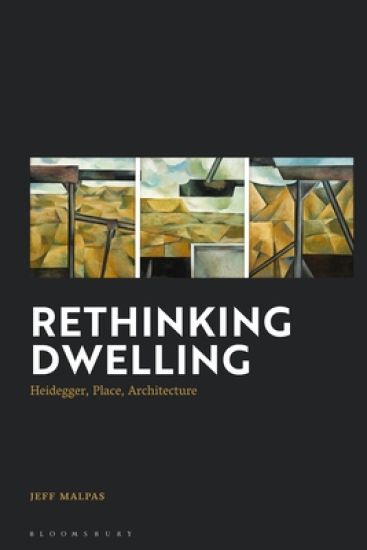
Over the last twenty years, Jeff Malpas’ research has involved his engagement with architects and other academics around the issues of place, architecture and landscape and particularly the way these practitioners have used the work of Martin Heidegger. In Rethinking Dwelling, Malpas’ primary focus is to rethink of these issues in a way that is directly informed by an understanding of place and the human relation it. With essays on a range of architectural and design concerns, as well as engaging with other thinkers on topics including textuality in architecture, contemporary high-rise construction, the significance of the line, the relation between building and memory and the idea of authenticity in architecture, this book departs from the traditional phenomenological focus and provides students and scholars with a new ontological assessment of landscape and architecture. As such, it may also be used on other ‘spatial’ or ‘topographic’ disciplines including geography, sociology, anthropology, and art in which the ‘spatial turn’ has been so important.
Rethinking Dwelling

Rethinking Dwelling

Jeff Malpas

BLOOMSBURY PUBLISHING PLC
2023
nidottu
Over the last twenty years, Jeff Malpas’ research has involved his engagement with architects and other academics around the issues of place, architecture and landscape and particularly the way these practitioners have used the work of Martin Heidegger. In Rethinking Dwelling, Malpas’ primary focus is to rethink of these issues in a way that is directly informed by an understanding of place and the human relation it. With essays on a range of architectural and design concerns, as well as engaging with other thinkers on topics including textuality in architecture, contemporary high-rise construction, the significance of the line, the relation between building and memory and the idea of authenticity in architecture, this book departs from the traditional phenomenological focus and provides students and scholars with a new ontological assessment of landscape and architecture. As such, it may also be used on other ‘spatial’ or ‘topographic’ disciplines including geography, sociology, anthropology, and art in which the ‘spatial turn’ has been so important.
In the Brightness of Place

In the Brightness of Place

Jeff Malpas

STATE UNIVERSITY OF NEW YORK PRESS
2023
pokkari
Drawing on a range of sources in philosophy and literature, but with particular reference to the work of Heidegger, makes a compelling case for the importance of place in philosophical discourse.The work of Jeff Malpas is well-known for its contribution to contemporary thinking about place and space. In the Brightness of Place takes that contribution further, as Malpas develops it in new ways and in relation to new topics. At the same time, the volume also develops Malpas' distinctively topological approach to the work of Martin Heidegger. Not limited simply to a reading of the topological in Heidegger, In the Brightness of Place also takes up the idea of topology after Heidegger, showing how topological thinking provides a way of rethinking Heidegger's own work and of rethinking our own being in the world.
In the Brightness of Place

In the Brightness of Place

Jeff Malpas

STATE UNIVERSITY OF NEW YORK PRESS
2022
sidottu
Drawing on a range of sources in philosophy and literature, but with particular reference to the work of Heidegger, makes a compelling case for the importance of place in philosophical discourse.The work of Jeff Malpas is well-known for its contribution to contemporary thinking about place and space. In the Brightness of Place takes that contribution further, as Malpas develops it in new ways and in relation to new topics. At the same time, the volume also develops Malpas' distinctively topological approach to the work of Martin Heidegger. Not limited simply to a reading of the topological in Heidegger, In the Brightness of Place also takes up the idea of topology after Heidegger, showing how topological thinking provides a way of rethinking Heidegger's own work and of rethinking our own being in the world.