

Kirjahaku
Etsi kirjoja tekijän nimen, kirjan nimen tai ISBN:n perusteella.
103 kirjaa tekijältä Jeff Pepper

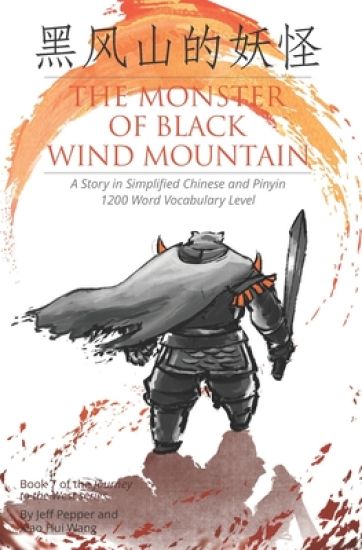
The monk Tangseng and his disciple, the short-tempered Monkey King Sun Wukong, begin their multi-year journey to retrieve Buddhist scriptures from Thunderclap Mountain in India. They first encounter a mysterious river-dwelling dragon, then run into serious trouble while staying in the temple of a 270 year old abbot. Their troubles deepen when they meet the abbot's friend, a terrifying black bear monster. This is the 7th book in the best-selling The Journey to the West series of stories for students learning to read Chinese. It is based on the epic 16th century novel of the same name by Wu Chen'en. That novel was inspired by an actual journey by the Buddhist monk Xuanzang, who traveled from Chang'an westward to India in 629 A.D. and returned seventeen years later with priceless knowledge and spiritual texts. Over the course of the book Tangseng and his companions face the 81 tribulations that Tangseng had to endure to attain Buddhahood.The story is written, as much as possible, using the 1200-word vocabulary of HSK4. It is presented in Simplified Chinese characters and pinyin, and includes an English version and glossary. A free audiobook is available on YouTube's Imagin8 Press channel and also on www.imagin8press.com.
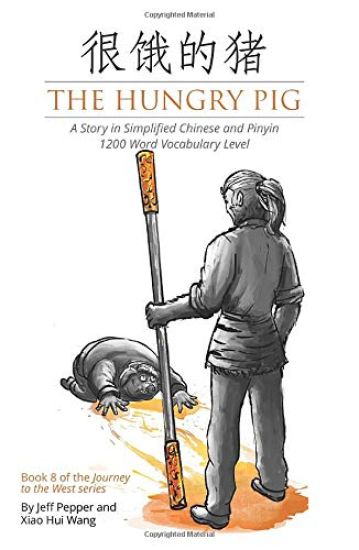
In this, the 8th book in our Journey to the West series, we meet the pig-man Zhu Bajie, who becomes Tangseng's second disciple. In his previous life, Zhu was the Marshal of the Heavenly Reeds, responsible for the Jade Emperor's entire navy and 80,000 sailors. But unable to control his appetites, he got drunk at a festival and attempted to seduce the Goddess of the Moon. The Jade Emperor banished him to earth, but as he plunged from heaven to earth he ended up in the womb of a sow and was reborn as a man-eating pig monster. This book tells the story of how Zhu was married to a farmer's daughter, fought with Sun Wukong, and ended up joining Tangseng and Sun Wukong in their journey to the Western Heaven. Zhu is the embodiment of stupidity, laziness, lust and greed. But he is brave and loyal, and also provides a bit of comic relief in the novel. This book is based on Journey to The West (西游记, xī y u j ), an epic novel written in the 16th Century by Wu Chen'en. The novel is loosely based on an actual journey by the Buddhist monk Tangseng (called Xuanzang and Sanzang in earlier books), who traveled from the Chinese city of Chang'an westward to India in 629 A.D. and returned 17 years later with priceless knowledge and texts of Buddhism. Over the course of the book the band of travelers face the 81 tribulations that Tangseng had to endure to attain Buddhahood. All of the stories in this series are all written in simple language suitable for intermediate Chinese learners. Our core vocabulary for this book is 1,200 words, made up of the 600 words of HSK-3 plus another 600 or so words that were introduced in the previous books of the series. These words are all in the glossary at the back of the book. Whenever we introduce a new word or phrase, it's defined in a footnote on the page where it first appears, and also appears in the glossary. In the main body of the book, each page of Chinese characters is matched with a facing page of pinyin. This is unusual for Chinese novels but we feel it's important. By including the pinyin, as well as a full English version and glossary at the end, we hope that every reader, no matter what level of mastery they have of the Chinese language, will be able to understand and enjoy the story we tell here. Free audio versions of all books in this series are available on YouTube. Go to www.youtube.com and search for the Imagin8 Press channel to find all of our free audiobooks.
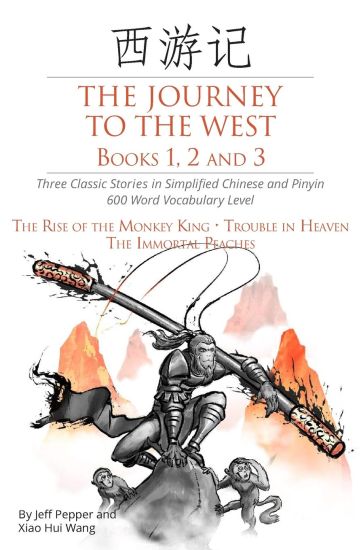
This book contains the full text of the first three stories in our best-selling Journey to the West series for people learning to read Chinese. The three stories told here - The Rise of the Monkey King, Trouble in Heaven, and The Immortal Peaches - are unchanged from our original versions except for minor editing and reformatting.These three stories all focus on the adventures of Sun Wukong, the Handsome Monkey King, one of the most famous characters in Chinese literature and culture. His legendary bravery, his foolish mistakes, his sharp-tongued commentary and his yearning for immortality and spiritual knowledge have inspired hundreds of books, television shows, graphic novels, video games and films.The full story of Sun Wukong's adventures is told in Journey to the West, an epic 2,000 page novel written in the 16th Century by Wu Cheng'en. Journey to the West is probably the most famous and best-loved novel in China and is considered one of the four great classical novels of Chinese literature.The story is written, as much as possible, using the 600-word vocabulary of HSK3. It is presented in Simplified Chinese characters and pinyin, and includes an English version and complete glossary. A free audiobook is available on YouTube's Imagin8 Press channel, and on our website, www.imagin8press.com.
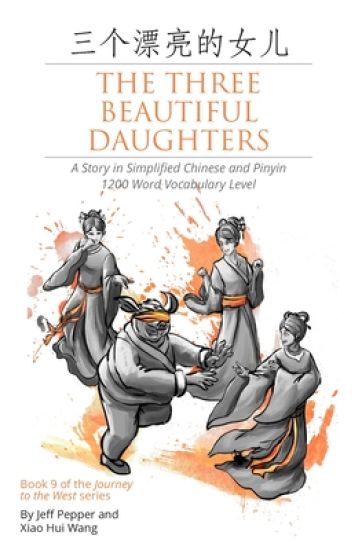
The river-dwelling monster Sha Wujing was once the Curtain Raising Captain, but was banished from heaven by the Yellow Emperor for breaking an extremely valuable cup during a drunken visit to the Peach Festival. Later, the band of pilgrims arrive at a beautiful home seeking a simple vegetarian meal and a place to stay for the night. What they encounter instead is a lovely and wealthy widow and her three even more lovely daughters. This meeting is, of course, much more than it appears to be, and it turns into a test of commitment and virtue for all of the pilgrims, especially for the lazy and lustful Zhu Bajie.This is the 9th book in the best-selling The Journey to the West series of stories for students learning to read Chinese. It is based on the epic 16th century novel of the same name by Wu Chen'en. That novel was inspired by an actual journey by the Buddhist monk Tangseng, who traveled from Chang'an westward to India in 629 A.D. and returned seventeen years later with priceless knowledge and spiritual texts. Over the course of the book Tangseng and his companions face the 81 tribulations that Tangseng had to endure to attain Buddhahood.The story is written, as much as possible, using the 1200-word vocabulary of HSK4. It is presented in Simplified Chinese characters and pinyin, and includes an English version and glossary. A free audiobook is available on YouTube's Imagin8 Press channel and also on www.imagin8press.com.
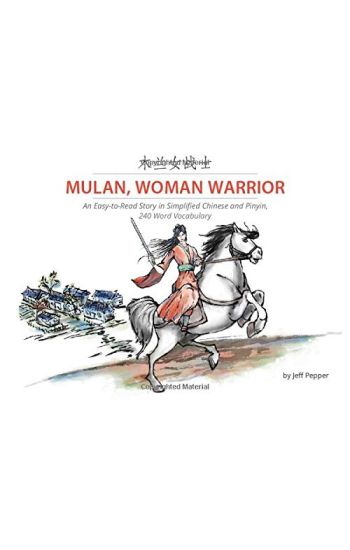
The story of Mulan, the young girl who joins the army to save her family and her country, is at least 1500 years old. Over the centuries, it has inspired dozens of poems, plays, novels, songs, and more recently, graphic novels, TV shows and films. The details of the story vary, but the core is always the same: a young girl living with her family in a small Chinese village learns that the army requires each family to contribute one man to fight invaders from the North. To save her elderly father she disguises herself as a young man and enlists in the army; she excels at fighting, strategy and leadership and rises through the ranks; the war ends successfully; she is recognized as a hero and is offered rewards by the Emperor; she declines the rewards and humbly chooses to return to her family and take up the traditional life of a village woman.This wonderful little book consists of just 30 six-line verses, and lets beginning students enjoy a great story while also learning to read Simplified Chinese. It uses a minimal vocabulary of just 233 words, using fewer than 300 different characters. Proper nouns are underlined, and new words that are not in the HSK3 standard vocabulary are defined on the page where they first appear. Each page of Chinese also contains a pinyin (romanized spelling) version. This gives an assist to beginning readers by letting them sound out the words instead of having to recognize each character in the main text. The pinyin is also useful for looking up word definitions in the glossary. There is an English translation at the end, and a free audiobook is available on the YouTube Imagin8 Press channel and on www.imagin8press.com.Jeff Pepper is President and CEO of Imagin8 Press, and has written dozens of books about Chinese language and culture. Over his thirty-five year career he has founded and led several successful computer software firms, including one that became a publicly traded company. He's authored two software related books and was awarded three U.S. software patents.
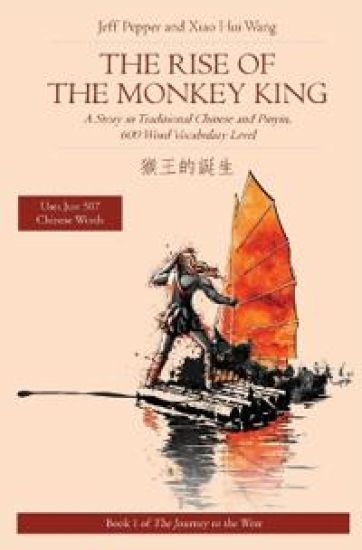
This book is a retelling, in easy-to-read Chinese, of the legendary story of how a little stone monkey was born, became king of his troop of monkeys, left his home to pursue enlightenment, received the name Sun Wukong (literally, "ape seeking the void") from his teacher, and returned home to defend his subjects from a ravenous monster.Sun Wukong, the Handsome Monkey King, is one of the most famous characters in Chinese literature and culture. His legendary bravery, his foolish mistakes, his sharp-tongued commentary and his yearning for immortality and spiritual knowledge have inspired hundreds of books, television shows, graphic novels, video games and films.This is the first book in the best-selling The Journey to the West series of stories for students learning to read Chinese. It is based on the epic 16th century novel of the same name by Wu Chen'en. The story is written, as much as possible, using the 600-word vocabulary of HSK3. It is presented in Traditional Chinese characters and pinyin, and includes an English version and glossary. A free audiobook is available on YouTube's Imagin8 Press channel and also on www.imagin8press.com.
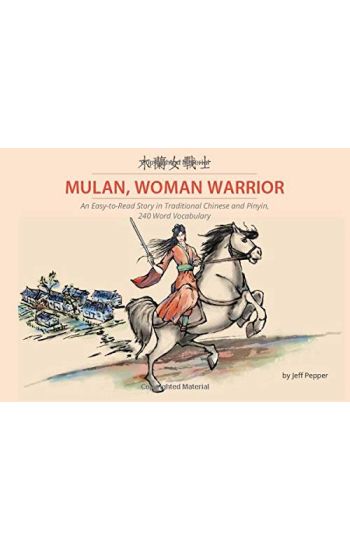
The story of Mulan, the young girl who joins the army to save her family and her country, is at least 1500 years old. Over the centuries, it has inspired dozens of poems, plays, novels, songs, and more recently, graphic novels, TV shows and films. The details of the story vary, but the core is always the same: a young girl living with her family in a small Chinese village learns that the army requires each family to contribute one man to fight invaders from the North. To save her elderly father she disguises herself as a young man and enlists in the army; she excels at fighting, strategy and leadership and rises through the ranks; the war ends successfully; she is recognized as a hero and is offered rewards by the Emperor; she declines the rewards and humbly chooses to return to her family and take up the traditional life of a village woman.This wonderful little book consists of just 30 six-line verses, and lets beginning students enjoy a great story while also learning to read Traditional Chinese. It uses a minimal vocabulary of just 233 words, using fewer than 300 different characters. Proper nouns are underlined, and new words that are not in the HSK3 standard vocabulary are defined on the page where they first appear. Each page of Chinese also contains a pinyin (romanized spelling) version. This gives an assist to beginning readers by letting them sound out the words instead of having to recognize each character in the main text. The pinyin is also useful for looking up word definitions in the glossary. There is an English translation at the end, and a free audiobook is available on the YouTube Imagin8 Press channel and on www.imagin8press.com.
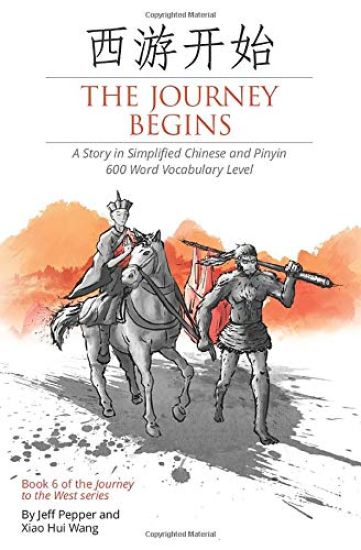
The young monk Xuanzang sets out on his westward journey. His journey is difficult and filled with dangers. He runs into trouble immediately when he is captured and nearly killed by the Monster King and his ogres. He escapes with the help of a mysterious old man, only to be attacked on the road later by tigers, snakes and more monsters. Eventually he meets the Monkey King, Sun Wukong. Together they face bandits and wild animals, and Sun Wukong must make a difficult decision.This is the 6th book in the best-selling Journey to the West series of stories for students learning to read Chinese. It is based on the events in Chapters 12 through 14 of the epic 16th century novel of the same name by Wu Chen'en. That novel was inspired by an actual journey by the Buddhist monk Xuanzang, who traveled from Chang'an westward to India in 629 A.D. and returned seventeen years later with priceless knowledge and spiritual texts. Over the course of the book Tangseng and his companions face the 81 tribulations that Tangseng had to endure to attain Buddhahood.The first 6 books in the Journey to the West series are written using an HSK vocabulary level of about 600 different Chinese words, but 669 are used in this book. Fifty two new words are introduced and are defined on the pages where they are first used. The book uses Simplified Chinese characters and includes pinyin, an English translation, and a full glossary. A free audiobook is available on YouTube's Imagin8 Press channel and on www.imagin8press.com.
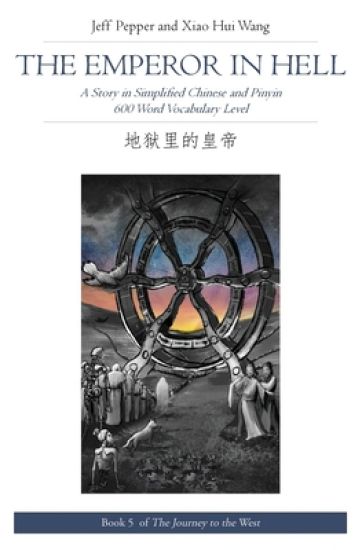
"The Emperor In Hell" is the fifth book in the "Journey to the West" series of stories by Jeff Pepper and Xiao Hui Wang. Other titles include "Rise of the Monkey King", "Trouble in Heaven", "The Immortal Peaches" and "The Young Monk".The story starts innocently enough, with two good friends chatting as they walk home after eating and drinking at a local inn. One of the men, a fisherman, tells his friend about a fortuneteller who advises him on where to find fish. This seemingly harmless conversation between two minor characters triggers a series of events that eventually cost the life of a supposedly immortal being, and cause the great Tang Emperor himself to be dragged down to the underworld. He is released by the Ten Kings of the Underworld, but is trapped and must escape with the help of a deceased courtier named Cui Jue.This book is based on chapters 9, 10 and 11 of Journey To The West, an epic novel written in the 16th Century by Wu Chen'en. Each book in our Journey to the West series covers a short section of the original 2,000-page novel.Journey To The West is loosely based on an actual journey by the Buddhist monk Xuanzang, who traveled from the Chinese city of Chang'an westward to India in 629 A.D. and returned 17 years later with priceless knowledge and texts of Buddhism. Over the course of the book the band of travelers face the 81 tribulations that Xuanzang had to endure to attain Buddhahood.This book, the fifth in the series, tells the final series of stories that lead us to the actual journey to the west, which starts in Book 6. It is by far the darkest and most frightening of all the stories we've told so far, with a series of horrifying visions of after-death punishment of evildoers that are reminiscent of those in Dante's Inferno.The story is written, as much as possible, using the 600 word vocabulary of HSK 3. It is presented in simplified Chinese characters and pinyin, and includes an English version and complete glossary. A free Chinese language audiobook is also available on YouTube, on the Imagin8 Press channel.
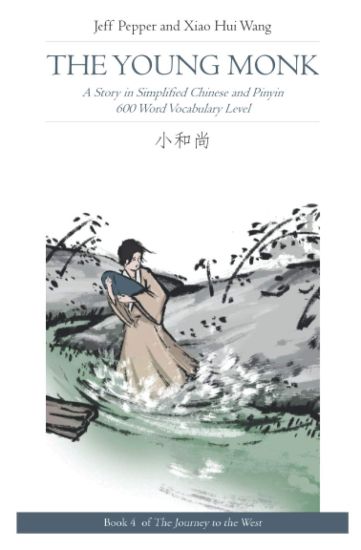
"The Young Monk" is the fourth book in the "Journey to the West" series of stories by Jeff Pepper and Xiao Hui Wang. Other titles include "Rise of the Monkey King", "Trouble in Heaven" and "The Immortal Peaches". In this, the fourth book in the series, we leave the imprisoned Sun Wukong behind, and tell the story of Xuanzang, the monk chosen by the Buddha to undertake the dangerous journey westward to India and bring sacred wisdom back to China. Unlike the previous books which told of Sun Wukong's great adventures (and misadventures) across heaven and earth, this story deals with smaller, human-scale events and the traditional themes of love, loyalty, treachery and revenge. Our story begins with the Buddha's decision to bring his wisdom to China. Then we meet the young couple - Guangrui and Wenjiao - who become Xuanzang's parents. We witness their terrible ordeals around the time of Xuanzang's birth, and we then jump ahead to when he turns eighteen, learns of his true parentage, and avenges his parents. This book is based on chapters 8 and 9 of Journey To The West, an epic novel written in the 16th Century by Wu Chen'en. Journey To The West is loosely based on an actual journey by the Buddhist monk Xuanzang, who traveled from the Chinese city of Chang'an westward to India in 629 A.D. and returned 17 years later with priceless knowledge and texts of Buddhism. Over the course of the book the band of travelers face the 81 tribulations that Xuanzang had to endure to attain Buddhahood. Each book in our Journey to the West series covers a short section of the original 2,000-page novel. The first three books in the series all focus on Sun Wukong, the Monkey King. We tell the story of his birth, his early years, and his adventures in Heaven and Earth that lead, ultimately, to his capture and his centuries-long imprisonment under Five Finger Mountain.The story is written, as much as possible, using the 600 word vocabulary of HSK 3. It is presented in simplified Chinese characters and pinyin, and includes an English version and complete glossary. A free Chinese language audiobook is also available on YouTube, on the Imagin8 Press channel.
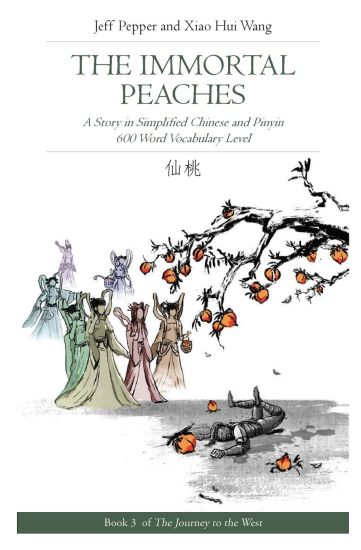
Once again the Monkey King's unlimited ambitions and uncontrolled appetites land him in deep trouble. He is given a job in heaven taking care of the Emperor's Garden of Immortal Peaches, but he can't stop himself from eating all the peaches. He impersonates a great Immortal and crashes a party in Heaven, stealing the guests' food and drink and barely escaping to his loyal troop of monkeys back on Earth. And in the end, he battles an entire army of Immortals and men, and discovers that even calling himself the Great Sage Equal to Heaven does not make him equal to everyone in Heaven.This is the 3rd book in the best-selling The Journey to the West series of stories for students learning to read Chinese. It is based on the epic 16th century novel of the same name by Wu Chen'en. That novel was inspired by an actual journey by the Buddhist monk Tangseng (formerly called Xuanzang), who traveled from Chang'an westward to India in 629 A.D. and returned seventeen years later with priceless knowledge and spiritual texts. Over the course of the book Tangseng and his companions face the 81 tribulations that Tangseng had to endure to attain Buddhahood.The story is written, as much as possible, using the 600-word vocabulary of HSK4. It is presented in Simplified Chinese characters and pinyin, and includes an English version and glossary. A free audiobook is available on YouTube's Imagin8 Press channel and also on www.imagin8press.com.
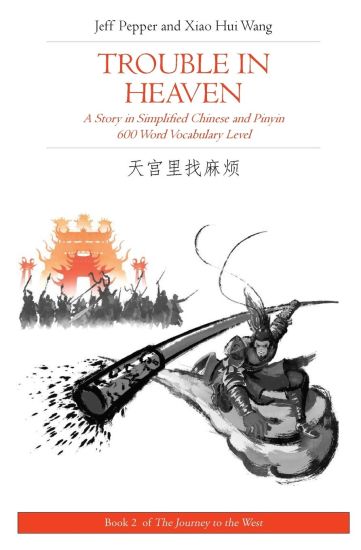
Things begin to unravel for Sun Wukong as he sees the consequences of his outrageous actions. While trying to defend his troop of monkeys, he manages to offend the underwater Dragon King, the Dragon Kong's mother, all ten Kings of the Underworld, and the great Jade Emperor himself. Finally, goaded by a couple of troublemaking demons, he goes too far, calling himself the Great Sage Equal to Heaven and setting events in motion that cause him some serious trouble.This is the 2nd book in the best-selling The Journey to the West series of stories for students learning to read Chinese. It is based on the epic 16th century novel of the same name by Wu Chen'en. That novel was inspired by an actual journey by the Buddhist monk Tangseng (formerly called Xuanzang), who traveled from Chang'an westward to India in 629 A.D. and returned seventeen years later with priceless knowledge and spiritual texts. Over the course of the book Tangseng and his companions face the 81 tribulations that Tangseng had to endure to attain Buddhahood.The story is written, as much as possible, using the 600-word vocabulary of HSK4. It is presented in Simplified Chinese characters and pinyin, and includes an English version and glossary. A free audiobook is available on YouTube's Imagin8 Press channel and also on www.imagin8press.com.
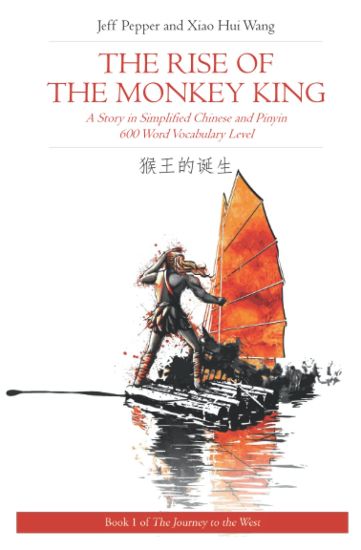
"The Rise of the Monkey King" is the first book in the "Journey to the West" series of stories by Jeff Pepper and Xiao Hui Wang. Other titles include "Trouble in Heaven", "The Immortal Peaches" and "The Young Monk". Sun Wukong, the Handsome Monkey King, is one of most famous characters in Chinese literature and culture. His legendary bravery, his foolish mistakes, his sharp-tongued commentary and his yearning for immortality and spiritual knowledge have inspired hundreds of books, television shows, graphic novels, video games and films. The full story of Sun Wukong's adventures is told in Journey To The West, an epic 2,000 page novel written in the 16th Century by Wu Cheng'en. Journey To The West is probably the most famous and best-loved novel in China and is considered one of the four great classical novels of Chinese literature. Its place in Chinese literature is roughly comparable to Homer's epic poem The Odyssey in Western literature. Wikipedia sums up the book's role perfectly, saying "Enduringly popular, the tale is at once a comic adventure story, a humorous satire of Chinese bureaucracy, a spring of spiritual insight, and an extended allegory in which the group of pilgrims journeys towards enlightenment by the power and virtue of cooperation."Journey To The West is a very, very long story, consisting of a hundred chapters. It is loosely based on an actual journey by the Buddhist monk Xuanzang who traveled from the Chinese city of Chang'an westward to India in 629 A.D. and returned 17 years later with priceless knowledge and texts of Buddhism. Over the course of the book Xuanzang and his companions face the 81 tribulations that Xuanzang had to endure to attain Buddhahood. This book, The Rise of the Monkey King, covers the events in the first two chapters of this epic story. We learn how the little stone monkey is born, becomes king of his troop of monkeys, leaves his home to pursue enlightenment, receives the name Sun Wukong (literally, "ape seeking the void") from his teacher, and returns home to defend his subjects from a ravenous monster. Future books in this series will tell more stories from the life of this famous monkey and his companions. Because of this story's importance in Chinese culture, we've made every effort to remain faithful to the original while retelling it in simple language suitable for beginning Chinese learners at the HSK 3 level. We have tried to not add or change anything, though of course we've had to leave out a lot of detail. Wherever we had to use a word or phrase not contained in the 600-word HSK 3 vocabulary (which for example does not include the word "monkey" ) or that has not entered common usage since the HSK lists were created, those new words are defined in footnotes on the page where they first appear. New compound (multi-character) words and expressions are, whenever possible, chosen so that they use characters already in HSK 3. An English version of the story is included for reference at the end, as well as a complete glossary. In the main body of the book, each page of Chinese characters is matched with a facing page of pinyin. This is unusual for Chinese novels but we feel it's important. By including the pinyin, the English version and the glossary, we hope that every reader, no matter what level of mastery they have of the Chinese language, will be able to understand and enjoy the story we tell here. The story is written, as much as possible, using the 600 word vocabulary of HSK 3. It is presented in simplified Chinese characters and pinyin, and includes an English version and complete glossary. A free Chinese language audiobook is also available on YouTube, on the Imagin8 Press channel.
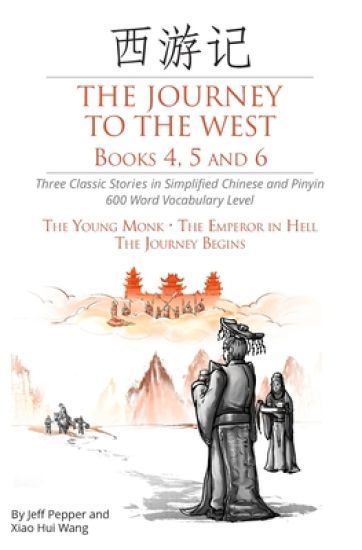
This book is a compilation of books 4, 5 and 6 in our Journey to the West series of story books for people learning to read Chinese.The three stories told here - The Young Monk, The Emperor in Hell, and The Journey Begins - are unchanged from our original versions except for minor editing and reformatting. In The Young Monk, we tell the story of Xuanzang, the monk chosen by the Buddha to undertake the dangerous journey westward to India and bring sacred wisdom back to China. Unlike the previous books which told of Sun Wukong's great adventures (and misadventures) across heaven and earth, this story deals with smaller, human-scale events and the traditional themes of love, loyalty, treachery and revenge. Our story begins with the Buddha's decision to bring his wisdom to China. Then we meet the young couple - Guangrui and Wenjiao - who become Xuanzang's parents. We witness their terrible ordeals around the time of Xuanzang's birth, and we then jump ahead to when he turns eighteen, learns of his true parentage, and avenges his parents. The next story, The Emperor in Hell, tells the last story leading up to the start of the actual journey to the west in Book 6. While this book has some light moments, it also has some of the darkest and most frightening scenes of all the stories we've told so far, with a series of horrifying visions of after-death punishment of evildoers that are reminiscent of those in Dante's Inferno. The story starts innocently enough, with two good friends chatting as they walk home after eating and drinking at a local inn. One of the men, a fisherman, tells his friend about a fortune-teller who advises him on where to find fish. This seemingly harmless conversation between two minor characters triggers a series of events that eventually cost the life of a supposedly immortal being, and cause the great Tang Emperor himself to be dragged down to the underworld. The final story, The Journey Begins, marks the end of the first section of the novel, as we wrap up the preliminaries and begin the actual journey. Several threads and key characters from earlier books come together. Taizong, the great emperor of the Tang Dynasty who spent most of Book Five trapped in the Underworld, selects the young monk Xuanzang to undertake the journey after being strongly influenced by the Buddhist teacher Guanyin. Xuanzang (now called Sanzang) sets out on his journey and receives help from Guanyin and from Bright Star of Venus, who previously appeared in Book Two. The Dragon King of the Eastern Ocean, who in Book One was Sun Wukong's adversary and was forced to give him his Jin Gu Bang (golden hoop rod weapon), is now Sun Wukong's old friend and gives him some life-changing advice. And near the end of the book Sanzang's path crosses that of Sun Wukong, and the young monk and the old monkey work out their differences (more or less) and become the first two members of the band of travelers.
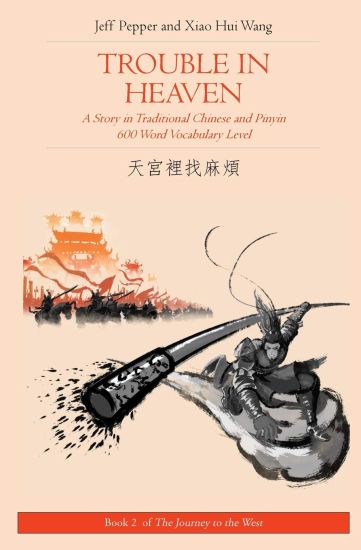
Things begin to unravel for Sun Wukong as he sees the consequences of his outrageous actions. While trying to defend his troop of monkeys, he manages to offend the underwater Dragon King, the Dragon Kong's mother, all ten Kings of the Underworld, and the great Jade Emperor himself. Finally, goaded by a couple of troublemaking demons, he goes too far, calling himself the Great Sage Equal to Heaven and setting events in motion that cause him some serious trouble.This is the 2nd book in the best-selling The Journey to the West series of stories for students learning to read Chinese. It is based on the epic 16th century novel of the same name by Wu Chen'en. That novel was inspired by an actual journey by the Buddhist monk Tangseng (formerly called Xuanzang), who traveled from Chang'an westward to India in 629 A.D. and returned seventeen years later with priceless knowledge and spiritual texts. Over the course of the book Tangseng and his companions face the 81 tribulations that Tangseng had to endure to attain Buddhahood.The story is written, as much as possible, using the 600-word vocabulary of HSK3. It is presented in Traditional Chinese characters and pinyin, and includes an English version and glossary. A free audiobook is available on YouTube's Imagin8 Press channel and also on www.imagin8press.com.
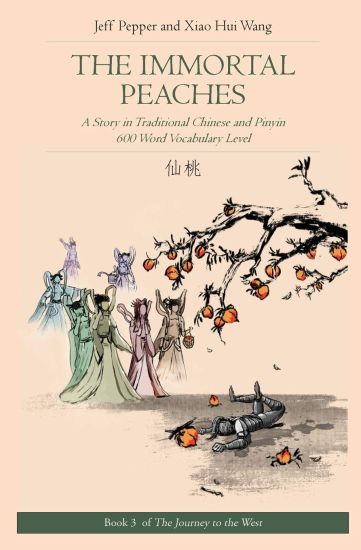
Once again the Monkey King's unlimited ambitions and uncontrolled appetites land him in deep trouble. He is given a job in heaven taking care of the Emperor's Garden of Immortal Peaches, but he can't stop himself from eating all the peaches. He impersonates a great Immortal and crashes a party in Heaven, stealing the guests' food and drink and barely escaping to his loyal troop of monkeys back on Earth. And in the end, he battles an entire army of Immortals and men, and discovers that even calling himself the Great Sage Equal to Heaven does not make him equal to everyone in Heaven.This is the 3rd book in the best-selling The Journey to the West series of stories for students learning to read Chinese. It is based on the epic 16th century novel of the same name by Wu Chen'en. That novel was inspired by an actual journey by the Buddhist monk Tangseng (formerly called Xuanzang), who traveled from Chang'an westward to India in 629 A.D. and returned seventeen years later with priceless knowledge and spiritual texts. Over the course of the book Tangseng and his companions face the 81 tribulations that Tangseng had to endure to attain Buddhahood.The story is written, as much as possible, using the 600-word vocabulary of HSK3. It is presented in Traditional Chinese characters and pinyin, and includes an English version and glossary. A free audiobook is available on YouTube's Imagin8 Press channel and also on www.imagin8press.com.