Kirjojen hintavertailu. Mukana 12 016 292 kirjaa ja 12 kauppaa.

Kirjahaku

Etsi kirjoja tekijän nimen, kirjan nimen tai ISBN:n perusteella.

2 kirjaa tekijältä Jeffrey Broughton

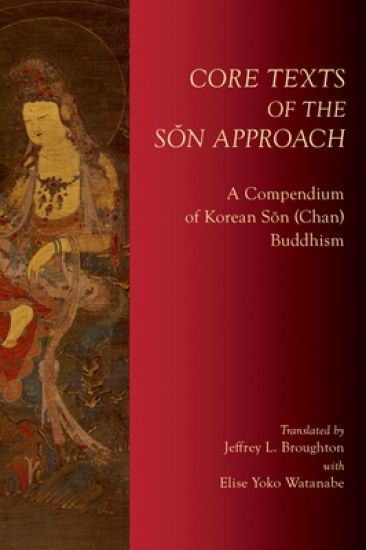
Core Texts of the Son Approach

Core Texts of the Son Approach

Jeffrey Broughton

Oxford University Press Inc
2021
sidottu
Jeffrey Broughton here offers a study and partial translation of Core Texts of the Son Approach (Sonmun ch'waryo), an anthology of texts foundational to Korean Son (Chan/Zen) Buddhism. Core Texts of the Son Approach provides a convenient entrée to two fundamental themes of Korean Son: Son vis-à-vis the doctrinal teachings of Buddhism (in which Son is shown to be superior) and the huatou (i.e., phrase; Korean hwadu) method of practice-work originally popularized by the Song dynasty Chinese Chan master Dahui Zonggao. This method consists of "raising to awareness" or "keeping an eye on" the phrase, usually No (Korean mu). No mental operation whatsoever is to be performed upon the phrase. One lifts the phrase to awareness constantly, when doing "quiet" cross-legged sitting as well as when immersed in the "noisiness" of everyday life. Core Texts of the Son Approach, which was published in Korea during the first decade of the twentieth century (the identity of the compiler is not known for certain), contains eight Chan texts by Chinese authors (two translated here) and seven Son texts by Korean authors (three translated here), showing the organic relationship between the parent Chinese tradition and its Korean inheritor. The set of translations in this volume will give readers access to some of the key texts of the Korean branch of this influential East Asian school of Buddhism.
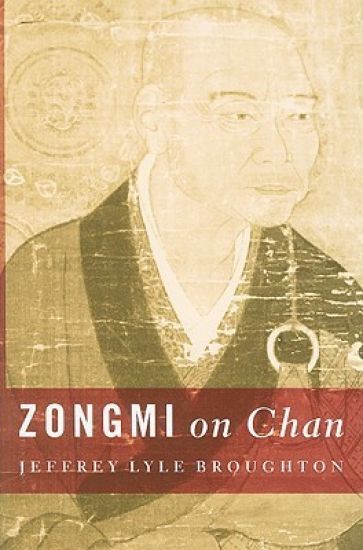
Zongmi on Chan

Zongmi on Chan

Jeffrey Broughton

Columbia University Press
2009
sidottu
Japanese Zen often implies that textual learning (gakumon) in Buddhism and personal experience (taiken) in Zen are separate, but the career and writings of the Chinese Tang dynasty Chan master Guifeng Zongmi (780-841) undermine this division. For the first time in English, Jeffrey Broughton presents an annotated translation of Zongmi's magnum opus, the Chan Prolegomenon, along with translations of his Chan Letter and Chan Notes. The Chan Prolegomenon persuasively argues that Chan "axiom realizations" are identical to the teachings embedded in canonical word and that one who transmits Chan must use the sutras and treatises as a standard. Japanese Rinzai Zen has, since the Edo period, marginalized the sutra-based Chan of the Chan Prolegomenon and its successor text, the Mind Mirror (Zongjinglu) of Yongming Yanshou (904-976). This book contains the first in-depth treatment in English of the neglected Mind Mirror, positioning it as a restatement of Zongmi's work for a Song dynasty audience. The ideas and models of the Chan Prolegomenon, often disseminated in East Asia through the conduit of the Mind Mirror, were highly influential in the Chan traditions of Song and Ming China, Korea from the late Koryo onward, and Kamakura-Muromachi Japan. In addition, Tangut-language translations of Zongmi's Chan Prolegomenon and Chan Letter constitute the very basis of the Chan tradition of the state of Xixia. As Broughton shows, the sutra-based Chan of Zongmi and Yanshou was much more normative in the East Asian world than previously believed, and readers who seek a deeper, more complete understanding of the Chan tradition will experience a surprising reorientation in this book.