Kirjojen hintavertailu. Mukana 11 342 296 kirjaa ja 12 kauppaa.

Kirjahaku

Etsi kirjoja tekijän nimen, kirjan nimen tai ISBN:n perusteella.

25 kirjaa tekijältä Jeffrey C. Alexander

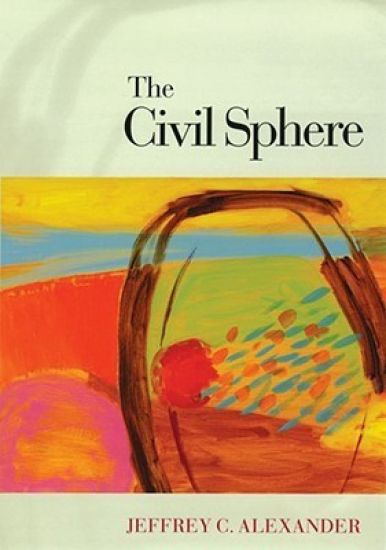
The Civil Sphere

The Civil Sphere

Jeffrey C. Alexander

Oxford University Press Inc
2006
sidottu
How do real individuals live together in real societies in the real world? Jeffrey Alexander's masterful work, The Civil Sphere, addresses this central paradox of modern life. Feelings for others--the solidarity that is ignored or underplayed by theories of power or self-interest--are at the heart of this novel inquiry into the meeting place between normative theories of what we think we should do and empirical studies of who we actually are. A grand and sweeping statement, The Civil Sphere is a major contribution to our thinking about the real but ideal world in which we all reside.
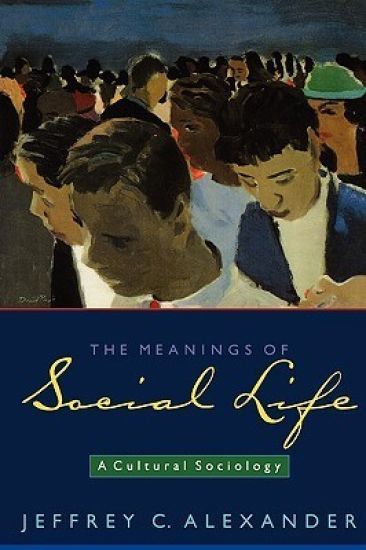
The Meanings of Social Life

The Meanings of Social Life

Jeffrey C. Alexander

Oxford University Press Inc
2005
nidottu
In The Meanings of Social Life , Jeffrey Alexander presents a new approach to how culture works in contemporary societies. Exposing our everyday myths and narratives in a series of empirical studies that range from Watergate to the Holocaust, he shows how these unseen yet potent cultural structures translate into concrete actions and institutions. Only when these deep patterns of meaning are revealed, Alexander argues, can we understand the stubborn staying power of violence and degradation, but also the steady persistence of hope. By understanding the darker structures that restrict our imagination, we can seek to transform them. By recognizing the culture structures that sustain hope, we can allow our idealistic imaginations to gain more traction in the world. A work that will transform the way that sociologists think about culture and the social world, this book confirms Jeffrey Alexander's reputation as one of the major social theorists of our day.
The Civil Sphere

The Civil Sphere

Jeffrey C. Alexander

Oxford University Press Inc
2008
nidottu
What binds societies together and how can these social orders be structured in a fair way? Jeffrey C. Alexander's masterful work, The Civil Sphere, addresses this central paradox of modern life. Feelings for others - the solidarity that is ignored or underplayed by theories of power or self-interest - are at the heart of this novel inquiry into the meeting place between normative theories of what we think we should do and empirical studies of who we actually are. Solidarity, Alexander demonstrates, creates inclusive and exclusive social structures and shows how they can be repaired. It is not perfect, it is not absolute, and the horrors which occur in its lapses have been seen all too frequently in the forms of discrimination, genocide, and war. Despite its worldly flaws and contradictions, however, solidarity and the project of civil society remain our best hope: the antidote to every divisive institution, every unfair distribution, every abusive and dominating hierarchy. This grand, sweeping statement and rigorous empirical investigation is a major contribution to our thinking about the real but ideal world in which we all reside.
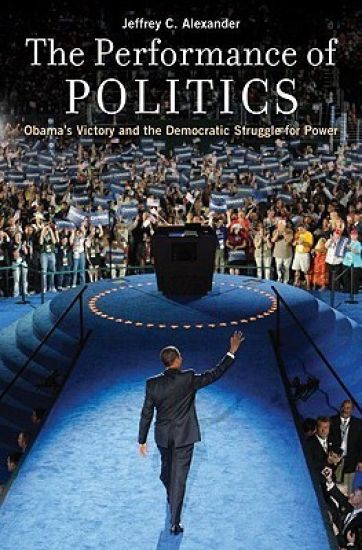
The Performance of Politics

The Performance of Politics

Jeffrey C. Alexander

Oxford University Press Inc
2011
sidottu
Jeffrey Alexander, a preeminent figure in social theory, offers here a new way of looking at democratic struggles for political power, discussing what happened, and why, during Barack Obama's remarkable run for president. Illustrated with vivid examples drawn from a range of media coverage, participant observation at a Camp Obama, and interviews with leading political journalists, Alexander argues that images, emotion, and performance are the central features of the battle for power. Winning depends on creating images so that candidates can become heroes. Demography, strategy, money, and issues matter, but power goes to the candidate with the most persuasive performances---the one whose carefully constructed heroic image resonates best with the audience of citizens. Though an untested Senator, Obama's moving performances succeeded in casting him as the hero and as the only candidate fit to lead in challenging times. As he sheds new light on modern politics, Alexander also conveys the immediacy and excitement of the final months of the historic 2008 presidential campaign.
The Performance of Politics

The Performance of Politics

Jeffrey C. Alexander

Oxford University Press Inc
2012
nidottu
Contemporary observers of politics in America often reduce democracy to demography, and presidential elections are no exception. But do differences in class, gender, race, and religion really determine the vote? The Performance of Politics develops a new way of looking at democratic struggles for big-time power and it explains what happened, and why, during the 2008 Presidential campaign in the United States. Through a series of simple but telling concepts about meaning and performance in public life, illustrated with vivid examples drawn from a range of media coverage, participant observation at a Camp Obama, and interviews with leading political journalists, Jeffrey Alexander argues that images, emotion, and performance are the central features of the battle for power. While these features have been largely overlooked by pundits, they are, in fact, the primary foci of political actors. Winning depends on creating images so that candidates can become heroes. Obama and McCain carefully constructed heroic self-images for their campaigns and the successful performance of those representations characterized not only each candidate's actual rallies, and not only their media messages but also the ground game. Money and organization facilitate the ground game, but they do not determine it. Emotion, images, and performance do. In other words, demography isn't destiny and political parties can't always delivery the vote. Though an untested Senator and the underdog in his own party, Obama, through his moving performances, succeeded in casting himself as the hero and McCain the anti-hero, as the only candidate fit to lead in challenging times. Drawing on these themes, Alexander then reveals several periods of shifting public opinion and isolates the drama of Obama's celebrity, the effect of Sarah Palin on the race, and the emerging financial crisis through an engaging narrative that conveys the immediacy and excitement of the final months of the historic 2008 presidential campaign. "Jeffrey C. Alexander's intriguing argument in The Performance of Politics, a meticulous review of the 2008 campaign, is that his fellow sociologists have overemphasized impersonal social forces at the expense of the theater of public life - the way politicians perform 'symbolically.' It's a prosaic call for a more poetic (or at least aesthetic) understanding of politics. Ideology must connect viscerally, or it doesn't connect at all." -The New York Times Book Review "The Performance of Politics is replete with sociological insights. ... Alexander presents original theoretical arguments on the democratic struggle for power in America, and in the process provides a new explanation for Obama's historic victory. ... Alexander's argument that the democratic struggle for power is about becoming a collective representation is persuasive, so too is the way he uses this argument to examine the successful and failed performances of candidates on both the primary and general elections. ... The most compelling part of this engaging book is Alexander's brilliant chapter on the 'Celebrity Metaphor.' Rarely have I read an analysis of a social event by a sociologist that had me so enthralled. ... This is a brilliant book.'" -William Julius Wilson, Contemporary Sociology 'That politics is about drama and unpredictable, surprising moments is one of the central arguments in Jeffrey Alexander's remarkable analysis of Barack Obama's presidential campaign ... By employing the tools of cultural sociology, Alexander writes about the most recent US presidential campaign as if it were a modern form of the Iliad.... Sometimes the best sociology is that which reveals itself through brilliant analysis and storytelling.'--Times Higher Education Supplement 'In an extraordinary analysis of real breadth and depth, Jeffrey Alexander challenges us to re-think Barack Obama's election as president. Reflect on the performance that takes place on a grand stage, Alexander advises, and we'll see the big picture.'-Larry J. Sabato, author of The Year of Obama 'This is a work of dazzling brilliance and imagination. It sparkles with new insights that go well beyond standard interpretations of electoral politics. Especially to be treasured is its keen understanding of civil society and the importance of moral meaning and symbolism in public life.'-Robert Wuthnow, Princeton University 'Revealing himself to be de Tocqueville's true heir, Jeffrey Alexander draws a sweeping and daring portrait of the heroes, villains, fools, and mavericks who peopled the 2008 American presidential campaign. The Performance of Politics is riveting. '-Robin Wagner-Pacifici, Swarthmore College
Action and Its Environments

Action and Its Environments

Jeffrey C. Alexander

Columbia University Press
1988
sidottu
Jeffrey Alexander, known for his work in sociological theory, breaks new ground in Action and Its Environments. His emphasis here is directly empirical and normative. He builds models, develops classifications, makes definitions, and offers explanations. He also develops an historical and comparative perspective on modernity that allows political and moral issues to be considered in a fresh way. The book aims to bring action theory and structure theory back together by focussing on three central questions. First, how can the normative and material properties of social structures be interlinked? Second, can the conventional, creative and strategic dimensions of individual action be related to social structures? Third, what are conditions and limits of modern social and cultural differentiation? In answering these questions Alexander portrays the complex relationship between social movements, public opinion formation, social solidarity, and social change. A new model of the structure and dynamics of cultural systems is presented as well. Alexander succeeds in applying this emerging model to a fascinating variety of empirical topics. He takes up issues of ethnic and national conflict, truth and distortion in the news media, the Watergate crisis, the moral responsibilities of universities, and the nature of war. Although this book stakes out new ground, in Action and Its Environments Alexander exhibits the same combination of insight and forceful argument that have won his earlier work high acclaim.
Performance and Power

Performance and Power

Jeffrey C. Alexander

Polity Press
2011
sidottu
Performativity has emerged as a critical new idea across the humanities and social sciences, from literary and cultural studies to the study of gender and the philosophy of action. In this volume, Jeffrey Alexander demonstrates how performance can reorient our study of politics and society. Alexander develops a cultural pragmatics that shifts cultural sociology from texts to gestural meanings. Positioning social performance between ritual and strategy, he lays out the elements of social performance - from scripts to mise-en-scène, from critical mediation to audience reception - and systematically describes their tense interrelation. This is followed by a series of empirically oriented studies that demonstrate how cultural pragmatics transforms our approach to power. Alexander brings his new theory of social performance to bear on case studies that range from political to cultural power: Barack Obama's electoral campaign, American failure in the Iraqi war, the triumph of the Civil Rights Movement, terrorist violence on September 11th, public intellectuals, material icons, and social science itself. This path-breaking work by one of the world's leading social theorists will command a wide interdisciplinary readership.
Performance and Power

Performance and Power

Jeffrey C. Alexander

Polity Press
2011
nidottu
Performativity has emerged as a critical new idea across the humanities and social sciences, from literary and cultural studies to the study of gender and the philosophy of action. In this volume, Jeffrey Alexander demonstrates how performance can reorient our study of politics and society. Alexander develops a cultural pragmatics that shifts cultural sociology from texts to gestural meanings. Positioning social performance between ritual and strategy, he lays out the elements of social performance - from scripts to mise-en-scène, from critical mediation to audience reception - and systematically describes their tense interrelation. This is followed by a series of empirically oriented studies that demonstrate how cultural pragmatics transforms our approach to power. Alexander brings his new theory of social performance to bear on case studies that range from political to cultural power: Barack Obama's electoral campaign, American failure in the Iraqi war, the triumph of the Civil Rights Movement, terrorist violence on September 11th, public intellectuals, material icons, and social science itself. This path-breaking work by one of the world's leading social theorists will command a wide interdisciplinary readership.
The Dark Side of Modernity

The Dark Side of Modernity

Jeffrey C. Alexander

Polity Press
2013
sidottu
In this book, one of the world’s leading social theorists presents a critical, alarmed, but also nuanced understanding of the post-traditional world we inhabit today. Jeffrey Alexander writes about modernity as historical time and social condition, but also as ideology and utopia. The idea of modernity embodies the Enlightenment’s noble hopes for progress and rationality, but its reality brings great suffering and exposes the destructive impulses that continue to motivate humankind. Alexander examines how twentieth-century theorists struggled to comprehend the Janus-faced character of modernity, which looks backward and forward at the same time. Weber linked the triumph of worldly asceticism to liberating autonomy but also ruthless domination, describing flights from rationalization as systemic and dangerous. Simmel pointed to the otherness haunting modernity, even as he normalized the stranger. Eisenstadt celebrated Axial Age transcendence, but acknowledged its increasing capacity for barbarity. Parsons heralded American community, but ignored modernity’s fragmentations. Rather than seeking to resolve modernity’s contradictions, Alexander argues that social theory should accept its Janus-faced character. It is a dangerous delusion to think that modernity can eliminate evil. Civil inclusion and anti-civil exclusion are intertwined. Alexander enumerates dangerous frictions endemic to modernity, but he also suggests new lines of social amelioration and emotional repair.
The Dark Side of Modernity

The Dark Side of Modernity

Jeffrey C. Alexander

Polity Press
2013
nidottu
In this book, one of the world’s leading social theorists presents a critical, alarmed, but also nuanced understanding of the post-traditional world we inhabit today. Jeffrey Alexander writes about modernity as historical time and social condition, but also as ideology and utopia. The idea of modernity embodies the Enlightenment’s noble hopes for progress and rationality, but its reality brings great suffering and exposes the destructive impulses that continue to motivate humankind. Alexander examines how twentieth-century theorists struggled to comprehend the Janus-faced character of modernity, which looks backward and forward at the same time. Weber linked the triumph of worldly asceticism to liberating autonomy but also ruthless domination, describing flights from rationalization as systemic and dangerous. Simmel pointed to the otherness haunting modernity, even as he normalized the stranger. Eisenstadt celebrated Axial Age transcendence, but acknowledged its increasing capacity for barbarity. Parsons heralded American community, but ignored modernity’s fragmentations. Rather than seeking to resolve modernity’s contradictions, Alexander argues that social theory should accept its Janus-faced character. It is a dangerous delusion to think that modernity can eliminate evil. Civil inclusion and anti-civil exclusion are intertwined. Alexander enumerates dangerous frictions endemic to modernity, but he also suggests new lines of social amelioration and emotional repair.
Trauma

Trauma

Jeffrey C. Alexander

Polity Press
2012
sidottu
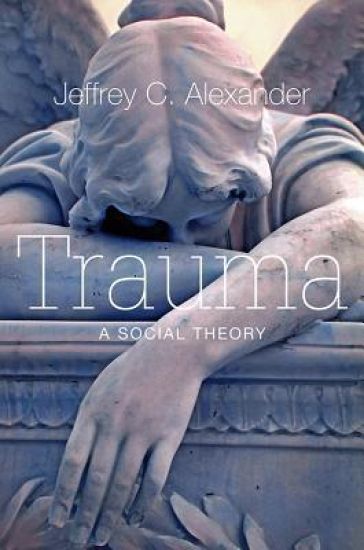
In this book Jeffrey C. Alexander develops an original social theory of trauma and uses it to carry out a series of empirical investigations into social suffering around the globe. Alexander argues that traumas are not merely psychological but collective experiences, and that trauma work plays a key role in defining the origins and outcomes of critical social conflicts. He outlines a model of trauma work that relates interests of carrier groups, competing narrative identifications of victim and perpetrator, utopian and dystopian proposals for trauma resolution, the performative power of constructed events, and the distribution of organizational resources. Alexander explores these processes in richly textured case studies of cultural-trauma origins and effects, from the universalism of the Holocaust to the particularism of the Israeli right, from postcolonial battles over the Partition of India and Pakistan to the invisibility of the Rape of Nanjing in Maoist China. In a particularly controversial chapter, Alexander describes the idealizing discourse of globalization as a trauma-response to the Cold War. Contemporary societies have often been described as more concerned with the past than the future, more with tragedy than progress. In Trauma: A Social Theory, Alexander explains why.
Trauma

Trauma

Jeffrey C. Alexander

Polity Press
2012
nidottu
In this book Jeffrey C. Alexander develops an original social theory of trauma and uses it to carry out a series of empirical investigations into social suffering around the globe. Alexander argues that traumas are not merely psychological but collective experiences, and that trauma work plays a key role in defining the origins and outcomes of critical social conflicts. He outlines a model of trauma work that relates interests of carrier groups, competing narrative identifications of victim and perpetrator, utopian and dystopian proposals for trauma resolution, the performative power of constructed events, and the distribution of organizational resources. Alexander explores these processes in richly textured case studies of cultural-trauma origins and effects, from the universalism of the Holocaust to the particularism of the Israeli right, from postcolonial battles over the Partition of India and Pakistan to the invisibility of the Rape of Nanjing in Maoist China. In a particularly controversial chapter, Alexander describes the idealizing discourse of globalization as a trauma-response to the Cold War. Contemporary societies have often been described as more concerned with the past than the future, more with tragedy than progress. In Trauma: A Social Theory, Alexander explains why.
Civil Repair

Civil Repair

Jeffrey C. Alexander

JOHN WILEY AND SONS LTD
2024
sidottu
This book challenges the pessimism that has so marked, and impoverished, social theorizing about modern life. Modernity has often been dark and debilitating, but it has also generated hope for a better life and extraordinary reforms and liberations, from the creation of hopeful democracies in the face of dangerous dictatorships to feminist transformations of patriarchy, struggles against imperialism and racial domination, and the stubborn but persistent reconstruction of pivotal institutions. Jeffrey Alexander theorizes these radical reforms as "civil repairs" – as efforts to make real the utopian promises of the civil sphere. Ideal civil spheres make stirring commitments to social solidarity, equality, and individual autonomy. Real civil spheres are rent by anti-civil hierarchies of class, gender, race, and religion. Contradictions between real and ideal civil spheres generate social movements for justice, which are not only about challenging power but making new and more solidarizing meanings. Civil repair is at once symbolic and institutional. It offers a new way to conceptualize progressive social change.
Civil Repair

Civil Repair

Jeffrey C. Alexander

JOHN WILEY AND SONS LTD
2024
nidottu
This book challenges the pessimism that has so marked, and impoverished, social theorizing about modern life. Modernity has often been dark and debilitating, but it has also generated hope for a better life and extraordinary reforms and liberations, from the creation of hopeful democracies in the face of dangerous dictatorships to feminist transformations of patriarchy, struggles against imperialism and racial domination, and the stubborn but persistent reconstruction of pivotal institutions. Jeffrey Alexander theorizes these radical reforms as "civil repairs" – as efforts to make real the utopian promises of the civil sphere. Ideal civil spheres make stirring commitments to social solidarity, equality, and individual autonomy. Real civil spheres are rent by anti-civil hierarchies of class, gender, race, and religion. Contradictions between real and ideal civil spheres generate social movements for justice, which are not only about challenging power but making new and more solidarizing meanings. Civil repair is at once symbolic and institutional. It offers a new way to conceptualize progressive social change.
The Drama of Social Life

The Drama of Social Life

Jeffrey C. Alexander

Polity Press
2017
sidottu
In this book Jeffrey Alexander develops the view that cultural sociology and “cultural pragmatics” are vital for understanding the structural turbulence and political possibilities of contemporary social life. Central to Alexander’s approach is a new model of social performance that combines elements from both the theatrical avant-garde and modern social theory. He uses this model to shed new light on a wide range of social actors, movements, and events, demonstrating through striking empirical examples the drama of social life. Producing successful dramas determines the outcome of social movements and provides the keys to political power. Modernity has neither eliminated aura nor suppressed authenticity; on the contrary, they are available to social actors who can perform them in compelling ways. This volume further consolidates Alexander’s reputation as one of the most original social thinkers of our time. It will be of great interest to students and scholars in sociology and cultural studies as well as throughout the social sciences and humanities.
The Drama of Social Life

The Drama of Social Life

Jeffrey C. Alexander

Polity Press
2017
nidottu
In this book Jeffrey Alexander develops the view that cultural sociology and “cultural pragmatics” are vital for understanding the structural turbulence and political possibilities of contemporary social life. Central to Alexander’s approach is a new model of social performance that combines elements from both the theatrical avant-garde and modern social theory. He uses this model to shed new light on a wide range of social actors, movements, and events, demonstrating through striking empirical examples the drama of social life. Producing successful dramas determines the outcome of social movements and provides the keys to political power. Modernity has neither eliminated aura nor suppressed authenticity; on the contrary, they are available to social actors who can perform them in compelling ways. This volume further consolidates Alexander’s reputation as one of the most original social thinkers of our time. It will be of great interest to students and scholars in sociology and cultural studies as well as throughout the social sciences and humanities.
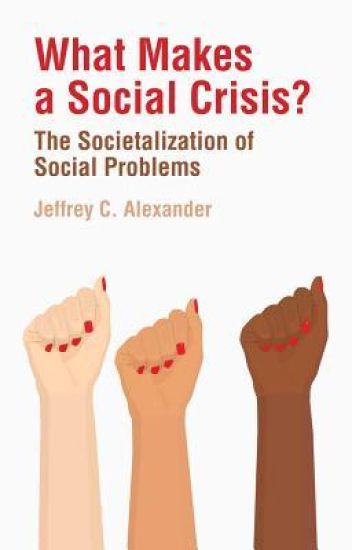
What Makes a Social Crisis?

What Makes a Social Crisis?

Jeffrey C. Alexander

Polity Press
2019
sidottu
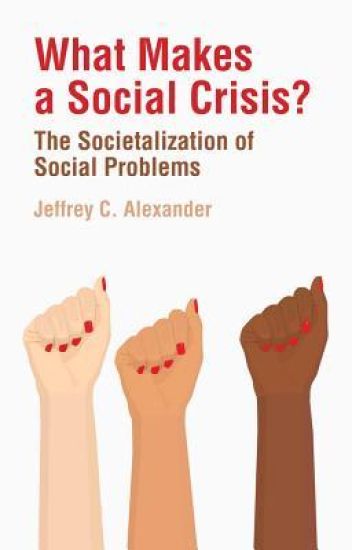
In this book Jeffrey Alexander develops a new sociological theory of social crisis and applies it to a wide range of cases, from the church paedophilia crisis to the #MeToo movement. He argues that crises are triggered not by objective social strains but by the discourse and institutions of the civil sphere. When strains become subject to the utopian aspirations of the civil sphere, there emerges widespread anguish about social justice and the future of democratic life. Once admired institutional elites come to be represented as perpetrators and the civil sphere becomes legally and organizationally intrusive, demanding repairs in the name of civil purification. Resisting such repair, institutional elites foment backlash, and a war of the spheres ensues. This major new work by one of the world’s leading social theorists will be of great interest to students and scholars in sociology, politics, and the social sciences generally.
What Makes a Social Crisis?

What Makes a Social Crisis?

Jeffrey C. Alexander

Polity Press
2019
nidottu
In this book Jeffrey Alexander develops a new sociological theory of social crisis and applies it to a wide range of cases, from the church paedophilia crisis to the #MeToo movement. He argues that crises are triggered not by objective social strains but by the discourse and institutions of the civil sphere. When strains become subject to the utopian aspirations of the civil sphere, there emerges widespread anguish about social justice and the future of democratic life. Once admired institutional elites come to be represented as perpetrators and the civil sphere becomes legally and organizationally intrusive, demanding repairs in the name of civil purification. Resisting such repair, institutional elites foment backlash, and a war of the spheres ensues. This major new work by one of the world’s leading social theorists will be of great interest to students and scholars in sociology, politics, and the social sciences generally.