Kirjojen hintavertailu. Mukana 11 342 296 kirjaa ja 12 kauppaa.

Kirjahaku

Etsi kirjoja tekijän nimen, kirjan nimen tai ISBN:n perusteella.

10 kirjaa tekijältä Jeffrey C. Goldfarb

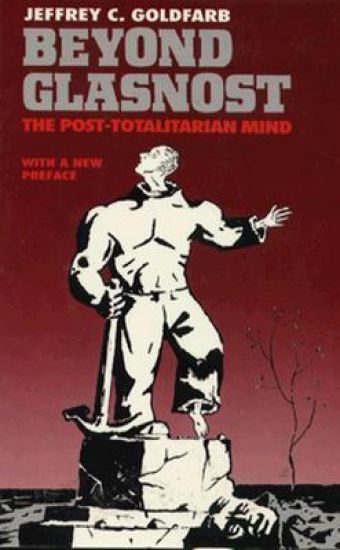
Beyond Glasnost

Beyond Glasnost

Jeffrey C. Goldfarb

University of Chicago Press
1992
nidottu
"Beyond Glasnost is a thoughtful exploration of the past decade's cultural and political ferment in Eastern Europe. It is also something else: an argument—in a deceptively unassuming, anti-ideological voice—about how to conceive of and move toward freedom; an argument that could hardly be more relevant to the roiling debates on the Western left."—Ellen Willis, Village Voice
On Cultural Freedom

On Cultural Freedom

Jeffrey C. Goldfarb

University of Chicago Press
1983
nidottu
In this timely study, Jeffrey C. Goldfarb explores the nature and prospects of cultural freedom by examining the conditions that favor or threaten its development in the political East and West. Goldfarb—who examines conditions in the Soviet Union, the United States, and their respective European allies—focuses most closely upon Poland and the United States. He investigates a wide range of concrete cases, including the Polish opposition movement and Solidarity, the migration of artists, the American television and magazine industries, American philanthropy, and communist cultural conveyor belts. From these cases, Goldfarb derives a definitive set of sociological conditions for cultural freedom: critical creativity which resists systematic constraints, continuity of cultural tradition, and a relatively autonomous public realm for the reception of culture. Cultural freedom, Goldfarb shows, is not a static state but a process of achievement. Its parameters and content are determined by social practice in cultural institutions and by their relations with other components and the totality of social structure. So defined, cultural freedom is transformed from an ideological concept into one with real critical and analytical power. Through it we can appreciate the invisible nature of constraint in the West and the unapparent but acting supports of cultural freedom existing in socialist countries. Most importantly, Goldfarb's conclusions provide a framework for understanding more clearly than before the circumstance of cultural freedom in both East and West so that citizens may utilize their full creative abilities as they address the problems of the present day.
The Cynical Society

The Cynical Society

Jeffrey C. Goldfarb

University of Chicago Press
1991
sidottu
The Cynical Society is a study of the political despair and abdication of (individual) responsibility Goldfarb calls cynicism—a central but unexamined aspect of contemporary American political and social life. Goldfarb reveals with vivid strokes how cynicism undermines our capacity to think about society's strengths and weaknesses. Drawing on thinkers from Alexis de Tocqueville to Allan Bloom and on such recent works as Beloved, Bonfire of the Vanities, and Mississippi Burning, The Cynical Society celebrates cultural pluralism's role in democracy.
The Cynical Society

The Cynical Society

Jeffrey C. Goldfarb

University of Chicago Press
1992
nidottu
The Cynical Society is a study of the political despair and abdication of (individual) responsibility Goldfarb calls cynicism—a central but unexamined aspect of contemporary American political and social life. Goldfarb reveals with vivid strokes how cynicism undermines our capacity to think about society's strengths and weaknesses. Drawing on thinkers from Alexis de Tocqueville to Allan Bloom and on such recent works as Beloved, Bonfire of the Vanities, and Mississippi Burning, The Cynical Society celebrates cultural pluralism's role in democracy.
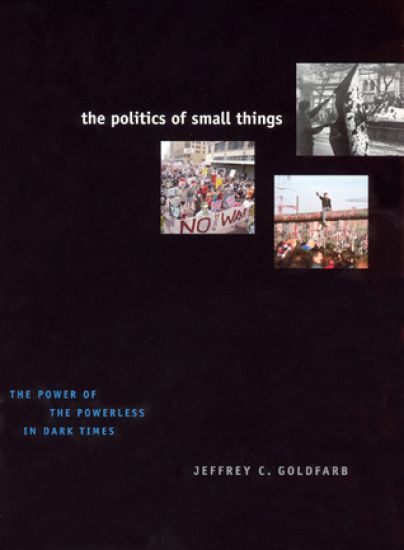
The Politics of Small Things

The Politics of Small Things

Jeffrey C. Goldfarb

University of Chicago Press
2006
sidottu
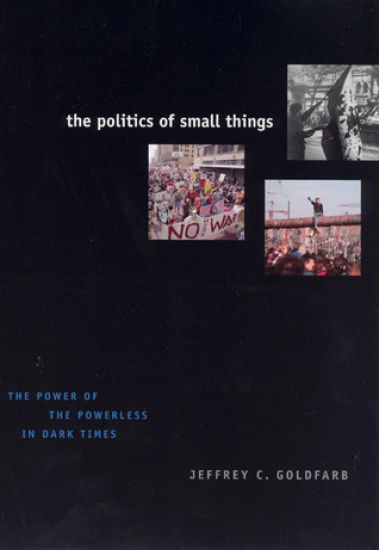
Political change doesn't always begin with a bang; it often starts with just a whisper. From the discussions around kitchen tables that led to the dismantling of the Soviet bloc to the more recent emergence of Internet initiatives like MoveOn.org and Redeem the Vote that are revolutionizing the American political landscape, consequential political life develops in small spaces where dialogue generates political power. In "The Politics of Small Things", Jeffrey C. Goldfarb provides an innovative way for understanding politics, a way of appreciating the significance of politics at the micro level by comparatively analyzing key turning points and institutions in recent history. He presents a sociology of human interactions that lead from small to large: dissent around the old Soviet bloc; life on the streets in Warsaw, Prague, and Bucharest in 1989; the network of terror that spawned 9/11; and the religious and Internet mobilizations that transformed the 2004 presidential election, to name a few. In such pivotal moments, he masterfully shows, political autonomy can be generated, presenting alternatives to the big politics of the global stage and the dominant narratives of terrorism, antiterrorism, and globalization.
The Politics of Small Things

The Politics of Small Things

Jeffrey C. Goldfarb

University of Chicago Press
2007
nidottu
Political change doesn't always begin with a bang; it often starts with just a whisper. From the discussions around kitchen tables that led to the dismantling of the Soviet bloc to the more recent emergence of Internet initiatives such as MoveOn.org and Redeem the Vote that are revolutionizing the American political landscape, consequential political life develops in small spaces where dialogue generates political power. In "The Politics of Small Things", Jeffrey C. Goldfarb studies political activism at the micro level by comparatively analyzing key turning points in recent history. He presents a sociology of human interactions that lead from small to large: dissent around the old Soviet bloc; life on the streets in Warsaw, Prague, and Bucharest in 1989; and the religious and Internet mobilizations that transformed the 2004 presidential election, to name a few. Such pivotal but small moments, Goldfarb argues, can generate political autonomy and present alternatives to the big politics of the global stage and the dominant narratives of terrorism, antiterrorism, and globalization.
Civility and Subversion

Civility and Subversion

Jeffrey C. Goldfarb

Cambridge University Press
1998
sidottu
This 1998 book provides a sophisticated alternative to existing accounts of the role of the intellectual in modern democracy. Arguing that society suffers from a systemic deliberation deficit, Jeffrey Goldfarb explores the potential of the intellectual as democratic agent, at once civilizing political contestation and subverting complacent consensus. The sentimental Leftist view of the intellectual as guardian of democracy and the demonising Rightist view of the intellectual as obstructor of progress, are both shown to be flawed. Instead, intellectuals are portrayed as special kinds of 'strangers' who pay careful attention to their critical faculties, equipping them uniquely to address the most pressing issues of today. Professor Goldfarb deploys classical and contemporary social theory to analyse a diverse set of intellectuals in action, from Socrates in fifth-century Athens to Malcolm X and Toni Morrison in twentieth-century America, and, drawing on personal acquaintance, the political dissidents in Communist and post-Communist Central Europe.
Civility and Subversion

Civility and Subversion

Jeffrey C. Goldfarb

Cambridge University Press
1998
pokkari
This book provides a sophisticated alternative to existing accounts of the role of the intellectual in modern democracy. Arguing that society suffers from a systemic deliberation deficit, Jeffrey Goldfarb explores the potential of the intellectual as democratic agent, at once civilizing political contestation and subverting complacent consensus. The sentimental Leftist view of the intellectual as guardian of democracy and the demonising Rightist view of the intellectual as obstructor of progress, are both shown to be flawed. Instead, intellectuals are portrayed as special kinds of ‘strangers’ who pay careful attention to their critical faculties, equipping them uniquely to address the most pressing issues of today. Professor Goldfarb deploys classical and contemporary social theory to analyse a diverse set of intellectuals in action, from Socrates in fifth-century Athens to Malcolm X and Toni Morrison in twentieth-century America, and, drawing on personal acquaintance, the political dissidents in Communist and post-Communist Central Europe.
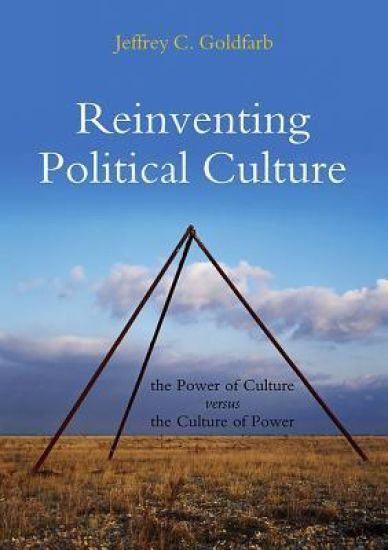
Reinventing Political Culture

Reinventing Political Culture

Jeffrey C. Goldfarb

Polity Press
2011
sidottu
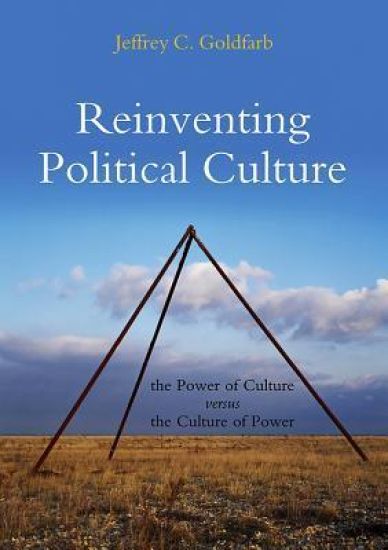
The way people think and act politically is not set in stone. People can and do change the fundamental cultural contours of their political situation. Their political culture does not only restrict imagination and action - it is also a resource for political creativity and invention. In Reinventing Political Culture, this resource is uncovered and explored. Analyzed as a tension between the power of culture and the culture of power, the concept of political culture is reinvented and applied to understanding the practice of people transforming their own political culture in very different circumstances. Three instances of such reinvention are closely examined: one historic, during the twilight of the Soviet empire; one actively in process and actively opposed, ‘the Obama revolution'; and one an apparent distant dream, the power of culture and the culture of power that would avoid ‘the clash of civilizations' in the Middle East. In accessible and engaging prose, Goldfarb clearly and forcefully presents students and scholars of sociology, comparative politics, and cultural studies with an original position on political culture, showing how the political cultures of our times pose not only grave dangers, but also opportunities for creative alternatives.
Reinventing Political Culture

Reinventing Political Culture

Jeffrey C. Goldfarb

Polity Press
2011
nidottu
The way people think and act politically is not set in stone. People can and do change the fundamental cultural contours of their political situation. Their political culture does not only restrict imagination and action - it is also a resource for political creativity and invention. In Reinventing Political Culture, this resource is uncovered and explored. Analyzed as a tension between the power of culture and the culture of power, the concept of political culture is reinvented and applied to understanding the practice of people transforming their own political culture in very different circumstances. Three instances of such reinvention are closely examined: one historic, during the twilight of the Soviet empire; one actively in process and actively opposed, ‘the Obama revolution'; and one an apparent distant dream, the power of culture and the culture of power that would avoid ‘the clash of civilizations' in the Middle East. In accessible and engaging prose, Goldfarb clearly and forcefully presents students and scholars of sociology, comparative politics, and cultural studies with an original position on political culture, showing how the political cultures of our times pose not only grave dangers, but also opportunities for creative alternatives.