Kirjojen hintavertailu. Mukana 12 016 292 kirjaa ja 12 kauppaa.

Kirjahaku

Etsi kirjoja tekijän nimen, kirjan nimen tai ISBN:n perusteella.

7 kirjaa tekijältä Jeffrey Church

Kant, Liberalism, and the Meaning of Life

Kant, Liberalism, and the Meaning of Life

Jeffrey Church

OXFORD UNIVERSITY PRESS INC
2022
sidottu
In the wake of populist challenges throughout the past decade in the U.S. and Europe, liberalism has been described as elitist and out of touch, concerned with protecting and promoting material interests with an orientation that is pragmatic, legalistic, and technocratic. Simultaneously, liberal governments have become increasingly detached from the middle class and its moral needs for purpose and belonging. If liberalism cannot provide spiritual sustenance, individuals will look elsewhere for it, especially in illiberal forms of populism. In Kant, Liberalism, and the Meaning of Life, Jeffrey Church addresses the "meaning deficit" in contemporary liberal societies. Focusing on Immanuel Kant's largely neglected early lectures on anthropology from the 1760s and 1770s, Church argues that Kant's work can serve as a basis for a more meaningful liberalism, one that conceives of freedom and equality for all as a moral vocation of citizens and institutions. Church also asserts that Kant's early view of the meaning of life has important implications for understanding his political theory. Kant saw liberal community as something that helps us realize our destiny on earth as the distinctively free creatures we are. Liberalism, then, is not elitist but a participatory project of all members of society. It is not concerned primarily with material things but with our moral destiny. It is not pragmatic but principled. Church holds that Kant's liberalism rests on a view of the meaning of human existence, and so analyzes Kant's view of the meaning of life and its application to his politics. In particular, Church contends that a fundamental concern included in Kant's liberalism, largely unrecognized by scholars, is to foster the meaning of life for citizens of liberal republican orders. At the same time, Church applies Kant's views of the meaning of life to contemporary problems in liberalism. In particular, he argues that Kant's view of a meaningful liberalism can provide a counterweight to the recent rise of illiberal nationalist or religious forms of community that seem attractive to liberal citizens hungering for meaning in a disenchanted world. Compelling and ambitious, Jeffrey Church provides the first extended treatment of Kant's understanding of the meaning of life and a powerful alternative to procedural liberalism.
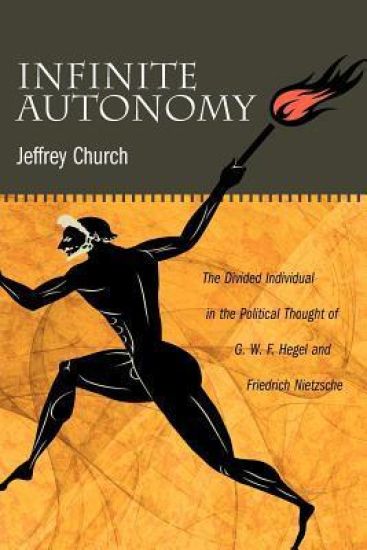
Infinite Autonomy

Infinite Autonomy

Jeffrey Church

Pennsylvania State University Press
2011
sidottu
G. W. F. Hegel and Friedrich Nietzsche are often considered the philosophical antipodes of the nineteenth century. In Infinite Autonomy, Jeffrey Church draws on the thinking of both Hegel and Nietzsche to assess the modern Western defense of individuality—to consider whether we were right to reject the ancient model of community above the individual. The theoretical and practical implications of this project are important, because the proper defense of the individual allows for the survival of modern liberal institutions in the face of non-Western critics who value communal goals at the expense of individual rights. By drawing from Hegelian and Nietzschean ideas of autonomy, Church finds a third way for the individual—what he calls the “historical individual,” which goes beyond the disagreements of the ancients and the moderns while nonetheless incorporating their distinctive contributions.
Infinite Autonomy

Infinite Autonomy

Jeffrey Church

Pennsylvania State University Press
2014
pokkari
G. W. F. Hegel and Friedrich Nietzsche are often considered the philosophical antipodes of the nineteenth century. In Infinite Autonomy, Jeffrey Church draws on the thinking of both Hegel and Nietzsche to assess the modern Western defense of individuality—to consider whether we were right to reject the ancient model of community above the individual. The theoretical and practical implications of this project are important, because the proper defense of the individual allows for the survival of modern liberal institutions in the face of non-Western critics who value communal goals at the expense of individual rights. By drawing from Hegelian and Nietzschean ideas of autonomy, Church finds a third way for the individual—what he calls the “historical individual,” which goes beyond the disagreements of the ancients and the moderns while nonetheless incorporating their distinctive contributions.
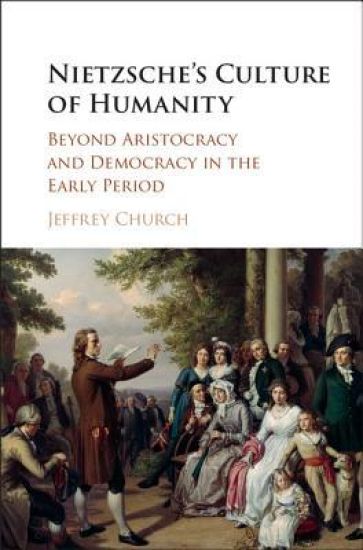
Nietzsche's Culture of Humanity

Nietzsche's Culture of Humanity

Jeffrey Church

Cambridge University Press
2015
sidottu
Nietzsche scholars have long been divided over whether Nietzsche is an aristocratic or a democratic thinker. Nietzche's Culture of Humanity overcomes this debate by proving both sides wrong. Jeffrey Church argues that in his early period writings, Nietzsche envisioned a cultural meritocracy that drew on the classical German tradition of Kant and Herder. The young Nietzsche's 'culture of humanity' synthesized the high and low, the genius and the people, the nation and humanity. Nietzsche's early ideal of culture can shed light on his mature period thought, since, Church argues, Nietzsche does not abandon this fundamental commitment to a cultural meritocracy. Nietzche's Culture of Humanity argues that Nietzsche's novel defense of culture can overcome some persisting problems in contemporary liberal theories of culture. As such, this book should interest Nietzsche scholars, political theorists and philosophers interested in modern thought, as well as contemporary thinkers concerned with the politics of culture.
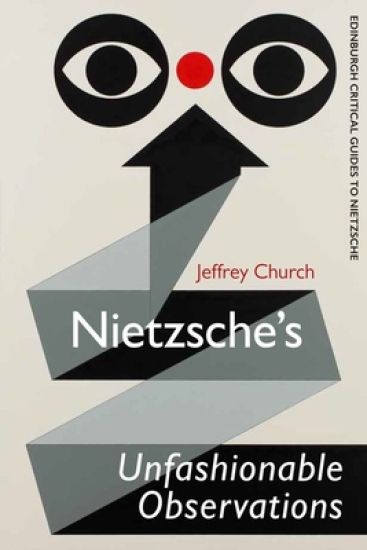
Nietzsche'S Unfashionable Observations

Nietzsche'S Unfashionable Observations

Jeffrey Church

Edinburgh University Press
2019
sidottu
Nietzsche's Unfashionable Observations often translated as the Untimely Meditations or Thoughts Out of Season is made up of four independent essays written between 1873 and 1876. The book remains a puzzle: what structure, principles and arguments underlie the essays? Presupposing no prior knowledge of Nietzsche or the text, Jeffrey Church sets the essays in historical and philosophical context, guides you through the text section-by-section and develops a structural overview of each essay. He reveals how the common themes of freedom, culture and genius unify the book.
Nietzsche'S Unfashionable Observations

Nietzsche'S Unfashionable Observations

Jeffrey Church

Edinburgh University Press
2019
nidottu
Nietzsche's Unfashionable Observations often translated as the Untimely Meditations or Thoughts Out of Season is made up of four independent essays written between 1873 and 1876. The book remains a puzzle: what structure, principles and arguments underlie the essays? Presupposing no prior knowledge of Nietzsche or the text, Jeffrey Church sets the essays in historical and philosophical context, guides you through the text section-by-section and develops a structural overview of each essay. He reveals how the common themes of freedom, culture and genius unify the book.